
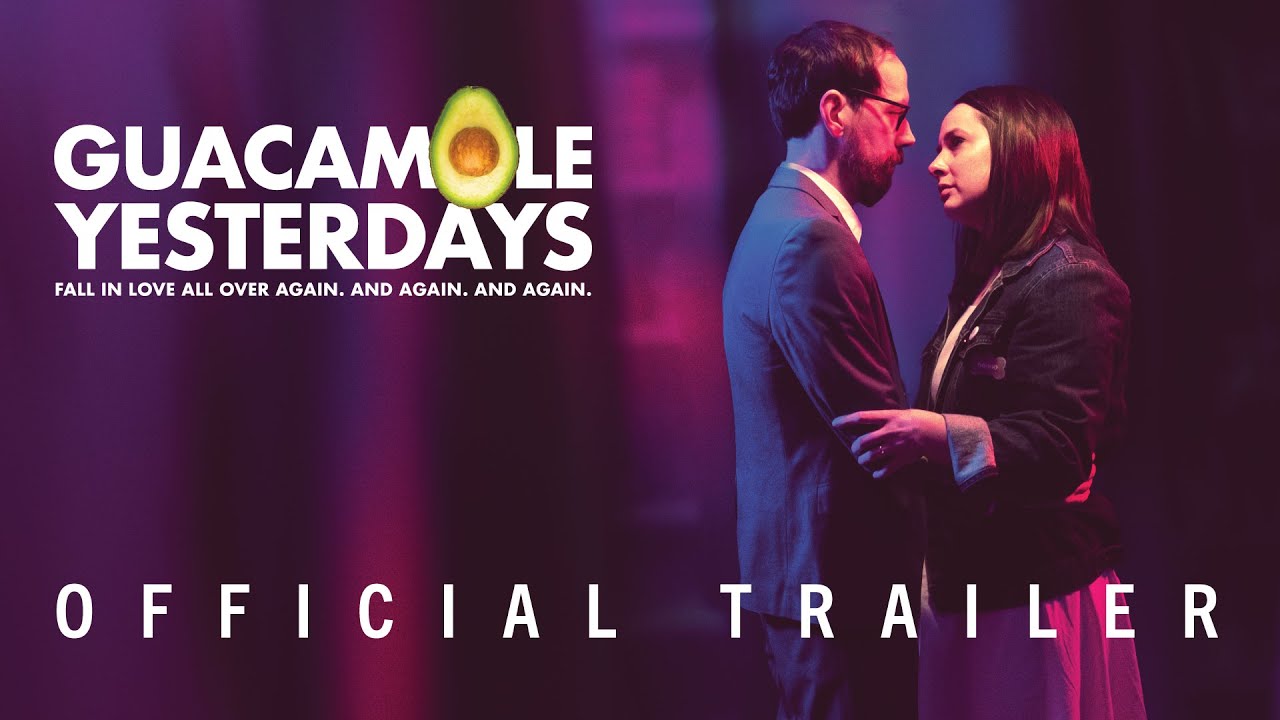
The Indie Sci-Fi That Turns Heartbreak Into a Memory You Can Rewrite — But Probably Shouldn’t
A heartbroken cartoonist named Ames enters experimental therapy that allows her to relive and reshape her memories of her failed marriage. First dates, quiet resentments, final arguments — she can replay them all, and change how they go. But as the altered versions accumulate, the line between what actually happened and what she wishes had happened begins to collapse. Written and shot in Georgia by Hudson Phillips and director Jordan Noel on a modest budget, with Randy Havens (Stranger Things) as Franklin and Adetinpo Thomas (Hawkeye) as the therapist who hands Ames the instrument of her own unravelling.
Why It Is Trending: A Grounded Sci-Fi Romance With Eternal Sunshine DNA, Two Festival Awards, and a Self-Distribution Model That Took It to 13 Cities
Guacamole Yesterdays sits at the intersection of indie sci-fi and intimate breakup drama — a genre combination that has built a reliable arthouse audience since Eternal Sunshine of the Spotless Mind established that memory-manipulation premises can carry genuine emotional weight without blockbuster budgets. The film’s high-concept hook — experimental therapy that lets you relive and rewrite your memories of a failed relationship — is immediately legible to the streaming audience that has made grounded sci-fi romance one of indie cinema’s most commercially sustainable genres. It played 11 festivals, won Best Narrative Feature and Best of Fest at the South Georgia Film Festival, and self-booked a 13-city theatrical arthouse tour before landing on Apple TV and Amazon Prime Video — a distribution arc that demonstrates the format’s discovery power when the concept is strong enough to carry word of mouth.
Elements Driving the Trend: Grounded Sci-Fi Premise, Colour-Coded Visual System, and a Third-Act Twist That Divides
-
The memory-manipulation premise places the film squarely in the Eternal Sunshine / Daniela Forever lineage — grounded sci-fi that uses a high-concept device to examine relationship dynamics rather than spectacle.
-
The colour-coding system — Ames red, Franklin blue, therapist yellow — gives the film a visual identity that distinguishes it immediately from comparable micro-budget indie romance.
-
The Super Mario Bros. therapy analogy grounds the sci-fi mechanics in instantly legible popular culture, keeping the film accessible without dumbing down the concept.
-
The third-act narrative swerve — praised by some as ambitious, criticised by others as undercutting the first two thirds — is the film’s most discussed formal choice and its primary word-of-mouth engine.
Virality: A Title That Provokes the Question and a Premise That Answers It
-
Guacamole Yesterdays is specific enough to be memorable and absurd enough to generate the “what is this?” click — the title alone functions as discovery mechanism.
-
The Eternal Sunshine comparison appeared across every review, giving the film an immediate genre positioning shortcut that travels across social media without requiring explanation.
Critics Reception: Praised for Intimacy and Ambition, Divided on the Landing
-
Raving Review — sharp dialogue, offbeat charm, just enough sci-fi edge; third-act swerve undercuts the groundwork of the first two thirds.
-
Moviejawn — inventive genre mash-up, strong colour-coded cinematography, ambitious but the dip lacks layers.
-
Bains Film Reviews — carefully grounded, emotional twist lands but the ending feels rushed.
-
Letterboxd five-star — quietly profound, slowly creeps up and delivers an absolute blow.
Awards and Recognitions: Two South Georgia Wins and an 11-Festival Arthouse Run
-
2 wins — South Georgia Film Festival 2024: Best Narrative Feature Film (Jordan Noel), Best of Fest (Michelle Moreland, Hudson Phillips).
-
11 festivals total. Self-booked theatrical tour, 13 US cities. Apple TV and Amazon Prime Video from June 24, 2025.
Director and Cast: A Georgia Indie Built on Local Talent and Two TV-Recognisable Faces
-
Jordan Noel directs with consistent visual intimacy — colour palette and framing evolve alongside Ames’s shifting mental state across every memory session.
-
Hudson Phillips writes and produces — the script finds its strength in small moments: missed signals, unspoken resentment, jokes remembered differently. Next project Gargantuan (“A24 made a Power Rangers movie”) is in post-production.
-
Sophie Edwards (This World Alone) plays Ames — impulsive but calculating, funny but guarded, a performance that earns the film’s emotional payoff without romantic lead archetypes.
-
Randy Havens (Stranger Things) plays Franklin — weary and subtly drawn, his depression the relationship’s central structural pressure.
-
Adetinpo Thomas (Hawkeye) plays the therapist — the film’s yellow-coded neutral ground, calm against the red-blue friction of the central couple.
Guacamole Yesterdays proves that grounded sci-fi romance is one of indie cinema’s most resilient genre propositions — high concept enough to generate discovery, intimate enough to sustain emotional investment. The self-distribution model validated the format. The 13-city tour found the audience the festivals identified.
What Movie Trend Is Followed: The Grounded Sci-Fi Romance Uses Memory Manipulation to Do What Breakup Films Have Always Done — and Does It More Honestly
Guacamole Yesterdays belongs to the grounded sci-fi romance tradition that uses a speculative device not for spectacle but for emotional excavation — Eternal Sunshine of the Spotless Mind, Daniela Forever, and now this. The memory-manipulation premise gives the breakup film its most structurally honest framework: relationships are not lived chronologically but remembered selectively, replayed obsessively, and revised constantly. A technology that makes that process literal is not a science fiction conceit — it is a precise metaphor for what heartbreak actually does to memory. The film’s specific contribution is showing that rewriting the memories doesn’t resolve the grief — it deepens it, because the altered versions reveal what Ames actually wanted the relationship to be rather than what it was.
Trend Drivers: The Memory-Manipulation Premise as the Breakup Film’s Most Structurally Honest Device
-
Grounded sci-fi romance has established a reliable indie arthouse audience that responds to high-concept emotional premises — the memory device here functions less as genre convention than as psychological realism rendered visually.
-
The unreliable narrator structure — every memory Ames revisits is potentially altered, making the audience unable to trust any version of the relationship they witness — gives the film a formal sophistication that micro-budget indie romance rarely achieves.
-
Phillips’s screenplay earns its concept by keeping the mechanics minimal and the emotional consequences central — the Super Mario analogy explains the technology in one scene and the film never returns to it.
-
The colour-coding system gives the unreliable narrator problem a visual solution: as Ames’s mental state deteriorates, the palette shifts, and the audience tracks her reliability through colour rather than exposition.
The film’s formal intelligence exceeds its budget in every frame. The concept generates the scale. The visual system sustains the intimacy.
What Is Influencing Trend: Eternal Sunshine’s Long Shadow and the Indie Sci-Fi Romance Pipeline
-
Eternal Sunshine of the Spotless Mind established that memory-erasure premises can generate genuine emotional devastation — and every film in this lineage benefits from that audience conditioning.
-
Daniela Forever (Nacho Vigalondo, 2024) occupied the same genre space in the same year, confirming that the memory-manipulation romance is a specific and currently active indie subgenre rather than an isolated premise.
-
The grounded sci-fi format — high concept, low budget, intimate cast, single location — is one of independent cinema’s most commercially sustainable production models, requiring no special effects beyond the conceptual premise itself.
The genre’s commercial ceiling is modest but reliable. Its audience is loyal, discovery-driven, and streaming-native.
Macro Trends Influencing: Grief Processing, Therapy Culture, and the Digitisation of Memory
-
The therapy session as narrative frame — Ames’s memory manipulation happens in a therapist’s office — connects the film to the contemporary normalisation of therapy as a self-understanding tool.
-
The premise literalises what social media already does to relationship memory: the ability to revisit, curate, and selectively alter the record of what a relationship was.
-
The film’s Kierkegaard epigraph — life understood backwards, lived forwards — positions the memory technology as a philosophical problem as much as a sci-fi device.
The cultural moment for this premise is precise. Memory, grief, and the digital record of relationships are all active cultural anxieties in 2024–2025.
Consumer Trends Influencing: Streaming Discovery, Festival Word of Mouth, and the Eternal Sunshine Audience
-
The Apple TV and Amazon Prime Video landing gives the film the streaming discoverability its self-booked theatrical tour built toward — audiences who heard about it during the festival run can now find it immediately.
-
The Eternal Sunshine comparison in every review functions as a search-term and algorithmic discovery asset — viewers who loved that film will find this one through the association.
-
The 90-minute runtime is the streaming audience’s most commercially optimal format for intimate indie drama — low commitment, high emotional return.
The self-distribution model built the audience the streaming platforms are now converting. The festival awards gave it the credibility the streaming algorithms reward.
Audience Analysis: Eternal Sunshine Fans, Indie Sci-Fi Romance Audiences, and the Therapy-Generation Viewer
The core audience is 25–45 — viewers who responded to Eternal Sunshine and its emotional lineage, indie sci-fi romance audiences who follow the grounded high-concept format, and the therapy-generation viewer for whom the memory-manipulation premise resonates as an extension of their own processing frameworks. The film’s modest budget is invisible to this audience — what they respond to is the concept, the colour system, and Edwards’s performance. The third-act swerve will divide this demographic between those who find it ambitious and those who find it a betrayal of the first two thirds — but both responses sustain word of mouth.
The film has found exactly the audience it was made for. The self-distribution model was not a limitation but a precision instrument. The 13-city tour proved the concept travels.
Final Verdict: Guacamole Yesterdays Earns Its Eternal Sunshine Comparison Through Visual Intelligence Rather Than Budget
A micro-budget sci-fi romance that punches above its circumstances — the colour-coding system, unreliable narrator structure, and Edwards’s performance give it formal sophistication rarely achieved at this scale. The first two thirds are its strongest achievement. The third-act swerve is ambitious but uneven.
Audience Relevance: Built for Eternal Sunshine Fans and Therapy-Generation Viewers
Works best for viewers who respond to high-concept emotional premises and grounded sci-fi romance. Less suited for those seeking conventional drama or a fully resolved payoff. The 90-minute runtime keeps the commitment modest.
What Is the Message of Movie: Rewriting the Past Reveals What You Wanted — Not What You Had
Memory manipulation doesn’t resolve grief — it surfaces the gap between the relationship you had and the one you needed. That gap is the film’s real subject. More honest than most breakup films dare to be.
Relevance to Audience: A High-Concept Indie That Rewards Attentive Viewing
The colour system keeps the sci-fi mechanics legible without over-explanation. The unreliable narrator structure makes it richer on a second watch. Ideal for arthouse streaming audiences who bring genuine engagement.
Social Relevance: The Memory Machine Literalises What Everyone With a Camera Roll Already Does
Therapy culture, social media, relationship history — the film connects its speculative premise to lived contemporary anxieties precisely. The Kierkegaard epigraph frames it as philosophy as much as sci-fi. The cultural moment is exact.
Performance: Edwards Carries Every Scene
Impulsive, calculating, funny, guarded, finally devastated — Edwards makes the film feel larger than its budget in every frame. Havens is weary and subtly drawn. Thomas provides the calm yellow-coded centre the red-blue friction requires.
Legacy: Two Filmmakers With a Formal Intelligence Worth Following
The colour-coding system is the kind of visual idea that gets cited in future coverage of both careers. Fits the Eternal Sunshine lineage without being defined by it. Gargantuan will determine whether this is a debut or a direction.
Success: Two Awards, 13 Cities, Streaming on Apple TV and Amazon
-
2 wins — South Georgia Film Festival 2024: Best Narrative Feature Film, Best of Fest
-
11 festivals, 13-city theatrical tour, Apple TV and Amazon Prime Video from June 24, 2025
Success rooted in concept-driven discovery and a disciplined festival-to-streaming arc. No studio infrastructure required.
Guacamole Yesterdays proves that formal intelligence is the only budget a grounded sci-fi romance actually needs.
Insights: A micro-budget film that achieves formal sophistication through concept rather than production value. Industry Insight: The self-distribution model — festivals, theatrical tour, VOD — is one of indie cinema’s most instructive recent distribution case studies. Audience Insight: The Eternal Sunshine audience responds to speculative mechanics used for emotional excavation rather than spectacle — and this film delivers exactly that. Social Insight: The memory-manipulation premise literalises what therapy culture and social media already do to relationship history. Cultural Insight: The colour-coding system positions Noel and Phillips as filmmakers with a developing visual intelligence worth tracking.
The self-distribution model validated the format. Edwards gave it a reason to stay with the audience. It earns its Eternal Sunshine comparison not through scale but through emotional honesty. Formal intelligence remains the most commercially sustainable resource in independent cinema. Guacamole Yesterdays is the proof.
Summary: One Cartoonist, One Memory Machine, One Marriage She Can Replay but Cannot Fix
-
Movie themes: Grief as repetition compulsion, the gap between the relationship you had and the one you needed, memory as unreliable narrator, therapy culture as self-understanding tool, and the cost of seeing clearly what you couldn’t change.
-
Movie director: Jordan Noel directs with visual intelligence that exceeds the budget — the colour system and framing evolution across memory sessions give the film a formal coherence that sustains every performance choice.
-
Top casting: Sophie Edwards carries the film’s entire emotional architecture — impulsive, funny, guarded, finally devastated. Randy Havens’s Franklin is weary and subtly drawn. Adetinpo Thomas is the film’s calm yellow-coded centre.
-
Awards and recognition: 2 wins — South Georgia Film Festival 2024: Best Narrative Feature Film, Best of Fest. 11 festivals. 13-city self-booked US theatrical tour. Apple TV and Amazon Prime Video from June 24, 2025.
-
Why to watch: The most formally inventive micro-budget sci-fi romance of its festival cycle — a colour-coded, unreliable-narrator breakup film that earns its Eternal Sunshine comparison through visual intelligence and a central performance that carries every scene.
-
Key success factors: Edwards’s performance plus Phillips’s emotionally precise screenplay plus Solyn’s colour-coded cinematography plus a disciplined festival-to-streaming distribution arc — a combination that gives a micro-budget concept the discovery reach it deserves.
-
Where to watch: Apple TV, Amazon Prime Video, YouTube, and Google TV.






Leave a Reply