
How to Divorce During the War (2026) by Andrius Blaževičius
Marija is a high-flying media executive in Vilnius, 2022. She has spent months working up to telling her husband Vytas — a once-celebrated Lithuanian filmmaker now caring for their daughter and struggling to restart his career — that she wants a divorce after twelve years. The morning after her announcement, Russia launches its full-scale invasion of Ukraine. Suddenly the logistics of personal dissolution are competing with the weight of a neighbouring war, Ukrainian refugees moving into Marija’s spare room, and the performance of being on the right side of history. Their daughter Dovile watches everything from the still centre. Blaževičius’s third feature, reuniting him with Jakštaitė and Repšys from Runner (2021). Written and directed by Blaževičius. Cinematography by Narvydas Naujalis. Score by Jakub Rataj. Produced by Marija Razgutė through M-Films. International sales: New Europe Film Sales, Warsaw. Lithuania-Czech Republic-Luxembourg-Ireland co-production. World premiere Sundance Film Festival January 26, 2026. Sundance World Cinema Dramatic Competition Directing Award winner.
Why It Is Trending: Sundance World Cinema Dramatic Directing Award Winner — Lithuania’s Third Film in the Sundance Competition — With a Premise That Captures the Absurdity of Performative Liberalism With Surgical Precision
Blaževičius won the Sundance 2026 World Cinema Dramatic Directing Award — the most significant recognition available to a film in the competitive international section, and the signal that positions the film for wider global distribution. The film also received a Sundance Grand Jury Prize nomination and competed at Göteborg and Hong Kong International Film Festival. Variety called it “drily witty, subtly searing” and confirmed it “should secure wider global distribution” following the Sundance directing prize. Silver Screen Riot called it “a powerful kitchen table drama anchored by two strong leads and Blaževičius’s assured direction.” The film reunites the director with the lead actors from Runner — building a specific actor-director vocabulary that the Sundance competition recognised with its top directing award.
Elements Driving the Trend: The Opening Chair Scene, Lithuania as the Mirror Country, and the Critique of Performative Activism That Never Becomes Preachy
-
The film opens with Vytas assembling a new office chair — sitting in it, feeling its discomfort, and silently rolling out his old worn chair instead — a three-minute single take that InSession Film identified as the film’s most precise formal statement: the familiar is more comfortable than the new, even when the new is objectively better.
-
Lithuania’s geographic position — between Russia and Ukraine, close enough to feel the war’s effects without being directly in it — mirrors Dovile’s position between her parents’ conflict; the country’s ambivalence is the film’s most formally precise structural parallel.
-
The critique of performative activism — Marija hosting Ukrainian refugees while complaining about their mess; Vytas boosting his public image through relief efforts while inflating his ego — is delivered with what Variety called “Chablis-dry” wit that never tips into moralising.
-
Naujalis’s cinematography documents the apartment’s gradual transformation: clean and bright at the film’s opening, slowly dimming and cluttering as the domestic and political crises compound — the setting as the film’s most precise emotional register.
Virality: The Sundance Directing Award and the “Uncomfortably Funny” Audience Response
-
The Sundance directing prize generates the most reliable international distribution signal for a World Cinema Competition film — Variety’s prediction of wider global distribution follows directly from the award’s track record as a commercial validator.
-
The “uncomfortably funny” audience response at Sundance — nervous laughter, cringing, and tearing up simultaneously — is the film’s most commercially specific discovery description and the one that generates word of mouth most efficiently.
Critics Reception: Consistently Strong at Sundance — Haneke Comparison the Most Consistent Critical Reference
-
Variety — drily witty, subtly searing; both empathetic and surgical; should secure wider global distribution after the directing prize; the Haneke recurring character names a deliberate formal reference rather than accidental echo.
-
Collider — thoughtful drama; highlights global impact of war at smallest scale; symbolism layered throughout; Naujalis’s cinematography speaks volumes; unafraid to show the spectrum of reactions to a tumultuous time.
-
Silver Screen Riot — powerful kitchen table drama; two strong leads; Blaževičius’s assured direction; uses Ukraine-Russia war backdrop to explore the quieter war of domestic selfishness.
-
IONcinema — crisp and chilling effect; unique alternative to Marriage Story; critiques modern performative activism; Dovile the silent centre managing her parents’ divorce with maturity as their selfish preoccupations leave her isolated.
-
The Moya View — compelling portrayal pulsating with a steady, human heartbeat; Jakštaitė’s luminous restraint; Repšys warm and grounded; the lived-in quality of scenes between the couple.
-
IMDb 7.0 from 108 viewers. 7 critic reviews.
Awards and Recognitions: Sundance Directing Award — Grand Jury Prize Nominee — 1 Win and 3 Nominations
-
Sundance Film Festival 2026: Directing Award, World Cinema Dramatic (Andrius Blaževičius) — win. Grand Jury Prize, World Cinema Dramatic — nominee.
-
Göteborg Film Festival 2026: Dragon Award, International Competition — nominee.
-
Hong Kong International Film Festival 2026: Golden Firebird Award, Young Cinema — nominee.
-
World premiere Sundance January 26, 2026. International sales: New Europe Film Sales, Warsaw.
Director and Cast: A Lithuanian Filmmaker Whose Three-Feature Progression Has Arrived at a Formally Assured International Award Level — With His Established Leads Delivering the Most Lived-In Performances of Their Collaboration
-
Andrius Blaževičius — debut The Saint (2016), Runner (2021), How to Divorce During the War (2026) — demonstrates with each feature a deepened formal command: the long-take architecture, the Haneke-adjacent restraint, the comedy extracted from political and domestic paralysis simultaneously.
-
Žygimantė Elena Jakštaitė (Marija) — Sundance lead actress, Runner alumna — delivers what Variety and The Moya View both describe as luminous restraint: a woman who has made a decision and cannot be swayed, whose inability to acknowledge her own privilege is the film’s most uncomfortably accurate portrait.
-
Marius Repšys (Vytas) — Sundance lead actor, Runner alumna — plays the wronged husband whose relief-effort public image conceals its own ego inflation; warm, grounded, and specific enough that the audience sympathises with him even as it recognises his own self-serving patterns.
-
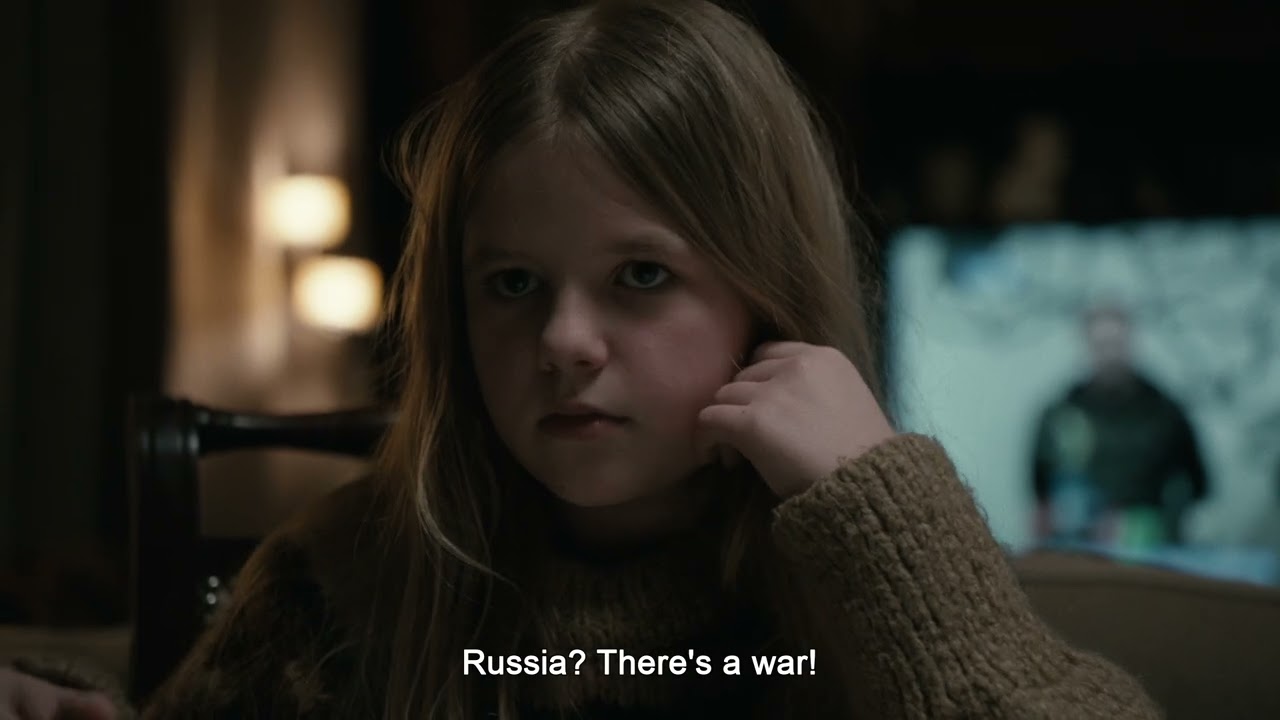
Amelija Adomaitytė (Dovile) — the film’s silent moral centre — manages her parents’ dissolution with a maturity that highlights, by contrast, exactly how equipped for sacrifice neither of her parents actually is.
Conclusion: A Sundance Directing Award Winner That Delivers the Most Formally Precise Lithuanian Portrait of Performative Activism in Recent International Arthouse Cinema
The Sundance directing prize positions the film for wider international distribution through New Europe Film Sales. The Göteborg and Hong Kong nominations confirm cross-continental critical recognition. Blaževičius’s three-film progression confirms the formal maturity that the Sundance jury recognised with its award.
What Movie Trend Is Followed: The Eastern European Dark Comedy Applies the Domestic Dissolution Drama to a War-Adjacent Context — With the Most Precise Critique of Liberal Privilege in Recent International Cinema
How to Divorce During the War belongs to the Central and Eastern European dark comedy tradition — Haneke’s formal vocabulary as acknowledged reference, Marriage Story as the American domestic dissolution film it explicitly diverges from, and the specific post-Soviet European political comedy that uses intimate domestic dynamics to expose the hypocrisy of the comfortable class in a geopolitically unstable neighbourhood. Blaževičius’s specific contribution is the war as an inconvenience for the privileged — not as tragedy for those living it, but as a complication for those adjacent to it who would prefer to feel heroic without disrupting their comfort.
Trend Drivers: The Long-Take Domestic Architecture, the Performative Activism Critique, and the Child as the Film’s Moral Anchor
-
The long-take discussion sequences — what IMDb reviewer jakebunker identified as shots lasting 30 seconds to five minutes — give the film’s domestic confrontations a real-time weight that conventional editing would dissolve.
-
The performative activism critique — both Marija and Vytas sublimate their marital selfishness into public displays of Ukrainian solidarity that are equally self-serving — is the film’s most politically precise observation and its most universal comic argument.
-
Dovile as the silent moral centre gives the film its most affecting emotional register: a child who manages the adults’ dissolution with more maturity than either adult can manage the war’s implications.
-
The gradual dimming and cluttering of the apartment — Naujalis’s most formally accomplished visual argument — gives the film’s emotional deterioration a spatial and visual documentation that exceeds what dialogue alone could achieve.
What Is Influencing Trend: New Europe Film Sales and the Sundance World Cinema Pipeline
-
New Europe Film Sales’ international distribution gives the film the Eastern European arthouse infrastructure that a post-Sundance directing award requires to reach European and North American theatrical audiences.
-
The Sundance World Cinema Dramatic Competition’s consistent championing of Central and Eastern European domestic drama — positioned as an alternative to the American prestige film tradition — gives How to Divorce During the War its most commercially authoritative launch platform.
-
Blaževičius’s Runner established a critical foundation that positions How to Divorce During the War as a progression rather than a debut — giving international critics and programmers a directorial trajectory to follow.
Macro Trends Influencing: The Ukraine War as a Mirror for Western Liberal Self-Examination and the Domestic Dissolution Drama’s Evolution
-
The Russia-Ukraine war’s impact on how Western and Central European comfortable classes perform solidarity — posting support while struggling with the actual inconvenience of hosting refugees — is one of contemporary European cinema’s most urgent and least satirically examined subjects.
-
Lithuania’s specific geographic and historical position — a NATO country with Russian borders, direct memory of Soviet occupation, and a large Ukrainian diaspora — gives the film a geopolitical specificity that distinguishes it from Western European films addressing the same subject from a safer distance.
-
The domestic dissolution drama — from Bergman through Haneke through Marriage Story — is one of international arthouse cinema’s most consistently rewarded genre entries; How to Divorce During the War adds a layer of geopolitical irony that the tradition has not previously addressed.
Consumer Trends Influencing: The Sundance International Discovery Circuit and the Arthouse Audience for Eastern European Cinema
-
The Sundance World Cinema Competition directing award is one of the most reliable international distribution triggers for Eastern European films — generating immediate press attention, sales conversation, and the critical credibility that arthouse theatrical programmers require.
-
The Eastern European arthouse audience — activated by the Haneke comparison, the Lithuanian specificity, and the war-adjacent subject — is one of international cinema’s most engaged and most critically active demographic communities.
-
The combination of dark comedy and domestic dissolution creates the most commercially accessible entry point for the film’s political argument — an audience that might resist a straightforwardly political film about the Ukraine war will follow the same argument through the lens of a failing marriage.
Audience Analysis: International Arthouse Drama Audiences, Eastern European Cinema Followers, and the Sundance Discovery Community
The core audience is 28–55 — international arthouse drama audiences who follow Sundance World Cinema competition programmes, Eastern European cinema followers who track the Lithuanian new wave emerging through Blaževičius’s work, and the politically engaged arthouse audience that responds to dark comedy as the most effective delivery mechanism for satire about liberal self-deception. The Haneke comparison activates the formal arthouse audience; the dark comedy accessibility activates a broader international theatrical audience.
Conclusion: A Formally Precise Eastern European Dark Comedy That Earned Its Directing Award Through the Consistency of Its Satirical Vision and the Lived-In Authority of Its Central Performances
The Sundance directing award confirms that Blaževičius’s long-take formal approach and his critique of performative activism are not stylistic choices but a coherent satirical vision that the jury recognised as one of the competition’s most formally authoritative entries. The Jakštaitė-Repšys collaboration — now across two features — delivers performances with the accumulated trust that gives the film its most affecting emotional foundation.
Final Verdict: A Formally Assured Lithuanian Dark Comedy That Earns Its Sundance Directing Award Through Satirical Precision and Two Performances of Complete Mutual Understanding
Blaževičius delivers a film of genuine formal maturity — the long-take architecture, the apartment’s gradual visual deterioration, and the Chablis-dry wit are all precisely calibrated to deliver the same argument: that the comfortable class’s response to geopolitical catastrophe reveals its actual moral capacity more clearly than any ideological declaration. The Jakštaitė-Repšys central partnership gives the film the lived-in credibility that its satirical targets require, and Dovile’s silent centrality gives it its most affecting emotional counterweight.
Audience Relevance: For International Arthouse Audiences Who Want Eastern European Dark Comedy That Is Politically Precise Without Being Preachy
Works best for arthouse drama audiences who respond to the Haneke formal register applied to dark comedy, viewers who follow Sundance World Cinema Competition award winners as discovery signals, and the international audience for Baltic cinema who recognise Lithuania’s specific geopolitical position as the film’s most resonant formal context.
What Is the Message of Movie: The War Is Not the Problem — the Comfortable Class’s Inability to Sustain the Inconvenience of Genuine Solidarity Is the Problem
The film’s most precise satirical argument — delivered through both Marija’s complaints about the Ukrainian family’s mess and Vytas’s ego-inflated relief efforts — is that performative activism is always more comfortable than the sustained inconvenience of actual responsibility. Lithuania’s geographic position makes the argument more concentrated: close enough to the war to feel obligated, far enough away to remain comfortable.
Relevance to Audience: A Film That Gives the Internationally Engaged Arthouse Audience Its Most Precise Available Satire of Its Own Liberal Self-Deception
The audience for How to Divorce During the War is the same comfortable, politically engaged, international arthouse demographic that the film’s central characters represent — giving it an unusually direct relationship between subject and viewer that the Sundance audience’s nervous laughter confirmed is exactly the discomfort Blaževičius intended to produce.
Social Relevance: The Refugee Crisis as a Domestic Inconvenience — and Lithuania as the Most Precise Geographic Lens for Western Liberal Discomfort
The Ukrainian refugee family living in Marija’s spare room — jammed into Vytas’s former office, eventually complained about — is the film’s most socially specific and most politically accurate observation about how international solidarity functions when it encounters the actual living conditions of displacement. Lithuania’s NATO membership, Russian border, and Soviet history give the argument its most historically grounded context.
Performance: Jakštaitė’s Luminous Restraint and Repšys’s Warm, Grounded Specificity Give the Film Its Most Commercially Reliable Foundation
Jakštaitė’s Marija — a woman who has made a decision and refuses to be deflected, whose own privilege is rendered through restraint rather than overstatement — is the film’s most formally difficult performance and the one that multiple reviews described first. Repšys’s Vytas — warm, grounded, sympathetic even as his ego-inflation is visible — gives the film the performance that makes the audience wish the marriage could work even knowing it cannot. Adomaitytė’s Dovile is the film’s most quietly devastating contribution.
Legacy: A Third Feature That Confirms Blaževičius as One of Eastern Europe’s Most Formally Assured and Politically Precise Dark Comedy Directors
How to Divorce During the War will be remembered as the film that announced Blaževičius to the international arthouse community with the formal authority that Runner had established domestically, and as the most precise satirical portrait of performative liberal activism in Eastern European cinema since the Ukraine invasion began.
Success: Sundance Directing Award — Grand Jury Prize Nominee — 1 Win and 3 Nominations
-
Sundance 2026 Directing Award, World Cinema Dramatic — win. Grand Jury Prize nominee.
-
Göteborg Dragon Award nominee. Hong Kong Golden Firebird Award nominee.
-
World premiere Sundance January 26, 2026. International sales: New Europe Film Sales, Warsaw. IMDb 7.0 from 108 viewers.
The Sundance directing award confirmed the film’s international standing. New Europe Film Sales confirmed the distribution pathway. The Haneke comparison confirmed the formal lineage. All three are accurate.
How to Divorce During the War proves that the most honest films about liberal self-deception are the ones where the characters never realise they are the targets — and that Blaževičius understood this well enough to make his audience laugh nervously and cringe simultaneously.
Insights: A formally precise Lithuanian dark comedy that earns its Sundance directing award through the surgical consistency of its satirical vision — the long-take domestic architecture, the apartment’s gradual visual deterioration, and the Chablis-dry wit all deliver the same argument about the comfortable class’s actual moral capacity in conditions of geopolitical crisis. Industry Insight: The Sundance World Cinema Dramatic directing award is one of international arthouse cinema’s most reliable distribution triggers for Eastern European films — and New Europe Film Sales’ positioning gives How to Divorce During the War the international circuit infrastructure that a three-festival competition entry of this quality warrants. Audience Insight: The Sundance audience’s “uncomfortable laughter” response — nervous chuckling, cringing, tearing up simultaneously — is the most precise available description of the film’s commercial effect and the word-of-mouth quality that will sustain its distribution trajectory; an audience that leaves the cinema unsettled is an audience that talks about what it just saw. Social Insight: A film in which a Ukrainian refugee family is jammed into a spare room and eventually complained about, set in a country that is close enough to the war to feel obligated and far enough away to remain comfortable, is making the most geographically precise and most politically honest available observation about how international solidarity functions when it encounters the actual inconvenience of displacement. Cultural Insight: Blaževičius’s three-feature progression — confirmed by the Sundance directing prize — positions him as one of Eastern European cinema’s most formally assured and most politically necessary new voices, and establishes the Jakštaitė-Repšys collaboration as one of contemporary Lithuanian cinema’s most productive and most trusted creative partnerships.
Conclusion: A Sundance Directing Award Winner That Delivers the Most Formally Precise Eastern European Satire of Performative Liberal Activism in Recent International Cinema — and Confirms Blaževičius as a Director of Fully Matured International Authority
The long-take formal discipline, the Jakštaitė-Repšys lived-in central partnership, and the refusal to resolve what cannot be neatly resolved confirm How to Divorce During the War as a work of complete formal intention. Blaževičius has arrived at the level of international recognition that Runner’s domestic critical standing promised, and the directing award confirms that the progression is real and the next feature will be one of Eastern European cinema’s most closely watched.
Summary: One Divorce Announcement, One Russian Invasion, and Two People Who Cannot Separate Without Proving Exactly Who They Are
-
Movie themes: The comfortable class’s inability to sustain the inconvenience of genuine solidarity, performative activism as a sublimation of domestic selfishness, the child who manages what the adults cannot, Lithuania’s geographic position as a mirror for Western liberal discomfort, and the argument that moving on is impossible when you have not yet understood what you are moving from.
-
Movie director: Andrius Blaževičius — The Saint (2016), Runner (2021) — delivers his most formally assured and politically precise feature: the long-take architecture, the Haneke formal reference, and the dark comedy register are precisely calibrated to deliver the same satirical argument through every available cinematic register simultaneously.
-
Top casting: Jakštaitė’s luminous restraint gives Marija the formal difficulty the film’s satirical target requires — a woman whose privilege is visible through what she cannot acknowledge. Repšys’s warm, grounded Vytas gives the film the sympathy that makes the argument morally complex rather than simply condemnatory. Adomaitytė’s Dovile is the film’s most quietly devastating contribution.
-
Awards and recognition: Sundance 2026 Directing Award, World Cinema Dramatic. Grand Jury Prize nominee. Göteborg Dragon Award nominee. Hong Kong Golden Firebird Award nominee. 1 win and 3 nominations. World premiere Sundance January 26, 2026.
-
Why to watch: The Lithuanian dark comedy that makes its audience laugh nervously and cringe simultaneously — a Sundance directing award winner that delivers its satirical argument about performative liberal activism through two career-defining performances and a formal precision that Variety compared to the most rigorous European arthouse tradition.
-
Key success factors: The Sundance directing prize institutional validation plus the Jakštaitė-Repšys creative partnership plus Naujalis’s precise cinematography plus New Europe Film Sales’ distribution infrastructure plus the dark comedy accessibility plus the geopolitical specificity of Lithuania’s position between Russia and Ukraine.
-
Where to watch: International distribution via New Europe Film Sales, Warsaw. Theatrical distribution pending following Sundance award. Check JustWatch for current availability.
Conclusion: The Most Formally Precise and Politically Accurate Eastern European Satire of Liberal Self-Deception Since the Ukraine Invasion Began — and a Directing Award That Confirms a Fully Matured International Voice
The award is earned. The satirical vision is consistent. The Jakštaitė-Repšys collaboration, now across two features, has arrived at a formal and emotional authority that the Sundance jury recognised with its top prize. Blaževičius’s fourth feature is the one international arthouse cinema should be anticipating.






Leave a Reply