
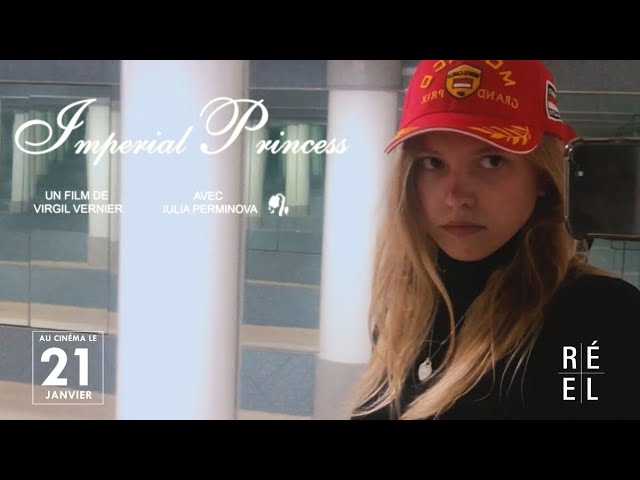
An Observational Documentary About Status, Identity, and the Fantasies That Shape Modern Life
Sometimes the most revealing portraits are not about power itself, but about the people who dream of belonging to it.
Imperial Princess is a 48-minute documentary directed by Virgil Vernier that continues the filmmaker’s fascination with contemporary society, social aspiration, and the fragile relationship between image and identity. Through an observational documentary approach, the film explores individuals navigating worlds shaped by status, appearance, ambition, and belonging. Rather than relying on interviews or traditional explanatory narration, Vernier focuses on atmosphere, behavior, and everyday interactions, allowing larger social realities to emerge organically. The documentary examines themes of class, privilege, aspiration, performance, loneliness, and self-invention in modern Europe. By observing people who exist close to the symbols of power and prestige, the film reveals the emotional realities hidden beneath social fantasies. Ultimately, Imperial Princess becomes both an intimate portrait and a reflection on how contemporary society constructs dreams of status, success, and belonging.
➡️ Implication: Modern documentary filmmaking increasingly uses observational storytelling to examine how identity is shaped by social aspiration and cultural symbolism.
Why It Is Trending: Audiences continue embracing intimate documentaries that explore contemporary social realities
Documentary audiences increasingly seek films that examine modern life through personal observation rather than conventional reporting.
Imperial Princess has attracted attention largely because of the reputation of Virgil Vernier, whose work often explores overlooked corners of European society through poetic and unconventional perspectives. The film resonates with viewers interested in documentaries that blur the line between social observation and cinematic portraiture. Its exploration of status, aspiration, and belonging feels particularly relevant in a world increasingly influenced by image, visibility, and social performance. The documentary’s concise runtime also makes its observations focused and accessible without sacrificing thematic depth. Festival audiences have been especially receptive to its reflective and immersive style.
➡️ Implication: Contemporary documentary audiences increasingly favor character-driven films that reveal larger cultural truths through individual experiences.
Elements Driving the Trend: Social aspiration, identity, and observational realism
The documentary builds engagement through its subtle exploration of how people define themselves within social hierarchies.
Themes surrounding status, image, belonging, ambition, class, and self-perception strengthen the film’s cultural relevance. Rather than presenting explicit arguments, the documentary allows viewers to observe how individuals navigate environments shaped by prestige and social expectations. This observational approach creates space for interpretation while encouraging reflection on broader social structures. The film’s minimalist style further enhances its authenticity and emotional resonance. Together, these elements create a compelling portrait of aspiration in contemporary society.
➡️ Implication: Documentary cinema increasingly explores major social themes through intimate observations of everyday life.
Virality of Movie (Social Media Coverage): Discussion driven by festival audiences and documentary enthusiasts
The film’s visibility has largely emerged through festival circuits and arthouse film communities.
Online discussions frequently focus on Virgil Vernier’s distinctive documentary style and his ability to capture social realities through observation rather than direct commentary. Viewers interested in documentary cinema often highlight the film’s atmosphere, ambiguity, and subtle social critique. Discussions also examine how the documentary portrays aspiration, identity, and status without offering simplistic conclusions. This interpretive quality has helped the film find a dedicated audience among cinephiles and documentary enthusiasts.
➡️ Implication: Observational documentaries increasingly generate engagement through interpretation and thematic discussion rather than conventional narrative structure.
Critics Reception: Appreciation for its observational approach and social insight
Critical response has primarily focused on the documentary’s observational precision and thematic richness.
Reviewers and festival audiences have noted Vernier’s ability to transform everyday moments into reflections on broader social realities. The documentary’s minimalist style, attention to detail, and refusal to impose overt conclusions have been viewed as strengths by audiences familiar with contemporary European documentary cinema. Critics have particularly appreciated the film’s ability to explore issues of identity, aspiration, and social positioning through subtle observation rather than direct explanation. The result is a documentary that rewards close attention and reflection.
➡️ Implication: Contemporary documentary filmmaking continues gaining recognition through restraint, observation, and thematic nuance.
Awards and Recognitions: International documentary festival recognition
Imperial Princess received 1 major international festival nomination.
Its most significant recognition came at the prestigious Cinéma du Réel, where director Virgil Vernier earned a nomination for the Cinéma du Réel Award in the International Competition section. As one of the world’s most respected documentary festivals, selection within the International Competition represents significant recognition for artistic achievement and documentary innovation. The nomination helped position Imperial Princess within the global documentary conversation and reinforced Vernier’s reputation as an important contemporary documentary voice.
➡️ Implication: Festival recognition remains a key indicator of artistic credibility and international visibility within documentary cinema.
Director and Cast: Virgil Vernier’s observational lens transforms ordinary lives into reflections of contemporary society
Directed by Virgil Vernier, Imperial Princess continues the filmmaker’s distinctive approach to documentary storytelling, combining social observation, atmospheric filmmaking, and intimate portraiture. Rather than constructing a conventional documentary driven by interviews or narration, Vernier allows reality to unfold naturally through behavior, environment, and everyday interactions. His filmmaking style emphasizes ambiguity and observation, encouraging viewers to actively interpret the social dynamics presented on screen.
As with much of Vernier’s work, the focus is less on celebrity subjects and more on the people and environments that reveal broader cultural truths. The documentary examines how individuals navigate systems of status, aspiration, image, and belonging, transforming personal experiences into reflections of contemporary European society. Through careful observation, Vernier reveals the tensions that exist between social fantasy and lived reality.
The film’s strength lies not in dramatic revelations but in its ability to capture subtle moments of self-presentation, vulnerability, ambition, and uncertainty. By observing individuals positioned near symbols of prestige and privilege, the documentary explores how social aspirations shape personal identity. This approach creates an intimate viewing experience that feels both highly specific and universally relatable.
Produced by Petit Film, the documentary demonstrates the continued vitality of European observational documentary filmmaking. Its concise runtime of 48 minutes allows Vernier to maintain focus while delivering a nuanced examination of contemporary social realities.
➡️ Implication: Observational documentary filmmakers increasingly use intimate character studies to explore broader questions of class, identity, and social aspiration.
Conclusion: A subtle documentary examining the dreams and identities created by modern society
Imperial Princess transforms everyday observation into a thoughtful exploration of status, belonging, aspiration, and self-perception. Through a restrained documentary approach, Virgil Vernier reveals how contemporary individuals construct meaning and identity within environments shaped by social expectations and cultural symbolism. The film’s strength lies in its ability to suggest larger truths without imposing simple conclusions, allowing viewers to engage directly with its observations. Its nomination at the prestigious Cinéma du Réel further highlights its artistic credibility within the international documentary landscape. By focusing on personal experiences rather than explicit social commentary, the documentary achieves both intimacy and broader cultural relevance. Ultimately, Imperial Princess becomes both a portrait of contemporary aspiration and a reflection on the fantasies that continue shaping modern life.
➡️ Implication: Character-focused observational documentaries will continue growing in importance as audiences seek nuanced explorations of identity, class, and social belonging.
What Movie Trend Is Followed: Observational documentaries exploring aspiration, status, and identity in contemporary society
Imperial Princess follows the growing trend of observational documentaries that examine social structures through intimate portraits of individuals navigating questions of identity, belonging, and aspiration.
Rather than focusing on major political events or investigative reporting, the film explores how ordinary people interact with symbols of prestige, status, and social success. Similar contemporary documentaries increasingly use personal observation to reveal larger cultural and economic realities. The movie also reflects growing audience interest in stories about image, self-presentation, class mobility, and the pursuit of belonging within highly visible social environments. Its minimalist approach aligns with a broader movement toward documentary filmmaking that prioritizes observation over explanation. This creates a narrative where social aspiration becomes a lens through which broader cultural values can be examined.
➡️ Implication: Contemporary documentary cinema increasingly investigates social structures through personal experiences rather than institutional analysis.
Trend Drivers: Growing fascination with identity and social performance
Audiences increasingly connect with documentaries that examine how people construct and present themselves.
Stories exploring status, aspiration, visibility, and belonging resonate because they reflect everyday social realities. Viewers are often drawn to narratives that reveal the gap between public image and private experience. The rise of image-driven culture has further strengthened interest in documentaries examining self-perception and social ambition. These themes create strong engagement because they remain universally recognizable.
➡️ Implication: Identity-centered storytelling continues becoming one of the most influential trends within contemporary documentary filmmaking.
What Is Influencing Trend: Increased focus on class, visibility, and aspiration
Modern documentary filmmakers increasingly explore how economic and social systems influence personal identity.
Contemporary audiences show strong interest in stories examining privilege, class structures, status symbols, and social mobility. These narratives resonate because they connect personal experiences with broader societal forces. Rather than presenting abstract discussions of inequality, filmmakers often focus on how individuals experience these realities in everyday life. This approach creates greater emotional accessibility and audience engagement.
➡️ Implication: Personal storytelling continues serving as an effective way to explore complex social issues.
Macro Trends Influencing: The rise of observational social documentaries
Across international cinema, documentaries increasingly prioritize observation and immersion.
Audiences often prefer films that trust viewers to draw their own conclusions rather than delivering explicit arguments. Observational documentaries allow social realities to emerge organically through behavior, environment, and interaction. This trend reflects broader interest in authenticity, nuance, and ambiguity within nonfiction storytelling. The movement has become especially prominent within European documentary cinema.
➡️ Implication: Observational filmmaking continues redefining how documentaries engage with contemporary social issues.
Consumer Trends Influencing: Demand for authentic and reflective nonfiction storytelling
Modern audiences increasingly seek documentaries that encourage reflection rather than provide direct answers.
Viewers often engage more deeply with films that present complex realities without simplifying them. Documentary audiences particularly value authenticity, emotional nuance, and character-driven narratives. The preference for immersive experiences also supports films that emphasize atmosphere and observation. These trends strongly align with the filmmaking approach seen in Imperial Princess.
➡️ Implication: Reflective and character-focused documentaries continue attracting sophisticated documentary audiences.
Audience Analysis: Festival audiences and documentary enthusiasts seeking social insight
The film primarily appeals to viewers aged 25–65 interested in documentary cinema, social observation, European arthouse filmmaking, and contemporary cultural analysis.
These audiences value subtle storytelling, thematic depth, and films that explore identity through lived experience. Festival audiences especially appreciate documentaries that reveal social realities through intimate personal portraits. Viewers interested in class, status, aspiration, and cultural identity will find particular relevance within the film’s themes. The documentary’s observational style further strengthens its appeal among cinephiles and nonfiction-film enthusiasts.
➡️ Implication: Documentary audiences increasingly support films that blend social insight with artistic and observational filmmaking techniques.
Conclusion: A documentary trend where personal observation reveals broader social realities
The trend reflected in Imperial Princess demonstrates how contemporary documentary cinema increasingly uses intimate observation to explore identity, aspiration, and social belonging. These films resonate because they reveal how larger social systems influence individual lives. Stories centered on personal experiences create deeper audience engagement when they connect private realities with broader cultural dynamics. The rise of observational documentaries also reflects growing audience demand for authenticity, nuance, and interpretive storytelling. These projects succeed through subtlety, immersion, and human insight. Ultimately, the trend represents a broader movement toward documentaries that examine society through the everyday experiences of individuals navigating its structures.
➡️ Implication: Observational social documentaries will continue shaping the future of nonfiction cinema by transforming personal stories into reflections of contemporary culture.
Final Verdict: A subtle documentary about aspiration, identity, and the social fantasies that shape modern life
Imperial Princess succeeds because it transforms quiet observation into a thoughtful exploration of status, belonging, image, and self-perception. Rather than presenting direct arguments or investigative revelations, the film invites audiences to observe how individuals navigate social structures shaped by prestige, aspiration, and cultural symbolism. Virgil Vernier creates a documentary that finds meaning in everyday interactions, allowing larger social realities to emerge naturally from personal experiences. The film’s greatest strength lies in its restraint, trusting viewers to interpret its observations without imposing definitive conclusions. Its themes of identity, class, ambition, visibility, and belonging create a reflective and intellectually engaging viewing experience. Ultimately, the documentary becomes both a portrait of contemporary aspiration and a meditation on the dreams people build around status and recognition.
➡️ Implication: Modern documentary cinema increasingly favors observation and interpretation over explicit commentary.
Audience Relevance: Appeals to viewers interested in contemporary society and human behavior
The film strongly connects with audiences interested in documentaries exploring identity, class, and social dynamics.
Its themes of aspiration, image, belonging, and self-definition resonate because they reflect everyday experiences within modern society. Viewers interested in social observation and European documentary cinema will appreciate the film’s nuanced approach. The documentary’s intimate perspective allows audiences to engage with broader cultural issues through personal stories. This creates strong appeal among festival audiences and documentary enthusiasts.
➡️ Implication: Audiences increasingly seek documentaries that reveal social realities through human experiences rather than statistics or analysis.
What Is the Message of Movie: The pursuit of status often reveals deeper questions about identity and belonging
The film explores how social aspirations influence the ways people see themselves and others.
The narrative suggests that symbols of prestige and success carry emotional significance far beyond their material value. Individuals often seek status not simply for recognition but for connection, acceptance, and personal meaning. Through observation rather than judgment, the documentary reveals how aspirations become intertwined with identity. The story ultimately portrays belonging as one of the most powerful motivations shaping human behavior.
➡️ Implication: Contemporary documentaries increasingly examine social ambition as an emotional and psychological experience.
Relevance to Audience: Reflects modern concerns surrounding image, status, and self-worth
The documentary resonates because its themes remain highly relevant within contemporary culture.
Audiences frequently navigate environments influenced by visibility, social comparison, and personal branding. The film reflects broader conversations surrounding class, aspiration, identity, and social mobility. Its observations encourage viewers to reflect on their own relationships with success and belonging. This relevance strengthens the documentary’s cultural significance.
➡️ Implication: Stories exploring identity through social aspiration continue gaining importance in modern nonfiction cinema.
Social Relevance: A portrait of contemporary society through individual experience
The film examines larger social structures through personal observation.
Its focus on status, aspiration, and belonging reflects ongoing discussions surrounding class, privilege, and social opportunity. Rather than analyzing these issues from a political perspective, the documentary explores how they shape everyday lives. This human-centered approach encourages empathy and reflection rather than debate. The result is a nuanced portrait of contemporary social realities.
➡️ Implication: Documentary filmmakers increasingly explore social issues through intimate and character-driven storytelling.
Performance: Real-life presence becomes the documentary’s emotional foundation
As an observational documentary, the film’s impact comes from the authenticity of its subjects rather than traditional performances.
The individuals captured by Vernier’s camera provide moments of vulnerability, ambition, confidence, uncertainty, and aspiration that feel genuine and unscripted. Their presence allows larger social themes to emerge naturally through behavior and interaction. This authenticity strengthens the film’s emotional and intellectual impact. The documentary’s power comes from observation rather than dramatic construction.
➡️ Implication: Authenticity remains one of the most valuable assets within contemporary documentary filmmaking.
Legacy: Part of the evolution of observational European documentary cinema
The film aligns with a growing movement of documentaries that blur the boundaries between social observation, portraiture, and cultural analysis.
Its focus on aspiration, identity, and social performance reflects broader trends within contemporary European nonfiction cinema. The project contributes to a tradition of documentaries that examine society through intimate portraits rather than broad institutional analysis. Its nomination at Cinéma du Réel further reinforces its place within the international documentary landscape. Over time, the film may be viewed as part of a broader movement toward reflective and observational documentary storytelling.
➡️ Implication: Observational documentaries will continue expanding their influence within international nonfiction cinema.
Success: Defined by artistic observation and festival recognition
The film’s success comes primarily through its artistic approach and thematic relevance.
Audience engagement is driven by the documentary’s observational style, social insight, and ability to reveal larger cultural realities through everyday experiences. Its nomination for the Cinéma du Réel Award in the International Competition section represents significant recognition within the documentary world. The project succeeds through subtlety, atmosphere, and intellectual engagement rather than dramatic storytelling. Its strength lies in encouraging reflection rather than providing answers.
➡️ Implication: Festival recognition continues rewarding documentaries that combine artistic vision with meaningful social observation.
Insights: Imperial Princess uses observation to reveal how aspiration, status, and belonging influence contemporary identity. Industry Insight: Documentary cinema increasingly embraces immersive observation as a way to explore complex social realities. Consumer Insight: Audiences strongly connect with nonfiction stories that reveal larger cultural truths through personal experiences. Social Insight: The film highlights how social status and aspiration continue shaping human behavior and self-perception. Cultural/Brand Insight: Modern societies increasingly construct identity through symbols of visibility, prestige, and belonging. Final Insight: The documentary demonstrates that the pursuit of status often reveals deeper human desires for connection, meaning, and recognition.
Conclusion: A reflective portrait of aspiration in contemporary society
Imperial Princess transforms everyday observation into a nuanced exploration of identity, ambition, status, and belonging. Through a restrained and immersive documentary approach, Virgil Vernier captures the subtle ways individuals navigate social expectations and cultural ideals. The film’s strength lies in its ability to reveal larger societal dynamics through intimate moments and personal experiences. Its recognition at Cinéma du Réel highlights its significance within contemporary documentary cinema. By focusing on observation rather than explanation, the documentary encourages viewers to engage actively with its themes. Ultimately, Imperial Princess becomes both a compelling social portrait and a thoughtful reflection on the aspirations that continue shaping modern life.
➡️ Implication: Observational documentaries will remain essential tools for understanding the cultural and emotional realities of contemporary society.
Summary of the Movie: An observational documentary about status, belonging, and the pursuit of identity in contemporary society
• Movie themes: Identity, social aspiration, status, class, belonging, self-perception, image, privilege, visibility, and modern ambition — the documentary explores how individuals navigate environments shaped by prestige, social expectations, and cultural symbolism while searching for meaning and acceptance.
➡️ Implication: Contemporary documentaries increasingly examine how social aspirations influence personal identity and emotional well-being.
• Movie director: Virgil Vernier delivers a minimalist and observational documentary that blends social portraiture, cultural analysis, and intimate human observation. His filmmaking style favors ambiguity and immersion, allowing viewers to draw their own conclusions about the social realities unfolding on screen.
➡️ Implication: European documentary filmmakers increasingly rely on observation rather than narration to explore contemporary social issues.
• Top casting: As an observational documentary, Imperial Princess is driven by the presence of its real-life subjects rather than traditional performances. Vernier’s camera focuses on individuals navigating worlds shaped by status, aspiration, and social symbolism, allowing authentic behavior and personal experiences to reveal broader cultural truths.
➡️ Implication: Authenticity continues becoming one of the defining characteristics of contemporary documentary storytelling.
• Awards and recognition: The documentary received 1 major international festival nomination. Its most important recognition came at the prestigious Cinéma du Réel, where Virgil Vernier earned a nomination for the Cinéma du Réel Award in the International Competition section. As one of the world’s leading documentary festivals, selection within the International Competition represents significant recognition for artistic achievement and documentary innovation. The nomination helped establish the film’s visibility within the international nonfiction cinema landscape.
➡️ Implication: Festival recognition remains one of the strongest indicators of artistic quality within documentary filmmaking.
• Why to watch movie: A strong choice for viewers who enjoy observational documentaries, European arthouse cinema, social portraiture, cultural analysis, and films that encourage interpretation rather than provide direct answers.
➡️ Implication: Audiences increasingly support documentaries that prioritize observation, nuance, and reflection.
• Key success factors: Observational filmmaking, social relevance, thematic depth, minimalist storytelling, cultural insight, festival recognition, and Virgil Vernier’s distinctive cinematic voice.
➡️ Implication: Documentary films increasingly succeed through perspective, atmosphere, and human insight rather than informational content alone.
• Where to watch: Released on January 21, 2026, in France. Produced by Petit Film. Runtime: 48 minutes. Language: French.
➡️ Implication: Short-form documentary formats continue providing filmmakers with opportunities to deliver focused and artistically ambitious nonfiction works.
Conclusion: A subtle and insightful reflection on aspiration and belonging
Imperial Princess transforms everyday observation into a thoughtful exploration of identity, status, ambition, and social belonging. Through its restrained documentary approach, Virgil Vernier reveals how contemporary individuals navigate environments shaped by prestige, visibility, and aspiration. The film’s strength lies in its ability to uncover broader social realities through intimate moments and human behavior rather than explicit commentary. Its nomination at Cinéma du Réel confirms its significance within the international documentary community and highlights its artistic credibility. By encouraging observation and interpretation, the documentary invites viewers to reflect on their own relationships with status, identity, and belonging. Ultimately, Imperial Princess becomes both a compelling social portrait and a meditation on the aspirations that continue shaping modern life.
➡️ Implication: Observational documentaries will remain powerful tools for examining how contemporary societies shape individual dreams, identities, and perceptions of success.






Leave a Reply