
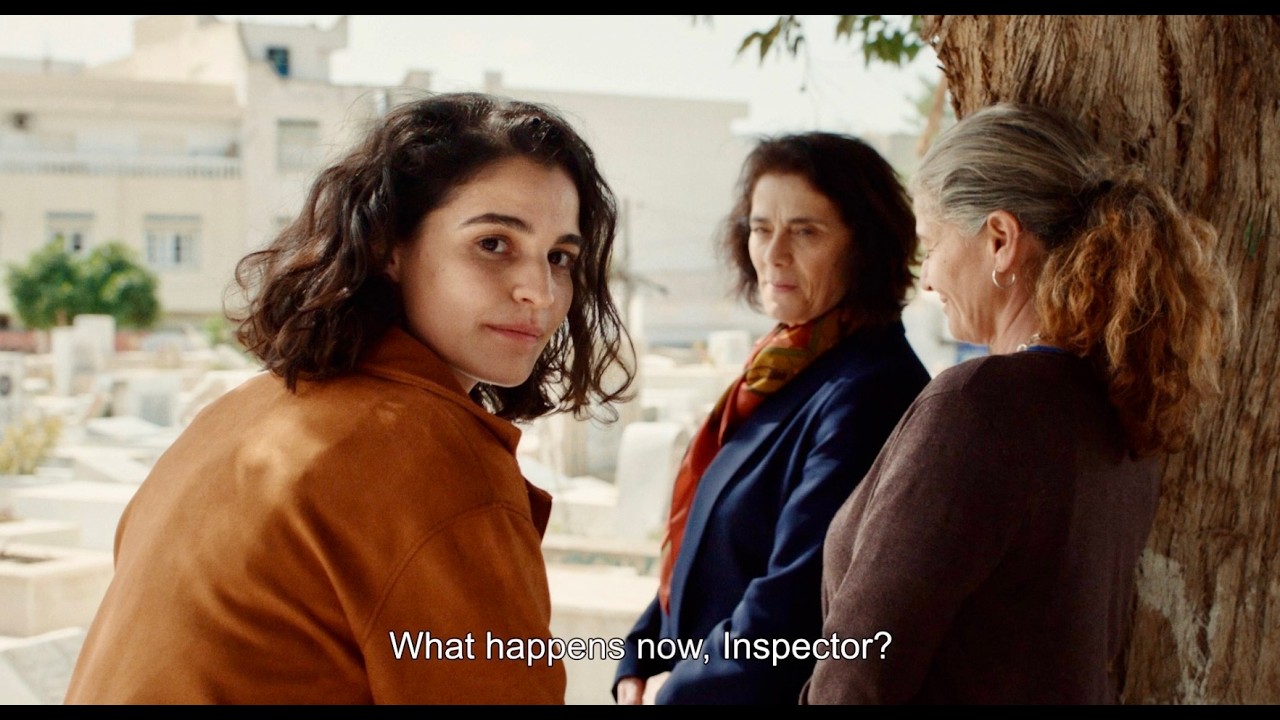
France, Tunisia | 2026 | 111 min | Drama
A Homecoming That Uncovers Buried Family Secrets
After the death of her uncle, Lilia returns from Paris to Tunisia and finds herself back inside a family that knows surprisingly little about the life she has built abroad. What begins as a return shaped by grief develops into something more unsettling when questions surrounding her uncle’s death lead Lilia toward secrets that have remained hidden within the family.
Leyla Bouzid uses the mystery as an entry point into a more intimate story about identity, belonging and the things families choose not to say. Lilia’s Paris life and relationships contrast with the version of her that exists within her Tunisian family, turning the journey home into a confrontation between the person she has become and the identity others still expect her to inhabit.
➡️ Key Takeaway: In a Whisper turns a mysterious death into an intimate homecoming story about family secrets, hidden identities and the uncomfortable truths waiting beneath familiar relationships.
Should You Watch It?: A Family Mystery Where Coming Home Means Confronting the Past
In a Whisper should appeal to viewers who enjoy family dramas where mystery creates momentum without taking attention away from character. Lilia wants to understand what happened to her uncle, but every question pulls her further into the relationships, memories and silences surrounding her family. The mystery therefore becomes less about solving a puzzle than discovering what those closest to her have chosen to conceal.
The France-Tunisia connection gives that investigation another dimension. Lilia has constructed an adult life in Paris that her family does not fully know, making her simultaneously an insider and outsider when she returns home. Bouzid uses that distance to explore the complicated experience of belonging to a family while realizing that belonging does not necessarily mean being understood.
➡️ Key Takeaway: Watch In a Whisper for a layered family mystery where uncovering the past forces a woman to reconsider home, identity and everything her family has left unsaid.
Why Everyone Is Talking About It?: Leyla Bouzid Turns a Family Mystery Into a Berlinale Competition Film
In a Whisper premiered in the Competition of the 76th Berlin International Film Festival in 2026, where it competed for the Golden Bear. The selection placed Bouzid’s France-Tunisia production at the center of the international festival conversation, while the film also received a Teddy Award nomination. Its cast brings together Eya Bouteraa, Hiam Abbass, Salma Baccar and Marion Barbeau within a story spanning generations of women.
But its relevance extends beyond festival recognition. Lilia’s return connects migration, female independence, generational expectations and family secrecy through the emotionally recognizable experience of going home after building a different life elsewhere. The mysterious death supplies the narrative hook; the deeper tension comes from discovering how much distance can exist between the identity someone creates for herself and the person her family believes her to be.
➡️ Key Takeaway: In a Whisper stands out by turning a mysterious death into something more personal—a confrontation between the family we inherit, the identity we create and the secrets connecting the two.
Movie Trend: Diaspora & Family — Returning Home Reveals the Life You Left Behind
In a Whisper uses Diaspora and Family to make Lilia’s return to Tunisia more than a conventional homecoming. She has built an adult life in Paris that her relatives do not fully know, yet the death of her uncle pulls her back into the relationships, expectations and unresolved histories she left behind. The tension comes from discovering that distance has changed both her relationship with home and the person she is within it.
The mysterious death deepens that conflict by forcing Lilia to investigate a family whose silences increasingly mirror her own. She wants answers about the past while carrying private parts of her present life, turning the story into a two-way confrontation between generations. Rather than asking whether Lilia belongs in Paris or Tunisia, Bouzid explores the more contemporary reality of belonging to both while feeling completely understood by neither.
➡️ Key Takeaway: In a Whisper makes diaspora deeply personal: returning home means confronting family secrets, inherited expectations and the distance between who your family remembers and who you have become.
➡️ Movie Trend: Diaspora & Family
Who Should Watch It? (Audience Profile): For Viewers Drawn to Family Secrets, Identity and Stories of Returning Home
|
European and North African arthouse audiences, family-drama viewers and festival-film audiences |
|
|
Viewers interested in identity, migration, cultural heritage, female-centered stories and family mysteries |
|
|
Broad adult appeal, with particular relevance to audiences interested in female-centered narratives |
|
|
Middle to upper-middle income, culturally engaged audience |
|
|
Internationally minded, culturally curious and interested in questions of identity and belonging |
|
|
Film festivals, arthouse cinemas, curated streaming platforms and international cinema |
The film should particularly resonate with viewers familiar with the experience of living between places or cultural identities. Lilia has established a life in Paris while remaining connected to Tunisia through family, creating the peculiar distance that can emerge when home remains emotionally important but no longer completely reflects who someone has become.
Its family mystery also broadens the audience beyond viewers specifically interested in migration or identity stories. Questions surrounding her uncle’s death create an accessible narrative engine, while the deeper discoveries concern relationships and histories hidden inside the family itself. That combination gives the film both emotional intimacy and narrative curiosity.
➡️ Key Takeaway: In a Whisper is for viewers who enjoy mysteries where the most important discovery is not simply what happened, but what returning home reveals about family, identity and belonging.
What This Movie Means for the Industry: North African Stories Are Moving Beyond Migration Into More Complex Ideas of Belonging
In a Whisper represents an important evolution in stories about people living between Europe and North Africa. Rather than making migration itself the central dramatic event, the film begins after Lilia has already established a life abroad. The more interesting question becomes what happens after someone has changed elsewhere and then returns to the family environment that helped shape them.
That perspective gives filmmakers richer territory than a simple opposition between Europe and North Africa. Lilia can belong to Tunisia while feeling distance from aspects of her family life; she can build independence in Paris without completely severing her connection to home. Combined with Bouzid’s focus on women across generations, the film positions cultural identity as something continually negotiated rather than permanently inherited.
➡️ Key Takeaway: In a Whisper points toward a more nuanced generation of cross-cultural cinema where identity is no longer framed as choosing between two worlds, but learning how to live with the contradictions of belonging to both.
Creative Analysis: A Family Mystery Becomes a Search for Identity
In a Whisper uses the mystery surrounding Lilia’s uncle as a narrative doorway rather than an endpoint. Her investigation draws her deeper into the family she thought she understood, gradually connecting questions about his death with questions about memory, secrecy and her own position within the household. The mystery therefore works on two levels: Lilia wants to discover what happened, but she is also discovering what her family has never told her.
Leyla Bouzid makes the return from Paris especially significant because Lilia arrives with an identity partly constructed beyond her family’s gaze. Tunisia is familiar territory, yet returning exposes how much emotional distance has developed between the woman she has become and the version of her that exists within the family. That tension gives the film its strongest creative foundation.
➡️ Key Takeaway: In a Whisper turns investigation into self-discovery, making every family secret another clue to understanding where Lilia belongs and who she has become.
Storytelling: The Mystery Opens the Door to Three Generations of Secrets
Bouzid builds the story around discovery. The death provides Lilia with an immediate reason to ask questions, but those questions gradually reveal histories and relationships extending beyond a single event. This allows the narrative to move naturally from mystery toward a broader portrait of family memory and the silences passed between generations.
The approach is particularly effective because Lilia herself carries secrets. Her relatives do not fully know her Paris life or relationships, meaning she cannot simply position herself as the outsider uncovering everybody else’s hidden truths. The investigator is also being investigated, emotionally if not literally, as returning home exposes the distance she has created between different parts of her life.
➡️ Key Takeaway: The film makes secrecy reciprocal—Lilia returns looking for answers about her family while carrying a life that remains partly hidden from them.
Direction: Leyla Bouzid Makes Homecoming Feel Both Intimate and Unfamiliar
Bouzid understands the emotional contradiction at the center of returning home after living abroad. Familiar people, rooms and rituals can provide comfort while simultaneously reminding someone that they no longer occupy exactly the same place within them. Rather than reducing Lilia’s experience to a simple clash between Parisian freedom and Tunisian tradition, the film allows belonging to remain more complicated.
That nuance is crucial. Lilia does not need to reject Tunisia to establish independence, nor does living in France erase the cultural and emotional connections that bring her back. Bouzid instead explores identity as something accumulated across places, relationships and generations—a process in which leaving home and belonging to home can remain true simultaneously.
➡️ Key Takeaway: Bouzid avoids an easy Europe-versus-Tunisia contrast, portraying identity instead as something continuously reshaped by movement, family and memory.
Performances: Eya Bouteraa and Hiam Abbass Give Generational Conflict an Intimate Face
Eya Bouteraa’s Lilia occupies the center of the film’s competing worlds. She must convey both familiarity and distance: this is her family and her history, yet she returns carrying experiences they do not fully know. That makes observation particularly important to the performance, because Lilia is constantly reading the people around her while reconsidering assumptions formed before she left.
The presence of Hiam Abbass adds considerable weight to the film’s intergenerational dimension, while Salma Baccar and Marion Barbeau expand the network of women surrounding Lilia. Rather than allowing the mystery to dominate character, the ensemble makes relationships between women across generations an essential part of what Lilia is actually uncovering.
➡️ Key Takeaway: The ensemble gives the mystery emotional depth by making Lilia’s search for answers inseparable from the women, memories and relationships that shaped her.
Cinematography & Visual Style: Tunisia Becomes Both Home and Uncharted Territory
The film’s 2.39:1 widescreen format offers Bouzid space to place Lilia within environments that carry personal and cultural memory. Tunisia is not merely an attractive backdrop to a mystery; it represents the physical landscape of a family history Lilia remains connected to despite the life she has established elsewhere.
That creates a productive visual contradiction. Lilia can move through places that should feel familiar while experiencing them differently because she herself has changed. The homecoming therefore allows landscapes, interiors and family spaces to function as emotional evidence—places she recognizes but must learn how to read again.
➡️ Key Takeaway: In a Whisper uses the return to Tunisia to make familiar spaces feel newly uncertain, visually reinforcing Lilia’s changing relationship with home.
Themes & Messages: You Can Belong Somewhere Without Being Fully Known There
The film’s most compelling theme is the difference between belonging and being understood. Lilia remains connected to her Tunisian family, yet significant parts of her Paris life exist outside their knowledge. Returning home exposes the emotional cost of maintaining those separate identities and raises the question of whether family intimacy can survive without complete honesty.
The same idea operates across generations. Families construct shared versions of their histories, but those histories are often shaped as much by omission as memory. Lilia’s investigation challenges that inherited narrative, suggesting that understanding where we come from sometimes requires confronting the stories previous generations decided not to tell.
➡️ Key Takeaway: In a Whisper suggests that family identity is built from both memory and silence—and sometimes understanding yourself requires discovering what earlier generations chose to hide.
What Makes This Movie Different?: The Person Investigating the Family Is Hiding a Life of Her Own
The film’s strongest twist on the family-mystery structure is not necessarily a plot revelation but a character contradiction: Lilia wants her family to reveal its secrets while keeping parts of herself hidden from them. That parallel prevents the story from becoming a simple investigation in which one enlightened outsider exposes an emotionally repressed household.
Instead, secrecy becomes part of how everyone negotiates family. Some truths may have been hidden to preserve relationships, others because social expectations made honesty difficult, and still others because distance allowed different identities to develop independently. The uncle’s death brings those carefully separated worlds into contact.
➡️ Key Takeaway: What makes In a Whisper distinctive is its understanding that family secrets do not belong only to the past—every generation creates new silences while trying to understand the ones it inherited.
If You Liked In a Whisper (2026): Recent Films About Women Returning to Family, Memory and Hidden Lives
The Little Sister (2025) by Hafsia Herzi
The Little Sister is a particularly strong companion to In a Whisper because both explore young women negotiating identities that do not fit comfortably inside family expectations. Hafsia Herzi follows Fatima, a young French-Algerian woman discovering desire and independence while moving between her Muslim family environment and the possibilities opening around her in Paris.
Where Lilia returns from Paris carrying a life her Tunisian family does not completely know, Fatima is still learning how to reconcile different parts of herself. Both films reject the idea that cultural identity requires choosing one world over another, instead examining the private negotiations involved in remaining connected to family while developing an increasingly independent identity.
The Blue Trail (2025) by Gabriel Mascaro
The Blue Trail approaches generational independence from the opposite end of life. Gabriel Mascaro follows an older Brazilian woman who refuses the future society has prescribed for her, transforming what could have been a story about aging into one about autonomy, movement and the right to continue defining yourself.
Its connection with In a Whisper lies in the refusal to treat identity as something fixed by family, age or social expectation. Lilia returns home questioning the identity others associate with her; Mascaro’s protagonist confronts a system attempting to decide her future for her. Both ultimately ask who gets to determine what a woman’s life should look like.
➡️ Where to Watch: 🇺🇸
All We Imagine as Light (2024) by Payal Kapadia
All We Imagine as Light offers the strongest recommendation for viewers drawn to the quieter emotional qualities of Bouzid’s filmmaking. Payal Kapadia follows women in Mumbai whose relationships, memories and personal desires reveal how place can simultaneously provide belonging and create limitations.
Like In a Whisper, the film understands female identity through relationships rather than simple declarations of independence. Home, migration, intimacy and memory overlap, creating characters who cannot easily separate where they come from from the lives they are trying to create.
➡️ Key Takeaway: Start with The Little Sister for the closest exploration of female identity between France and North African heritage, choose The Blue Trail for another story of a woman resisting prescribed identity, and All We Imagine as Light for an intimate exploration of women, place and belonging.
Final Verdict: A Family Mystery Where the Real Discovery Is Who You Become After Leaving Home
In a Whisper uses a mysterious death effectively, but its real subject is the emotional disruption caused by returning home after constructing a different life somewhere else. Leyla Bouzid makes Lilia’s investigation inseparable from her own identity: every secret she discovers about her Tunisian family forces her to reconsider how much they know about her—and how much she actually knows about them.
The France-Tunisia relationship gives the film particular resonance. Rather than presenting Paris and Tunisia as opposing identities, Bouzid explores the more complicated territory occupied by people who genuinely belong to multiple places. Lilia’s independence does not erase her family history, while returning home does not require abandoning the person she has become. That ambiguity makes the film richer than a straightforward cultural-conflict narrative.
Its mystery may feel deliberately understated to viewers expecting a conventional investigation, because Bouzid is ultimately more interested in what the death exposes than in turning the film into a thriller. For audiences receptive to character-driven festival cinema, however, that becomes a strength: the mystery opens the family door, but identity, memory and generational silence are what remain after it opens.
➡️ Final Verdict: 4.2/5 — A thoughtful and emotionally layered family mystery that transforms a return to Tunisia into a compelling exploration of identity, belonging and the secrets families inherit across generations.
Quick Facts: A Family Mystery Where Returning Home Changes What Belonging Means
|
Identity, family secrets, cultural heritage, belonging and grief |
|
|
Unité, Cinétéléfilms, Canal+ |
|
|
Eya Bouteraa, Hiam Abbass, Salma Baccar, Marion Barbeau |
|
|
Identity & Cultural Heritage |
|
|
2026 Berlinale Competition — Golden Bear nominee; Teddy Award nominee |
➡️ Key Takeaway: In a Whisper is worth discovering for how it combines family mystery with female identity and cultural belonging, showing that returning home can reveal as much about the person who left as the family she returns to.






Leave a Reply