
A Surreal Dark Fairytale About Power, Isolation, and the Fragility of Human Hierarchy
A kingdom with only two inhabitants becomes the stage for an increasingly bizarre struggle over power, identity, and control in this darkly comic fantasy that blends theatrical performance with psychological allegory.
The Big Picture: A Surreal Allegory About the Performance of Power
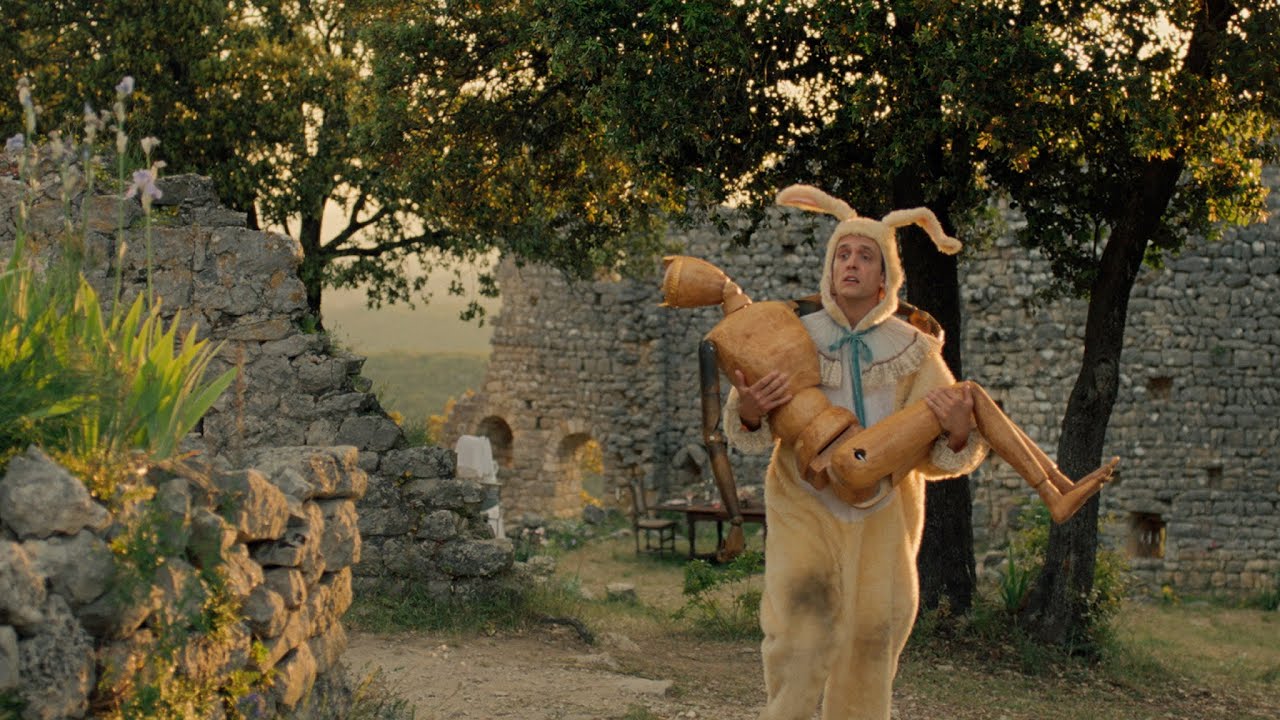
Written and directed by Kit Redstone and Arran Shearing, King Baby is an unconventional fantasy that follows a self-appointed King and his devoted Servant living alone in a decaying castle, where ritual and imagination sustain their isolated world. The arrival of a mannequin Queen disrupts their carefully maintained hierarchy, transforming an eccentric routine into a surreal descent marked by jealousy, paranoia, and murderous ambition. Rather than building a traditional fantasy universe, the filmmakers create an intimate chamber piece where every interaction becomes a reflection on authority, dependence, and the fragile nature of human relationships.
Blending absurd comedy with psychological drama and theatrical staging, King Baby explores how power exists only as long as others agree to believe in it. Through stylized performances, symbolic imagery, and minimalist world-building, Redstone and Shearing craft a modern fairytale that examines the absurdity of hierarchy, the loneliness of leadership, and the dangerous consequences of confusing performance with reality. The result is a distinctive independent film that turns a simple premise into an imaginative meditation on identity, obsession, and the human desire for control.
➡️ Implication: King Baby reflects the growing popularity of independent films that use surreal storytelling and theatrical minimalism to explore universal questions about power, identity, and the psychological structures that shape human behavior.
Quick Facts
|
United Kingdom, France, Canada |
|
|
Kit Redstone & Arran Shearing |
|
|
Graham Dickson, Neil Chinneck, Jasmine Albuquerque, Ryan Spencer |
|
|
June 22, 2025 (United States) |
|
|
Allègre-les-Fumades, France (Castle) |
|
|
Ghosts City, Vacuum Theatre, Greendale Productions |
|
|
Fans of surreal cinema, absurdist comedy, psychological fantasy, theatrical filmmaking, and arthouse independent films |
What This Story Is Really About: The Fragile Illusion of Power and the Human Need for Control
Although King Baby unfolds within the confines of a crumbling castle populated by only a King and his Servant, its true focus extends far beyond its eccentric fantasy setting. The film explores how authority is created through performance rather than legitimacy, with both men trapped in a relationship sustained by ritual, routine, and mutual dependence. Their carefully constructed world functions as a fragile illusion—one that begins to unravel the moment an unexpected presence disrupts the balance they have spent years maintaining.
The arrival of the mannequin Queen becomes the catalyst for exposing hidden insecurities, unfulfilled desires, and the psychological cost of living inside self-created hierarchies. Rather than simply telling a story about madness, King Baby examines how loneliness, obsession, and the pursuit of power can distort reality itself. Through its surreal humor and symbolic storytelling, the film suggests that the greatest kingdoms are often those people build inside their own minds, where identity, authority, and purpose exist only as long as someone continues to believe in them.
➡️ Implication: King Baby transforms an absurd fantasy into a thoughtful exploration of how power, identity, and social hierarchies are often sustained by perception rather than reality, making its themes resonate far beyond its unconventional setting.
Why This Film Is Worth Discovering: A Bold Fusion of Theatre, Fantasy, and Independent Cinema
One of King Baby‘s greatest strengths is its willingness to embrace theatrical storytelling without sacrificing cinematic ambition. Rather than relying on elaborate visual effects or large-scale world-building, directors Kit Redstone and Arran Shearing create an immersive experience through expressive performances, carefully composed imagery, and a richly atmospheric setting. The film’s confined location becomes an advantage, allowing every conversation, gesture, and ritual to deepen the psychological tension while reinforcing its surreal fairytale atmosphere.
The film also stands out within contemporary independent cinema because it refuses to fit neatly into a single genre. Combining absurd comedy, psychological drama, fantasy, and dark satire, King Baby invites audiences to interpret its symbolism rather than providing straightforward answers. This imaginative approach rewards viewers looking for films that challenge conventional storytelling while demonstrating how originality, strong performances, and inventive direction can create an unforgettable cinematic experience without relying on blockbuster scale.
➡️ Implication: King Baby demonstrates how today’s most distinctive independent films are redefining fantasy through originality, theatrical craftsmanship, and psychologically rich storytelling rather than conventional spectacle.
Should You Watch It? A Rewarding Experience for Fans of Bold, Unconventional Cinema
Best Suited For: Viewers Who Enjoy Symbolic and Thought-Provoking Films
-
Fans of surreal and absurdist cinema looking for stories that prioritize atmosphere, symbolism, and imagination over conventional narrative structure.
-
Viewers who appreciate theatrical filmmaking, where expressive performances, dialogue, and carefully staged visuals drive the emotional experience.
-
Audiences interested in psychological allegories exploring power, identity, obsession, and the fragile dynamics of human relationships.
-
Independent film enthusiasts seeking original, genre-defying productions that challenge traditional storytelling while embracing artistic experimentation.
May Not Appeal To: Viewers Seeking Conventional Fantasy or Fast-Paced Entertainment
-
Audiences expecting a traditional fantasy adventure with expansive world-building, action sequences, or heroic quests.
-
Viewers who prefer straightforward narratives, as the film intentionally embraces ambiguity, symbolism, and open interpretation.
-
Fans of mainstream comedies, since its humor is deliberately dark, surreal, and rooted in absurd situations rather than broad comedy.
-
Anyone looking for a fast-moving plot, as the film unfolds deliberately, focusing on character dynamics, atmosphere, and psychological tension rather than constant action.
➡️ Implication: King Baby is best experienced by viewers who embrace unconventional storytelling and enjoy films that provoke interpretation as much as entertainment. Its blend of theatrical performance, surreal humor, and psychological depth makes it a memorable choice for arthouse audiences willing to step into its strange and unsettling world.
Why Everyone Is Talking About It: A Fantasy That Turns Absurdity Into a Study of Human Nature
King Baby has attracted attention because it demonstrates how independent cinema can transform an intentionally minimalist concept into a rich exploration of power, identity, and social hierarchy. Rather than relying on complex mythology or visual spectacle, the film builds an entire world from the evolving relationship between two characters, using surreal humor and theatrical performance to examine how authority is created, maintained, and ultimately challenged. Its unusual premise immediately distinguishes it from conventional fantasy films while inviting audiences to engage with its deeper symbolic meaning.
The film also reflects the growing appetite for genre-defying independent productions that blur the boundaries between cinema, theatre, and contemporary art. As audiences increasingly seek original experiences beyond mainstream franchises, King Baby stands out as an example of filmmakers using limited resources to create ambitious, thought-provoking work. Its festival recognition further reinforces the international appeal of bold, auteur-driven storytelling that values creativity and thematic depth over commercial convention.
➡️ Implication: King Baby highlights the growing demand for original independent films that challenge traditional genre expectations while proving that imaginative storytelling and distinctive artistic vision remain some of cinema’s greatest strengths.
Audience & Critical Reception: Festival Recognition for an Imaginative Independent Vision
Audience Response: A Film That Rewards Interpretation
Although King Baby is not designed as mainstream entertainment, early audiences have praised its originality, theatrical energy, and willingness to embrace surreal storytelling. Rather than offering straightforward answers, the film encourages viewers to interpret its symbolism and psychological themes, making each viewing a unique experience. Its blend of absurd humor, unsettling atmosphere, and expressive performances has particularly resonated with audiences who appreciate arthouse cinema and experimental filmmaking.
Critical Reception: Celebrated for Its Creativity and Distinctive Style
Critics have recognized King Baby as a bold example of independent filmmaking that transforms minimal resources into a richly imaginative cinematic experience. Particular praise has been directed toward Kit Redstone and Arran Shearing’s confident direction, inventive screenplay, and ability to merge theatrical performance with cinematic language. Reviewers have also highlighted the performances of Graham Dickson and Neil Chinneck, whose dynamic relationship anchors the film’s increasingly surreal exploration of power, identity, and obsession.
➡️ Implication: King Baby demonstrates how original storytelling, strong performances, and a distinctive artistic vision continue to earn critical recognition, reinforcing the growing importance of auteur-driven independent cinema.
Awards & Recognition: 1 Win & 5 Nominations Highlight an Emerging Independent Fantasy
Despite its modest independent production, King Baby has earned recognition across multiple awards programs, reflecting appreciation for both its artistic ambition and technical craftsmanship. The film has received 1 win and 5 nominations, recognizing achievements in directing, screenwriting, cinematography, and performance. These accolades reinforce its reputation as a distinctive contribution to contemporary independent fantasy cinema.
Among its honors, King Baby won Best Fantasy Film at the UK Film Awards, while Graham Dickson received a nomination for Best Actor and Neil Chinneck was nominated for Best Supporting Actor. The film also earned Leo Award nominations for Best Direction, Best Screenwriting, and Best Cinematography, highlighting the collaborative vision of Kit Redstone, Arran Shearing, and cinematographer Ryan Petey. Together, these recognitions position the film as an emerging cult favorite within the international independent film landscape.
➡️ Implication: King Baby illustrates how imaginative genre filmmaking continues to gain industry recognition when originality, strong performances, and creative vision outweigh production scale.
Entertainment Trend: Surreal Independent Fantasy Is Redefining Contemporary Arthouse Cinema
King Baby reflects a growing movement in contemporary independent filmmaking where fantasy is increasingly used as a vehicle for psychological and philosophical exploration rather than traditional escapism. Instead of building expansive fictional worlds, filmmakers are embracing intimate settings, symbolic characters, and theatrical storytelling to examine universal themes such as power, identity, isolation, and human behavior. This approach allows imaginative concepts to emerge from performance and metaphor rather than visual spectacle, creating films that invite interpretation long after the credits roll.
The film also highlights the continued convergence of theatre and cinema within the independent film landscape. Directors are increasingly drawing on stagecraft, minimalist production design, and performance-led storytelling to create distinctive cinematic experiences that stand apart from mainstream genre conventions. As festival audiences continue seeking original voices and unconventional narratives, films like King Baby demonstrate that creative ambition and artistic identity have become powerful differentiators within the global independent market.
➡️ Implication: King Baby reflects the growing popularity of surreal, performance-driven independent films that blur the boundaries between theatre, fantasy, and psychological drama, proving that originality and artistic vision remain central to the evolution of contemporary arthouse cinema.
Why This Film Matters: A Modern Fairytale That Questions the Nature of Authority
Beyond its eccentric premise, King Baby stands out for using fantasy as a lens through which to examine how authority, identity, and social roles are constructed. Rather than presenting kingship as a symbol of power, the film portrays it as a fragile performance sustained by ritual and belief. This inversion transforms an intimate character study into a broader commentary on the human tendency to create hierarchies and assign meaning to systems that often exist only because people collectively agree they do.
The film also demonstrates the creative confidence of today’s independent filmmakers, showing that ambitious ideas do not require large budgets or elaborate visual effects to leave a lasting impression. By combining absurd comedy, theatrical performance, and psychological allegory, Kit Redstone and Arran Shearing craft a film that feels both timeless and contemporary, inviting audiences to reflect on the structures that shape society while delivering a uniquely imaginative cinematic experience.
➡️ Implication: King Baby illustrates how modern independent cinema is increasingly using surrealism and symbolic storytelling to explore universal human experiences, expanding the possibilities of fantasy beyond entertainment into thoughtful social and psychological commentary.
What This Film Means for the Entertainment Industry: Original Vision Continues to Drive Independent Cinema
For Filmmakers: Minimalism Can Strengthen Creative Expression
King Baby demonstrates that distinctive artistic vision can be more impactful than production scale. By relying on performance, symbolism, and carefully controlled environments, the film shows how filmmakers can transform limited resources into an immersive cinematic experience with a strong authorial identity.
For Independent Cinema: Festival Audiences Continue Rewarding Bold Storytelling
The film’s recognition illustrates the important role festivals continue to play in championing unconventional projects that challenge genre expectations. Original concepts and confident execution remain valuable assets for independent productions seeking international visibility.
For Audiences: Demand Is Growing for Films That Invite Interpretation
Modern viewers increasingly embrace films that encourage discussion rather than provide simple answers. King Baby reflects this shift by rewarding audiences willing to engage with symbolism, metaphor, and open-ended storytelling instead of conventional narrative formulas.
For the Industry: Genre Boundaries Continue to Dissolve
By blending fantasy, comedy, psychological drama, and theatrical performance, King Baby represents a broader industry trend toward genre hybridity. Independent filmmakers are increasingly creating works that resist categorization, offering fresh experiences that appeal to audiences looking for originality rather than familiarity.
➡️ Implication: King Baby highlights how the future of independent cinema will continue to be shaped by filmmakers who embrace creative risk, genre innovation, and distinctive artistic voices rather than conventional commercial formulas.
Future Outlook: Surreal Independent Cinema Will Continue Expanding Creative Boundaries
As audiences increasingly seek original stories that challenge conventional genre expectations, films like King Baby are likely to play an increasingly important role within the independent film landscape. Rather than competing with blockbuster productions through scale or visual effects, these films distinguish themselves through bold artistic vision, symbolic storytelling, and memorable performances. Festival audiences and specialty distributors continue to embrace projects that offer distinctive perspectives, encouraging filmmakers to experiment with new ways of blending theatre, fantasy, and psychological drama.
At the same time, the growing international success of auteur-driven cinema suggests that unconventional films can reach audiences far beyond the festival circuit. As streaming platforms and independent distributors continue expanding access to global arthouse productions, imaginative works like King Baby have greater opportunities to find dedicated viewers who value originality over familiarity. This evolving landscape rewards filmmakers willing to take creative risks and reinforces the demand for stories that inspire interpretation, discussion, and emotional engagement.
➡️ Implication: King Baby points toward a future where independent fantasy increasingly prioritizes symbolism, artistic experimentation, and psychological depth, demonstrating that originality remains one of cinema’s most valuable creative assets.
Final Verdict: A Bold and Imaginative Fairytale That Reimagines Power Through Surrealism
King Baby is a striking example of how independent cinema can transform a minimalist concept into a richly layered cinematic experience. Written and directed by Kit Redstone and Arran Shearing, the film combines absurd comedy, fantasy, and psychological drama to examine the fragile nature of authority, identity, and human dependence. Through inventive performances, theatrical staging, and symbolic storytelling, it creates a world that feels both playfully eccentric and quietly unsettling, encouraging audiences to look beyond its unusual premise to discover deeper reflections on power and human behavior.
Although its surreal style and open-ended narrative may not appeal to viewers seeking conventional entertainment, those willing to embrace its imaginative vision will find a film that rewards interpretation and discussion. By refusing to follow traditional genre conventions, King Baby establishes itself as a memorable work of contemporary independent cinema and a compelling showcase for the creative possibilities of performance-led storytelling.
➡️ Key Takeaway: King Baby proves that independent fantasy can achieve remarkable emotional and intellectual depth through originality, theatrical craftsmanship, and symbolic storytelling rather than spectacle.
Summary of the Movie: An Absurd Fairytale About Power, Identity, and Isolation
In a forgotten kingdom occupied only by a self-appointed King and his devoted Servant, everyday rituals sustain an imaginary social order that appears stable until the arrival of a mannequin Queen changes everything. As jealousy, paranoia, and obsession begin to consume their isolated world, the fragile hierarchy that once defined their existence slowly collapses into madness. Blending dark comedy with psychological allegory, King Baby uses its surreal premise to explore how authority is built on belief, how identity is shaped by the roles people perform, and how easily carefully constructed realities can unravel when confronted with change.
➡️ Key Takeaway: Through its imaginative blend of absurd humor, theatrical performance, and symbolic fantasy, King Baby transforms a minimalist story into a thought-provoking meditation on the nature of power, control, and the fragile illusions that shape human relationships.
If You Liked This Movie: More Surreal and Thought-Provoking Independent Films
-
The Lobster — A darkly comic exploration of relationships, conformity, and social expectations through absurdist world-building.
-
The Lighthouse — A psychologically intense chamber piece about isolation, authority, and descent into madness.
-
Being John Malkovich — An inventive fantasy that blends surrealism, identity, and philosophical humor.
-
Dogtooth — A disturbing allegory examining power, control, and the construction of reality within an isolated household.
-
Men — A visually symbolic psychological horror exploring gender, trauma, and recurring archetypes through surreal storytelling.
Where to Watch: How to Experience King Baby
Streaming Availability: When and Where You Can Watch at Home
As of July 2026, King Baby has not received a wide streaming release on major subscription platforms. The film remains unavailable on most mainstream streaming services, reflecting its status as an independent festival title. Viewers can track future digital and streaming availability through JustWatch or Letterboxd as additional distribution deals are announced.
Theatrical Release
King Baby premiered at the International Film Festival Rotterdam on January 25, 2024, before continuing its international festival run. It later received its U.S. theatrical release on June 22, 2025, introducing the film to a wider arthouse audience.
Festival Journey
The film enjoyed a successful international festival circuit that helped establish its reputation as one of the more distinctive independent fantasy films of 2024.
-
1 Win & 5 Nominations
-
Winner — Best Fantasy Film (UK Film Awards)
-
Leo Award nominations for Best Direction, Best Screenwriting, and Best Cinematography
-
UK Film Award nominations for Best Actor (Graham Dickson) and Best Supporting Actor (Neil Chinneck)
Viewing Recommendation: Who Should Experience King Baby?
King Baby is highly recommended for viewers who enjoy surreal, performance-driven cinema from filmmakers such as Yorgos Lanthimos and Quentin Dupieux. Fans of symbolic storytelling, absurdist comedy, theatrical filmmaking, and psychologically layered fantasy will find its unconventional style particularly rewarding. Those looking for a traditional fantasy adventure or fast-paced narrative, however, may find its deliberately theatrical and allegorical approach more challenging.



Leave a Reply