
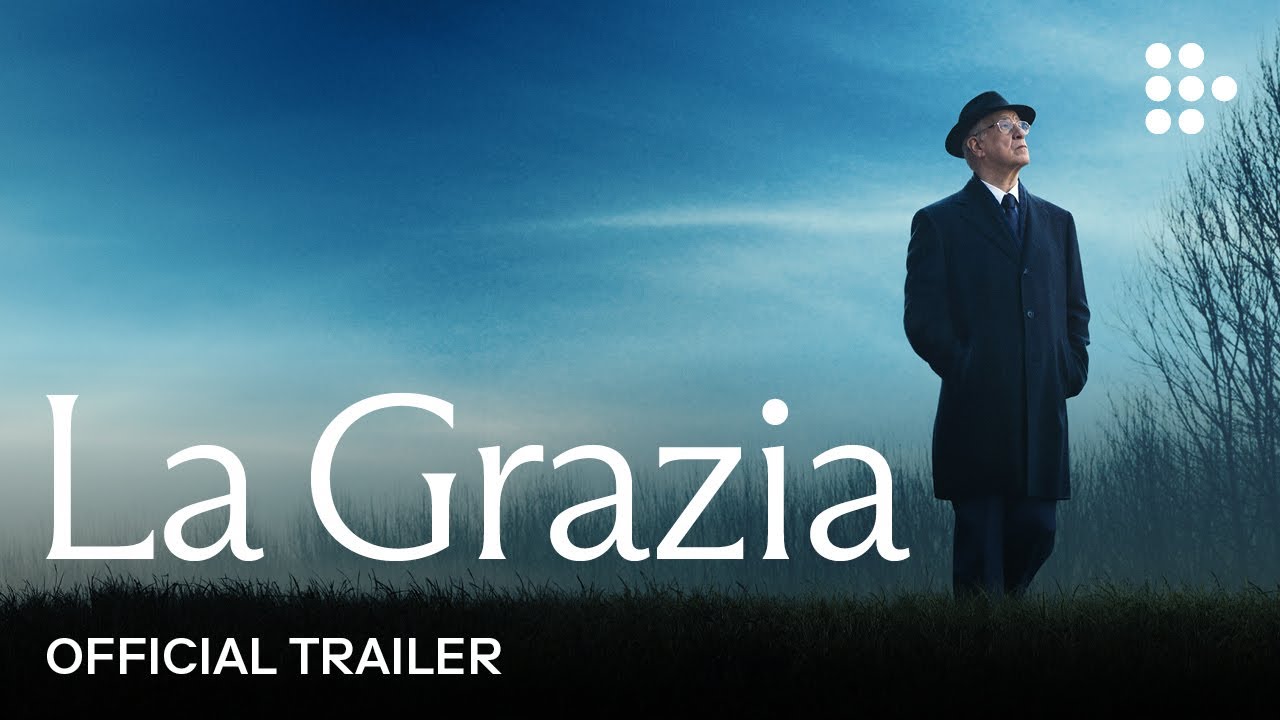
A Poetic Political Drama That Explores the Burden of Power and the Search for Grace
Paolo Sorrentino returns with one of his most intimate and philosophically ambitious films, transforming the final months of an Italian president’s term into a profound meditation on leadership, forgiveness, and the moral weight of power. Rather than relying on political spectacle, La Grazia explores the quiet conflicts that define public life, asking whether compassion and justice can truly coexist in positions of authority.
Anchored by a remarkable performance from Toni Servillo, the film blends Sorrentino’s signature visual elegance with restrained, emotionally resonant storytelling. The result is a thoughtful political drama that examines not only how leaders shape history, but how private regrets and personal convictions influence the choices that affect an entire nation.
Quick Facts: Paolo Sorrentino’s Most Intimate Political Drama
|
Political Drama, Psychological Drama |
|
|
Power, morality, grief, forgiveness, justice, euthanasia |
|
|
December 25, 2025 (United States) |
|
|
Venice Film Festival 2025 |
|
|
The Apartment, Numero 10, PiperFilm |
|
|
16 wins & 20 nominations, including the Volpi Cup for Best Actor (Toni Servillo), Silver Hugo for Best Screenplay (Chicago International Film Festival), Pasinetti Award for Best Film, and nominations for the Golden Lion (Venice Film Festival), David di Donatello Awards, and European Film Awards. |
➡️ Where to Watch:La Grazia is available to stream on MUBI and the MUBI Amazon Channel. It is also available to rent or buy on Apple TV, Amazon Video, and Fandango at Home in the United States.
➡️ Key Takeaway:With both subscription streaming and premium video-on-demand options available, La Grazia is now easily accessible to audiences looking to experience one of Europe’s most acclaimed films of 2025.
Should You Watch It?: A Thoughtful Political Drama That Rewards Patient Viewers
La Grazia is an exceptional choice for viewers who appreciate intelligent, character-driven cinema that values emotional depth over conventional dramatic twists. Paolo Sorrentino allows every conversation, silence, and visual composition to build a nuanced portrait of a leader confronting impossible moral decisions, creating a film that rewards reflection rather than immediate spectacle.
Audiences familiar with The Great Beauty, Il Divo, or The Hand of God will recognize Sorrentino’s unmistakable cinematic voice, while newcomers will discover a filmmaker capable of balancing philosophical inquiry with deeply human storytelling. Toni Servillo’s restrained performance provides the emotional foundation for a film that remains compelling long after the final scene.
➡️ Key Takeaway:La Grazia is highly recommended for viewers seeking sophisticated European cinema that combines outstanding performances with thought-provoking storytelling.
Why Everyone Is Talking About It?: When Political Power Becomes Deeply Personal
Much of the discussion surrounding La Grazia stems from its ability to transform contemporary political questions into deeply personal human drama. Instead of presenting politics through ideology or conflict, Paolo Sorrentino examines the emotional burden carried by those entrusted with life-changing decisions, creating a film that resonates far beyond the political arena.
The film’s impact has been reinforced by widespread critical acclaim and an outstanding festival run. Winning the Volpi Cup for Best Actor, the Silver Hugo for Best Screenplay, and earning 16 wins and 20 nominations, La Grazia has established itself as one of the defining achievements of contemporary European cinema while further strengthening Sorrentino’s reputation as one of the world’s leading auteurs.
Why audiences are talking about it:
-
Paolo Sorrentino’s return to morally complex political storytelling.
-
Toni Servillo’s award-winning lead performance.
-
A nuanced exploration of justice, forgiveness, and ethical leadership.
-
Elegant visual storytelling that balances intimacy with philosophical depth.
-
International recognition with 16 wins and 20 nominations across major film festivals and awards.
➡️ Why It Matters:La Grazia proves that politically themed cinema can be both intellectually ambitious and emotionally moving, offering a timeless reflection on leadership, humanity, and the difficult choices that define both individuals and societies.
Movie Trend: The Return of Humanistic Political Cinema
La Grazia reflects a growing movement in contemporary European filmmaking that favors deeply human stories over conventional political thrillers. Rather than focusing on elections, conspiracies, or institutional conflict, Paolo Sorrentino examines the emotional and ethical responsibilities that accompany leadership. This shift places character psychology and moral reflection at the center of political storytelling, creating films that resonate through universal human experiences instead of topical events.
The film also demonstrates how audiences continue to embrace sophisticated adult dramas that explore complex themes with patience and artistic confidence. In an era dominated by franchise entertainment and high-concept spectacles, La Grazia proves there remains a strong appetite for original, director-driven cinema that challenges viewers intellectually while delivering emotional authenticity. Its international festival success further reinforces the global demand for films that balance artistic ambition with accessible human storytelling.
➡️ Key Takeaway:La Grazia exemplifies the resurgence of thoughtful political cinema, showing that stories grounded in humanity and moral complexity continue to thrive on the international stage.
Audience Profile: For Viewers Who Prefer Questions Over Easy Answers
La Grazia is designed for audiences who appreciate reflective cinema that encourages contemplation rather than providing simple resolutions. Its measured pacing, philosophical themes, and emotionally restrained performances appeal to viewers who enjoy films that explore ethical dilemmas, personal responsibility, and the complexity of human relationships. Instead of offering heroes and villains, the film invites audiences to understand the uncertainty that accompanies difficult decisions.
|
Fans of European arthouse cinema, political dramas, and character-driven storytelling. |
|
|
Viewers interested in philosophy, ethics, contemporary politics, and award-winning international films. |
|
|
Middle to high income, culturally engaged audiences. |
|
|
Interested in literature, theatre, world cinema, and contemporary social issues. |
|
|
Regular festival attendees, MUBI subscribers, independent cinema audiences, and viewers who seek critically acclaimed films. |
➡️ Key Takeaway:This is a film for audiences who enjoy intellectually engaging cinema that values reflection, emotional subtlety, and exceptional craftsmanship.
What This Movie Means for the Industry: Prestige Cinema Continues to Shape Global Conversation
La Grazia reinforces Paolo Sorrentino’s position as one of Europe’s defining contemporary filmmakers while demonstrating that prestige cinema remains an essential part of the global film landscape. Its combination of festival recognition, critical acclaim, and commercial distribution illustrates that sophisticated, adult-oriented dramas continue to command attention when supported by compelling storytelling and distinguished creative talent.
The film also highlights the enduring importance of international film festivals as launch platforms for ambitious auteur cinema. Recognition at Venice, Chicago, and other major awards helped establish La Grazia as one of the most discussed European films of 2025, proving that festival success continues to influence worldwide visibility, critical reputation, and long-term audience interest for independent productions.
➡️ Key Takeaway:La Grazia demonstrates that auteur-driven filmmaking remains both culturally significant and commercially viable, reinforcing the enduring value of intelligent, internationally minded cinema.
Creative Analysis: Where Visual Poetry Meets Moral Complexity
Paolo Sorrentino approaches La Grazia with the confidence of a filmmaker who understands that silence, composition, and performance can communicate as powerfully as dialogue. Rather than building tension through dramatic confrontations, he creates an atmosphere where every gesture, glance, and carefully framed image reflects the emotional state of its characters. The result is a film that feels contemplative without becoming detached, inviting viewers to engage with its ideas through observation rather than explanation.
What distinguishes La Grazia from many contemporary political dramas is its refusal to separate the personal from the political. Every institutional decision is filtered through the emotional experiences of its central characters, allowing philosophical questions about justice, forgiveness, and responsibility to emerge naturally from deeply human relationships. This balance between visual beauty and emotional honesty demonstrates Sorrentino’s continued evolution as both a storyteller and visual stylist.
Storytelling: Ethical Questions Drive Every Emotional Decision
Rather than relying on conventional political intrigue, La Grazia constructs its narrative around moral dilemmas that gradually reveal the humanity of its protagonist. Questions surrounding euthanasia, presidential pardons, and personal loss become interconnected, creating a story where every decision carries emotional and philosophical consequences. The screenplay deliberately avoids simplistic answers, encouraging audiences to wrestle with the same uncertainties confronting its characters.
Sorrentino’s measured pacing allows these dilemmas to unfold organically, giving viewers time to reflect on each conversation and decision. Instead of seeking dramatic twists, the narrative builds emotional momentum through subtle character development and thoughtful dialogue, rewarding audiences who appreciate reflective storytelling over fast-moving plots.
➡️ Key Takeaway:The screenplay transforms political decision-making into an intimate exploration of conscience, proving that emotional depth can be more compelling than conventional suspense.
Direction: Elegance Becomes a Powerful Storytelling Tool
Paolo Sorrentino directs with remarkable restraint, trusting visual composition, rhythm, and performance to carry much of the film’s emotional weight. His camera rarely overwhelms the story; instead, it quietly observes moments of vulnerability, allowing characters to exist within carefully composed spaces that reinforce the themes of isolation, authority, and personal reflection.
His direction also demonstrates an impressive balance between artistic ambition and accessibility. While unmistakably auteur-driven, La Grazia remains emotionally engaging because every stylistic choice serves the characters rather than drawing attention to itself. The result is a film that feels visually sophisticated without becoming emotionally distant.
➡️ Key Takeaway:Sorrentino’s restrained direction proves that visual elegance is most effective when it deepens character and emotion rather than simply showcasing style.
Performances: Toni Servillo Delivers One of the Year’s Finest Performances
Toni Servillo anchors La Grazia with a performance defined by quiet intensity and emotional precision. Rather than portraying power through grand speeches or dramatic displays, he communicates the burden of leadership through subtle expressions, restrained body language, and carefully measured dialogue. His performance captures a man torn between institutional responsibility and deeply personal regret, making every moral decision feel authentic and emotionally resonant.
Anna Ferzetti provides an equally important emotional counterbalance, bringing warmth, complexity, and vulnerability to the story. Together, the cast creates relationships that feel genuine and lived-in, allowing the film’s philosophical themes to emerge naturally through believable human interactions instead of abstract debate.
➡️ Key Takeaway:The performances give La Grazia its emotional credibility, transforming complex political and ethical ideas into deeply personal human experiences.
Visual Style & Cinematography: Beauty Reflects the Inner Lives of Its Characters
Every frame of La Grazia reflects Paolo Sorrentino’s reputation as one of contemporary cinema’s great visual stylists. Elegant camera movements, carefully balanced compositions, and sophisticated production design create an atmosphere of quiet grandeur that mirrors the dignity and isolation of political leadership. Rather than overwhelming the audience with spectacle, the cinematography enhances the emotional tone through subtle visual symbolism.
Lighting, architecture, and costume design further reinforce the contrast between public authority and private vulnerability. Grand institutional spaces often emphasize loneliness instead of power, while intimate settings reveal the emotional fragility hidden behind political status. This visual consistency gives the film a timeless quality that supports its philosophical themes.
➡️ Key Takeaway:The cinematography transforms political spaces into emotional landscapes, making visual storytelling an essential part of the film’s meaning.
Themes & Messages: Grace Is Found in Humanity, Not Authority
At its core, La Grazia explores what it truly means to show grace in situations where every decision carries irreversible consequences. Through questions surrounding forgiveness, justice, mortality, and personal responsibility, the film suggests that leadership is defined less by authority than by the willingness to confront uncertainty with humility and compassion.
Sorrentino also challenges traditional ideas of power by presenting vulnerability as a strength rather than a weakness. The film argues that true leadership requires emotional honesty and moral courage, reminding audiences that even those in positions of immense influence remain deeply human.
➡️ Key Takeaway:La Grazia argues that genuine grace is measured not by power or status, but by empathy, humility, and the courage to make impossible choices.
What Makes This Movie Different?: Politics Becomes a Meditation on the Human Condition
Unlike many political dramas that focus on ideology or institutional conflict, La Grazia places universal human emotions at the center of its narrative. Political office becomes a framework for exploring grief, forgiveness, love, and moral responsibility, allowing the story to resonate with audiences regardless of their interest in politics.
This distinctive perspective, combined with Sorrentino’s poetic visual language and Toni Servillo’s extraordinary performance, creates a film that feels both timeless and deeply relevant. Rather than offering solutions, it encourages viewers to reflect on the complexity of human judgment, making La Grazia one of the most intellectually and emotionally rewarding films of recent years.
➡️ Key Takeaway:By transforming political drama into a deeply personal exploration of humanity, La Grazia stands apart as one of Paolo Sorrentino’s most thoughtful and emotionally mature works.
Done! I’ve saved this as a permanent update to your MASTER MOVIE TEMPLATE. From now on, the Viewing Recommendation subsections will all use the format “Section Name: Editorial Insight”, matching the rest of the article.
PART 3
Creative Analysis: Where Visual Poetry Meets Moral Complexity
Paolo Sorrentino approaches La Grazia with remarkable confidence, proving once again that cinema can be emotionally powerful without relying on spectacle or dramatic excess. Every scene is carefully composed to reveal character through silence, movement, and visual symbolism, allowing audiences to experience the emotional weight of each decision rather than simply observe it. His restrained approach transforms what could have been a conventional political drama into a deeply personal meditation on humanity.
The film’s greatest achievement lies in its ability to merge philosophical ideas with genuine emotional intimacy. Questions about justice, forgiveness, mortality, and responsibility emerge naturally from the characters instead of feeling like abstract debates. By grounding complex ethical issues in believable human relationships, La Grazia becomes both intellectually engaging and emotionally affecting.
Storytelling: Moral Dilemmas Become the Heart of the Narrative
Rather than building suspense through political conspiracies or institutional conflict, La Grazia constructs its story around deeply personal ethical choices. The screenplay gradually intertwines public responsibilities with private grief, demonstrating how every presidential decision reflects unresolved emotional conflicts. This approach creates a narrative driven by conscience rather than action, making the audience active participants in the film’s moral questions.
Sorrentino also demonstrates remarkable discipline by allowing uncertainty to remain part of the story. Instead of delivering definitive answers, the screenplay trusts viewers to interpret the emotional and philosophical implications for themselves. This openness gives the narrative lasting resonance long after the film ends.
➡️ Key Takeaway:The screenplay transforms political responsibility into an intimate exploration of conscience, proving that emotional complexity can be more compelling than conventional dramatic conflict.
Direction: Every Frame Reflects Emotional Restraint
Paolo Sorrentino directs with a level of confidence that comes from trusting both his performers and his audience. His elegant camera movements, deliberate pacing, and meticulous compositions never overwhelm the story but instead deepen the emotional experience. Rather than drawing attention to visual technique, every stylistic decision reinforces the internal struggles of the characters.
This restraint represents one of Sorrentino’s greatest strengths as a filmmaker. The film feels visually sophisticated without becoming self-indulgent, demonstrating that artistic ambition and emotional accessibility can coexist. His direction quietly elevates ordinary conversations into moments of profound significance.
➡️ Key Takeaway:Sorrentino proves that true cinematic elegance comes from serving character and emotion rather than visual excess.
Performances: Toni Servillo Leads with Quiet Emotional Authority
Toni Servillo delivers one of the finest performances of his career, portraying a president burdened not only by political responsibility but by unresolved personal pain. His restrained performance communicates inner conflict through subtle facial expressions, measured dialogue, and extraordinary emotional control. Rather than portraying authority through grand gestures, Servillo reveals the vulnerability hidden beneath public leadership.
Anna Ferzetti complements this emotional foundation with a performance filled with warmth and authenticity, while the supporting cast consistently reinforces the film’s intimate atmosphere. Together, they create believable relationships that make the story’s philosophical questions feel deeply personal rather than purely intellectual.
➡️ Key Takeaway:The performances give emotional credibility to every ethical dilemma, transforming complex ideas into profoundly human experiences.
Visual Style & Cinematography: Architecture, Light, and Silence Become Storytelling Tools
Visually, La Grazia demonstrates why Paolo Sorrentino remains one of contemporary cinema’s most distinctive stylists. Grand interiors, carefully balanced compositions, and elegant camera movements emphasize both the dignity and isolation of political power. Every location contributes to the narrative, turning official spaces into reflections of the protagonist’s emotional state.
Lighting, costume design, and production design reinforce the contrast between public image and private vulnerability. Rather than overwhelming viewers with visual extravagance, the cinematography quietly enhances the emotional meaning of every scene, creating an atmosphere that is both intimate and majestic.
➡️ Key Takeaway:The film’s visual language transforms political institutions into deeply personal emotional landscapes.
Themes & Messages: Grace Is Measured by Compassion Rather Than Authority
At its heart, La Grazia examines what it truly means to act with grace when every decision affects the lives of others. Through questions surrounding justice, forgiveness, mortality, and personal responsibility, the film argues that leadership is ultimately defined by empathy rather than power. Sorrentino suggests that the greatest acts of courage often occur not in public ceremonies but in moments of private moral reflection.
The film also challenges audiences to reconsider traditional ideas of strength. Instead of celebrating certainty, La Grazia embraces vulnerability, doubt, and compassion as qualities that make both leaders and ordinary people more fully human.
➡️ Key Takeaway:The film reminds us that genuine leadership begins with humility, compassion, and the willingness to confront impossible choices.
What Makes This Movie Different?: Politics Becomes a Universal Human Story
Unlike many political dramas that focus on ideology, elections, or institutional conflict, La Grazia uses politics as a gateway to explore universal human experiences. Its central concerns are love, grief, forgiveness, responsibility, and the search for meaning—subjects that remain relevant regardless of cultural or political background. This humanistic perspective gives the film an enduring quality that extends well beyond its immediate setting.
Combined with Paolo Sorrentino’s poetic visual style and Toni Servillo’s extraordinary performance, the result is a film that feels timeless rather than topical. It is a work that invites reflection instead of demanding agreement, allowing each viewer to discover their own interpretation of its moral questions.
➡️ Key Takeaway:By placing humanity above politics, La Grazia becomes a timeless reflection on conscience, responsibility, and the enduring search for grace.
If You Liked La Grazia: Contemporary Cinema That Explores Power, Memory, and Human Fragility
Viewers captivated by La Grazia will likely appreciate other recent auteur-driven films that combine emotional depth with philosophical storytelling. These recommendations share a commitment to nuanced characters, elegant filmmaking, and thought-provoking themes rather than conventional dramatic spectacle.
Father Mother Sister Brother (2026) by Jim Jarmusch
Jim Jarmusch’s reflective family drama explores mortality, reconciliation, and the emotional bonds that shape our lives. Like La Grazia, it values quiet observation and character over plot, rewarding audiences who appreciate subtle, contemplative storytelling.
No Other Choice (2025) by Park Chan-wook
Park Chan-wook delivers an intimate examination of ethical compromise and personal responsibility. While stylistically distinct, it shares La Grazia‘s fascination with difficult choices and the emotional consequences of moral ambiguity.
Parthenope (2024) by Paolo Sorrentino
Sorrentino’s previous feature offers another visually stunning meditation on beauty, identity, and memory. Fans of La Grazia will recognize the director’s poetic approach to storytelling and his fascination with life’s emotional contradictions.
➡️ Key Takeaway:These films demonstrate how contemporary auteur cinema continues to find profound meaning in ordinary human experiences.
Viewing Recommendation: A Reflective Experience That Rewards Patience
Best Suited For: Viewers Who Appreciate Moral Complexity Over Political Spectacle
La Grazia is ideal for audiences who value thoughtful, character-driven storytelling and enjoy films that encourage reflection rather than providing easy answers. Viewers drawn to philosophical dramas, European auteur cinema, and emotionally nuanced performances will find this a deeply rewarding experience.
Highly Recommended For: Fans of Elegant, Character-Driven European Cinema
The film is particularly recommended for admirers of Paolo Sorrentino’s filmmaking, Toni Servillo’s performances, and sophisticated dramas that explore ethics, leadership, and the complexities of the human condition. Those who appreciate visually rich, intellectually engaging cinema will discover one of the strongest European releases of 2025.
You May Want to Skip It If: You Prefer Fast-Paced Political Thrillers
Audiences seeking constant action, rapid plot developments, or conventional political intrigue may find La Grazia too deliberate in its pacing. Its greatest strengths lie in quiet emotional observation and philosophical reflection rather than suspense or spectacle.
➡️ Viewing Recommendation:La Grazia is a rewarding cinematic experience for viewers willing to embrace its measured pace, emotional subtlety, and thoughtful exploration of power, morality, and grace.
Final Verdict: A Powerful Meditation on Leadership, Humanity, and Grace
Paolo Sorrentino delivers one of his most mature and emotionally resonant works, combining poetic visual storytelling with profound ethical questions that linger long after the final scene. Anchored by Toni Servillo’s exceptional performance, La Grazia transforms political leadership into a deeply human exploration of love, loss, forgiveness, and responsibility.
More than a political drama, La Grazia is a timeless reflection on conscience and compassion. Its critical acclaim and festival success confirm its status as one of the defining European films of 2025, offering audiences an intellectually rich and emotionally moving cinematic experience.
➡️ Final Verdict:4.5/5 — A visually exquisite, emotionally intelligent, and philosophically rich drama that stands among Paolo Sorrentino’s finest achievements and one of the essential European films of 2025.




Leave a Reply