
UK | 2025 | 99 min | Comedy, Horror
An Influencer Goes Offline and Discovers Nobody Is Watching
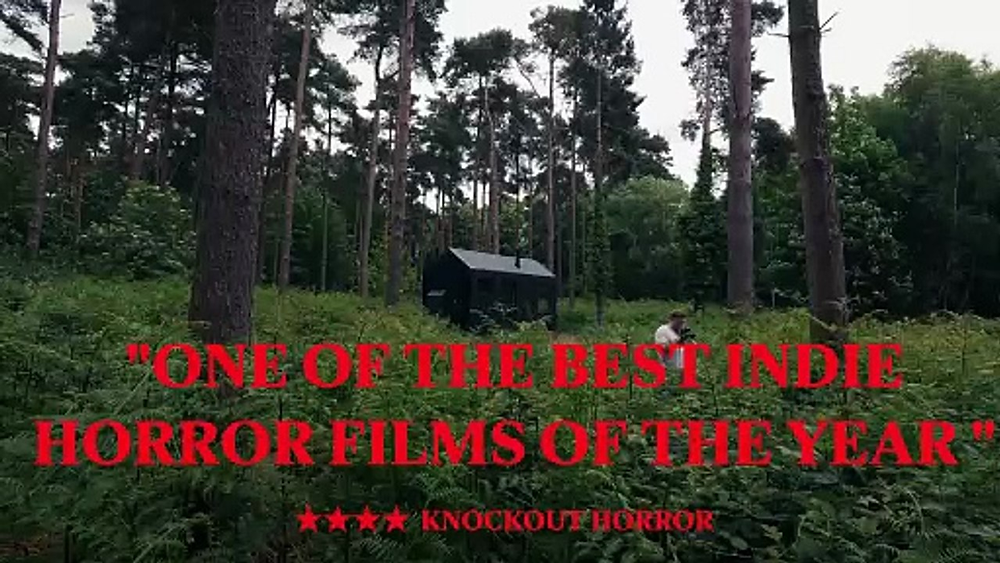
Angus Mattock wants what countless aspiring creators want: attention, purpose and something worth filming. He heads into the British wilderness for a remote retreat, hoping to turn nature, survival and a digital detox into content. Instead, the isolation becomes frighteningly real when an ancient natural force traps him in a place where his camera can record what is happening but cannot rescue him from it.
Charlie Robb and Douglas Tawn turn the familiar found-footage camera into something distinctly contemporary. Angus does not film because he happens to be carrying a camera when horror begins; recording is already part of how he experiences life. His need to turn himself into content follows him into the woods, creating a horror story about what happens when the person behind the screen suddenly has no audience capable of helping.
➡️ Movie Insight: Loner turns creator culture into a modern found-footage nightmare. Angus brings the camera into the wilderness expecting it to give his experience meaning. When danger arrives, recording everything only makes his isolation more visible.
Why This Movie Matters Right Now: Everyone Is Recording but Nobody Is Really Connected
Vlogging has transformed private experience into potential public content. Travel, relationships, breakdowns, challenges and even moments of vulnerability can become something to upload, share and measure through engagement. Loner takes that familiar behavior and asks what remains when the audience disappears.
Angus deliberately moves away from urban life and digital connection, yet he continues performing for the camera. That contradiction gives the horror its contemporary edge. He wants a digital detox while simultaneously documenting the detox for future viewers, revealing how difficult it can be for a creator to separate personal experience from the instinct to turn that experience into content.
➡️ Why It Matters: Loner understands that the camera is no longer unusual in everyday life. For creators, constant self-documentation can become a way of processing reality itself. Horror begins when Angus discovers that being recorded is very different from being connected.
Should You Watch It?: Come for Found Footage and Stay for the Loneliness
Loner is best suited to viewers who enjoy patient, character-driven horror rather than constant jump scares. Much of the movie rests on Charlie Robb’s performance as Angus, with the isolation forcing audiences to spend extended periods inside his increasingly uncomfortable attempt to maintain confidence while the wilderness becomes more threatening.
The movie also blends awkward comedy with psychological and folk horror. Angus can be funny because he behaves like someone accustomed to presenting a version of himself to an imaginary audience, but that same behavior gradually becomes uncomfortable as his circumstances deteriorate. The transition from creator persona to genuine vulnerability becomes one of the movie’s strongest ideas.
➡️ Viewing Recommendation: Watch Loner if you like stripped-back found footage, folk horror and movies built around isolation. Its slow-burn approach requires more patience than conventional supernatural horror. The reward is a more intimate story about what happens when a man accustomed to performing for a camera finally has nowhere to hide.
Why Everyone Is Talking About It?: A Micro-Budget Horror Movie Is Finding a Bigger Audience
Loner arrived through the independent horror circuit rather than a traditional studio launch. Its world premiere at Raindance Film Festival in 2025 immediately gave the feature visibility, with nominations there for Best UK Feature, Best Director of a UK Feature for Charlie Robb and Douglas Tawn, and Best Performance in a UK Feature for Robb.
Its genre momentum continued at Panic Fest in 2026, where the film received three nominations: Best of Fest – Feature Film, Best Actor for Charlie Robb, and Best Director – Feature Film for Douglas Tawn and Charlie Robb. That recognition is particularly valuable for such a stripped-back production because the categories highlight the three things the movie depends upon most: the feature itself, Robb’s central performance and the directors’ ability to sustain horror with extremely limited resources.
➡️ Viral Potential: Loner has a premise audiences can understand immediately: an aspiring influencer goes offline and discovers something ancient waiting in the woods. The combination of vlogging, digital detox, found footage and wilderness horror creates multiple conversation hooks. Its independent festival journey gives the movie additional credibility among horror audiences looking beyond major studio releases.
Why Loner Stands Out: The Camera Becomes a False Friend
Found footage traditionally needs to answer one awkward question: why would anyone keep filming when something terrifying is happening? Loner has a natural answer. Angus is a vlogger. Recording himself is already part of his identity, so continuing to use the camera feels psychologically connected to the character rather than simply required by the filmmaking format.
The camera also becomes a kind of companion. As Angus grows increasingly isolated, speaking into it gives him someone to address even when nobody is physically present. The relationship gradually becomes unsettling because the camera can listen but cannot respond, comfort him or intervene.
➡️ Cinema Insight: Loner modernizes found footage by making self-recording part of its protagonist’s personality. The camera begins as a content-creation tool and gradually becomes evidence of his loneliness. Horror emerges from the gap between being visible and actually being connected to another human being.
Movie Trend: Influencer Horror — When the Camera Won’t Save You
Influencer Horror turns the habits of online creators into the machinery of horror. Cameras, livestreams, followers, challenges and constant self-documentation can initially provide characters with attention and control, but horror movies can reverse that relationship. Suddenly the camera is capturing danger instead of producing entertainment.
Loner pushes the idea into the wilderness. Angus expects to control the story because he is the creator, presenter and subject of his own videos. But the ancient force surrounding him does not care about his persona, his content or the audience he hopes eventually to reach. Nature effectively takes control of the narrative away from the influencer.
➡️ Movie Trend: Influencer Horror turns content creation into vulnerability. The camera can capture everything while protecting absolutely nothing. Loner makes that contradiction frightening by trapping a man who knows how to perform for an audience somewhere his audience cannot save him.
Viewer Profile: Found-Footage Fans Raised on Social Media
The strongest audience is horror viewers already comfortable with found footage, slow-burn tension and small-scale independent filmmaking. Loner deliberately keeps its world narrow, making Angus and the wilderness more important than elaborate mythology, large ensembles or constant supernatural spectacle.
A secondary audience comes from viewers interested in creator culture and stories about digital identity. Angus represents a recognizable modern personality: someone who instinctively turns experience into potential content. That makes his journey accessible even to audiences who have never attempted to become influencers themselves.
|
Found-footage, folk-horror and independent horror fans |
|
|
Viewers interested in influencer culture, digital identity and psychological horror |
|
|
Broad streaming and independent-film audience |
|
|
Digitally connected, social-media aware, interested in online culture and alternative horror |
|
|
Found footage, streaming horror, folk horror, psychological horror and micro-budget independent films |
➡️ Audience Insight: Loner connects an established horror format with behavior younger audiences recognize immediately. Angus does not simply carry a camera; he understands himself through it. That makes his isolation especially effective for audiences accustomed to living between physical and digital worlds.
What This Movie Means for the Industry: Influencer Culture Gives Found Footage a New Reason to Exist
Found footage once needed elaborate explanations for why characters continued recording. Smartphones, vloggers, livestreamers and creators have largely solved that problem. Modern people already document extraordinary amounts of their lives, giving filmmakers new ways to make first-person horror feel believable.
Loner also demonstrates what micro-budget horror can accomplish by making limitations part of the concept. A small cast, remote setting and consumer-style cameras do not necessarily have to look like financial compromises. When incorporated into the story, they become the aesthetic itself.
➡️ Industry Insight: Creator culture has given found footage a new generation of protagonists. The people most likely to keep filming when they should run are precisely the people whose identities depend on filming everything. That gives independent horror filmmakers an inexpensive format with increasingly contemporary storytelling possibilities.
Creative Analysis: Turning Self-Documentation Into Terror
Loner is constructed around restriction. One central character, an isolated environment, a limited production footprint and a camera system justified by Angus’s obsession with recording himself create a movie where filmmaking limitations become narrative tools.
The creative challenge is therefore maintaining interest without constantly expanding the story. Robb and Tawn rely on Angus, changing camera perspectives, the landscape, sound and gradually escalating uncertainty to make the familiar wilderness increasingly uncomfortable.
Storytelling: A Digital Detox That Cannot Escape the Digital Mindset
The central irony is immediate. Angus goes into nature partly to disconnect, yet he brings the behavioral machinery of digital life with him. His camera allows him to continue narrating, presenting and shaping his experience even without an active online audience.
That creates a story where external horror and internal loneliness can develop together. The wilderness strips away the social environment around Angus until the persona he presents to the camera becomes increasingly difficult to maintain.
Direction: Isolation Is the Main Special Effect
Charlie Robb and Douglas Tawn understand that the wilderness does not need to become visually spectacular to become frightening. Distance, silence and uncertainty make the environment threatening because Angus cannot easily determine where safety might be.
Their restraint also allows the natural force to remain more unsettling than a constantly visible monster would be. The forest gradually changes from the location of Angus’s content into something that appears to possess its own authority.
Performances: Charlie Robb Has Nowhere to Hide
Charlie Robb carries much of Loner alone, making Angus’s personality essential to whether the movie works. His performance begins with the recognizable confidence and awkward humor of someone accustomed to addressing a camera even when nobody else is physically present.
As that confidence deteriorates, the performance has to become less performative. The creator persona begins cracking under genuine fear, allowing the camera to capture vulnerability Angus would normally have controlled before presenting himself publicly.
Visual Style: Every Camera Angle Has a Reason
The vlogger setup gives Loner opportunities to move beyond a single shaky handheld perspective. Angus wants footage, which means multiple recording positions can become part of the way he constructs his content.
That allows the filmmakers to create visual variety while preserving the found-footage logic. Instead of the camera feeling like an arbitrary device the movie needs to exist, camera placement becomes something Angus himself might plausibly consider.
Themes: Being Seen Is Not the Same as Being Known
Underneath the wilderness horror sits a story about loneliness. Angus can talk endlessly to a camera and imagine future viewers, but none of those potential viewers are physically present when he needs another human being.
That distinction becomes increasingly uncomfortable. Digital visibility can create the sensation of constant social contact while still leaving somebody profoundly alone. Loner turns that contradiction into horror by removing the network and leaving only the person who expected it to be there.
What Makes It Different: The Influencer Is Not Just a Gimmick
The vlogger identity does more than explain the found footage. It gives the format thematic purpose because Angus’s instinct to document himself reveals something about how he relates to the world.
The ancient natural presence becomes an effective opposite force. Angus represents modern self-documentation, digital identity and the desire to transform experience into content; the wilderness represents something older, indifferent and completely uninterested in being filmed.
➡️ Creative Insight: Loner makes its technology part of character rather than simply technique. Angus films because recording himself is how he understands experience. Once the wilderness removes the audience from that relationship, the camera becomes an increasingly disturbing mirror.
If You Liked Loner (2025): More Horror Where the Camera Becomes Part of the Nightmare
These films connect with Loner through found footage, content creation, isolation or the dangerous belief that recording something gives the person behind the camera control over it.
Shelby Oaks (2025) by Chris Stuckmann: Content Creators Discover Something They Cannot Explain
Shelby Oaks begins with a group of paranormal content creators whose investigation ends in disappearance, leaving recorded material behind. The story then expands beyond the footage as the mystery surrounding the missing creators becomes increasingly disturbing.
➡️ Why It Connects: Shelby Oaks and Loner both update found-footage horror for an era in which people deliberately create frightening content for an audience. Cameras begin as tools for documenting an adventure but eventually preserve evidence of something the creators cannot control. Both films understand that online content culture has given found footage a new generation of victims.
The Last Cabin (2025) by Brendan Rudnicki: The Wilderness Turns the Production Against the Filmmakers
A film crew working at a remote cabin finds its isolation becoming dangerous when masked attackers begin hunting them. The location that initially makes the production possible becomes the reason escape is so difficult.
➡️ Why It Connects: Both movies use cameras, isolated cabins and wilderness environments to transform filmmaking into vulnerability. Loner is more focused on one creator and an ancient natural threat, while The Last Cabin turns the act of making a film in an isolated environment into a survival scenario. Both ask what happens when the people controlling the camera suddenly lose control of everything outside the frame.
Deadstream (2022) by Joseph Winter and Vanessa Winter: The Influencer Keeps Filming Because the Horror Is the Content
A disgraced internet personality attempts to rebuild his online career by livestreaming himself spending a night alone inside a supposedly haunted house. His determination to create attention-grabbing content becomes increasingly absurd once the supernatural threat turns real.
➡️ Why It Connects: Deadstream is one of the clearest companion movies to Loner because both make the protagonist’s creator identity the reason the camera keeps recording. Deadstream is louder, faster and more comedic, while Loner is quieter and more psychologically isolated. Together they show two sides of Influencer Horror: one driven by the desperate pursuit of attention, the other by what happens when attention disappears.
➡️ If You Liked Insight: Shelby Oaks brings content creators into a larger supernatural mystery, The Last Cabin turns remote filmmaking into survival, and Deadstream makes online attention itself part of the horror. Loner takes the quieter route by removing the audience and leaving the creator alone with his camera. Together they show why self-documentation has become one of the most natural foundations for contemporary found footage.
Final Verdict: The Camera Records Everything Except a Way Out
Loner succeeds most clearly when it treats found footage as character psychology rather than simply a low-budget visual style. Angus’s constant filming tells us who he is before the supernatural threat has to do anything. His camera provides confidence, companionship and the possibility of future attention — until the wilderness reveals how useless all three can become.
Its deliberate pace will make the movie more appealing to patient found-footage and folk-horror viewers than audiences looking for relentless scares. But its combination of awkward humor, creator culture, loneliness and ancient wilderness horror gives a familiar cabin-in-the-woods setup a distinctly contemporary identity.
➡️ Final Verdict: Loner understands that modern horror characters no longer need an excuse to keep filming. Angus records because the camera has become part of how he experiences himself. The frightening idea is that when genuine danger arrives, the camera can document his isolation perfectly without doing anything to end it.
Quick Facts: Loner at a Glance
|
Charlie Robb, Douglas Tawn |
|
|
Charlie Robb, Kat Johns-Burke |
|
|
Charlie Robb, Kat Johns-Burke, Jessica Summer, Douglas Tawn |
|
|
Lucy Hollis, Charlie Robb, Douglas Tawn |
|
|
World premiere at Raindance Film Festival 2025; Nòt Film Festival; Panic Fest 2026 |
|
|
Panic Fest 2026 — 3 nominations: Best of Fest – Feature Film, Best Actor (Charlie Robb), Best Director – Feature Film (Douglas Tawn and Charlie Robb) |
|
|
Influencer Horror — When the Camera Won’t Save You |
|
|
An aspiring vlogger seeking isolation in the wilderness becomes trapped by an ancient natural force |
|
|
Found-footage horror where the protagonist’s identity as a vlogger naturally explains why he keeps recording |
|
|
Loneliness, creator identity, digital dependence, isolation, nature, masculinity, self-image, survival |
|
|
Charlie Robb’s central performance, contemporary found-footage perspective, folk-horror atmosphere and the collision between influencer culture and wilderness isolation |
Final Insights: Influencer Horror Is the Natural Evolution of Found Footage
Found footage was created for a world where carrying a camera everywhere was unusual. Influencer culture has changed that completely. Millions of people now voluntarily record their lives, speak directly to invisible audiences and turn personal experiences into content, making the camera more psychologically believable than ever as part of a horror protagonist’s everyday behavior.
Loner takes advantage of that shift by removing the thing creators usually depend upon most: connection. Angus can film himself, speak to the camera and imagine the people who may eventually watch, but none of those actions can replace another human being when the wilderness closes around him. That is where Influencer Horror becomes more than a social-media gimmick and starts revealing something uncomfortable about modern life.
➡️ Final Insight: Influencer Horror turns the promise of constant connection into a new form of isolation. The camera gives characters visibility but not safety, attention but not companionship, and evidence but not control. Loner understands the central nightmare perfectly: sometimes the camera keeps watching long after nobody is coming to help.





Leave a Reply