
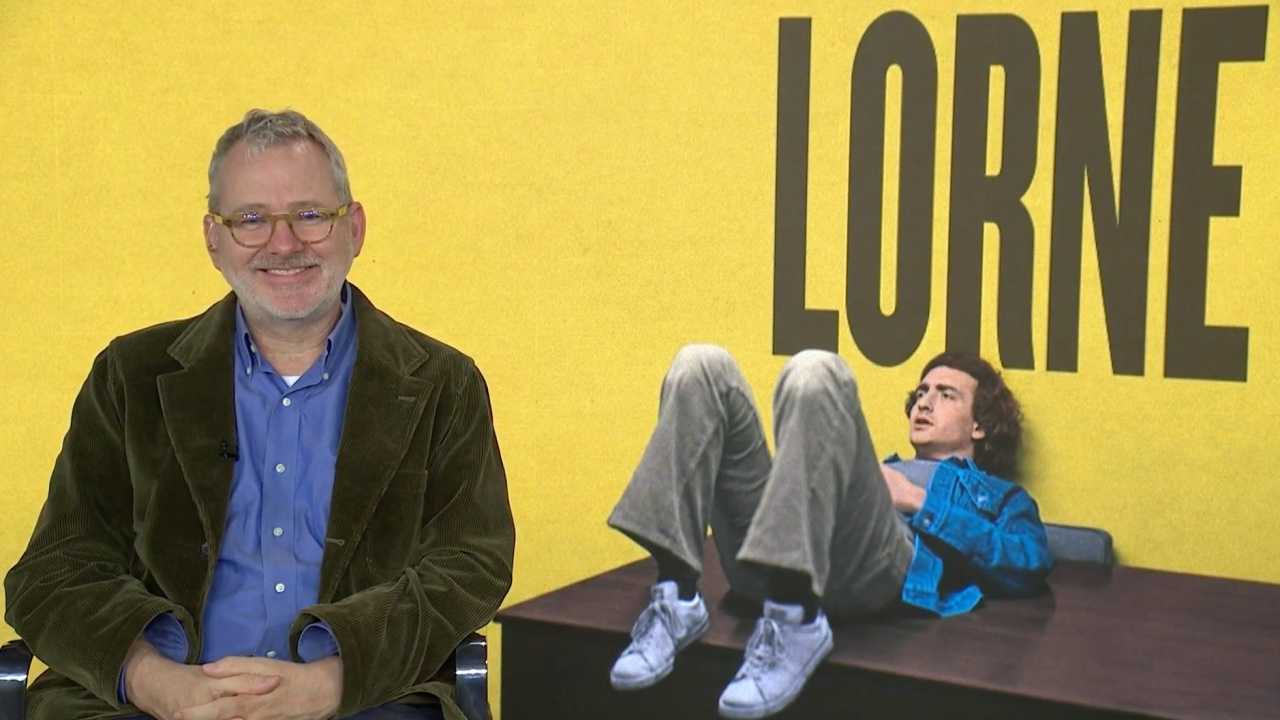

‘Lorne’ director Morgan Neville.
Opening in theaters on April 17th is the new documentary from Oscar winning filmmaker Morgan Neville (‘Man on the Run’) called ‘Lorne’, which chronicles the life and career of ‘Saturday Night Live’ creator Lorne Michaels.

“The legend behind the legends.”
Release Date: Apr 17, 2026
Run Time: 1 hr 41 min
Moviefone recently had the pleasure of speaking with director Morgan Neville about his work on ‘Lorne’, the style of the documentary, making it funny, his unprecedented access to ‘Saturday Night Live’, the show’s darkest period, conducting the interviews, what he learned about Lorne from making the movie, and the future of the long running show.
Related Article: Morgan Neville Talks Paul McCartney Documentary ‘Man on the Run’

Lorne Michaels stars in director Morgan Neville’s documentary ‘Lorne’, a Focus Features release. Credit: Courtesy of Focus Features. © 2026 All Rights Reserved.
Moviefone: To begin with, the film plays almost like an ‘SNL’ parody of a celebrity biopic with animated sequences and Chris Parnell’s narration. Was that what you set out to do from the beginning or did you have to pivot when you realized you might not get what you need from Lorne Michaels himself?
Morgan Neville: I think my intent in the beginning was, I want this to be funny. I didn’t know how exactly. But beyond that, I don’t entirely have a plan about what the film is going to be. I know it had all these great ingredients. I know Lorne’s story is interesting. He’s a fascinating character who rarely does interviews or shows people into his life. I know the show is fascinating. I knew there were lots of interesting things, but I didn’t know how it would fit together. When we started shooting, what you see in the beginning of the film is my first day of shooting, where the cameras come out, and then Lorne vanishes. I felt like one of the themes of the film is basically the theme of me making the film. You go from somebody who really doesn’t seem like he wants a film made about him to somebody who has made his peace with it and is willing to give us a glimpse inside. That was my experience of making the film. So, the idea of bringing Chris Parnell in is a way of channeling ‘SNL’, but also the ‘TV Funhouse’. I mean, it’s also something that I’ve done with a lot of my films. I want the subject of the film to help me decide how to tell the story, so it feels like the telling of it is related to the subject. So, I just kept thinking, well, what is the ‘SNL’ version of a documentary about Lorne? Not to say that because it’s funny that there’s no substance there. Because one thing I’m also proud of is how the emotion sneaks into the film quietly, in a way you’re not expecting. Lorne, in the beginning, is like, “Why is this guy even here? Why is he torturing this poor crew?” But then you understand a lot more about what makes him tick and he opens in that way.
MF: The movie is very funny. Can you set out to make a funny documentary, or is that a result of the subject you are focusing on?
MN: I think humor is one of the great under discussed things in documentary film. I think some of my favorite documentaries are funny in different ways. That could be anything from the films that inspired me to make documentaries, like ‘Sherman’s March’, ‘Roger & Me’, and ‘The Atomic Cafe’. I mean, all the documentaries that got me excited, that are funny in different ways. Even in films I’ve made, like, ‘Best of Enemies’ or ‘Won’t you be my Neighbor?’ There are some big laughs in those films, too. But I think humor is such a great way of letting the audience exhale and open themselves up in a way if they’re laughing. They’re way more receptive to what you might want to share with them. So, I love that, and why can’t documentaries be comedies sometimes? So, this was me intentionally in the beginning saying, “I do want this to be a funny film.” Because it’s a film, most people who are going to watch it are comedy fans. I’ve seen a lot of documentaries about comedy that are really depressing. There are a lot of dark stories in comedy. But I always wanted to remember the comedy part of it, too. ‘Steve! (Martin) A Documentary in 2 Pieces’ was the first comedy documentary I did that was purely comedy, and this is the second. With both, I tried to balance the funny with some weight or gravitas at the same time.
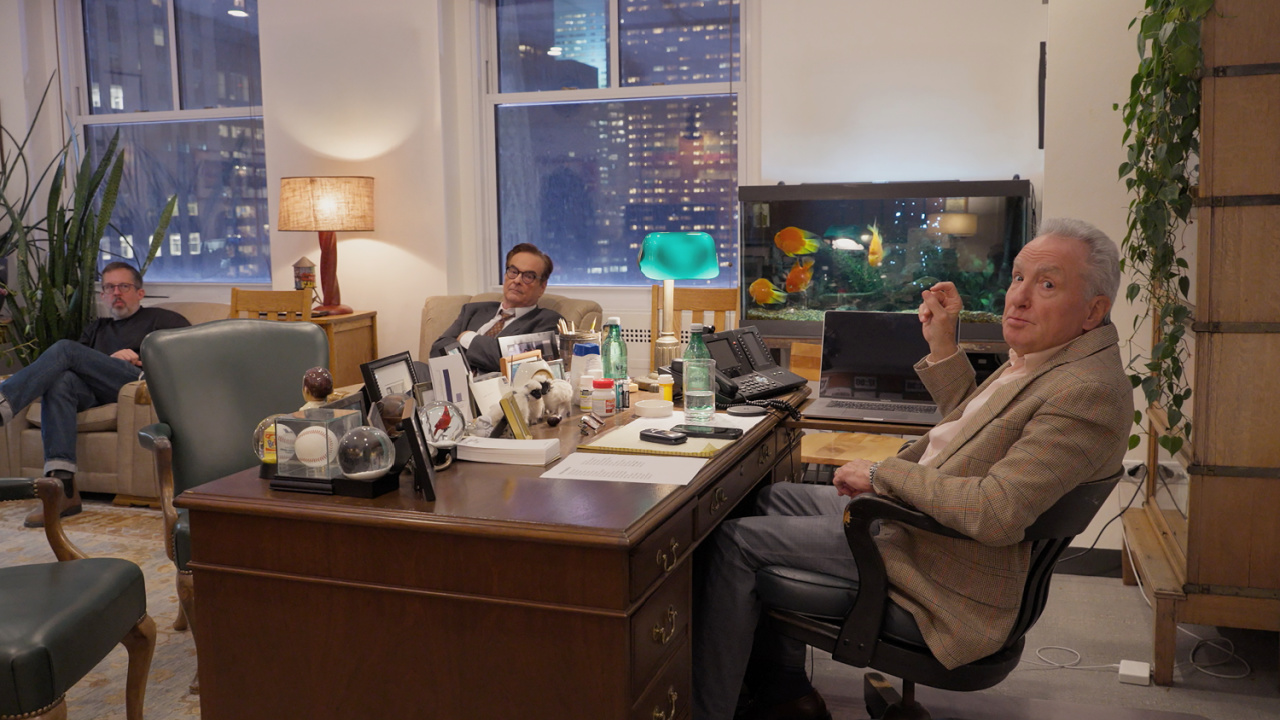
(L to R) Erik Kenward, Steve Higgins and Lorne Michaels in director Morgan Neville’s documentary ‘Lorne’, a Focus Features release. Credit: Courtesy of Focus Features. © 2026 All rights reserved.
MF: Can you talk about the unprecedented access that you had to Lorne and ‘Saturday Night Live’ and what did you learn about him as a person from your access?
MN: I think people think of Lorne as sitting on a throne, deciding who makes it in comedy and who doesn’t make it, and that he is just sitting there, flipping his finger, and deciding the fate of people. I think Lorne sees himself as beleaguered, in the trenches, and worrying about next week’s show and making 100 phone calls to sponsors, network people, affiliates, agents, studios, and cast members to just keep all the plates in the air. So, it’s funny that everybody thinks Lorne is just sitting pretty. I think Lorne feels like he’s just barely making it, because I asked everybody in the film, “At what point do you think Saturday Night Live became a show that was not going to disappear?” Some people said, “Well, when the show reinvented itself after 1995 with Will Ferrell and that amazing cast, or maybe after 9/11, when it became a place where people came together and mourned and laughed together for the first time.” I asked Lorne that question, and he said, “Maybe this year.” You know, fifty years in! So, I think Lorne’s the last person to pat himself on the back and feel like, job well done, we don’t have to worry anymore. I think Lorne is thinking about, “When this cast gels, where’s it going to be in two years?” He’s thinking about things like that. “Oh, this writer I have who might want to leave, maybe I can get him to work on a TV show, and I can get him a development deal.” He’s constantly pulling levers to keep everything kind of bubbling along and that’s something, People don’t see him sweat, but I think he feels like he’s in the thick of it. I think it’s maybe part of why he made the film, is for people to understand that producing is a real job. It’s not just sitting back and collecting checks. It’s a lot of invisible things that people just don’t understand.
MF: You mention in the film that the closest Lorne came to losing control of the show was in the mid- ‘90s, which culminated in the firing of Norm MacDonald. In discussing it with Lorne, did he express any regret in how that went down and being unable to protect Norm in the same way he has protected so many ‘SNL’ performers before and after?
MN: I don’t think so. I love Norm’s comedy. But, let’s face it, Norm was asking for it and in the funniest way possible. Norm was warned again and again and again. So, I think Norm enjoyed poking the bear, and I don’t think Norm felt like Lorne was to blame for any of that. I think the other person in that equation was Jim Downey, the legendary writer who started in season two, and was on and off the show for decades, who I interviewed in the documentary. Jim, at that time, was running ‘Weekend Update’ with Norm, and the two of them were thick as thieves, and they were the ones who were enjoying poking the bear. When Norm got fired, Jim got fired too, but Lorne quietly got Jim back the next year. I think Lorne both felt a loyalty to Jim, and really wanted to protect Jim. Norm was going to be fine. Lorne told the bosses, “Okay, I’ll let them go,” and then quietly rehired Jim, and helped Norm land his next thing. Again, it’s something that made Lorne incredibly unhappy to have to go through, but he is the king of the long game. You may lose the battles, but he always wins the war.
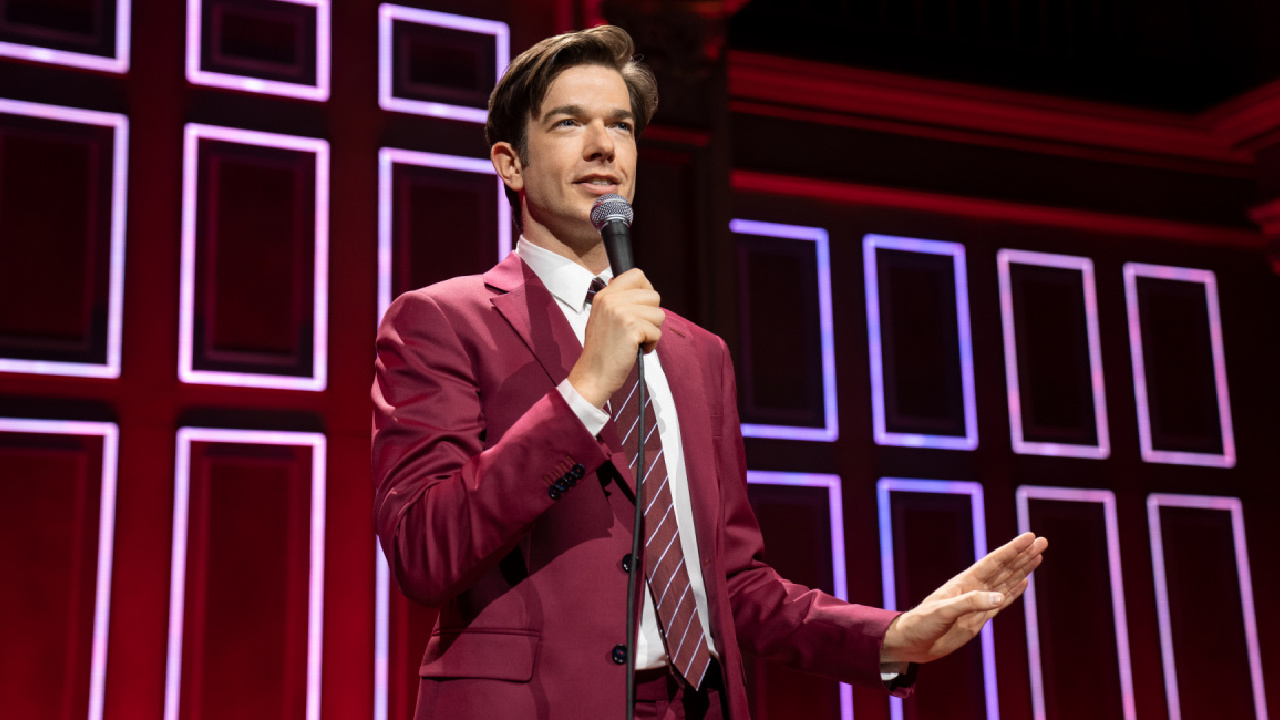
John Mulaney in ‘John Mulaney: Baby J’ Photo: Netflix.
MF: Of all the interviews you conducted, who had the most insight into Lorne and was there anyone you wanted to interview but were unable to?
MN: I mean, the only person I really wanted to interview who said no was Dan Aykroyd, and he had said he was just talked out from doing documentary interviews, which is fine. I get it. But at the same time, for a film like this, you could interview so many people, and I interviewed even more than I normally like to. I normally don’t like to interview a ton of people for a film because I want there to be a smaller chorus of voices. But even here, I could have interviewed another fifty people for this film easily. So, I wanted people from different chapters of his life, people like Howard Shore, who he met at camp as a 14-year-old to Rosie Shuster, his first wife he met in high school who became one of the original writers on ‘Saturday Night Live’. But one of my favorites was John Mulaney because he is both, such a great talker, but also a real student of Lorne’s. They’re friends, but I think John has studied Lorne, and I think when they’re together, John constantly peppers Lorne with questions, and he’s collecting as much information about Lorne as he can. So, I think he was ready to talk. I think he loved talking about Lorne. I think we did, like, a two-hour interview, and I said, “Well, I think that’s good,” and he was like, “Well, let’s keep going.” So we went for another hour, and then when we did the round table, he said, “Oh, I want to do that.” So, I got him together with Bill Hader, Andy Samberg, and Fred Armisen. But I think Mulaney was probably the MVP of talking about Lorne.
MF: Finally, I get the sense from the film that Lorne Michaels is ‘Saturday Night Live’ and ‘Saturday Night Live’ is Lorne Michaels, and that there is no retiring for him. He’ll leave the show when he must and it may go on for a while, but that will be the end of the show as we currently know it. What is your sense of the future of the series and how long do you think it will go on without Lorne Michaels at the helm?
MN: I think Lorne is not going to run the show for another fifty years, but he wants it to continue, and I think it will continue, just because, for no other reason, the IP of ‘SNL’ is very valuable, and people still watch and will continue to watch. It’s one of the last places where we come together to watch things. You know, it’s like sports and ‘Saturday Night Live’. There aren’t a lot of places where we all come together to watch things. So, I think there are a lot of reasons why it will continue. I just don’t think it’ll be the same, because, in part, Lorne’s not doing it, but also because I can’t imagine it continuing to be as wasteful as it is. I mean, Lorne says that in the film. It’s made wastefully, but that’s because by being wasteful, you get to discover more things. He’s producing way more than he needs for a week. So, if you’re able to throw out a third of all your work every week and just pick the best two thirds, it makes it better. But it’s also kind of crazy to know you’re going to throw out a third of all your work every week. I also don’t think there’s one person to fill Lorne’s shoes, which are impossible to fill. But I think the thing about Lorne is he’s managing two different ways. He’s managing down, which is him with the writers and the cast, and all of that, which he’s great at. You hear all those stories of how he works with cast members. But the other part of his job is he’s managing up. So, dealing with the network people, and the sponsors, and affiliates, and studios, and all of that, in a way that is invisible, and is a very different skill than dealing with writers. So, you know, part of me feels like it would take at least two people to do his job.
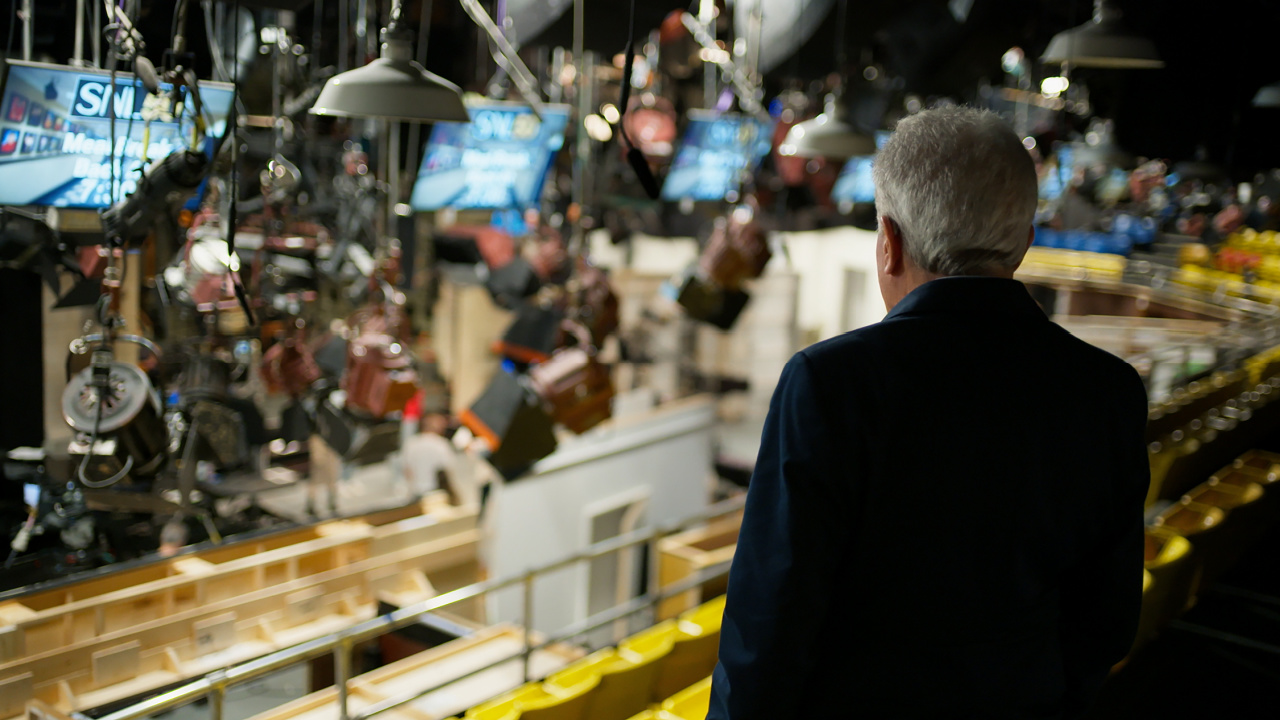
Lorne Michaels stars in director Morgan Neville’s documentary ‘Lorne’, a Focus Features release. Credit: Courtesy of Focus Features. © 2026 All Rights Reserved.
What is the story of ‘Lorne’?
‘Lorne’ is an unprecedented, behind-the-scenes glimpse at the man who built the inimitable empire of comedy, shaping television and culture for generations. The documentary features exclusive footage, archival treasures, and candid interviews with the show’s most iconic cast members and writers.
Who appears in ‘Lorne’?
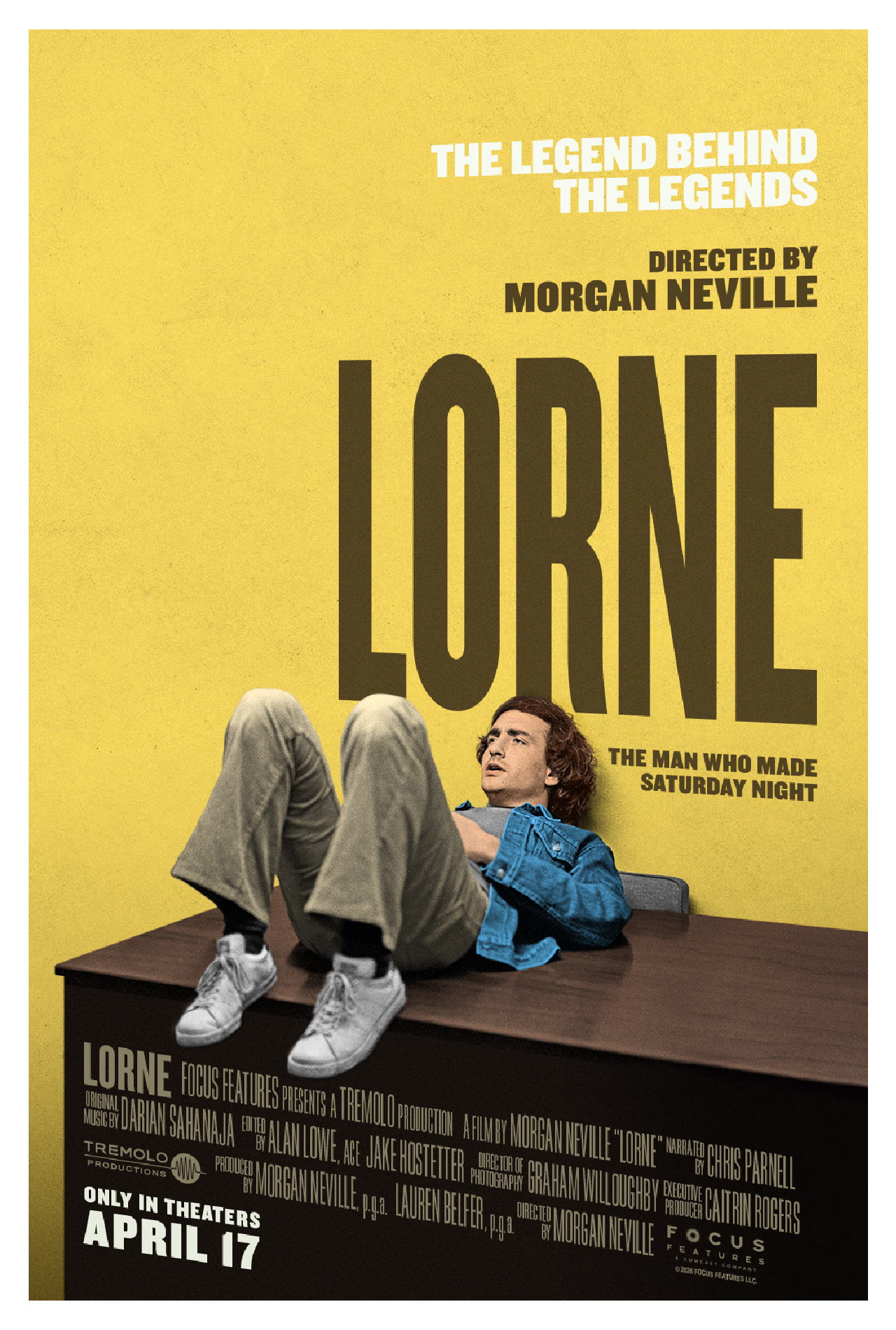
‘Lorne’ opens in theaters on April 17th.
List of Morgan Neville Movies and TV Shows:
Buy Tickets: ‘Lorne’ Movie Showtimes
Buy Morgan Neville Movies on Amazon






Leave a Reply