

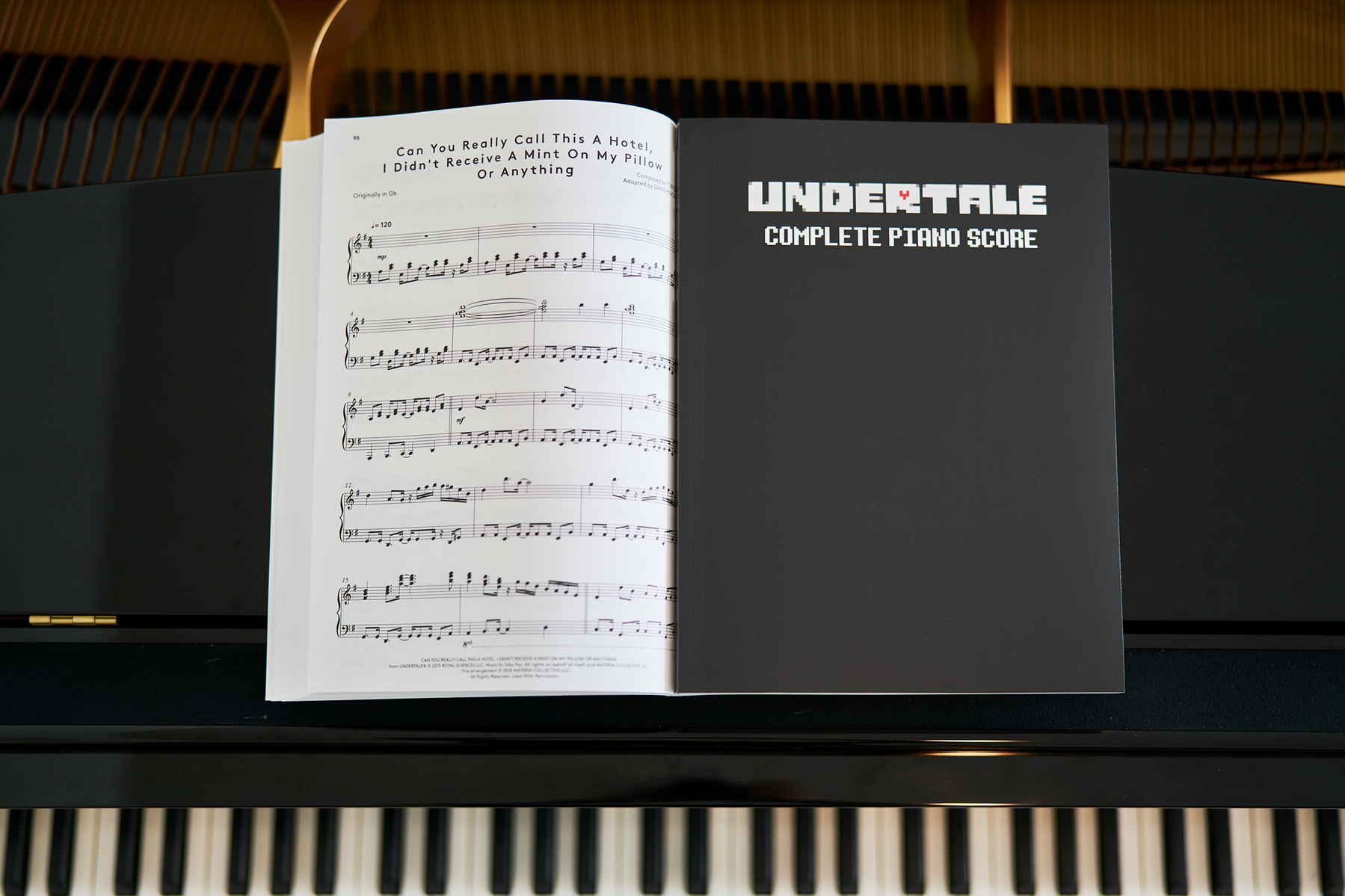
Photo Credit: Materia Music
Materia Music is turning 10, and the timing is hard to beat. A decade ago, original game soundtracks rarely made it past the game itself. Now the company behind Deltarune’s music has a #3 placement on Billboard’s Soundtracks chart.
This article was created in collaboration with DMN partner Materia Music.
Materia Music, the Seattle-based independent label and publisher specializing in original video game music, marks its 10th anniversary this year. The milestone arrives as Deltarune: Chapter 5, the latest installment from creator and composer Toby Fox, debuted at #3 on Billboard’s Soundtracks chart and #5 on Top Dance/Electronic Albums.
According to Billboard, it also marks the first time Fox appeared on a songs-based chart, with “Flower Man” and “Cutie Mew Mew Magic” landing at #13 and #18, respectively, on the Hot Dance/Electronic Songs chart. The Chapter 5 soundtrack, released in June, topped the #5 peak of the Deltarune 3+4 soundtrack that Materia Music released in 2025.
That chart run is the most visible proof point of the long partnership between Toby Fox and Materia Music. Fox first became known for Undertale, and Materia Music has worked with him on the soundtrack for its spiritual successor, Deltarune, since Chapter 1 arrived in 2018.
Original game music has been a distinct musical category for decades, building a bond between listener and score that few other genres achieve. Game music is written for an interactive medium, where a track may need to loop for hours, shift with the action on screen, or carry a moment the player has shaped themselves. Composers often write it alongside the game rather than after the fact, so the music becomes an integral part of how a game world looks, feels, and is remembered by gamers. That connection explains why games return to these scores long after they finish a game and why they seek out the music available in formats like vinyl, sheet music, or in live performances.
What Materia Music has built over the past ten years is a way for that music to travel beyond the game. Materia treats an original soundtrack as more than a single release. It arrives on streaming platforms but also as CDs and LPs for collectors, as sheet music for players keen to learn the pieces on their instruments, and as merchandise for fans who want to carry a piece of their favorite game with them.
“As a classically trained pianist, I am overjoyed by the reaction our sheet music books have had,” shares Sebastian Wolff, CEO of Materia Music. “Over 50K books printed and sold to date, inspiring the next generation of players—both of games and instruments.”
That range exists because fans actively seek out this music and continue to listen to a game’s original soundtrack long after the credits roll.
“During a single convention, more than 20,000 people walk past our booth, and the fans who stop almost always have a story about the first time a song from a game stuck with them,” shares Jen Miller, Consumer Events Coordinator for Materia Music. “They aren’t just shopping. They want a way to reconnect with their favorite game and share that feeling with other fans, whether it’s a record, a book of sheet music, a shirt, or a night at a live concert.”
Behind that demand sits Materia Music, with its publishing, licensing, and sync operation that manages the rights and revenue this music generates once it reaches audiences outside the game. Fans’ appetite for original game music has driven Materia’s growth, and the company looks very different from the small team that started it, growing from four people to 35 in roughly five years.
“Game music has always had devoted fans,” shares Joel Andrew, Head of Operations for Materia Music. What was missing is the infrastructure to serve them properly: the rights work, the manufacturing, the distribution, and the reporting. We spent ten years building that, so the people who make the music don’t have to figure it all out themselves.”
Materia Music’s rise over the last ten years matches the expanding audience that game music reaches. The global games market generates $560.55 billion annually, with a forecast expecting the market to reach $761.51 billion in 2026. The number of players worldwide already exceeds 3 billion, with an expected reach of 3.7 billion by the end of 2026.
The scale of the gaming industry shows up in deal prices, too. Microsoft’s $68.7 billion acquisition of Activision Blizzard dwarfs even the biggest music catalog sales. That includes the more than $1 billion Queen catalog acquisition and the $1.6 billion Hipgnosis acquisition. When a single game publisher can command that kind of valuation, the original music built for those worlds is working in a very different league than licensed or synced music that appears in games like GTA VI.
Ten years in, Materia Music is no longer just a label for releasing original game music onto DSPs. It is a rights, publishing, and catalog business built around the idea that original game music has a life well beyond the game itself. Materia Music’s next chapter is already taking shape. If the first decade was about proving original game music can chart, the next may be about proving that original game music can sustain a full music business tailored toward audiences who have a deep love and appreciation for that music. The company is working on new ways to bring that music to listeners, with more to be announced soon.
“For a growing number of people, a game is where they first fall in love with a song, and that love doesn’t go away when the game ends,” continues Wolff. “Our mission is to give this music the long life it deserves, with the human artists who write it sharing in its success.”





Leave a Reply