
By Gerald Bourguet
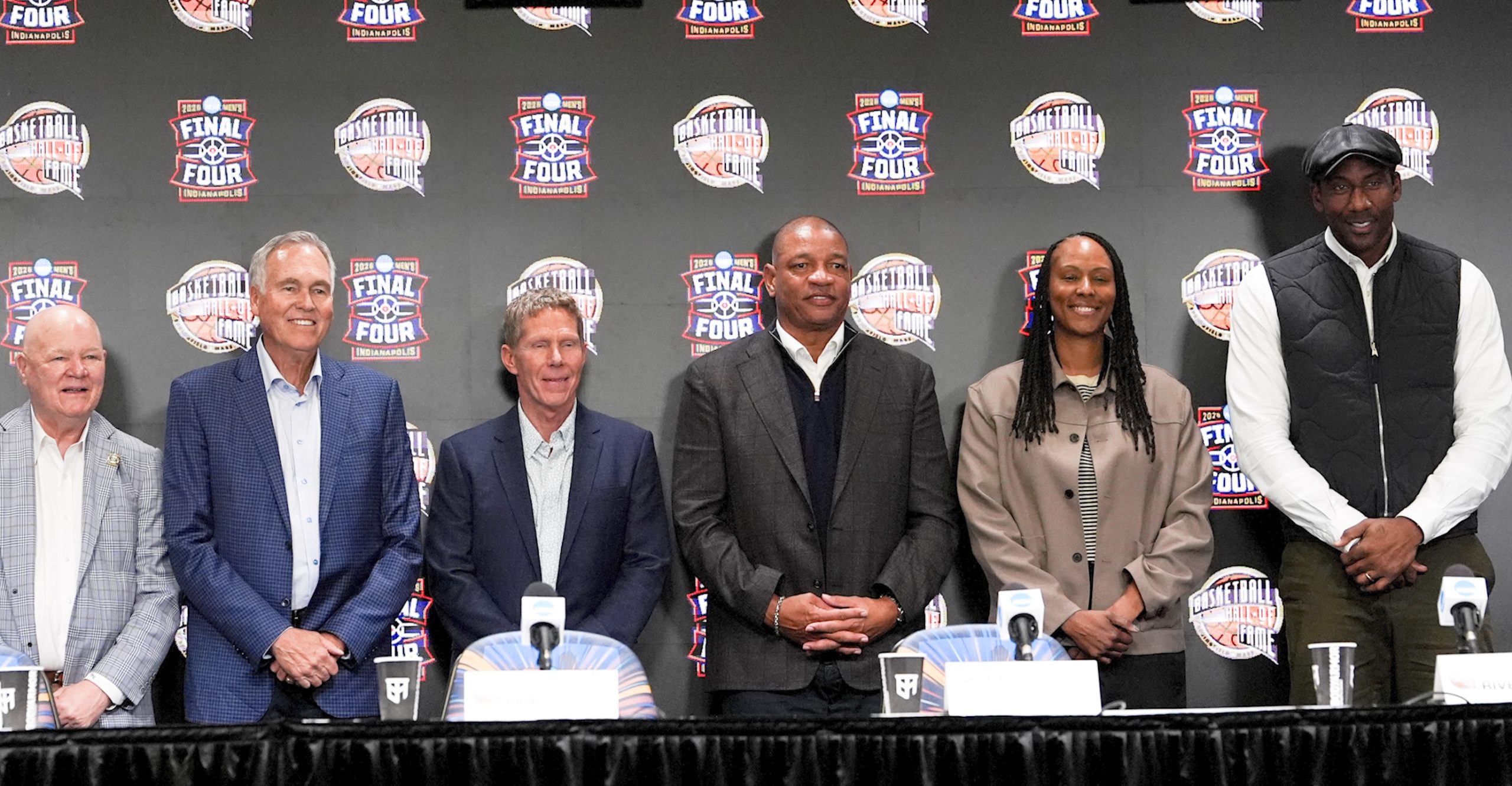
On Saturday, legendary Phoenix Suns coach Mike D’Antoni will officially be inducted into the Naismith Memorial Basketball Hall of Fame. Despite his reputation as one of the all-time greats who never won an NBA title, it’s a well-deserved honor for a coach (and former player) whose career spanned decades in the league and in Italy before that.
The resumé speaks for itself. D’Antoni is 22nd on the NBA coaches’ all-time wins list, with a 672-527 record overall (.560 win percentage). He’s a two-time Coach of the Year award winner, three-time conference finalist, and he won two Olympic gold medals as an assistant coach for Team USA in 2008 and 2012.
As a Suns head coach, only John MacLeod (579) won more regular season games than D’Antoni (253), and only MacLeod (37) and Monty Williams (27) won more playoff games (26). All of this, of course, is before you even get to his career in Italy, where won five Italian League championships, two Italian Cups and one FIBA Intercontinental Cup as a player with Olimpia Milano…before coaching them to two more Italian League championships and two Italian Supercups.
D’Antoni was never able to reach those same peaks in the NBA, and there are literally dozens of heartbreaking playoff moments that come with such a distinction.
And yet, in his humbly trademark way, the happy-go-lucky 75-year-old wants to focus on the good times he shared with his players and teammates — the ones he credits with getting him to this monumental point.
“You start thinking (about) all the people that got you here, because it’s a whole collective of players and front offices and friends and family, and just so many people that are just as responsible as I am getting here,” D’Antoni told me on the Suns After Dark Podcast. “The day it happens, you never think about it. All the way through your career, all you’re trying to do is provide for your family and win games and have fun and all the above — make the players better and hope they can provide for their families and have fun. So it’s pretty cool, obviously. But I am taken aback and appreciate all the people that got me here.”
It’s just like D’Antoni to defer to the admittedly excellent players he got to coach over his stops at Olimpia Milano, Phoenix, New York, Los Angeles and Houston. And it’s particularly special for him to be inducted alongside one of them, Amar’e Stoudemire, who is also part of the 2026 Hall of Fame class.
“It’s great, Amar’e, just to watch his growth,” D’Antoni said. “When he came in, I was an assistant in Phoenix his first year, and he was just raw from Florida and really not very worldly. And to watch him grow into the man he’s grown (into) and where he is today and who he is, it’s pretty impressive what he did and how he just improved his game every year and kept working, kept working, and got to the Hall of Fame. It’s remarkable.”
D’Antoni spent all five of his seasons as the Suns’ head coach with STAT, then got to coach him again for another season-and-a-half with the New York Knicks. But it was their time together in Phoenix where both really left their mark on NBA history, with D’Antoni being the main architect of the “Seven Seconds Or Less” Suns.
Those teams were revolutionary at the time, emphasizing pace, spacing and 3-point shooting while going smaller, rather than playing traditional bigs. As a former point guard himself, D’Antoni had always liked to play a certain style based on the fast-paced offenses he ran at Marshall University in college, and he eventually carried that over to his career in Italy when he became a coach.
D’Antoni recalled his Milano team having a mediocre season despite having enough talent to compete. He needed to change things up to keep his job, so he went with his gut, moving his leading scorer to the bench and opting for a smaller, fast-paced lineup. It exploded, and years later, when he landed the main gig in Phoenix, it gave him the confidence to unleash that run-and-gun philosophy on the NBA.
Of course, none of it would’ve been possible without his co-architect and maestro on the floor, Steve Nash. That first summer with D’Antoni in charge in 2004, Phoenix knew that Nash was the guy they needed to make that playing style work.
“We got a preview, because Steve — being in Dallas — would come to Phoenix and play sometimes before the season started, just pickup ball in our gym with our other guys, no coaches or anything,” D’Antoni said. “And just watching him play, he just made everybody better. You could just tell. It was like, ‘Okay, that’s the guy we gotta get.’ And luckily, we were able to do that.”
D’Antoni credits owner Jerry Colangelo for empowering him and general manager Bryan Colangelo for going out and getting Nash in free agency. The Suns now had the tools, but even internally, expectations for the 2004-05 season were low. After all, Phoenix had only won 29 games the season before.
“I don’t think any of us expected that it would explode like it did,” D’Antoni admitted. “We only won 28 games the year before, 29, 28, something like that, and we added Steve Nash, and everybody else is more or less the same — well, we added Quentin Richardson, which was a big part. But we went into the season, we just wanted to make the playoffs.”
The Western Conference was still stacked, and everyone was trying to figure out how to handle the Los Angeles Lakers with Shaquille O’Neal. D’Antoni’s gut told him that playing a traditional big was just fodder for Shaq to clobber, so when the Colangelos asked him the big question at lunch that offseason, the new Suns coach was honest…eventually.
“Jerry, I remember, posed the question at lunch one day: ‘Well, who’re you starting?’ after we got Steve and everybody,” D’Antoni explained. “And I go, ‘Well, I mean, we could go this way, traditionally, blah, blah blah’ — you know, you do your coach’s tap and dance, I didn’t wanna come out boldly. And then I said, ‘Or, we could go small,’ and both of ’em almost simultaneously said, ‘Well, do what you think your gut says to do.’ And with that, I said, ‘Oh, okay!’”
D’Antoni had been given the green light, and while he insists the new playing style took some experimentation and didn’t come together right away, it exploded pretty immediately after that. The Suns got off to a 31-4 start, and a lot of those pre-season critics had to bite their tongues.
“We had a lot of people that were naysayers,” D’Antoni said. “‘Cause I talk to players, maybe have ’em a couple hours a day. Then they go home, they got uncles, they got barbershop people, they got talk radio, they got TV shows, ex-players, and all of ’em saying, ‘This is not gonna work. It’s gonna kill your career.’ And so, you gotta give them a lot of credit for feeling the same thing I was feeling that this will work. And then luckily we started off 31-4, and it became a moot point.”
The immediate success certainly didn’t hurt with player buy-in, despite going against the grain of the rest of the league. With a laugh, D’Antoni said that his discussions with coaches before heading into the locker room at halftime basically amounted to “Don’t say anything in there to screw this up!” because they were usually up by 15 at that point.
As the wins kept piling up, even Mike D’Antoni and Bryan Colangelo were surprised by how successful that Suns team was.
“I’d walk in around 7:30 (in the morning) or so, and I’d go into his office and I’d just look, and he’d look at me, and we’re like 20-2 or something, and we’d just start laughing,” D’Antoni said. “It’s like, ‘Holy mackerel, did we ever think this was gonna happen?’”
After that 31-4 start, Nash got hurt and the Suns lost six games in a row. But once Phoenix got healthy, they started cruising once again, finishing the year atop the West with a 62-20 record — a staggering 33-win turnaround from the year before. Nash won MVP honors, D’Antoni won Coach of the Year, and Amar’e Stoudemire and Shawn Marion were both named All-Stars alongside Nash.
A new era had dawned in Phoenix, but unfortunately, their success wouldn’t carry them to the promised land in the playoffs. The Suns reached the Western Conference Finals, but lost in five games to Tim Duncan and the San Antonio Spurs. Phoenix missed Joe Johnson for the first two games of that series due to a left orbital bone fracture he suffered in the prior series against the Dallas Mavericks, and his absence loomed large for the Suns.
D’Antoni still believes that first year was one of two seasons in Phoenix where he felt the Suns were the closest to winning it all.
“The first year, I thought we were the best team in the league by far — not by far, but the best team,” he said. “Joe Johnson was a big part of what we did, shooting 47 percent from 3 — most people don’t realize that, how well he shot from 3 — being the point guard that can spell Steve when he goes so I can get Steve more rest, guarding the hardest guard on the floor so Steve can have more rest. He was an integral part of what we did.”
While D’Antoni credited Jim Jackson for stepping up and giving Phoenix good minutes, the Spurs were in the midst of their own dynasty, and they were simply too much to handle with Joe Johnson sidelined. San Antonio would go on to win the title, and Phoenix lost Johnson that summer after he was displeased with the Suns’ low-ball offers and demanded a sign-and-trade.
The following year, Phoenix won 54 games despite Stoudemire missing all but three games. They reached the conference finals once again, but lost to the Dallas Mavericks in six games.
But it was the 2006-07 campaign that may have been the most difficult to stomach. Phoenix finished as the 2-seed in the West with 61 wins, and the pathway to the NBA Finals looked wide open after the 67-win Mavs were upset in the first round of the playoffs by the 8-seeded “We Believe” Golden State Warriors.
Unfortunately, in the second round, the Spurs once again stood in Phoenix’s way. Robert Horry’s infamous hip check — which saw Amar’e Stoudemire and Boris Diaw suspended for a pivotal Game 5 because they left the bench in that scuffle — ultimately gave San Antonio the edge. The Spurs took Game 5 in Phoenix against the shorthanded Suns, won Game 6 at home, and went on to win another title.
“To have your whole season screwed up because of that, that leaves a mark,” D’Antoni said.
Nothing would’ve been guaranteed for Phoenix if those suspensions had never happened; the Suns still would’ve had to win the conference finals and the Finals after that. But the 4-seeded Utah Jazz would’ve been light work for Phoenix in the conference finals, and the Spurs swept an unprepared Cleveland Cavaliers team carried by LeBron James in the Finals.
The Suns had been knocked out in the second round, but that year was probably their best shot to end the city’s NBA title drought.
And yet, the blows kept coming. Phoenix knew they were going to lose Shawn Marion in free agency the following summer, so they dealt him in a trade for Shaq midseason. They still won 55 games, but were bounced in the first round of the playoffs by the Spurs once again.
It was the first time D’Antoni’s Suns failed to make it out of the first round, and the wind was knocked out of their sails in Game 1 of that series, when Tim Duncan hit the first 3-pointer of his career with three seconds left in overtime to force double-OT.
Phoenix crumbled in five games, D’Antoni left the team that summer to become the New York Knicks’ head coach, and just like that, the Seven Seconds Or Less era was over. Looking back, he and those Suns teams suffered more than their fair share of traumatizing losses that sting as competitors.
“‘Sting?’ D’Antoni said with his eyebrows raised, almost incredulous at the word choice. “Hey, they hurt so hard you can’t believe how hard they hurt. You’re on the couch in a fetal position, just taking body blows!”
The 75-year-old coach’s lovable sense of humor is clearly still intact, but it took years of playoff loss and postseason heartbreak for him to learn how to make his peace with it.
“I think Winston Churchill said it: ‘When you’re going through hell, put your head down and keep on going,’” D’Antoni said. “I’ve had those (traumatic losses) in high school, I’ve had ’em in college, I’ve had ’em. Just, any level, I’ve had ’em.”
Fortunately — or maybe unfortunately — D’Antoni had years of practice in Italy as well. He recalled a two-year stretch where his team lost six title games in a row by one or two points, since those leagues had an Italian Cup, and Italian league championship and a European type of cup each year. And his team lost all of them, two years in a row, after coming so close each time.
“It was like there wasn’t enough wine or champagne to erase all the pain that was going on,” D’Antoni explained. “But the more we lost, the closer we got as a team, and then after that, we won like five titles in a row. So we didn’t let that defeat us, or the front office and coach did not deter them at all. They just kept going with the program.”
In the NBA, it’s harder for a front office to keep the faith and give teams more cracks at it. Between the media hype, the tension and the millions of dollars involved, it’s no wonder players routinely jump ship for better contracts or better opportunities.
But that didn’t mean D’Antoni’s time as a title-contending coach in the NBA was done after Phoenix. Although he failed to win a single playoff game over six seasons coaching the Knicks and Lakers, his time in Houston with James Harden and Chris Paul gave him one last shot at the mountaintop.
D’Antoni won Coach of the Year honors in his first year with the Rockets, helping lead them to a 55-win season. They lost in the conference semifinals — once again to those dreaded Spurs — but they added Chris Paul over the summer to truly open their window of contention.
That next season in 2017-18, the Rockets won a franchise-record 65 games, finishing with the NBA’s best record. In the conference finals, they were up 3-2 on the defending champion Golden State Warriors — with Steph Curry, Klay Thompson, Draymond Green and Kevin Durant in tow. But late in Game 5, Chris Paul suffered a hamstring injury that ended his season.
“We thought we were the best team in the league by far that year, for sure,” D’Antoni said. “And we had Golden State on the ropes, with their Big 3 — Big 4, actually, they’ll probably have four Hall-of-Fame guys going in. They were good, and Steve Kerr does a great job. We had ’em, you know? We had ’em, and just…Chris got hurt. And that’s just the way it goes.”
The Warriors won the next two games to advance to the NBA Finals, but Game 7 was particularly cruel. Houston led by as many as 15 points in the first half, but they missed 27 3-pointers in a row, which is an NBA record for most consecutive 3-point misses in a playoff game.
“Analytically, I know that’s not good!” D’Antoni said with a laugh.
Chris Paul lasted one more season in Houston before getting traded, and D’Antoni lasted two more seasons after that devastating loss in 2018 before his time as an NBA head coach came to a close. It was yet another period littered with painful “what-ifs,” but by that point in his career, D’Antoni had adopted a new mantra: What’s next?
“I don’t think we had the mantra back then (in Phoenix that) I did in Houston,” D’Antoni said. “We would always say after a game like that, ‘So what? What’s next?’ You know, that’s it. Because it was a great game, so you have to also appreciate, ‘Well, that was fun.’ I mean, you saw some of the best.”
Even after years of being out of the league, it’d be easy to look back on those days with bitterness or regret. He’s one of the greatest coaches of all time to never win a title, and he coached multiple Suns and Rockets teams that are considered some of the greatest teams of all time to never win a championship.
To that point, D’Antoni admitted he spent his fair share of time looking back on the heartbreak just to be sane. But at this point where he has another opportunity to look back fondly on his career before Saturday’s Hall of Fame induction ceremony, he prefers to reminisce about the good times and the people who brought joy to the job, with the understanding that the shadow proves the sunshine.
“It’s worth it,” he said. “All the highs are worth all the lows. You can’t experience the great highs if you don’t have some great lows. It just doesn’t happen. You can stay in the middle and just be kinda blah, but we shot for the moon a couple times and got close to it. Didn’t quite get there, but very rewarding.”
That’s just who Mike D’Antoni is: Undaunted, fun-loving, light-hearted, humble, and willing to share his success with those who joined him on the journey. His biggest concern these days is how he’s supposed to fit all the people he wants to thank into a seven- or eight-minute acceptance speech, and the only regret he really has is when he didn’t zig far enough while the rest of the league zagged.
“The biggest regrets I have is when I didn’t believe enough in ourselves or myself or the coaching style to push it forward even more, back before analytics came along,” D’Antoni said. “But it could’ve been better, and we could’ve been so much more dynamic. And also, when you hit a bump in the road, being so sure of what you’re doing that you don’t let that send you sideways. It’s like, ‘No, keep going. Double down.’ I didn’t have that earlier in my career. I’m just trying to feed my family, I’m just trying to make a career out of it. So some regrets, but now, it’s like, why stew over that? Just remember the good times.”
Despite how many of those good times ended in playoff loss, last-second heartbreak or out-of-his-control bad luck, Mike D’Antoni believes he was “as lucky as can be” for the players he got to coach, the assistant coaches and GMs he got to work with, and the success he enjoyed as a pioneer of the game over his Hall of Fame career.
“It’s a wild journey, but it was fun and I enjoyed every minute of it,” he said, before giving a little smirk. “Well, almostevery minute of it.”
For more of Gerald Bourguet’s Suns work, check back with Sports360AZ on a weekly basis, subscribe to his Patreon articles and podcast at Suns After Dark, or follow him on Twitter.



Leave a Reply