
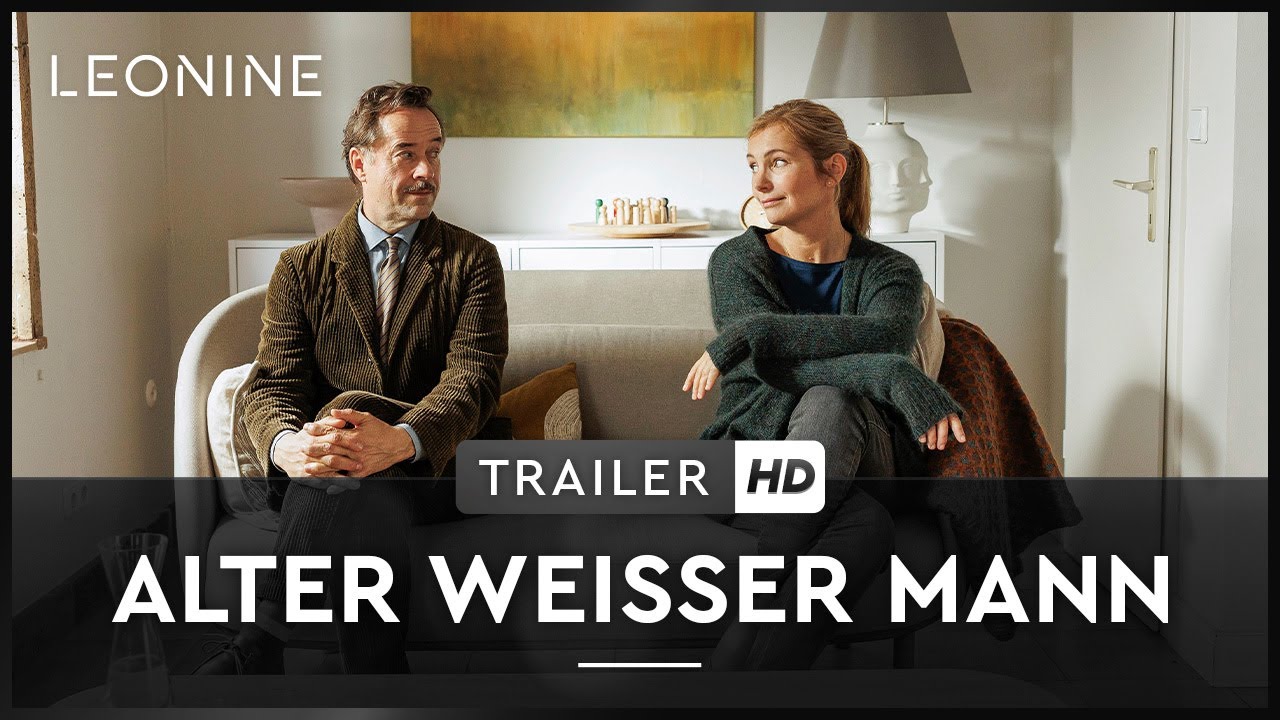
A Sharp Social Satire About Political Correctness, Generational Change, and the Fear of Saying the Wrong Thing
Blending fast-paced comedy with contemporary social commentary, Alter weißer Mann (“Old White Man”) examines how rapidly changing cultural expectations around diversity, inclusion, and workplace etiquette create both genuine misunderstandings and comic absurdity, turning one family dinner into a chaotic collision of modern values.
The Big Picture: A Dinner Party That Becomes a Battlefield of Modern Culture
Written and directed by Simon Verhoeven, Alter weißer Mann (2024) follows Heinz Heimlich, a middle-aged office employee whose traditional attitudes have earned him the stereotype of the “old white man.” Hoping to secure a long-awaited promotion, Heinz attempts to reinvent himself as the model of political correctness. His carefully rehearsed performance begins to unravel, however, when he invites his boss and colleagues to dinner, where an evening intended to demonstrate his cultural sensitivity quickly spirals into a succession of awkward misunderstandings, escalating arguments, and increasingly outrageous revelations. As every guest brings their own assumptions, insecurities, and ideological convictions to the table, Heinz discovers that navigating contemporary social expectations is far more complicated than simply choosing the right words.
More than a workplace comedy, Alter weißer Mann explores how generational change has transformed everyday conversations about identity, privilege, diversity, and communication. Rather than taking a simplistic position in today’s culture debates, Simon Verhoeven uses satire to expose how fear of making mistakes can become just as disruptive as ignorance itself. Through exaggerated misunderstandings and rapid-fire dialogue, the film examines the challenges of adapting to changing social norms while questioning whether genuine understanding can survive when everyone becomes more concerned with appearing correct than communicating honestly.
➡️ Implication: Alter weißer Mann reflects the growing popularity of contemporary social satires that use comedy to explore cultural polarization, workplace diversity, and the evolving expectations surrounding identity and communication.
Quick Facts
|
Jan Josef Liefers, Elyas M’Barek, Meltem Kaptan, Michael Maertens |
|
|
October 31, 2024 (Germany) |
|
|
Leonine Studios, Wiedemann & Berg Filmproduktion, Sentana Filmproduktion |
|
|
1 nomination (Golden Hen Awards – Acting) |
|
|
Fans of social satire, workplace comedies, contemporary European comedy, and films about generational conflict and political correctness |
What This Story Is Really About: When the Fear of Offending Replaces Honest Conversation
While Alter weißer Mann (2024), directed by Simon Verhoeven, follows Heinz Heimlich as he desperately tries to present himself as politically correct in front of his superiors, its deeper focus is on the anxiety many people experience while navigating rapidly changing social expectations. Heinz’s carefully constructed performance reflects a broader fear of saying the wrong thing in an era where language, workplace culture, and public behavior are evolving faster than many people can comfortably adapt. As his dinner party descends into chaos, the film reveals how authenticity often collapses when individuals become more concerned with avoiding mistakes than communicating honestly.
Beyond its broad comedy, Alter weißer Mann examines how generational differences, identity politics, and workplace diversity influence modern relationships. Every guest arrives with their own assumptions, insecurities, and ideological positions, transforming an ordinary social gathering into a humorous collision of competing worldviews. Rather than portraying cultural change as entirely positive or negative, Simon Verhoeven satirizes the misunderstandings that arise when people rely on stereotypes instead of genuine dialogue, suggesting that empathy requires openness rather than carefully rehearsed correctness.
➡️ Implication: Alter weißer Mann demonstrates that contemporary social comedies increasingly use humor to explore cultural polarization, showing how fear, misunderstanding, and communication breakdowns often create greater conflict than ideological differences themselves.
Why This Film Is Worth Discovering: A Fast-Paced Satire of Modern Workplace and Social Culture
One of Alter weißer Mann‘s greatest strengths is its ability to transform contemporary cultural debates into energetic ensemble comedy. Rather than presenting abstract discussions about political correctness, diversity, or generational conflict, the film grounds these issues in recognizable everyday situations where misunderstandings escalate through awkward conversations and social expectations. The dinner-party setting allows multiple perspectives to collide simultaneously, creating rapid-fire exchanges that expose the contradictions, hypocrisies, and insecurities shared by every generation.
The film also benefits from Simon Verhoeven’s confident comic direction and Jan Josef Liefers’ performance as Heinz, whose desperate attempts to appear progressive become increasingly impossible to sustain. Instead of portraying Heinz as either a villain or a victim, the film presents him as an ordinary individual struggling to adapt to a changing cultural landscape. This balanced approach allows Alter weißer Mann to function as both an entertaining farce and a broader commentary on communication, identity, and social expectations in contemporary Germany.
➡️ Implication: Alter weißer Mann illustrates how modern European satire continues evolving by using humor not simply to mock cultural debates but to explore the human uncertainty that often exists beneath them.
Should You Watch It? A Clever Social Satire for Viewers Who Enjoy Sharp Contemporary Comedy
Best Suited For: Fans of Smart Ensemble Comedies and Cultural Satire
-
Viewers who enjoy social satires that examine contemporary issues such as political correctness, workplace diversity, and generational change through humor rather than confrontation.
-
Fans of ensemble comedies, where multiple personalities and opposing viewpoints collide in increasingly chaotic and entertaining situations.
-
Audiences interested in modern European comedy, particularly films that blend fast-paced dialogue, family dynamics, and workplace satire.
-
Viewers who appreciate character-driven humor, where misunderstandings, awkward conversations, and social anxiety create both laughs and thoughtful reflection.
May Not Appeal To: Viewers Looking for Broad Slapstick or Apolitical Comedy
-
Audiences seeking purely escapist comedy, as the film frequently engages with contemporary debates surrounding identity, inclusion, and workplace culture.
-
Viewers expecting subtle arthouse humor, since Alter weißer Mann embraces broad satire, exaggerated situations, and energetic ensemble performances.
-
Fans of traditional romantic or family comedies, as much of the humor comes from ideological clashes rather than emotional storytelling.
-
Anyone uncomfortable with comedy built around controversial social topics, as the film deliberately satirizes cultural stereotypes and politically sensitive conversations from multiple perspectives.
➡️ Implication: Alter weißer Mann (2024), directed by Simon Verhoeven, is best suited for audiences who enjoy socially relevant comedies that use humor to explore changing cultural norms, workplace dynamics, and the complexities of modern communication.
Why Everyone Is Talking About It: A Comedy That Satirizes Today’s Culture Wars
Alter weißer Mann (2024), directed by Simon Verhoeven, has become one of Germany’s most talked-about comedies because it tackles one of today’s most polarizing cultural topics through humor rather than ideological argument. Instead of taking a clear political position, the film pokes fun at misunderstandings surrounding political correctness, diversity initiatives, generational differences, and workplace etiquette, allowing audiences from different perspectives to recognize elements of themselves in its exaggerated characters. This balanced satirical approach has generated discussion about whether comedy can still serve as a space for exploring sensitive social issues without becoming overtly partisan.
The film has also attracted attention thanks to its strong commercial performance, earning more than $8 million worldwide and becoming one of Germany’s notable domestic comedy successes of 2024. Its combination of recognizable workplace situations, family dynamics, and fast-paced ensemble humor demonstrates the continued popularity of socially conscious comedies that encourage audiences to laugh at the absurdities of modern life while reflecting on the changing rules of public conversation.
➡️ Implication: Alter weißer Mann illustrates how contemporary European comedies continue using satire to explore cultural change, proving that humor remains an effective way to examine difficult conversations about identity, communication, and social expectations.
Audience & Critical Reception: A Commercial Comedy That Sparked Conversation About Modern Society
Audience Response: Broad Entertainment with Plenty of Cultural Debate
Audience reactions to Alter weißer Mann (2024), directed by Simon Verhoeven, have been mixed but highly engaged, reflecting the film’s willingness to tackle controversial contemporary topics through comedy. Many viewers praised its fast-paced dialogue, energetic ensemble cast, and ability to find humor in everyday workplace situations where people struggle to navigate changing expectations around language, diversity, and political correctness. Jan Josef Liefers received particular praise for portraying Heinz as a flawed yet relatable character whose desperation to fit into a rapidly changing social environment creates many of the film’s funniest moments.
Other viewers felt the satire occasionally relied too heavily on familiar stereotypes or broad caricatures, arguing that some jokes favored exaggeration over subtlety. Nevertheless, many agreed that the film succeeds as accessible entertainment because it refuses to present simple heroes or villains, instead encouraging audiences to laugh at the misunderstandings and insecurities shared by people across generations.
Critical Reception: A Fast-Paced Satire That Balances Humor with Social Observation
Critics generally recognized Alter weißer Mann as an ambitious attempt to transform today’s cultural debates into mainstream entertainment. Rather than presenting a purely political statement, reviewers noted that Simon Verhoeven approaches subjects such as workplace diversity, cancel culture, generational conflict, and political correctness through farce, allowing the comedy to emerge from escalating misunderstandings instead of ideological confrontation.
Many critics also highlighted the film’s screwball-style pacing, ensemble performances, and carefully orchestrated dinner-party structure, where every new guest increases both the comedic energy and the social tension. While some reviewers questioned whether every satirical target receives equal treatment, the film was widely acknowledged as one of Germany’s more ambitious contemporary social comedies, successfully using humor to encourage discussion rather than simply delivering easy answers.
➡️ Implication: Alter weißer Mann demonstrates how contemporary European comedy continues evolving by using satire to explore rapidly changing social norms, transforming politically sensitive topics into opportunities for entertainment and reflection.
Awards & Recognition: Commercial Success Overshadowed Awards Recognition
Although Alter weißer Mann (2024), directed by Simon Verhoeven, received relatively limited awards recognition, the film achieved notable commercial success, grossing more than $8.1 million worldwide and becoming one of Germany’s stronger domestic comedy releases of the year.
Its primary industry recognition includes:
While major international festival recognition did not follow, the film’s strong theatrical performance demonstrated the continued audience appetite for socially relevant comedies addressing contemporary workplace culture, generational differences, and political correctness. Its commercial success arguably became its most significant achievement, confirming that topical satire remains an important part of mainstream German cinema.
➡️ Implication: Alter weißer Mann shows that commercially successful social comedies do not necessarily require extensive awards recognition to shape cultural conversations, proving that audience engagement can be just as influential as critical accolades.
Entertainment Trend: Social Satire Is Becoming a Mirror for Workplace and Cultural Anxiety
Alter weißer Mann (2024), directed by Simon Verhoeven, reflects a growing trend in European cinema where comedy is increasingly used to explore the uncertainties created by rapidly changing social norms. Rather than relying on timeless misunderstandings or purely personal conflicts, contemporary social satires focus on issues such as diversity, workplace inclusion, generational change, identity, and political correctness. These films recognize that many of today’s most awkward—and funniest—situations arise not from bad intentions but from uncertainty about evolving expectations and communication.
The film also illustrates the resurgence of ensemble comedies built around confined social settings. Similar to classic dinner-party farces, Alter weißer Mann uses one gathering to expose conflicting beliefs, hidden insecurities, and competing worldviews. By placing characters with different generations, cultural backgrounds, and social perspectives around the same table, the film transforms everyday conversation into escalating comedy while highlighting how modern workplaces increasingly reflect broader societal debates.
➡️ Implication: Alter weißer Mann demonstrates how contemporary comedies are evolving into social observation, using humor to explore cultural change, workplace transformation, and the complexities of communicating in an increasingly diverse society.
Why This Film Matters: A Comedy About Communication Rather Than Ideology
Alter weißer Mann (2024), directed by Simon Verhoeven, stands out because it focuses less on political positions than on the anxiety surrounding communication itself. Heinz’s greatest challenge is not simply adapting to new workplace expectations but learning that genuine understanding cannot be achieved through rehearsed language or performative behavior. By satirizing both outdated attitudes and exaggerated political correctness, the film argues that meaningful dialogue depends on authenticity rather than perfection.
The film is equally significant because it captures a broader cultural transition affecting workplaces across Europe and beyond. As organizations become more diverse and conversations about inclusion, representation, and respectful communication become increasingly important, many people experience uncertainty about how to navigate these changes. Instead of treating this discomfort as either heroic or shameful, Simon Verhoeven presents it as a shared human experience, allowing comedy to emerge from mistakes, misunderstandings, and imperfect attempts to adapt.
➡️ Implication: Alter weißer Mann illustrates how modern satire can encourage reflection without abandoning entertainment, demonstrating that comedy remains one of the most effective ways to examine rapidly changing social expectations.
What This Film Means for the Entertainment Industry: Contemporary Comedy Is Becoming More Socially Engaged
For Filmmakers: Everyday Conversations Are Becoming Compelling Comedy
Alter weißer Mann shows that ordinary workplace meetings, family dinners, and social gatherings can generate compelling cinematic comedy when they reflect larger cultural tensions. Rather than relying on elaborate premises, filmmakers are increasingly finding humor in recognizable situations shaped by contemporary society.
For European Cinema: Local Stories Can Address Universal Cultural Change
Although rooted in modern German society, the film explores themes familiar to audiences across many countries. Questions surrounding workplace diversity, generational differences, and political correctness have become global conversations, allowing culturally specific comedies to resonate internationally.
For Audiences: Comedy Is Becoming a Space for Difficult Conversations
Modern viewers increasingly embrace comedies that provoke discussion alongside laughter. Alter weißer Mann demonstrates that audiences are willing to engage with sensitive social issues when presented through relatable characters, self-aware humor, and balanced satire rather than overt political messaging.
For the Industry: Social Satire Continues Finding Commercial Audiences
The film’s strong box-office performance demonstrates that topical comedies remain commercially viable. Audiences continue supporting films that reflect contemporary life, suggesting that social satire will remain an important genre for European filmmakers seeking to balance entertainment with cultural relevance.
➡️ Implication: Alter weißer Mann highlights how contemporary European comedy continues evolving beyond simple entertainment, using humor as a tool to explore cultural change, workplace dynamics, and the increasingly complex ways people relate to one another in modern society.
Future Outlook: Social Comedies Will Continue Exploring the Cultural Challenges of Everyday Life
Alter weißer Mann (2024), directed by Simon Verhoeven, points toward a future in which comedy increasingly serves as a way of exploring the uncertainties created by rapidly evolving social norms. As workplaces become more diverse and conversations around inclusion, language, and identity continue to develop, filmmakers are likely to focus less on ideological debates themselves and more on the everyday misunderstandings that arise as people attempt to adapt. Rather than presenting clear moral lessons, future social comedies will increasingly embrace nuance, portraying flawed but relatable characters navigating unfamiliar cultural landscapes with humor and humanity.
The film also reflects the growing importance of European satire in addressing universal social questions through locally grounded storytelling. While Alter weißer Mann is deeply rooted in contemporary German culture, its themes of generational change, workplace anxiety, performative behavior, and communication resonate well beyond Germany. As audiences continue seeking comedies that feel relevant to modern life, socially engaged ensemble films are likely to remain an important part of European cinema, balancing entertainment with thoughtful observation of changing cultural dynamics.
➡️ Implication: Alter weißer Mann suggests that the future of comedy lies in stories that use humor to bridge cultural divides, encouraging audiences to laugh at the awkwardness of social change while recognizing the shared humanity behind contemporary debates.
Final Verdict: A Timely Satire That Finds Humor in Cultural Change
Alter weißer Mann (2024), directed by Simon Verhoeven, is an energetic social comedy that transforms today’s conversations about political correctness, diversity, and workplace culture into an entertaining ensemble farce. Anchored by Jan Josef Liefers’ charismatic performance, the film uses one increasingly chaotic dinner party to expose the misunderstandings, anxieties, and contradictions that often accompany periods of rapid social transformation. Rather than offering simplistic answers, it succeeds by allowing every character to become both the source of comedy and the object of satire.
Although some viewers may find its caricatures broad or its humor deliberately provocative, the film’s greatest strength lies in its willingness to examine contemporary cultural tensions through accessible entertainment instead of overt ideological argument. Supported by strong commercial success and fast-paced direction, Alter weißer Mann demonstrates that comedy remains one of cinema’s most effective tools for exploring complicated social issues while keeping audiences laughing throughout.
➡️ Key Takeaway: Alter weißer Mann proves that the best social satires are not about choosing sides but about revealing the humorous, awkward, and deeply human realities that emerge whenever society undergoes meaningful cultural change.
Summary of the Movie: A Dinner Party Where Modern Society Comes to the Table
In Alter weißer Mann (2024), directed by Simon Verhoeven, Heinz Heimlich desperately tries to reinvent himself as a politically correct employee in hopes of securing a promotion. His carefully constructed image begins to unravel after inviting his boss and colleagues to dinner, where misunderstandings, cultural assumptions, workplace politics, and family dynamics quickly spiral into comic chaos. Through rapid-fire dialogue, ensemble performances, and escalating social awkwardness, the film explores how communication, authenticity, and identity become increasingly complicated in a society adapting to new cultural expectations.
➡️ Key Takeaway: Alter weißer Mann transforms an ordinary dinner party into a humorous reflection on modern communication, demonstrating that empathy and honesty often matter more than saying every politically correct word.
If You Liked This Movie: More Smart Social Satires and Ensemble Comedies
-
Triangle of Sadness (2022) — Directed by Ruben Östlund. Streaming: Available on selected streaming platforms and digital rental services. A biting satire of wealth, privilege, and modern social hierarchies.
-
The Square (2017) — Directed by Ruben Östlund. Streaming: Available on The Criterion Channel and digital platforms. A provocative comedy examining political correctness, art, and contemporary social behavior.
-
Carnage (2011) — Directed by Roman Polanski. Streaming: Available on selected streaming services and digital rental platforms. A sharp ensemble comedy where a civil meeting between two families descends into hilarious conflict.
-
Perfect Strangers (2016) — Directed by Paolo Genovese. Streaming: Available on selected streaming platforms depending on region. A dinner-party comedy-drama revealing hidden truths through a simple social game.
-
Don’t Look Up (2021) — Directed by Adam McKay. Streaming: Available on Netflix. A satirical comedy about media culture, politics, and society’s response to uncomfortable truths.
Where to Watch: How to Experience Alter weißer Mann
Streaming Availability: When and Where You Can Watch at Home
Following its theatrical release on October 31, 2024, Alter weißer Mann (2024), directed by Simon Verhoeven, is available on digital platforms in Germany. Streaming availability varies by country, with additional licensing expected across European streaming services as distribution expands.
Theatrical Release
Alter weißer Mann premiered in Germany on October 31, 2024. Produced by Leonine Studios, Wiedemann & Berg Filmproduktion, and Sentana Filmproduktion, the film became a strong domestic box-office success, earning more than $8.16 million worldwide.
Awards & Recognition
Viewing Recommendation: Who Should Watch Alter weißer Mann?
Alter weißer Mann is recommended for viewers who enjoy contemporary social satire, ensemble comedies, and films that explore cultural change through humor rather than confrontation. Fans of witty European comedies, workplace satire, and character-driven farces such as The Square, Carnage, or Perfect Strangers will appreciate its fast-paced dialogue, topical themes, and entertaining examination of communication, identity, and modern social expectations.





Leave a Reply