
IE | UK | US | 2026 | 89 min | Psychological Drama
One Contract Could Save Everything — or Bring Everything Down
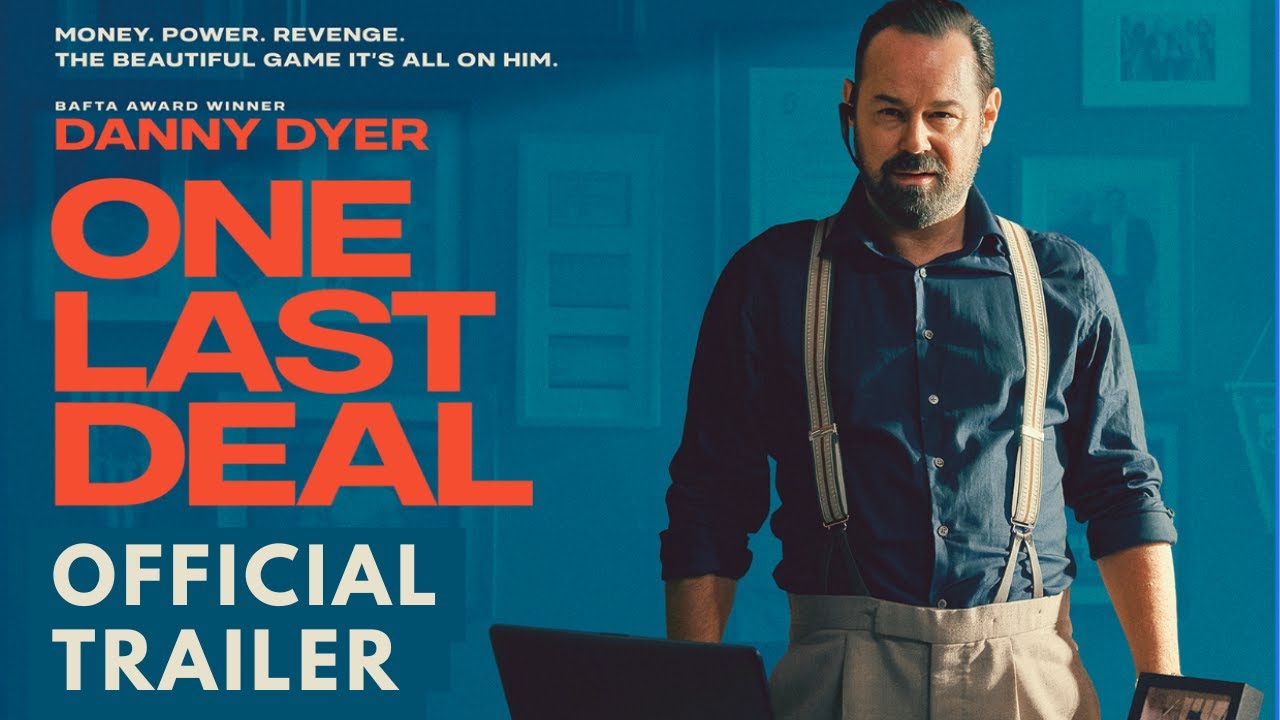
Jimmy Banks has spent his career making deals, managing personalities and surviving inside the money-driven machinery surrounding professional football. Now the veteran sports agent is approaching the negotiation that could determine everything. His star client needs a lucrative new contract, Jimmy needs the deal to preserve his own future, and the pressure surrounding both men is becoming increasingly difficult to contain.
Brendan Muldowney turns that premise into a remarkably concentrated thriller. Instead of sending Jimmy across football stadiums, luxury offices and negotiation rooms, One Last Deal largely traps him inside his own professional world, where phone calls become confrontations and every new piece of information threatens to expose another weakness. Danny Dyer becomes the center of a story about what happens when someone who has spent his life controlling deals suddenly realizes he may no longer control anything.
➡️ Movie Insight: One Last Deal turns football negotiation into a psychological pressure cooker. Jimmy believes another successful deal can keep his world intact, but every conversation reveals how unstable that world has become. The real negotiation gradually becomes whether he can escape the consequences of the life he has built.
Why This Movie Matters Right Now: The Business Behind Football Is Becoming the Drama
Football movies traditionally focus on players, matches and the emotional spectacle of competition. One Last Deal looks somewhere very different: at the people making money, protecting careers, managing reputations and negotiating the commercial machinery operating around the game.
That makes Jimmy Banks an especially timely protagonist. Modern football increasingly exists simultaneously as sport, entertainment industry and enormous commercial ecosystem, and agents occupy a fascinating position between those worlds. The film takes that familiar background machinery and asks what happens when the person accustomed to turning everything into a transaction discovers that some consequences cannot simply be negotiated away.
➡️ Why It Matters: One Last Deal finds thriller material inside the business surrounding professional football. Contracts, reputations and money become sources of suspense instead of background details. It shows that some of the biggest battles in modern sport happen far away from the pitch.
Should You Watch It?: Come for Danny Dyer Under Maximum Pressure
One Last Deal is particularly suited to viewers who enjoy contained thrillers where performance and dialogue must generate the tension normally created by action. Much of the experience depends on watching Jimmy react to calls, information and rapidly changing circumstances while trying to maintain the confidence of a man accustomed to controlling negotiations.
That makes Danny Dyer the central attraction. Jimmy needs to move repeatedly between confidence, aggression, desperation, manipulation and fear without the movie constantly giving him another physical location or large ensemble to hide behind. Viewers who enjoy one-person pressure cookers should find that restriction part of the appeal.
➡️ Viewing Recommendation: Watch One Last Deal if you enjoy contained thrillers driven by escalating conversations and moral pressure. Danny Dyer carries the film through Jimmy’s increasingly desperate attempts to keep control. The limited setting makes every phone call feel capable of changing the entire story.
Why Everyone Is Talking About It?: Danny Dyer Has to Carry Almost the Entire Game
The immediate hook is Danny Dyer in a performance-driven thriller constructed to leave him unusually exposed. Jimmy spends much of the movie negotiating, arguing, persuading and reacting through calls, meaning the film depends less on spectacle than on whether one actor can sustain tension for almost 90 minutes.
That creates a natural conversation point around Dyer himself. Audiences familiar with his tough, confrontational screen persona get a character who initially appears perfectly equipped for the aggressive business of football representation, only for that confidence to become increasingly fragile as the pressure escalates. The more Jimmy loses control, the more important Dyer’s performance becomes.
➡️ Viral Potential: One Last Deal has a simple conversation hook: Danny Dyer carrying a football thriller largely through phone calls and one confined space. That minimalist setup makes the performance itself part of the selling point. Viewers are likely to debate whether the restriction intensifies Jimmy’s breakdown or becomes too claustrophobic for them.
Why One Last Deal Stands Out: The Football Thriller Barely Needs the Football Pitch
One Last Deal makes an unusual decision for a story built around professional football: it removes almost everything audiences normally associate visually with the sport. The important action happens through deals, calls, media pressure, reputation management and information moving between people who may never physically enter Jimmy’s room.
That absence becomes part of the concept. Football exists as an enormous invisible system surrounding Jimmy, and the film allows audiences to experience it primarily through the pressure it places on him. A contract can change a career, an allegation can destroy a reputation and a phone call can become more dangerous than anything happening during a match.
➡️ Cinema Insight: One Last Deal turns the unseen machinery surrounding football into the movie’s real playing field. Jimmy fights through conversations rather than physical confrontations. By removing the spectacle of the sport, the film makes power, money and reputation the things actually competing.
Movie Trend: One Last Deal — When Everything Depends on the Final Negotiation
One Last Deal belongs to a strain of thrillers where negotiation becomes action. Instead of protagonists escaping explosions or chasing enemies, these movies create urgency through conversations in which every decision changes the balance of power and one badly judged response can make an already dangerous situation worse.
Jimmy is particularly suited to this trend because negotiation is supposed to be his greatest professional skill. He has built a career around understanding leverage, money and human weakness. The tension comes from watching those abilities become less useful as professional pressure collides with blackmail, scandal and consequences that cannot necessarily be solved by offering somebody a better deal.
➡️ Movie Trend: One Last Deal turns negotiation into a survival mechanism. Jimmy keeps searching for leverage because making deals is how he understands power. The thriller begins to close around him when he discovers that not everybody can be bought, persuaded or controlled.
Viewer Profile: Football Fans Who Prefer the Business Behind the Game
The obvious audience includes Danny Dyer fans and viewers interested in football, but One Last Deal reaches beyond conventional sports cinema. Its contained construction should appeal equally to audiences who enjoy psychological thrillers, one-location dramas and movies built around a performer gradually losing control under sustained pressure.
Football audiences may find the off-pitch perspective especially interesting because the film treats agents, contracts, money and reputation as dramatic material in their own right. Rather than asking whether a team will win, it asks what people surrounding elite sport may be willing to do when careers and fortunes depend on the next transaction.
|
Psychological-thriller viewers and Danny Dyer fans attracted to contained, performance-driven suspense |
|
|
Football audiences interested in agents, contracts, money and the business surrounding professional sport |
|
|
Broad adult audience with particularly strong potential among male football and crime-thriller viewers |
|
|
Broad middle-income audience |
|
|
Sports-aware, entertainment-focused and interested in crime, business and contemporary British culture |
|
|
British thrillers, football films, crime dramas, psychological dramas and contained one-location movies |
➡️ Audience Insight: One Last Deal connects two audiences that do not always meet: football viewers and contained-thriller fans. The sport provides the recognizable world while Jimmy’s psychological collapse provides the dramatic experience. Danny Dyer becomes the bridge between both.
What This Movie Means for the Industry: Small Spaces Can Still Create Big Tension
One Last Deal demonstrates the production potential of contained genre filmmaking. A thriller does not necessarily need multiple locations, elaborate action sequences or a large ensemble when the central dramatic mechanism is strong enough to make information itself feel dangerous.
That approach is particularly valuable for independent filmmaking because limitation can become identity rather than compromise. Concentrating the film around Jimmy allows production scale to remain controlled while placing greater emphasis on performance, writing, sound and pacing. The challenge is considerable — audiences have nowhere else to look — but that is also what differentiates the film.
➡️ Industry Insight: Contained thrillers can transform production limitations into a recognizable creative hook. One strong performer, one escalating situation and carefully controlled information can generate suspense without blockbuster scale. One Last Deal shows how familiar worlds such as professional football can be approached from inexpensive but unexpected perspectives.
Creative Analysis: One Man, One Room and a World Closing In
The creative gamble behind One Last Deal is restriction. Jimmy Banks exists inside a world associated with stadiums, expensive cars, celebrity players and enormous transfers, yet Brendan Muldowney deliberately compresses that world until much of it reaches Jimmy only through voices, screens and conversations.
That turns the film into an exercise in psychological accumulation. Each interaction must add another problem, reveal another weakness or force Jimmy into another decision, gradually converting the office from the place where he conducts business into the space where the consequences of that business finally catch him.
Storytelling: Every Phone Call Changes the Deal
Peter Howlett’s screenplay builds tension through information. Jimmy’s objective initially appears straightforward — secure an important contract — but competing pressures progressively make the transaction harder to separate from everything else happening around him.
The phone therefore becomes the movie’s essential storytelling device. Different voices bring opportunities, threats, accusations and demands into the same physical space, allowing Jimmy’s world to expand narratively even while the film remains visually contained.
Direction: Brendan Muldowney Turns Restriction Into Pressure
Muldowney’s challenge is making confinement feel increasingly dramatic rather than simply repetitive. The film cannot continually escape to another location whenever tension needs refreshing, so changes in Jimmy’s emotional condition become as important as changes in physical environment.
That approach makes escalation psychological. The office may remain relatively stable while Jimmy does not, allowing the audience to measure how much the situation has deteriorated through the man occupying the room.
Performances: Danny Dyer Becomes the Entire Match
Danny Dyer carries an unusual amount of the film’s dramatic weight. Jimmy must command attention even when the person confronting him exists only as a voice on the other end of a call, forcing Dyer’s reactions to create characters and conflicts that audiences may not physically see.
His familiar aggressive confidence also becomes useful dramatic material. Jimmy initially looks like someone capable of bullying, bargaining or talking his way through almost anything. Watching that certainty weaken provides the performance with its central trajectory.
Visual Style: The Office Becomes a Trap
A contained location changes meaning depending on what the protagonist believes about it. At first, Jimmy’s office represents professional authority: this is where he makes calls, controls information and conducts deals.
As his situation deteriorates, the same environment can begin to feel restrictive. The walls have not moved, but Jimmy’s options have narrowed, allowing the physical space to mirror his decreasing ability to escape the consequences surrounding him.
Themes: Greed, Loyalty, Reputation and Complicity
Money sits close to the center of Jimmy’s worldview, but One Last Deal expands beyond simple financial ambition. Professional loyalty, celebrity culture, media pressure, corruption and personal responsibility all become increasingly difficult to separate once the machinery protecting valuable careers begins breaking down.
The larger moral question concerns complicity. Making a deal often requires accepting compromises, overlooking inconvenient truths or protecting relationships because they remain financially valuable. Jimmy’s crisis forces those professional habits into much more uncomfortable territory.
What Makes It Different: A Sports Movie Where Nobody Needs to Play
The most distinctive choice is making professional football essential while keeping the actual sport largely outside the frame. Jimmy’s livelihood depends on football, but the movie is interested in everything happening around the match rather than during it.
That gives One Last Deal a different relationship with sports cinema. Instead of athletic achievement, it examines the ecosystem created by success — agents, contracts, media, money and people whose fortunes depend on keeping valuable players valuable.
➡️ Creative Insight: One Last Deal creates scale through implication rather than spectacle. An entire football industry presses against Jimmy even when he remains physically confined. The movie’s creative success depends on making every new voice feel like another part of the outside world closing in.
If You Liked One Last Deal (2026): More Thrillers Where One Conversation Can Change Everything
These films connect with One Last Deal through contained pressure, characters forced to manage crises through communication and situations where professional confidence begins collapsing once the protagonist realizes somebody else may control the game.
Locke (2013) by Steven Knight: One Man Tries to Control His Life Through a Phone
Ivan Locke leaves a construction site and begins a nighttime drive toward London while attempting to manage a personal decision that threatens his family and professional future. Almost everyone else in his life exists through telephone conversations while he tries to prevent several crises from collapsing simultaneously.
➡️ Why It Connects: Locke is the clearest creative companion to One Last Deal because both ask one central performer to carry a drama through conversations with largely unseen characters. Professional responsibility collides with personal consequences while the protagonist desperately attempts to maintain control. In both films, answering the next call can make everything worse.
The Guilty (2021) by Antoine Fuqua: The Entire Crisis Arrives Through a Phone
A police officer assigned to emergency-call duty receives a call from an abducted woman and attempts to solve the situation without leaving his workstation. Information arrives in fragments, forcing him to make increasingly consequential judgments about people and events he cannot directly see.
➡️ Why It Connects: The Guilty and One Last Deal both demonstrate how voices can create an entire world beyond a restricted physical location. Their protagonists believe professional experience gives them control over the situation, but incomplete information repeatedly challenges that confidence. Suspense comes from what they hear, what they assume and what they decide to do next.
The Outfit (2022) by Graham Moore: One Room Becomes a Battlefield of Information
A quiet tailor working in Chicago becomes trapped inside a dangerous confrontation involving gangsters, hidden motives and information that could determine who survives the night. The confined setting turns conversation, observation and strategic deception into the protagonist’s primary weapons.
➡️ Why It Connects: The Outfit and One Last Deal transform limited locations into strategic arenas. Both depend on characters understanding leverage while dangerous information moves between people. Physical confinement makes every decision more important because there are fewer ways to escape the consequences.
➡️ If You Liked Insight: Locke turns phone calls into a personal and professional collapse, The Guilty makes incomplete information dangerous and The Outfit transforms conversation into strategic survival. One Last Deal brings similar contained tension into the commercial world surrounding football. Together they show how thrillers can make words, information and negotiation feel like action.
Final Verdict: Danny Dyer Has One More Deal to Make
One Last Deal strips the sports thriller down to something unusually concentrated: one agent, one increasingly unstable situation and a series of conversations capable of destroying the world he has built. Brendan Muldowney’s restrained approach places enormous responsibility on Danny Dyer, but that pressure mirrors the experience of Jimmy Banks himself.
What begins as a race to secure a football contract becomes something darker about the transactional mentality surrounding money, loyalty and reputation. Jimmy has spent his career believing that understanding leverage means understanding people. His final crisis tests what happens when that philosophy reaches a situation where another deal may no longer be enough.
➡️ Final Verdict: One Last Deal turns Danny Dyer into the center of a compact psychological pressure cooker. Its football setting matters because money, reputation and negotiation have become inseparable from the modern game. The film’s strongest idea is simple: a man who makes deals for a living finally encounters consequences he may not be able to negotiate away.
Quick Facts: One Last Deal at a Glance
|
Danny Dyer as Jimmy Banks |
|
|
Elliott Rogers as Matt Gravish, Carlos Bardem as Roberto Sanchez |
|
|
Ireland, United Kingdom, United States |
|
|
Psychological Drama, Psychological Thriller, Thriller |
|
|
Fís Éireann / Screen Ireland, Hail Mary Pictures, Lumiere Ventures |
|
|
One Last Deal — When Everything Depends on the Final Negotiation |
|
|
A veteran sports agent tries to secure a crucial contract for his star client while professional and personal pressures threaten everything around him |
|
|
A largely contained football-industry thriller carried by Danny Dyer and a succession of high-pressure calls |
|
|
Money, greed, loyalty, reputation, power, complicity, fame, professional survival |
|
|
Danny Dyer carrying a minimalist psychological thriller where football negotiation becomes a battle for control |
Final Insights: The Biggest Deal Can Be the One You Cannot Control
Negotiation thrillers work because they transform an ordinary human skill — talking — into an arena where enormous consequences depend on every word. When characters are professionally accustomed to controlling people through persuasion, money or leverage, taking that control away can generate suspense without requiring conventional action.
That makes One Last Deal part of a useful direction for contained cinema. Professional worlds such as sport, finance, law and media already contain competition, secrecy and enormous personal stakes; filmmakers can turn those pressures into thrillers simply by placing the right character at the moment when their usual strategies stop working. Jimmy Banks discovers that being an expert dealmaker is valuable only while somebody is still willing to negotiate.
➡️ Final Insight: One Last Deal makes negotiation feel like the final minutes of a match. Jimmy’s greatest professional skill becomes increasingly powerless as consequences replace bargaining. The broader trend shows that a thriller can create enormous pressure when one conversation has the power to change everything.




Leave a Reply