
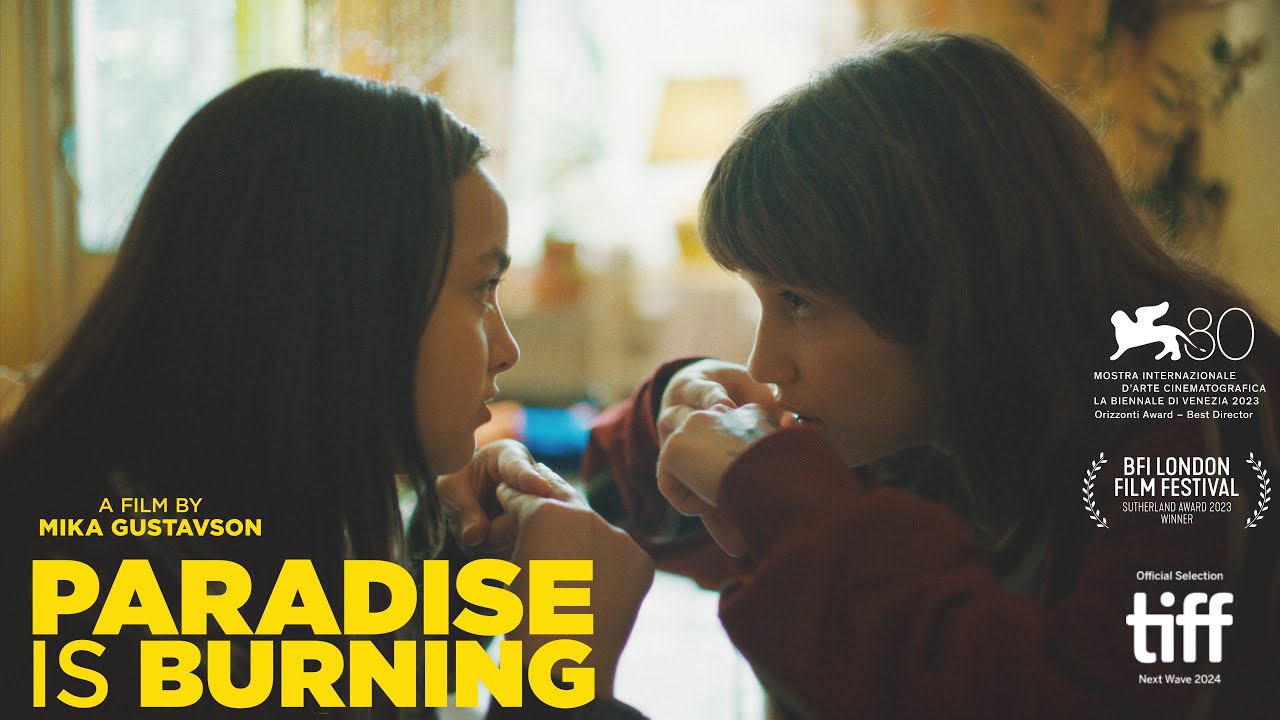
A raw coming-of-age drama exploring sisterhood, survival, and emotional abandonment
Three sisters navigating freedom, chaos, and fragile belonging
Paradise Is Burning follows three sisters—Laura, Mira, and Steffi—who live alone in Sweden as their mother disappears for extended periods. Forced to survive without adult supervision, they create their own world of freedom, rituals, and emotional bonds.
When social services intervene and demand a family meeting, the fragile balance of their independence is threatened. Laura, the eldest, attempts to maintain control by finding a substitute for their absent mother, blurring the line between childhood and adulthood.
The film unfolds as a portrait of survival without structure, where love, chaos, and vulnerability coexist. It explores how children construct identity and connection in the absence of authority, creating a narrative that feels both intimate and unsettling.
Why It Is Trending: A bold, female-driven indie drama reflecting themes of autonomy, neglect, and identity
Paradise Is Burning is trending within European indie cinema due to its unfiltered portrayal of youth autonomy and emotional neglect.
It aligns with contemporary films that challenge traditional narratives of family and authority, offering a perspective centered on female relationships and independence. Its raw storytelling and immersive style resonate with audiences seeking authenticity over conventional structure.
The film also gains traction through its festival success and critical recognition, positioning it as a standout debut within modern European cinema.
Elements Driving the Trend: Emotional intensity, non-traditional structure, and strong female perspective
The film’s appeal lies in its unconventional narrative style, which prioritizes atmosphere and emotional experience over linear storytelling.
Its focus on female relationships and sisterhood adds depth, presenting a rarely explored perspective in coming-of-age cinema.
Performances by Bianca Delbravo, Dilvin Asaad, and Safira Mossberg contribute to the film’s authenticity, creating a believable and emotionally charged dynamic.
Virality of Movie (Social Media Coverage): Strong engagement within festival and cinephile communities
The film generates significant discussion among festival audiences and cinephiles, driven by its bold themes and unique storytelling approach.
While not mainstream viral, it maintains strong visibility within art-house and independent film circles, where its emotional impact is widely discussed.
Critics Reception: Strong critical response highlighting authenticity and artistic direction
With a Metascore of 68, the film receives generally positive reviews, particularly for its direction and performances.
Publications such as The Hollywood Reporter and festival coverage platforms highlight its raw realism and striking debut, positioning it as a significant entry in contemporary indie cinema.
Awards and Recognitions: Major festival success establishing a powerful debut voice
The film achieved 6 wins and 10 nominations, including:
-
Best Film (Guldbagge Awards)
-
Best Director (Venice Horizons Award) at the Venice Film Festival
-
Sutherland Award (Best First Feature) at the BFI London Film Festival
It was also nominated for the Gold Hugo (Chicago International Film Festival), reinforcing its global festival presence and critical acclaim.
Director and Cast: Mika Gustafson’s fearless direction supported by deeply authentic performances
Mika Gustafson delivers a bold and uncompromising debut, using a raw, immersive style that places the audience inside the sisters’ world.
Bianca Delbravo leads with a powerful performance as Laura, capturing both strength and vulnerability. Alongside Dilvin Asaad and Safira Mossberg, the cast creates a deeply believable portrayal of sisterhood and survival.
The performances are central to the film’s emotional impact, reinforcing its realism.
The film trends because: Emotional realism, female perspective, and festival recognition align
• Cultural + market relevance The film reflects growing interest in raw, female-led narratives.
• Industry opportunity Festival-driven cinema continues to gain global visibility.
• Audience alignment Viewers seek authentic, emotionally intense storytelling.
The industry increasingly supports bold, auteur-driven films that challenge traditional narratives.
Conclusion: A powerful and unsettling coming-of-age story redefining independence and emotional survival
Paradise Is Burning stands out as a daring exploration of youth, autonomy, and emotional complexity. Its strength lies in its authenticity and its willingness to embrace discomfort and ambiguity. While not designed for mainstream audiences, it delivers a deeply impactful experience within its niche. Ultimately, the film reinforces the importance of bold, character-driven storytelling in contemporary cinema.
What Movie Trend Is Followed: Raw, female-led coming-of-age cinema exploring autonomy, survival, and emotional instability
Paradise Is Burning follows a growing trend of unfiltered, female-driven coming-of-age films that reject traditional structure in favor of experiential storytelling and emotional immersion.
This trend moves beyond classic adolescence narratives (like The 400 Blows) by focusing on absence of authority, fractured family systems, and self-constructed identities. Instead of guidance from adults, young characters navigate their own rules, creating a more chaotic and realistic portrayal of youth.
The film fits within a modern wave of European cinema where the story is less about resolution and more about capturing a state of being—fluid, unstable, and emotionally raw.
Trend Drivers: Demand for authentic, female-centered narratives and non-linear storytelling
A key driver is the increasing focus on female perspectives, especially stories that explore relationships between women and girls without external framing.
There is also a strong shift toward non-linear, atmosphere-driven storytelling, where emotions and environment take precedence over plot.
Performances by Bianca Delbravo and the ensemble cast reinforce this trend through naturalistic acting and improvisational energy, enhancing realism.
What Is Influencing Trend: Festival culture and auteur filmmaking encouraging creative freedom
The trend is heavily influenced by international film festivals, particularly platforms like the Venice Film Festival and BFI London Film Festival, which support bold, experimental storytelling.
There is also a strong influence from auteur directors, who prioritize personal vision over commercial constraints.
This environment allows films like Paradise Is Burning to exist as artistic expressions rather than traditional narratives.
Macro Trends Influencing: Rise of boundary-pushing indie cinema and global festival ecosystems
Globally, there is increasing recognition of independent cinema that challenges norms, particularly in Europe.
Streaming platforms and international distribution networks have expanded access to such films, allowing them to reach wider audiences.
This supports a broader movement toward diverse storytelling styles and voices in global cinema.
Consumer Trends Influencing: Growing appetite for raw, emotionally intense, and unconventional stories
Audiences—especially younger and cinephile segments—are increasingly drawn to films that feel real, uncomfortable, and emotionally honest.
There is a clear shift away from polished, formula-driven narratives toward stories that embrace ambiguity and complexity.
This makes films like Paradise Is Burning highly relevant despite their niche positioning.
Audience Analysis: Cinephiles and young adults seeking emotional depth and artistic storytelling
The core audience typically ranges from 18–40, including festival-goers and viewers interested in indie cinema.
These audiences value artistic expression, realism, and emotional intensity, often preferring films that challenge conventional storytelling.
Behaviorally, they engage deeply with content that reflects identity, relationships, and social dynamics, even when narratives are fragmented or ambiguous.
They are more likely to discover such films through festivals, critical reviews, and curated streaming platforms.
Conclusion: A bold and sustainable trend driven by authenticity, artistic freedom, and emotional intensity
The trend works because it offers a unique and deeply immersive experience that resonates on an emotional level. It is scalable through global festival circuits and streaming platforms, which amplify its reach. Its sustainability is strong, as audiences continue to seek authenticity and originality. The industry will keep supporting such films as they push creative boundaries and diversify cinematic storytelling.
Final Verdict: A raw and immersive coming-of-age film that challenges structure while delivering emotional authenticity
Paradise Is Burning stands as a bold, uncompromising debut, prioritizing emotional truth over traditional storytelling. It rejects clear narrative arcs in favor of immersive, lived-in experiences, placing the audience directly inside the unstable world of its protagonists.
Director Mika Gustafson embraces a fragmented, observational style, allowing moments of chaos, tenderness, and discomfort to coexist without resolution. This approach may feel disorienting, but it reinforces the film’s central themes of instability and emotional survival.
Bianca Delbravo delivers a standout performance as Laura, capturing the complexity of a young girl forced into premature adulthood. Alongside Dilvin Asaad and Safira Mossberg, the cast creates a deeply authentic portrayal of sisterhood.
The film’s long-term impact lies in its contribution to modern European indie cinema, reinforcing a movement toward raw, female-centered storytelling.
Audience Relevance: A powerful but challenging experience for viewers seeking depth over comfort
The film resonates with audiences who appreciate emotionally intense and unconventional storytelling. Its authenticity and rawness create a strong emotional connection.
However, its lack of structure and clarity may alienate viewers expecting a more traditional narrative.
What Is the Message of Movie: Survival, identity, and connection can emerge even in the absence of structure
At its core, the film suggests that human connection persists even in unstable environments.
It highlights how identity is shaped not only by guidance, but also by absence, improvisation, and resilience.
Relevance to Audience: Reflecting the realities of emotional neglect and self-constructed identity
The story speaks to audiences familiar with uncertainty, independence, and emotional complexity, particularly younger viewers navigating similar transitions.
It reflects the reality that growth often occurs without clear direction or support.
Social Relevance: A stark portrayal of systemic gaps and the fragility of family structures
The film subtly critiques systems meant to protect children, showing how easily individuals can fall through institutional gaps.
It presents a world where family structures are unstable, forcing children to adapt in ways that challenge societal norms.
Performance: Strong critical recognition supported by awards and festival acclaim
With a Metascore of 68 and multiple awards, the film is widely recognized for its artistic quality.
Bianca Delbravo received particular praise, including recognition at the Lisbon Film Festival for her performance, reinforcing the film’s emotional impact.
Legacy: A defining debut reinforcing the power of female-led indie storytelling
The film’s legacy lies in its role as a breakthrough debut, positioning Mika Gustafson as a significant emerging voice.
It contributes to a broader shift toward female-centered narratives and experimental storytelling in global cinema.
Success: Measured through festival dominance and artistic recognition rather than commercial scale
The film achieved 6 wins and 10 nominations, including major recognition at the Venice Film Festival and BFI London Film Festival.
Its success is defined by critical acclaim and cultural impact, rather than box office performance.
Insights: Raw, female-driven narratives are reshaping contemporary indie cinema through authenticity and emotional intensity.Industry Insight: Festivals continue to play a crucial role in elevating unconventional storytelling. They provide visibility for emerging voices and innovative narratives. This strengthens the diversity of global cinema.Audience Insight: Viewers increasingly value authenticity and emotional depth over traditional storytelling. They are willing to engage with challenging narratives. This expands the space for experimental films.Social Insight: The film reflects societal concerns around family instability and youth independence. It highlights gaps in support systems and the resilience required to navigate them. These themes remain highly relevant.Cultural Insight: Paradise Is Burning reinforces the importance of female perspectives in cinema. It contributes to a broader cultural shift toward inclusive and diverse storytelling. This evolution continues to shape the industry.
Conclusion: A striking and uncompromising film that captures the chaos, beauty, and fragility of youth
The film’s long-term relevance lies in its alignment with a growing movement toward raw, experiential storytelling. It operates within a cinematic landscape that increasingly values authenticity and artistic risk. From a cultural standpoint, it challenges traditional narratives of family and identity. The industry will continue to support such works as audiences seek deeper, more meaningful cinematic experiences.
Summary of the Movie: A raw and emotionally charged portrait of sisterhood, survival, and freedom without boundaries
• Movie themes: Sisterhood, survival, autonomy, emotional neglect, identity, youth rebellionThe film explores how children create their own systems of love, control, and belonging in the absence of parental structure.
• Movie director: Bold, immersive storytelling driven by Mika GustafsonGustafson crafts a visceral and unfiltered cinematic experience, prioritizing emotional realism and atmosphere over traditional narrative structure. Her direction reflects a fearless, auteur-driven approach.
• Top casting: Breakout performances led by Bianca Delbravo with strong ensemble supportDelbravo delivers a powerful and nuanced performance as Laura, supported by Dilvin Asaad and Safira Mossberg, whose chemistry creates a deeply authentic portrayal of sisterhood.
• Awards and recognition: Major festival success confirming critical and artistic impactThe film achieved 6 wins and 10 nominations, including:
-
Best Film (Guldbagge Awards)
-
Best Director (Venice Horizons Award) at the Venice Film Festival
-
Sutherland Award (Best First Feature) at the BFI London Film Festival
• Why to watch movie: A bold, emotionally intense indie drama that pushes boundaries of storytellingIt offers a unique cinematic experience that challenges traditional narratives while delivering powerful emotional impact.
• Key Success Factors: Positioned within female-led indie and experimental coming-of-age cinema trendComparable to films like The 400 Blows, it succeeds through authenticity, artistic risk, and emotional depth.
• Where to watch: Streaming availability and international festival distributionReleased on October 27, 2023 (Sweden), the film is available on HBO Max, expanding its reach beyond festival audiences.
Conclusion: A fearless exploration of youth and survival that redefines coming-of-age storytelling
Paradise Is Burning ultimately defines its narrative through the raw and unfiltered experiences of its characters as they navigate a world without guidance. It stands as a film that prioritizes emotional truth over structure, offering a deeply immersive experience. While challenging in its execution, it delivers a powerful and lasting impression. Its strength lies in its authenticity, performances, and bold direction. Ultimately, the film reflects the evolving landscape of cinema where risk-taking and emotional honesty drive meaningful storytelling.






Leave a Reply