
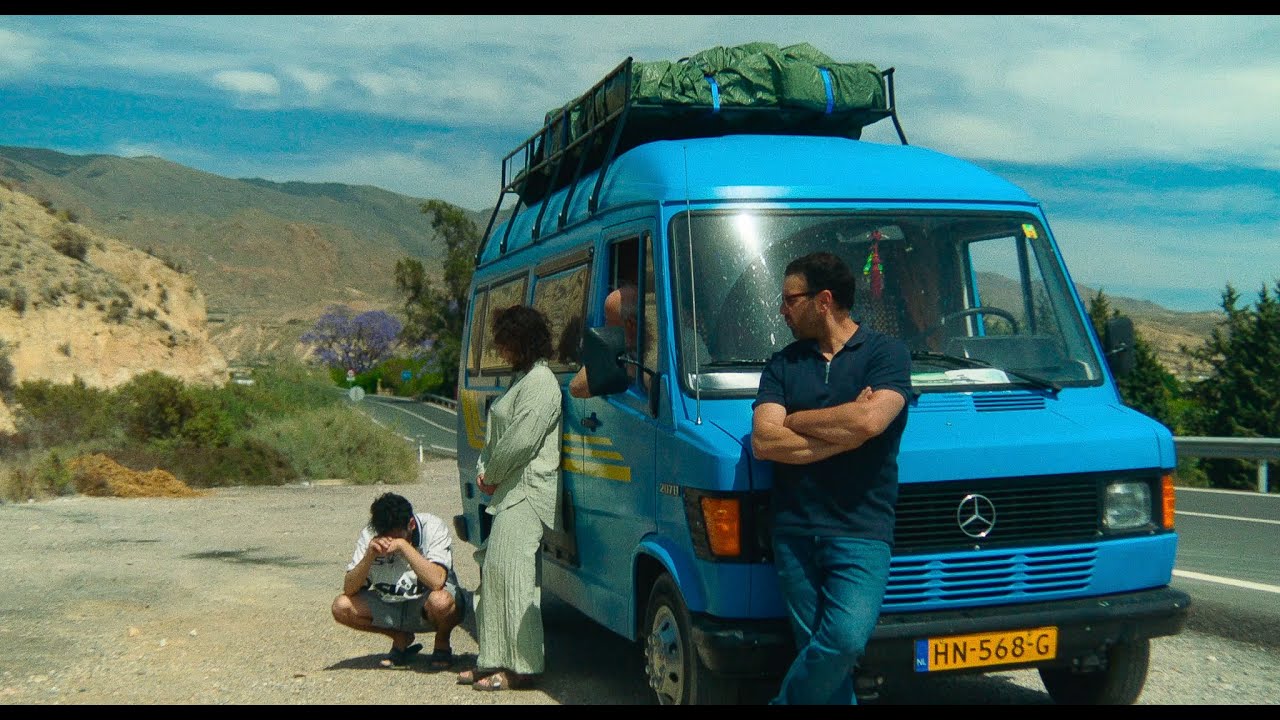
NL | 2025 | 104 min | Drama, Family Drama, Road Movie
When Caring for a Parent Changes the Direction of an Entire Family
Noor has spent years caring for her father Musa, but the balance holding their family together begins to collapse when she is offered her dream job as a chef in Paris. Musa is developing progressive dementia and increasingly needs support, leaving Noor caught between the future she has worked toward and the responsibilities she has quietly absorbed at home.
Abdelkarim El-Fassi turns that conflict into a Dutch-Moroccan family road movie. When Musa expresses a desire to return to Morocco, Noor begins to see the journey as both a way of respecting his wishes and creating space for her own independence. What follows is not simply a journey home, but a confrontation between siblings over caregiving, sacrifice, belonging and who has been carrying the family for too long.
➡️ Movie Insight: Porte Bagage turns eldercare into a family conflict about responsibility rather than treating dementia only as an individual illness. Noor’s opportunity in Paris forces responsibilities that have remained unequal and largely unspoken into the open. The road to Morocco becomes a journey through everything the family has avoided discussing.
Why This Movie Matters Right Now: Family Care Is Becoming a Story About Changing Roles
Porte Bagage taps into an increasingly resonant subject for contemporary family drama: adult children becoming responsible for aging parents while still trying to build independent lives. Noor’s dilemma is powerful precisely because neither side of it is trivial—caring for Musa matters, but so does the life she has postponed while doing it.
The film adds another dimension through migration. Musa belongs to a generation that left Morocco and established a family in the Netherlands, while his children have developed identities and futures shaped by Europe. His desire to return therefore makes aging inseparable from questions of home, memory and whether the place someone came from can become home again at the end of life.
➡️ Why It Matters: Porte Bagage captures the reversal that occurs when children gradually become responsible for their parents. That transition can redistribute time, freedom and responsibility across an entire family. By connecting eldercare with migration, the film makes that familiar conflict culturally more specific without making it less universal.
Should You Watch It?: A Warm Family Drama Built Around Difficult Choices
Porte Bagage is suited to viewers who prefer intimate character dramas where emotional tension grows through family conversations rather than major plot twists. Its road-movie structure provides movement, but the real journey happens inside the family as Noor, Musa and the siblings confront resentment, responsibility and unresolved history.
There is warmth alongside the heavier material. The film has been described as a drama with comedic elements, allowing the family to remain recognizably alive rather than becoming defined entirely by Musa’s illness. That balance makes the story about living with change rather than simply anticipating loss.
➡️ Viewing Recommendation: Watch Porte Bagage for an emotionally accessible family drama about caregiving, migration and changing family roles. Its strongest moments come from the tension between love and obligation rather than from melodrama. The road-movie format gives a difficult subject warmth, movement and room for reconciliation.
Why Everyone Is Talking About It?: A Dutch-Moroccan Family Story Found Its Audience
Porte Bagage has developed a meaningful life beyond a conventional debut release. The film premiered internationally in the Moroccan Panorama at the Marrakech International Film Festival, while its Dutch exhibition became notable for strong community engagement around a story reflecting a Moroccan-Dutch family experience rarely centered this directly in mainstream cinema.
That audience connection is particularly significant because the film emerged independently. Cinetree reports that Abdelkarim El-Fassi and producer Asma El-Fassi gathered 10,000 signatures in their effort to bring the film to cinemas, after which screenings were extended and repeatedly sold out. The film has subsequently continued through festival and theatrical circulation, demonstrating how culturally specific stories can generate momentum when audiences recognize experiences that have been underrepresented on screen.
➡️ Viral Potential: Porte Bagage has a strong word-of-mouth engine because its central dilemma is immediately recognizable across cultures. For Moroccan-Dutch audiences, the migration and family details add another level of identification. Its momentum shows how representation becomes commercially meaningful when audiences feel that a film is telling a story they rarely see centered.
Why Porte Bagage Stands Out: The Road Home Is Also a Journey Through Family Responsibility
Many dementia dramas concentrate primarily on the person experiencing cognitive decline. Porte Bagage widens the frame to examine what illness does to the structure surrounding that person. Noor’s burden, her siblings’ different levels of involvement and Musa’s desire to return to Morocco make care a negotiation involving the entire family.
The road movie is an effective form for that conflict because physical movement continually changes the emotional context. The family is travelling toward Musa’s past while Noor is trying to move toward her future. Morocco therefore becomes simultaneously a destination, a memory, a possible solution and a reminder that different generations can attach entirely different meanings to the idea of home.
➡️ Cinema Insight: Porte Bagage uses the road movie to externalize a family caught between past and future. Musa’s journey points back toward Morocco while Noor’s ambitions point toward Paris. The family is forced to move physically before it can reconsider where everyone belongs emotionally.
Movie Trend: Family Drama — When Children Become the Caregivers
Family Drama provides the strongest professional genre foundation for Porte Bagage. The Nederlands Film Festival classifies the film around drama, family and friendship, while Marrakech describes it specifically as a layered family drama with social relevance. The content then develops through Family + Elderly + Health + Dementia + Diaspora + Immigration/Emigration, with the road movie providing the narrative structure.
The emerging story pattern is the reversal of family roles. Adult children are no longer primarily receiving care or guidance from parents; they are making decisions about parents whose independence is declining. Porte Bagage makes this reversal dramatically productive because the responsibility is unevenly distributed, turning caregiving into a question of sibling relationships, personal freedom and inherited expectations.
➡️ Movie Trend: Family Drama — When Children Become the Caregivers captures the film’s genre and its central social content in one clear direction. Aging transforms the established parent-child relationship and redistributes responsibility across the family. Contemporary family drama is increasingly finding conflict in the moment when care begins flowing from one generation back to another.
Viewer Profile: Family Drama Audiences
The core audience is Contemporary Family Drama Viewers—people drawn to films about ordinary families facing emotionally difficult transitions rather than extraordinary circumstances. They want recognizable relationships, complicated choices and characters whose love for one another does not automatically make living together easy.
A strong secondary audience is Diaspora Story Viewers, particularly viewers interested in films exploring how migration continues to shape families across generations. For this audience, the Netherlands-to-Morocco journey adds emotional specificity to the universal caregiving story by connecting aging with cultural memory, identity and return.
|
Contemporary Family Drama Viewers — audiences seeking emotionally recognizable stories about family responsibility, aging and changing relationships |
|
|
Diaspora Story Viewers — viewers interested in migration, bicultural identity, home and intergenerational belonging |
|
|
Primarily adult audiences, with particular relevance for viewers experiencing changing relationships with parents |
|
|
Broad appeal, with especially strong resonance for audiences interested in intimate family and caregiving narratives |
|
|
Broad; emotional and cultural relevance matter more than economic profile |
|
|
Viewers attracted to European cinema, multicultural storytelling, family dramas and socially grounded independent films |
|
|
Choose character-led dramas, festival discoveries and stories where family relationships drive the narrative rather than spectacle |
➡️ Audience Insight: Porte Bagage offers recognition rather than escapism. Its audience is likely to connect with the uncomfortable mixture of affection, resentment, guilt and responsibility that accompanies family caregiving. The Dutch-Moroccan context gives that emotional experience a distinctive cultural identity.
What This Movie Means for the Industry: Specific Communities Can Build Their Own Audience Momentum
Porte Bagage demonstrates the value of treating culturally specific family experiences as central stories rather than niche subjects. The film’s Moroccan-Dutch identity is fundamental, yet its central dramatic question—how a family responds when an aging parent increasingly needs care—is immediately understandable far beyond that community.
Its route to audiences is equally instructive. The project was independently produced through Zouka, found festival visibility through Marrakech, and developed audience momentum in the Netherlands before moving into wider on-demand circulation. It is now available domestically through services including Picl and Cinetree, while MMM Film Sales handles international sales.
➡️ Industry Insight: Cultural specificity does not have to limit audience accessibility when the emotional conflict is universal. Porte Bagage uses a recognizably Dutch-Moroccan family to tell a much broader story about aging and responsibility. Its audience journey also shows how community engagement, festivals, theatrical exhibition and curated streaming can work together for independent cinema.
Creative Analysis: Turning Emotional Baggage Into a Physical Journey
El-Fassi’s feature fiction debut uses a simple structural idea effectively: place a family carrying years of unresolved conflict inside a vehicle and send them toward the place that represents their shared origins. The title itself evokes luggage, but the family’s most significant baggage is emotional.
The film’s 104-minute journey combines family drama with road-movie movement. Marrakech credits Sjors Mosman with cinematography, Sjoerd Schipper with editing, Iris Schuttevaar with production design and Valentin Hadjadj with music, while Asma El-Fassi produces.
Storytelling: Caregiving Creates the Conflict
The story establishes two pressures that cannot easily coexist: Noor receives a professional opportunity in Paris at the same time that Musa’s dementia makes his need for care increasingly urgent. Neither development is merely background; together they force the family to make decisions it has postponed.
Musa’s wish to return to Morocco provides the narrative solution that becomes a new source of conflict. What initially appears to offer Noor a way forward instead brings the siblings together in circumstances where long-standing frustrations can no longer remain hidden.
Direction: Keeping the Family at the Center
El-Fassi avoids turning the film into a medical case study. Dementia creates the circumstances, but the dramatic focus remains on how people respond to one another when responsibility, fear and resentment begin overlapping.
That approach keeps Musa within a family rather than reducing him to a diagnosis. The journey allows moments of vulnerability, friction, humor and affection to coexist, giving the family a lived-in quality that supports the film’s broader social themes.
Performances: A Family Defined by Unequal Responsibility
Ahlaam Teghadouini plays Noor, while Mahjoub Benmoussa plays Musa, with Mohammed Chaara, Sahil Amar Aïssa and Moussaab Mahyu among the principal family ensemble. The uploaded material also identifies Kaltoum Boufangacha as Louisa Idrissi.
The ensemble structure matters because the film is fundamentally about distribution of responsibility. Noor’s frustration only becomes meaningful when contrasted with how other family members understand their obligations to Musa and to one another.
Visual Style: Movement Between Two Homes
The road-movie structure allows changing landscapes to mirror the family’s shifting emotional state. Moving from the Netherlands toward Morocco gradually removes the characters from their everyday routines and places them inside a shared journey where avoidance becomes more difficult.
The visual movement also reinforces the migration theme. Geography becomes family history: Europe represents lives built after migration, while Morocco carries memory, origin and Musa’s desire for return.
Themes: Care, Aging, Migration and Home
The central themes are Family, Elderly, Health, Dementia, Diaspora, Immigration/Emigration and Belonging. Rather than existing independently, they constantly intersect. Musa’s health changes the family’s responsibilities, while his migration history shapes what he wants those responsibilities to accomplish.
The film is therefore as much about home as it is about care. Noor is looking toward Paris, Musa toward Morocco and the family has been built in the Netherlands. Three places represent three different directions, making geography part of the emotional conflict.
What Makes It Different: Eldercare Meets the Diaspora Road Movie
The combination gives Porte Bagage its strongest identity. A familiar family drama about an aging parent becomes a migration story when Musa decides that the final stage of his life should reconnect him with Morocco.
At the same time, the migration story becomes generational. Returning home means something different to Musa than it does to children whose lives and ambitions have developed elsewhere, allowing the movie to explore how the meaning of belonging changes inside one family.
➡️ Creative Insight: Porte Bagage gains distinction by combining family caregiving with the physical language of the road movie. The journey to Morocco makes questions of aging, responsibility and belonging visible through movement. Home becomes something every generation understands differently.
If You Liked Porte Bagage (2025): Families Facing Care, Illness and Changing Roles
These films approach caregiving from different perspectives, but all examine what happens when illness or aging changes established relationships. Like Porte Bagage, they find drama not simply in declining health but in the responsibilities, resentments and acts of love that emerge around it.
His Three Daughters (2024) by Azazel Jacobs: When Caring for a Parent Brings Siblings Back Together
Three estranged sisters reunite in a New York apartment as their father’s health deteriorates. Their different personalities and approaches to caregiving expose unresolved tensions while forcing them to confront the approaching loss together.
➡️ Why It Connects: Both films make an aging father’s condition the catalyst for sibling conflict. Care is unevenly distributed, exposing old resentments about who carries responsibility and who has been absent. His Three Daughters is the closest companion to Porte Bagage’s examination of caregiving as a family-system problem.
Familiar Touch (2025) by Sarah Friedland: When Dementia Changes the Meaning of Independence
Ruth, an older woman experiencing dementia, moves into assisted living and begins adapting to a world where her memory, autonomy and relationship with care are changing. Sarah Friedland approaches aging from Ruth’s perspective, allowing identity and desire to remain central rather than defining her exclusively through decline.
➡️ Why It Connects: Porte Bagage largely explores dementia through the family surrounding Musa, while Familiar Touch shifts attention toward the person experiencing cognitive change. Together, the films reveal both sides of caregiving: the family learning to assume responsibility and the older person confronting the loss of independence. Both resist reducing aging to a simple narrative of decline.
The Room Next Door (2024) by Pedro Almodóvar: When Care Means Staying Beside Someone
When Ingrid reconnects with her former friend Martha, who is facing terminal illness, their renewed relationship becomes an intimate exploration of mortality, autonomy and what it means to accompany someone through the final stage of life.
➡️ Why It Connects: Both films understand care as an emotional relationship rather than simply a practical task. Porte Bagage examines responsibility inside a family, while The Room Next Door shifts that responsibility toward friendship and chosen companionship. Both ask how much autonomy can remain when illness begins determining the future.
➡️ If You Liked Insight: These films place caregiving at the center of contemporary drama rather than treating it as background context. Illness changes not only the person receiving care but the relationships surrounding them. Porte Bagage belongs to a growing body of family cinema examining what happens when love increasingly has to express itself through responsibility.
Final Verdict: A Family Road Movie Carrying More Than Luggage
Porte Bagage works because its central dilemma has no painless solution. Noor deserves the opportunity to build her own future, Musa increasingly needs care, and the rest of the family cannot continue treating responsibility as something that will somehow resolve itself.
The journey to Morocco transforms those competing needs into a warm but emotionally complicated family road movie. By connecting eldercare with diaspora identity, El-Fassi gives a familiar family conflict a distinctive cultural dimension without losing its broader emotional accessibility.
➡️ Final Verdict: Porte Bagage is an intimate family drama about the moment established roles begin to reverse. Its Dutch-Moroccan road journey gives caregiving a distinctive story of migration, memory and belonging. The result is a socially grounded film where moving forward requires the family to reconsider what everyone has been carrying.
Quick Facts: Porte Bagage at a Glance
|
Ahlaam Teghadouini, Mahjoub Benmoussa, Mohammed Chaara |
|
|
Sahil Amar Aïssa, Moussaab Mahyu, Kaltoum Boufangacha |
|
|
Drama, Family Drama, Road Movie |
|
|
Marrakech International Film Festival; Nederlands Film Festival |
|
|
Family Drama — When Children Become the Caregivers |
|
|
Noor’s ambitions collide with the increasing care required by her father |
|
|
A caregiving crisis becomes a family road trip from the Netherlands to Morocco |
|
|
Family, Eldercare, Dementia, Diaspora, Migration, Responsibility, Home, Independence |
|
|
A warm, culturally specific family drama about aging, caregiving and changing roles |
Final Insights: Family Drama Is Finding New Conflict in the Reversal of Care
Family Drama — When Children Become the Caregivers reflects a powerful contemporary story pattern because aging changes one of the most fundamental relationships in family life. Parents who once provided stability gradually become dependent on children who may simultaneously be building careers, relationships and families of their own. The resulting conflict is not necessarily about whether love exists, but about how responsibility is distributed when love begins requiring significant care.
Porte Bagage adds migration to that reversal and makes the trend richer. Aging can reactivate questions of origin, home and belonging that seemed settled decades earlier, particularly for first-generation migrants and their children. That creates fertile territory for contemporary family cinema: eldercare becomes not only a story about health, but about identity, sacrifice, generational expectations and where a family ultimately believes home to be.
➡️ Final Insight: Contemporary family drama is increasingly finding emotional tension in the reversal of parent-child roles. Caregiving transforms relationships because responsibility moves between generations while individual lives continue moving forward. Porte Bagage shows how that shift becomes even more complex when aging also reopens the question of where home is.




Leave a Reply