
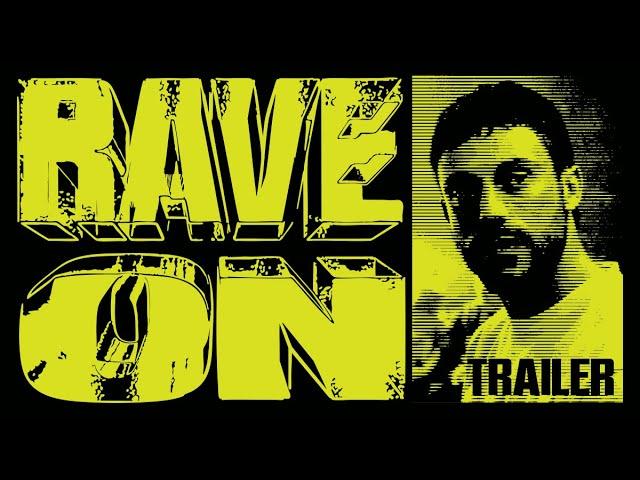
Berlin’s Most Notorious Techno Club, One Night, One Vinyl Record That Could Save Everything — a Dante’s Inferno for the Rave Generation
Kosmo, an aging music producer overtaken by a new generation, has one mission: hand his newly finished vinyl to legendary Chicago techno figure Troy Porter (Hieroglyphic Being), playing tonight at Berlin’s most notorious club. What begins as a simple delivery escalates into an intoxicating rave odyssey — drugs, strobe, bass, and a lost record that might still mean a future. Shot at real parties in real Berlin clubs with a guerrilla documentary approach. Stars Aaron Altaras (The Zweiflers) and Clemens Schick (Dogman), with real-life DJs including Hieroglyphic Being and Lucia Lu. Score by Ed Davenport (Inland) and John Gürtler (System Crasher). Produced by Andro Steinborn (Funny Games U.S.). German theatrical July 31, 2025 via Weltkino. International sales via AFM 2025. ➡️ The film premiered at Berlin’s RSO club to a sell-out crowd of over 1,000 — the most commercially honest available launch venue for a film designed to transform a movie theatre into a techno club.
Why It Is Trending: Munich Film Festival Young German Cinema — German Film Critics Best Score Nomination — International Sales at AFM — Hieroglyphic Being as the Film’s Most Commercially Specific Discovery Signal
Variety: “a singular cinematic experience that blends a fictional narrative with a guerrilla documentary approach and immersive cinematography.” ➡️ The guerrilla documentary method gives the Berlin club world its most formally authentic available cinematic treatment — the realness of the footage is the film’s most commercially irreplaceable single production decision. IMDb: “rarely can one experience German-language cinema as raw and engaging — a small monument to the Berlin club scene which resonates worldwide with international partygoers.” ➡️ The international partygoer community is the film’s most commercially pre-converted available audience — people who have been to Berlin and people who wish they had.
Elements Driving the Trend: Dante’s Inferno Structure, Real Clubs Real DJs, the Lost Vinyl as the Night’s MacGuffin
-
The film is structured like Dante’s Inferno — Kosmo descending through the purgatory of Berlin’s underground, each level of the club a new circle of the night. ➡️ The allegorical structure gives the rave odyssey its most formally legible available narrative architecture without requiring the audience to follow a conventional plot.
-
Shot at real parties in real clubs — the cast moves through actual crowds, actual strobe, actual bass. ➡️ The documentary texture is what the Berlin club scene’s most motivated available audience will cite first — the film cannot be faked and was not.
-
The vinyl record as MacGuffin — simple mission, total escalation — gives the night its most commercially efficient available dramatic engine. ➡️ Every viewer who has ever been to a club understands immediately what it means to lose the one thing you came for.
-
Hieroglyphic Being as Troy Porter is the film’s most commercially specific casting signal — a real Chicago techno legend whose presence makes the club world’s cultural stakes immediately legible to the international electronic music community. ➡️
Virality: The RSO Premiere and the Club-as-Cinema Event Model
-
The film premiered at Berlin’s RSO to 1,000+ guests with an afterparty — the most commercially specific available launch event for a film designed to be screened with a DJ lineup attached. ➡️ The club-as-cinema event model is the film’s most commercially productive available distribution innovation — transforming every theatrical screening into a rave.
-
The event screening model — tailored afterparty lineups with key DJs from the film — gives the film its most commercially distinctive available distribution format and its most motivated available repeat audience. ➡️ Every person who sees it at an event screening becomes the most commercially reliable available advocate for the next one. The film is for the audience that has spent a night in Berlin and for the audience that has always wanted to.
Critics Reception: Specialist Circuit Positive — Immersive Quality Unanimous, Narrative Thinness the Consistent Qualification
-
IMDb: “magnificent plunge into Berlin’s nightlife — this film should certainly find its international audience.” ➡️
-
Letterboxd: “more drug-saturated experience than story — more Gaspar Noé influence than does it good; somehow fascinating, loud and colourful, but also slightly boring.” ➡️ The Noé comparison is the film’s most commercially honest available critical framing — the audience that responds to Enter the Void will find exactly what they came for.
-
Groove Magazine: “between bass storms and drug trip, techno ecstasy and inner emptiness — a man who is lost and must find himself again.” ➡️
-
IMDb 6.4 from 227 voters. 14 critic reviews.
Awards and Recognitions: 4 Nominations — Munich Film Festival Young German Cinema — German Film Critics Best Score
-
Munich Film Festival 2025: Young German Cinema — Direction (Chryssos/Jakovleski), Screenwriting (Chryssos/Jakovleski), Acting (June Ellys Mach) — 3 nominees.
-
German Film Critics Association 2026: Best Film Score — Ed Davenport and John Gürtler nominee.
-
German theatrical July 31, 2025. International: Njutafilms (Scandinavia), Unlimited Media (Baltics), KyivMusicFilm (Ukraine).
Director and Cast: Two German Directors Who Made a Film Inside the Experience They Were Depicting
-
Nikias Chryssos — The Bunker, A Pure Place — and Viktor Jakovleski — Berlin ER, Brimstone & Glory — team up for the most formally specific available Berlin club film, shot from the inside. ➡️ Chryssos: “What is the minimum amount of plot we need at the beginning to allow the audience to dive in?” — the most commercially honest available directorial question for a film whose subject is immersion rather than narrative.
-
Aaron Altaras (Kosmo) — The Zweiflers — carries the film’s emotional through-line with the specific vulnerability of a man who wants to stay sober and cannot. ➡️ The performance that makes the night’s escalation feel personally consequential rather than merely spectacular.
-
Clemens Schick (Klaus) — Dogman — gives Kosmo’s former partner the specific weight of a friendship that survived the fall from success. ➡️
-
Hieroglyphic Being (Troy Porter) — Chicago leftfield techno legend — as himself in all but name, the goal Kosmo is chasing through every circle of the night. ➡️ His actual presence is the most commercially specific available validation of the film’s claim to cultural authenticity.
Conclusion: A Munich Film Festival Debut That Earned Its Three Young German Cinema Nominations Through the Most Formally Specific Available Berlin Club Experience on Film
The guerrilla documentary method, the real club locations, and Hieroglyphic Being’s presence collectively give the film its most commercially irreplaceable available authenticity credential. ➡️ The AFM international sales confirm the electronic music community’s most globally distributed available discovery circuit is already engaged. Chryssos and Jakovleski have made the Berlin club scene’s most commercially honest available cinematic monument.
What Movie Trend Is Followed: Immersive Single-Night Club Drama — Dante’s Inferno Applied to the Berlin Techno Underground
Rave On belongs to the single-night immersive club film tradition — Enter the Void, Human Traffic, Right Here Right Now — but with its most formally specific available contribution: a guerrilla documentary approach that puts the audience inside a real party rather than a recreation of one. ➡️ The Berlin techno scene is the most internationally recognisable available urban music culture — making the film simultaneously a local monument and a global discovery object.
Trend Drivers: Guerrilla Documentary Method, Real DJs Real Clubs, the MacGuffin That Makes the Night Legible
-
The fictional narrative and documentary footage combination gives the club world its most commercially credible available cinematic treatment — the audience cannot tell where the film ends and the party begins. ➡️ That boundary collapse is the film’s most formally specific available achievement.
-
Real DJs — Hieroglyphic Being, Lucia Lu, Freddy K, Rhyw — give the club world its most institutionally validated available cultural cast. ➡️ The electronic music community’s recognition of these names is the most commercially efficient available discovery signal for the international audience the film is designed to reach.
-
The vinyl MacGuffin keeps the escalating night narratively anchored. ➡️ The simplest available plot device is also the most commercially elegant — it gives the chaos a direction without requiring the film to resolve it conventionally.
What Is Influencing Trend: Weltkino’s Theatrical Release and the Event Screening Model
-
Weltkino’s German theatrical release gives the film its most commercially credible available domestic platform. ➡️
-
The event screening model — club screening plus afterparty — is the most commercially innovative available distribution strategy for an immersive music film. ➡️ It converts every theatrical venue into the film’s most productive available marketing event simultaneously.
Macro Trends Influencing: Berlin Techno’s Global Cultural Moment and the Immersive Cinema Wave
-
Berlin’s club scene — Berghain, RSO, the mythology of the city as the world’s most significant available techno capital — has never had more mainstream cultural recognition than in 2025. ➡️ The film arrives at the precise moment the subject has its widest available international audience.
-
The immersive cinema wave — Enter the Void, Climax, Aftersun — has established a critical infrastructure treating sensory overwhelm as a formal achievement. ➡️ Rave On arrives in a critical environment already prepared for the register.
Consumer Trends Influencing: The Electronic Music Community and the Berlin Pilgrimage Audience
-
The global electronic music community — the most commercially motivated available audience for a Berlin techno film — is activated by Hieroglyphic Being, Ed Davenport, and Lucia Lu’s presence in the cast and score. ➡️ Real names doing real things in a real club is the most commercially efficient available discovery mechanism for this specific community.
-
The Berlin pilgrimage audience — people who have queued at Berghain or wish they had — is the film’s most emotionally pre-loaded available secondary discovery community. ➡️
Audience Analysis: Electronic Music Communities, Immersive Cinema Audiences, German Independent Film Followers
The core audience is 22–45 — global electronic music communities activated by the real DJ cast, immersive cinema audiences who respond to the Noé-adjacent sensory register, and German independent film followers who treat the Munich Film Festival Young German Cinema section as their most reliable available quality signal. ➡️ The event screening model extends the audience beyond cinema — every club that hosts a Rave On screening becomes its own most commercially productive available discovery community.
Conclusion: A Berlin Techno Monument That Earned Its International Sales by Being the Only Available Film That Actually Feels Like Being There
The Munich nominations confirm the German film industry’s recognition of the formal achievement. ➡️ The AFM international sales confirm the global electronic music community’s most commercially motivated available interest. The event screening model is the distribution innovation that could make Rave On the most commercially specific available German club film of the decade.
Final Verdict: An Immersive Berlin Techno Odyssey — the Guerrilla Documentary Method and the Real Club Cast Give It the Authenticity That Every Berlin Club Film Has Been Promising and Failing to Deliver
The film works best for the audience that has been to Berlin and for the audience that has always wanted to go. ➡️ The guerrilla documentary method is what makes it irreplaceable — a recreation of a Berlin club is always inferior to the actual one, and this is the actual one. The narrative thinness is the film’s most consistent critical qualification — the Noé influence is real, and for some viewers the experience outpaces the story. ➡️ That trade-off is not a failure but a formal declaration — Chryssos and Jakovleski decided immersion was the subject and built the film accordingly.
Audience Relevance: Electronic Music Communities, the Berlin Pilgrimage Audience, Immersive Cinema Fans
This film is for everyone who has ever lost themselves in a club and considered that a good night. Works best for viewers who respond to the Noé-adjacent sensory register and for whom the Berlin techno scene is personally or culturally specific. ➡️ If you want narrative resolution, this is not your film — if you want to know what it actually feels like to be inside the night, this is the only available version.
What Is the Message: The Club as Purgatory, the Vinyl as Salvation, and the Night as the Only Available Path Back to Who You Were
A man who has lost his place in the world enters the one space where he might find it again. Kosmo’s descent through the club mirrors Dante’s descent through hell — each circle of the night stripping away another layer of the identity he thought he was protecting. ➡️ The techno club as a place of liberation is the film’s most commercially honest available thesis — Jakovleski: “the techno club can be a place of liberation.”
Relevance to Audience: Berlin Techno as Global Cultural Geography, the Club Night as Universal Coming-of-Age
The film is as much about losing yourself as it is about Berlin. The club is the microcosm, the night is the structure, and Kosmo’s mission is the most universally legible available version of the question — what do you do when the world has moved on without you? ➡️ The techno setting is specific but the emotional stakes are available to anyone who has ever felt overtaken by a generation that arrived after them.
Social Relevance: The Aging Artist Displaced by a New Generation, the Club as the Space Where Hierarchies Dissolve
Berlin’s club scene is the most democratic available space in one of the world’s most stratified cultural industries. Kosmo is displaced not by failure but by time — a more specific and more honest available social observation about creative obsolescence than the conventional fall-from-grace narrative provides. ➡️ The club is where the hierarchy that displaced him temporarily dissolves — which is why it is the only place he can go to find what he lost.
Performance: Altaras’ Vulnerable Kosmo, Hieroglyphic Being’s Cultural Authority, Mach’s Munich Nomination
Altaras carries the night with the specific vulnerability of a man who wants to stay sober and cannot — the performance that makes the escalation feel consequential rather than merely spectacular. ➡️ Without his interiority the immersive method has nothing to anchor it. Hieroglyphic Being’s presence as Troy Porter is the film’s most commercially specific available cultural validation — a real legend playing the goal Kosmo is chasing confirms the film’s cultural stakes without a word of exposition. ➡️ June Ellys Mach’s Munich Film Festival Acting nomination confirms the institutional recognition of the film’s most formally unexpected available secondary performance.
Legacy: A Monument to the Berlin Club Scene — and the Event Screening Model as the Film’s Most Commercially Innovative Available Legacy
Rave On will be remembered as the Berlin techno film that actually felt like being there. The event screening model — club venue plus DJ afterparty — is the most commercially innovative available distribution legacy the film leaves behind, transforming every new screening into the most productive available marketing event. ➡️ Chryssos and Jakovleski have established the immersive club film’s most formally specific available production method — guerrilla, real, inside the experience — as the standard against which every subsequent Berlin techno film will be measured.
Success: 4 Nominations — Munich Film Festival Young German Cinema — German Film Critics Best Score — AFM International Sales
-
Munich Film Festival 2025: 3 Young German Cinema nominations (Direction, Screenwriting, Acting). German Film Critics 2026: Best Score nominee (Davenport/Gürtler). German theatrical July 31, 2025. International: Njutafilms (Scandinavia), Unlimited Media (Baltics), KyivMusicFilm (Ukraine).
Rave On proves that the only Berlin techno film worth making is the one shot inside the actual club — and that Chryssos and Jakovleski understood this well enough to hand Hieroglyphic Being the goal and let Kosmo chase it through every circle of the night.
Insights: Immersive Berlin techno film shot at real parties — guerrilla documentary method and real DJ cast make it the most formally authentic available club film in German cinema. Industry Insight: AFM international sales and the event screening model confirm the most commercially innovative available distribution strategy for an immersive music film. Audience Insight: Hieroglyphic Being’s presence activates the global electronic music community — the most commercially pre-converted available audience for a Berlin club film. Social Insight: Kosmo displaced by time rather than failure is the most specific available social observation about creative obsolescence in a scene that runs on youth. Cultural Insight: The event screening model transforms every cinema into a Berlin techno club — the most commercially productive available cultural legacy for a film that was always designed to be an experience rather than a viewing.
Conclusion: A Munich Film Festival Debut That Proved the Berlin Club Scene’s Most Commercially Honest Available Monument Is the One Shot Inside It
The most important thing Rave On confirms is that immersion is not a style choice but a formal argument — the film is the experience, and the experience is the film. Rave On earns its institutional recognition through the formal qualities that the most honest immersive cinema always demonstrates — the real location that cannot be faked, the real cast that cannot be replicated, and the event screening model that converts every theatrical venue into the most productive available extension of what the film is actually about. ➡️ Chryssos and Jakovleski’s next film arrives with this formal identity confirmed — the most commercially specific available test of whether the guerrilla immersive method can be sustained beyond the single night that established it.
Summary: One Mission, One Club, One Night, and the Most Commercially Honest Available Portrait of What It Feels Like to Be Inside the Berlin Techno Underground
-
Movie themes: The aging artist displaced by time rather than failure, the club as the only available space where hierarchies dissolve, the vinyl as the MacGuffin that keeps the night narratively anchored, and Dante’s descent applied to Berlin’s underground as the most formally legible available structure for a rave odyssey. ➡️ Immersion is the subject — every formal decision exists to put the audience inside the experience rather than outside it.
-
Movie directors: Nikias Chryssos — The Bunker, A Pure Place — and Viktor Jakovleski — Berlin ER, Brimstone & Glory — team up for the most formally specific available Berlin club film, answering their own directorial question: “What is the minimum plot we need to allow the audience to dive in?” ➡️ The answer is a vinyl record, a legendary DJ, and one night — the most commercially elegant available narrative reduction.
-
Top casting: Altaras’ Kosmo carries the night with the vulnerability of a man who wants to stay sober and cannot. Hieroglyphic Being’s Troy Porter confirms the film’s cultural stakes without exposition. Mach’s Munich nomination confirms the film’s most formally unexpected available performance. ➡️ Real DJs alongside fictional characters is the film’s most commercially specific available casting decision — the boundary between performance and presence is the film’s most productive available formal ambiguity.
-
Awards and recognition: Munich Film Festival 2025: 3 Young German Cinema nominations (Direction, Screenwriting, Acting). German Film Critics 2026: Best Score nominee. German theatrical July 31, 2025. International sales: Njutafilms, Unlimited Media, KyivMusicFilm. ➡️ The institutional recognition confirms the German film industry’s engagement with the most formally specific available immersive music film of the 2025 domestic calendar.
-
Why to watch: The Berlin techno film shot at real parties in real clubs — Altaras losing the vinyl in a crowd of actual ravers, Hieroglyphic Being as the idol at the end of the night, Ed Davenport and John Gürtler’s score transforming the cinema into the most productive available approximation of the actual experience, and a Dante’s Inferno structure that makes one man’s desperate mission through the underground feel like every night you ever almost didn’t survive. ➡️ If you have ever lost yourself in a Berlin club and considered that a good night, this film is specifically for you.
-
Key success factors: Guerrilla documentary method plus real club locations plus Hieroglyphic Being’s cultural authority plus Altaras’ vulnerability plus Davenport/Gürtler’s German Film Critics-nominated score plus the event screening model plus Munich Film Festival institutional validation plus AFM international sales infrastructure. ➡️ The event screening model is the most commercially innovative available single factor — transforming every venue into the film’s most productive available marketing event.
-
Where to watch: German theatrical from July 31, 2025 via Weltkino. International via Njutafilms (Scandinavia), Unlimited Media (Baltics), KyivMusicFilm (Ukraine). Event screenings with DJ afterparties at selected international venues via raveon.party. ➡️ The event screening is the most commercially productive available viewing condition — the film is designed to be experienced rather than merely watched.
Conclusion: The Berlin Club Scene’s Most Formally Honest Available Cinematic Monument — Shot Inside the Experience, Distributed as the Experience, Remembered as the Experience
The most important thing the film confirms is that the only way to make a Berlin techno film is to make it inside the club. Rave On earns its institutional recognition through the qualities that the most honest immersive cinema always demonstrates — the real location that cannot be faked, the real cast that cannot be replicated, and the event model that extends the film beyond the cinema into the most productive available version of what it was always trying to be. ➡️ Chryssos and Jakovleski’s next film arrives with this formal identity confirmed — the most commercially specific available test of whether the guerrilla immersive method can be sustained beyond the single night that established it.






Leave a Reply