

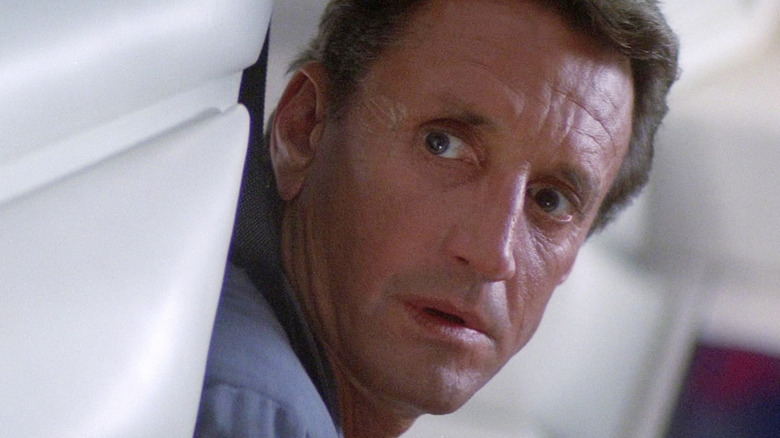
Yes, “2001: A Space Odyssey” received a sequel. Titled “2010: The Year We Make Contact,” it stars Roy Scheider and even scored five Oscar nods. It’s also been more or less forgotten these days.
In contrast, everyone remembers “2001: A Space Odyssey,” as Stanley Kubrick’s 1968 classic is still gorgeous and provocative to this day. The film envisions a near future where humanity is already making prolonged sojourns to the stars, which it presents as the next step in human evolution. In trekking into the cosmos, we humans finally grow into something that we’d been working on since the days of our proto-humanity. We’re ready to be reborn as cosmic creatures. Our minds might not be able to handle it, but we’re finally arriving somewhere. (Tellingly, “2001” was far from science fiction for Kubrick.)
“2001: A Space Odyssey” was co-written by Arthur C. Clarke, who published the novel version of “2001” a few months after the release of Kubrick’s movie. He went on to write several books and short stories in the 1970s (including “Rendezvous with Rama” in 1973) before returning to the world of “2001” with “2010: Odyssey Two” in 1982. Sci-fi fans rejoiced, and Hollywood licked its lips.
In 1984, writer/director Peter Hyams released a big-budget feature film adaptation of “Odyssey Two” titled, you guessed it, “2010: The Year We Make Contact.” However, the movie was a bit of a financial disappointment, which may have discouraged studios from adapting Clarke’s other two “2001” sequel novels (“2061: Odyssey Three” and “3001: The Final Odyssey”). It didn’t help that “2010” lacks the awe, mystery, and psychedelic nature of Kubrick’s “2001,” focusing more on plot and practical matters. Its visual effects are cool, though.
2010: The Year We Make Contact lacks the abstract elements of 2001
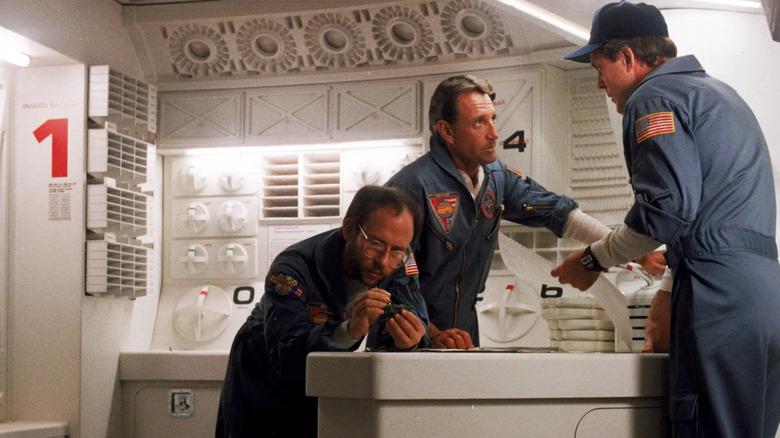
The cast of “2010: The Year We Make Contact” is actually quite impressive. Roy Scheider stars as the astronaut Heywood Floyd, with John Lithgow and Bob Balaban playing Floyd’s fellow American space travelers and Helen co-starring as a Russian cosmonaut.
At the end of “2001,” as you may recall, astronaut Dave Bowman (Keir Dullea) treks to Jupiter and encounters some kind of spatial aperture that seems to either transport him out of space or scramble his mind. In “2010,” it’s revealed that Dave and his crew were lost on their Jupiter mission, and they haven’t been heard from in nine years. So, Floyd and his peers hitch a ride on a Russian space vessel known as the Leonov to find out what happened. (Russia, you see, was ready to investigate the fate of the Discovery before the United States.)
Upon reaching Jupiter, Floyd and the others learn that one of the planet’s moons, Europa, may have plant life on it, and they soon find the derelict Discovery. Most astonishingly, though, they uncover a large black monolith, like the one in “2001,” adrift in space between Europa and Jupiter’s moon Io.
The remainder of “2010” is part mystery and part nostalgia trip. Upon reactivating HAL 9000 (Douglas Rain), i.e. the paranoid killer computer from “2001,” the movie’s leads learn that HAL broke down because it was meant to conceal information about the monolith. Yes, many of the abstract (read: confusing) elements of “2001” are made disappointingly concrete in “2010,” and that includes Dave’s fate. He eventually appears as a kind of non-corporeal being who tells Floyd he needs to get outta Dodge.
2010 is not mysterious enough
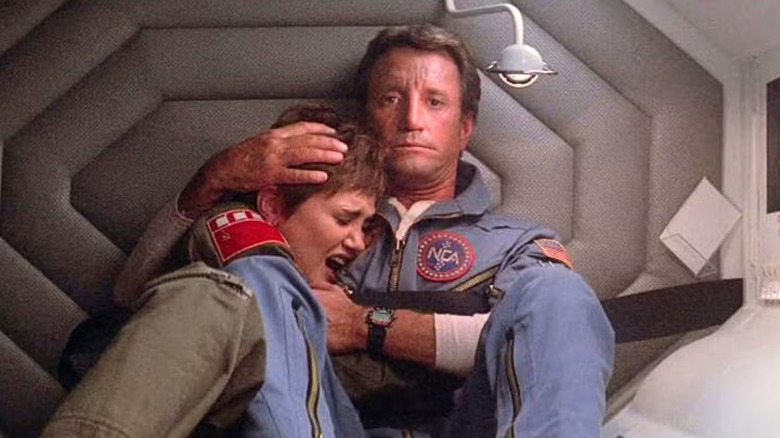
Stanley Kubrick had the eerie skill to make the spatial traversal in “2001” feel ineffable and beyond human. “2010,” on the other hand, is very literal, and it only begins to tip into the abstract near the end. But even then, it concludes on a fairly grounded note, with the events of the movie paving the way for the U.S. and Russia to end their hostilities. It’s disappointing to see the space mission from “2001,” which is so enormous and speaks to the future of human evolution in that film, reduced to something much simpler. Instead, the ultimate message of “2010” is that we should end the Cold War, which was, obviously, timely in 1984 but a little too specific to have much meaning beyond that.
On the whole, critics were mixed on “2010.” Awarding it three stars (out of four), Roger Ebert felt it was a fun adventure, but he admitted it robs “2001” of its indescribable mysteries. His was one of the more positive reviews, though, with Variety merely referring to it as “a hodgepodge of bits and pieces.” Not much has changed since then, either. While you’ll occasionally find “2010” ranked among the best sci-fi movies nobody talks about anymore, the film doesn’t really have any steadfast fans beyond that. It’s neither good enough to be included in conversations about “2001” nor bad enough to be considered entertaining shlock.






Leave a Reply