
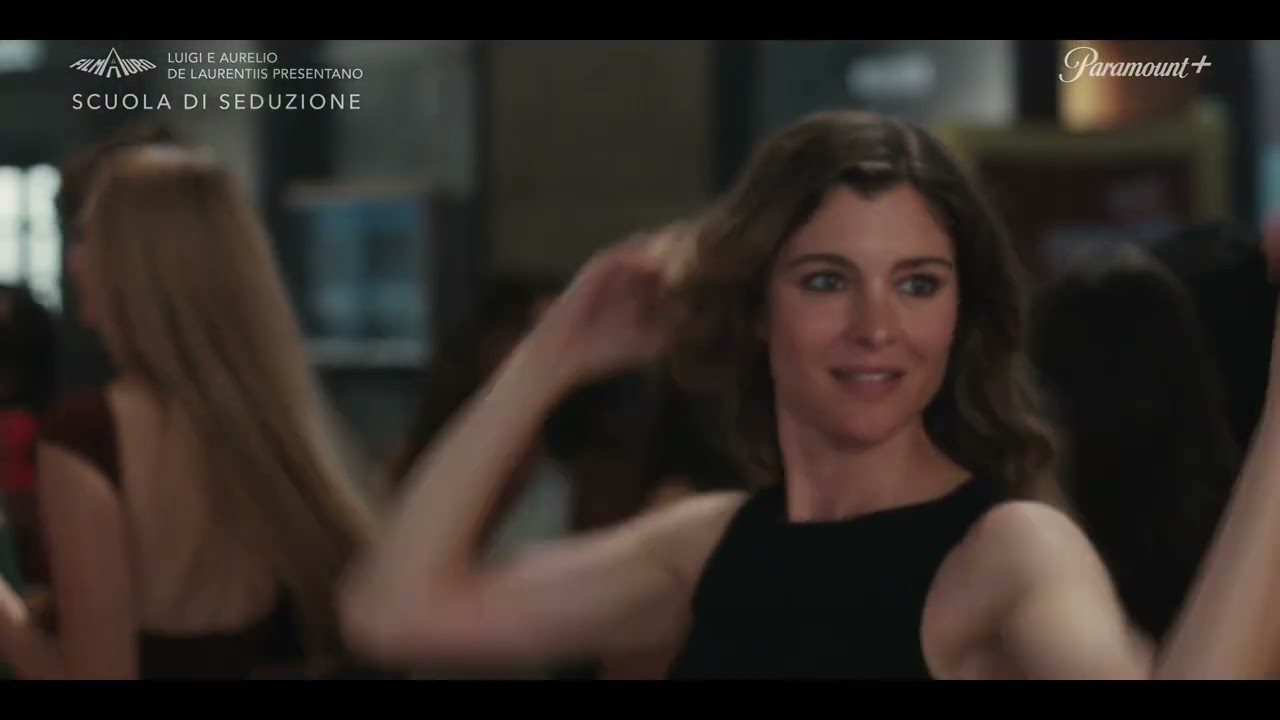
The Italian Ensemble Comedy Where a Love Coach Guides Six Emotionally Fragile People Through Modern Romance — With Karla Sofía Gascón Making Her Italian-Language Debut
Clemente is a sixty-year-old musician, restless and lonely, who enrolls in a seduction workshop run by the enigmatic love coach Ortensia. Alongside him: Bruno, a mathematics teacher oppressed by his mother figure; Adele, an influencer who documents her inconclusive romantic adventures; Giuliana, a nurse trapped in a long-failing marriage; Emanuele, a wealthy young man handsome on the outside and profoundly ill at ease within; and Gaia, an activist and bookshop owner. Ortensia guides them through a series of exercises and confrontations that gradually reveal what each of them is really looking for. Directed, co-written, and performed by Carlo Verdone — the Roman filmmaker and actor who has defined Italian comedy for four decades. Written with Pasquale Plastino and Luca Mastrogiovanni. Produced by Luigi and Aurelio De Laurentiis through Filmauro. Cinematography by Giovanni Canevari. Exclusively on Paramount+ from April 1, 2026. The film originated from a Guardian article about online seduction schools.
Why It Is Trending: Carlo Verdone’s Return to the Feature Film Format After Four Seasons of Vita da Carlo — With Karla Sofía Gascón Making Her Italian-Language Debut
Verdone’s return to feature film direction after his extended television period with Vita da Carlo (Paramount+, four seasons) was one of Italian cinema’s most anticipated 2026 events. The casting of Karla Sofía Gascón — Oscar-nominated for Emilia Pérez, the most discussed Spanish-language performance of 2024 — as Ortensia gave the film its most internationally significant casting announcement. Gascón delivers her lines in Italian with a cadenced, almost musical rhythm that Sky TG24 described as “calibrated to the millimetre, the product of Verdone’s patient directorial work guiding her toward slownesses and silences.” Lino Guanciale, Vittoria Puccini, and Beatrice Arnera round out an ensemble praised across multiple Italian reviews for its cohesion and complementary energy.
Elements Driving the Trend: The Ensemble Cohesion, Gascón’s Magnetic Ortensia, and Verdone’s Signature Blend of Comedy and Melancholy
-
Gascón’s Ortensia — magnetic, confidential, warmly unconventional — is the film’s most discussed performance, with Sky TG24 noting that she speaks Italian with a naturalness that makes the other actors, already strong, seem even stronger by contagion.
-
The ensemble’s internal coherence is the film’s most praised structural quality — the six students’ individual fragilities complement rather than compete, creating what Movieplayer described as “a group that grows more unified as the story progresses.”
-
Verdone’s ability to mix laughter and melancholy — what Italian critics uniformly call his “malincomicità” — is the film’s most reliable tonal foundation, with CineCriticaWeb describing a dramedy register “that only a few today can afford to shoot in such a balanced way.”
-
The Roman setting is handled with the specific visual attention of CineCriticaWeb’s noted “a Rome no longer working-class but almost unrecognisable — never an anonymous backdrop but a city frozen in its past, cold, impassive” — giving the familiar Verdone geography a more composed and European visual register.
Virality: Gascón’s Italian Debut and Verdone’s Paramount+ Return
-
The casting of Gascón — the first major international star to make an Italian-language film debut in Verdone’s universe — generated substantial media attention in both Italian and international entertainment press.
-
Verdone’s Paramount+ loyalty — the platform confirmed as his distribution home for both the Vita da Carlo series and now this feature — gives the film immediate streaming discovery reach across Paramount+’s Italian subscriber base.
Critics Reception: Positively Received by Verdone Enthusiasts — Recognised as a Warmly Consistent Entry in His Filmography
-
Sky TG24 — Gascón interprets Ortensia with magnetic and confidential presence; the Verdone-Guanciale comedic duo reveals the possibilities of an exciting new pairing; the music contributes with the same emotional intelligence as the film itself.
-
Movieplayer — follows Verdone’s consolidated canon; seeks to entertain without surrendering his melancholic vein; the affinity of the cast ensemble is the film’s point of strength; Gascón at ease in Ortensia’s role.
-
Ciak Magazine — the heart of the film is its characters, fragile, imperfect, and deeply human; Guanciale delivers a convincing and emotional performance; Puccini brings elegance and intensity; Gascón adds an original and contemporary note.
-
CineCriticaWeb — the most balanced dramedy register available in Italian cinema today; a Rome attentive to light in interior and exterior; a European breath brought by Gascón’s exotic class.
-
Today.it — the writing functions and contains multiple tonal shifts without losing itself; dialogue gives depth or lightness as needed; solid direction; honourable mention for the entire cast’s performances. IMDb 5.5 from 128 viewers.
Awards and Recognitions: No Awards at Time of Writing — Paramount+ Italy April 1, 2026
Director and Cast: Italy’s Most Beloved Comic Auteur Returns to the Feature Format — With an Oscar-Nominated International Star and One of Italian Television’s Most Popular Ensembles
-
Carlo Verdone — one of Italian cinema’s most beloved writer-director-performers across four decades — returns to the feature film format after the Vita da Carlo television experience, bringing his signature blend of Roman comedy and melancholic observation to the contemporary digital relationship landscape. The film originated from a Guardian article about online seduction schools.
-
Karla Sofía Gascón (Ortensia) — Oscar-nominated for Emilia Pérez, the most discussed performance at Cannes 2024 — makes her Italian-language debut in a role that Verdone built specifically around her presence, guiding her toward a cadenced, musical Italian delivery that reviewers praised as one of the film’s most distinctive formal elements.
-
Lino Guanciale (Bruno) — one of Italian television’s most popular actors — delivers what Ciak Magazine called “a convincing, very emotional performance” and what CineCriticaWeb identified as part of the film’s best comedic pairing alongside Verdone’s Clemente.
-
Vittoria Puccini (Giuliana) — brings elegance and emotional intensity to the nurse trapped in a failing marriage; cited by multiple reviews as one of the ensemble’s most polished contributions.
-
Beatrice Arnera (Adele) — the influencer character whose generational contrast with Verdone’s Clemente produces the film’s strongest individual duets.
-
Euridice Axen (Gaia), Romano Reggiani (Emanuele), Elisa Di Eusanio, and Irene Girotti complete an ensemble praised for collective cohesion over individual stardom.
Conclusion: Carlo Verdone’s Warmly Anticipated Return to the Feature Format — Delivered With the Tonal Confidence and Ensemble Intelligence That Defines His Most Accomplished Comedies
The Gascón casting is the film’s most commercially significant creative decision and its most formally successful one. The ensemble’s collective cohesion — six emotionally fragile individuals who become a group — is the film’s most praised structural achievement. Verdone’s return to feature direction confirms his continued formal command of the Italian dramedy register that he has defined more consistently than any other Italian filmmaker of his generation.
What Movie Trend Is Followed: The Italian Ensemble Comedy Turns the Love Coach Premise Into a Portrait of Contemporary Emotional Fragility
Scuola di Seduzione belongs to the tradition of Italian ensemble comedies that use a shared social space — a therapy group, a school, a journey — to examine the full spectrum of contemporary emotional life. The specific films that reviewers explicitly cite as predecessors within Verdone’s own filmography are Ma Che Colpa Abbiamo Noi (2003) and Compagni di Scuola (1988) — the school as group therapy, the shared vulnerability as the mechanism for individual revelation. The film’s contemporary contribution is the digital age as the landscape of emotional failure: apps, AI, social media, and the algorithmic management of desire as the environment in which these six characters have lost the ability to simply be present with another person.
Trend Drivers: The Love Coach as Structural Device, the Multi-Generational Ensemble, and Rome as Emotional Landscape
-
The love coach as structural device — Ortensia as both guide and narrator, opening scenarios for each character — gives the film its most commercially legible comedic architecture and its most efficient character introduction mechanism.
-
The multi-generational ensemble — from Clemente’s sixty-year-old melancholy to Adele’s influencer anxiety — gives the film a breadth of contemporary emotional portraiture that a single protagonist could not achieve.
-
Verdone’s consistent use of Rome as emotional landscape — not backdrop but a city that reflects its inhabitants’ inner states — gives the film a geographic specificity that the Italian audience recognises as an authorial signature.
-
The digital age framing — AI, dating apps, social media as the environment of contemporary loneliness — gives the familiar Verdone ensemble structure a contemporary urgency that speaks directly to the film’s intended audience.
What Is Influencing Trend: Verdone’s Filmauro Partnership and Paramount+’s Italian Content Strategy
-
The Verdone-De Laurentiis partnership — confirmed across decades of Italian popular cinema — gives the film the production infrastructure that premium Italian comedy requires to compete with streaming platform international content.
-
Paramount+’s investment in Italian original content — of which Vita da Carlo was the flagship — positions Scuola di Seduzione as the platform’s most high-profile Italian original feature of 2026.
-
Gascón’s international profile gives the film a discovery pathway beyond Verdone’s established Italian audience — the Emilia Pérez community will encounter it through her name.
Macro Trends Influencing: Digital Loneliness, the Love Coach Cultural Moment, and the Italian Comedy’s Evolution
-
The love coach as cultural phenomenon — referenced in the Guardian article that inspired the film — reflects a specific contemporary anxiety: that human intimacy has become a competence requiring professional guidance.
-
The Italian comedy’s evolution from physical slapstick and character types toward a more emotionally nuanced, therapy-adjacent register reflects a generational shift in what Italian audiences expect from their most beloved comic voices.
-
The streaming-first Italian feature is now an established format — Scuola di Seduzione confirms that premium Italian comedy has a viable home on platform beyond traditional theatrical release.
Consumer Trends Influencing: Verdone’s Loyal Italian Audience and Gascón’s International Fanbase
-
Verdone’s four-decade audience loyalty — Italian viewers who have followed his filmography from Un Sacco Bello to Vita da Carlo — gives the film its most motivated discovery community on Paramount+.
-
Gascón’s international fanbase from Emilia Pérez creates a secondary discovery audience outside Italy — viewers who followed her through Cannes and the Oscar campaign will seek out her subsequent work.
-
Paramount+’s existing Italian subscriber base gives the film immediate reach within the platform’s most engaged Italian audience segment.
Audience Analysis: Verdone’s Established Italian Audience, Gascón’s International Followers, and the Italian Streaming Drama Community
The core audience is 35–65 — Italian Verdone enthusiasts who follow his career as a cultural institution, Italian streaming drama audiences who respond to ensemble emotional comedy in the Vita da Carlo register, and Gascón’s international following who will discover the film through her profile. The multi-generational ensemble structure ensures that younger viewers (Adele’s influencer storyline, Emanuele’s identity struggle) and older viewers (Clemente’s loneliness, Bruno’s mother-figure oppression) find their specific emotional register within the same film.
Conclusion: A Streaming Ensemble Comedy That Delivers the Reliable Pleasures of Verdone’s Established Register — With an International Casting Choice That Elevates the Material
Scuola di Seduzione earns its audience through the accumulated trust of Verdone’s filmography and the specific novelty of Gascón’s Italian-language debut. The ensemble’s collective cohesion is the film’s most commercially durable quality. The digital age framing gives a familiar Verdone structure its most contemporary relevance.
Final Verdict: A Warmly Crafted Italian Ensemble Comedy That Earns Verdone’s Most Loyal Audience — and Introduces Gascón’s Italian Register as One of the Film’s Most Formally Distinctive Contributions
Verdone delivers a feature return that confirms his formal command of the Italian dramedy register — the blend of laughter and melancholy, the ensemble structure built on complementary fragilities, the Rome that is never merely a backdrop. Gascón’s Ortensia is the film’s most unexpected formal pleasure: a performance built in collaboration with Verdone that transforms a potentially difficult Italian-language debut into one of the ensemble’s most warmly received elements. The Verdone-Guanciale comedic pairing reveals a new collaboration with genuine potential for future development.
Audience Relevance: For Verdone’s Established Italian Audience and for International Viewers Discovering Gascón’s Post-Emilia Pérez Career
Works best for Italian audiences who approach Verdone’s comedies as cultural events and find emotional resonance in his specific tonal register — the irony gentile, the malinconia discreta that Italian critics recognise as his authorial signature. International viewers who followed Gascón through Emilia Pérez will find her Italian-language performance a compelling continuation of the range she demonstrated at Cannes.
What Is the Message of Movie: Seduction Was Never the Point — Presence Is the Skill That the Digital Age Has Made the Rarest
The film’s most precise thematic observation — that in an era when AI can learn to flirt while we forget how to be present — is delivered through Ortensia’s core teaching: that seduction is always born from the healed scar, not the perfect performance. Verdone’s Clemente embodies this directly — a man who has everything except the willingness to simply be with someone.
Relevance to Audience: A Film That Gives Italian Comedy’s Most Beloved Voice His Most Contemporarily Specific Subject
The digital age framing — apps, AI, voice notes as the infrastructure of modern loneliness — gives the familiar Verdone ensemble structure a cultural specificity that speaks directly to the emotional experience of his contemporary Italian audience. Every character’s fragility is recognisable as the product of a specific contemporary condition.
Social Relevance: The Love Coach as a Mirror of Contemporary Emotional Incompetence — and the Specific Italian Social Landscape That Verdone Continues to Document
The film’s social observation — that human intimacy has become a professional skill requiring expert guidance, that the digital age has made vulnerability harder to perform than competence — is delivered with the gentle irony that has always been Verdone’s most socially precise instrument. The Rome of Scuola di Seduzione, cold and impassive behind its characters’ dramas, is the social landscape that Italian comedy has always needed its auteurs to document.
Performance: Gascón Delivers a Formally Disciplined Italian-Language Debut — the Guanciale-Verdone Pairing Reveals a New Comedic Partnership
Gascón’s Ortensia — calibrated, musical, warmly eccentric — is the performance that every Italian reviewer placed first in their cast assessments. The Guanciale-Verdone dynamic delivers the film’s most consistently pleasurable comedic sequences. Puccini’s elegance and intensity and Arnera’s generational contrast with Verdone’s Clemente are the ensemble’s most complementary secondary contributions.
Legacy: A Formally Confident Feature Return That Confirms Verdone’s Continued Creative Authority in the Italian Dramedy Register
Scuola di Seduzione will be remembered as the film that confirmed Verdone’s feature directing authority after his television period — and as the work that brought Gascón into Italian cinema with a performance crafted specifically for her by one of the medium’s most experienced guides of actor and character. The Guanciale collaboration is the film’s most promising creative development for future projects.
Success: Paramount+ Italy Exclusive — April 1, 2026 — No Awards at Time of Writing
The Paramount+ platform delivered the audience. Gascón’s casting delivered the discovery conversation. The ensemble’s collective warmth delivered the emotional engagement.
Scuola di Seduzione confirms that Carlo Verdone’s most enduring gift to Italian cinema is not the gag or the character type but the specific melancholy that makes his comedies feel true — and that Karla Sofía Gascón, guided by his patient direction, found her Italian voice within it.
Insights: A warmly crafted ensemble comedy that delivers the reliable pleasures of Verdone’s established dramedy register — the blend of irony and melancholy, the complementary fragilities of a well-assembled cast, and the Rome that reflects rather than merely frames its characters — elevated by Gascón’s Italian-language debut as the film’s most formally unexpected and most widely praised element. Industry Insight: The Verdone-Paramount+ partnership — confirmed across Vita da Carlo and now Scuola di Seduzione — establishes that Italy’s most beloved comic auteur has found in streaming the distribution home that allows him to continue working at pace and reach his audience directly; the Filmauro-De Laurentiis production infrastructure gives the streaming format the production quality that Italian comedy demands. Audience Insight: Gascón’s Italian-language debut is the film’s most commercially efficient discovery mechanism beyond Verdone’s established audience — her Emilia Pérez following will encounter Scuola di Seduzione through her name and find a performance that demonstrates both range and the specific warmth that Verdone elicits from his collaborators. Social Insight: A film that identifies the inability to be present with another person as the defining emotional condition of the digital age — and proposes that seduction is always born from the healed scar rather than the perfect performance — is making one of contemporary Italian comedy’s most precisely observed social arguments. Cultural Insight: Scuola di Seduzione positions Verdone as the Italian filmmaker most capable of translating the specific anxieties of the digital relationship landscape into the tonal register of Italian popular comedy — and confirms that his formal authority in that register, developed across four decades, remains fully intact.
Conclusion: A Confident Feature Return That Reaffirms Verdone’s Formal Authority in Italian Ensemble Comedy — and Delivers Gascón’s Italian Debut as the Film’s Most Memorable Creative Contribution
Scuola di Seduzione earns its place in Verdone’s filmography as a formally assured, emotionally generous ensemble comedy that reflects both his accumulated directorial wisdom and his continued openness to formal novelty — here embodied by Gascón’s carefully crafted performance. The film confirms that Verdone’s voice remains one of Italian cinema’s most culturally necessary, and that his collaboration with Paramount+ continues to give that voice its most direct and most broadly accessible platform.
Summary: One Love Coach, Six Fragile Romans, and the Discovery That Seduction Was Never the Lesson
-
Movie themes: Contemporary emotional fragility in the digital age, the love coach as a mirror of a society that has outsourced intimacy to professional guidance, the specific loneliness of the Roman upper-middle class, the generational gap between analogue and digital approaches to desire, and the argument that vulnerability is the only competence worth learning.
-
Movie director: Carlo Verdone — four decades of Italian comedy, from Un Sacco Bello to Compagni di Scuola to Vita da Carlo — returns to feature direction with the formal confidence of a filmmaker who knows precisely what register he is working in and how to assemble the ensemble that will serve it.
-
Top casting: Gascón’s Ortensia — musical, calibrated, warmly eccentric — is the film’s most praised individual contribution. The Guanciale-Verdone pairing reveals a comedic partnership with compelling future potential. Puccini, Arnera, and the full ensemble deliver the collective cohesion that Verdone’s films have always required.
-
Awards and recognition: No awards at time of writing. Paramount+ Italy exclusive from April 1, 2026. Produced by Luigi and Aurelio De Laurentiis through Filmauro.
-
Why to watch: Verdone’s feature return — featuring Gascón’s Italian-language debut crafted by one of Italian cinema’s most experienced directors of character and performance — delivers the irony, melancholy, and ensemble warmth that his audience has followed across four decades, updated for the digital relationship landscape of 2026.
-
Key success factors: Verdone’s forty-year audience loyalty plus Gascón’s international profile and Emilia Pérez following plus the Guanciale-Puccini-Arnera ensemble cohesion plus the Paramount+ distribution infrastructure plus the Filmauro production quality plus the digital age framing that gives the familiar Verdone structure its most contemporary relevance.
-
Where to watch: Paramount+ Italy, exclusively from April 1, 2026.
Conclusion: A Feature Return That Delivers the Full Range of Verdone’s Tonal Authority — and Confirms That His Collaboration With Gascón Produced One of Italian Comedy’s Most Formally Distinctive Performances of 2026
Verdone’s return to the feature format is assured, generous, and formally consistent with the best of his ensemble comedies. Gascón’s Italian-language debut — built through patient directorial collaboration — is the creative decision that distinguishes Scuola di Seduzione from its predecessors and positions it as one of Italian streaming cinema’s most significant 2026 originals.





Leave a Reply