
The SXSW Grand Jury Winner That Asks What Get Out Asked From the Other Side — Chinese-American Girl Undergoes Surgery to Become White and Win Prom Queen
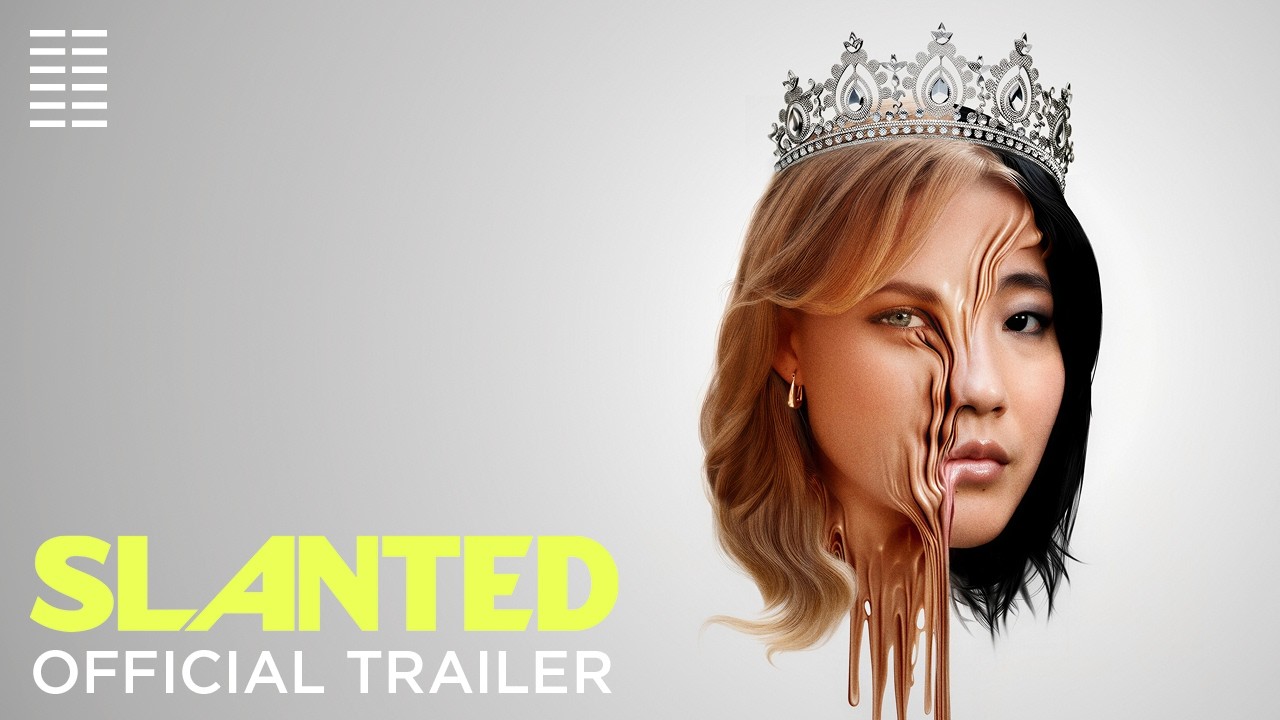
Joan is a Chinese-American high school senior whose prom queen ambition collides with the school hallway of blonde, blue-eyed past winners watching her every day. She starts using the Ethnos app — a Snapchat-adjacent race filter — and when Ethnos contacts her with an offer to make the transformation surgical and permanent, she accepts. She exits the clinic as Jo Hunt (McKenna Grace), instantly white. Strangers smile. Men turn to look. The popular girls include her. Then her face starts peeling. Written and directed by Amy Wang — Chinese-Australian, LA-based; writer of the forthcoming Crazy Rich Asians sequel. Cinematography by Ed Wu. Production design by Ying-Te Julie Chen. Score by Shirley Song. Produced by Mountain Top Pictures and Tideline Entertainment. Distributed by Bleecker Street (Crosswalk label) and Fox Entertainment Studios. SXSW world premiere March 8, 2025. US theatrical March 13, 2026. Now streaming on Paramount+. ➡️ Wang publicly stated she pushed the satire only “about 60 percent” of the distance she intended after producer pressure — making that admission the film’s most commercially productive secondary discovery argument.
Why It Is Trending: SXSW Grand Jury Award Narrative Feature — Fantasy Filmfest Fresh Blood Award — Paramount+ Streaming — The Substance Comparison the Film’s Most Commercially Legible Discovery Hook
The Hollywood Outsider: “impactful and timely — it’s The Substance of the cultural divide; one helluva conversation piece.” ➡️ Roger Ebert’s site: “it’s cathartic to see rage so singular and justified on-screen.” ➡️ Screen Daily praised “dark, poignant satire about assimilation and female beauty standards”; SIFF described it as “satirical and grotesque — body horror feels right at home against the backdrop of high school.” ➡️ The SXSW Grand Jury Prize gives the film its most commercially decisive institutional validation and its most reliable discovery signal for the US independent cinema community.
Elements Driving the Trend: The Karaoke Anesthesia Scene, the Prom Queen Hallway, and McKenna Grace as the Surgical Result
-
When Joan goes under anesthesia, she experiences a morbidly cheery karaoke song about the frictionless existence of being white — when she wakes, Wang deploys a dreamy, almost narcoticized look that is more disturbing than the actual body horror elements. ➡️ The film’s most formally inventive single sequence and its most discussed tonal innovation.
-
The enormous posters of past prom queens — blonde white girls staring down at Joan from the school hallway — are a stellar externalisation of her inferiority complex and the film’s most commercially legible visual argument. ➡️ A single production design decision that communicates the entire film’s social thesis before a word of dialogue is spoken.
-
Wang’s script deploys the “White Chicks” inversion: Joan exits the clinic and emerges as a completely different person — McKenna Grace — rather than using makeup to communicate the transformation. The joke is that she pretends to be a new student named Jo Hunt. ➡️ The casting of Grace as the post-surgery Joan is the film’s most formally efficient commercial decision — instantly communicating the premise without a line of exposition.
-
Wang and DP Ed Wu shoot high school like a lab: mirror shots, fluorescent hum, gelled nightmare palettes — the visual language tilts progressively grotesque as Joan’s new face refuses to stay fixed. ➡️ The cinematographic progression from high school comedy to body horror is the film’s most formally sustained single technical achievement.
Virality: The Logline and Wang’s “60 Percent” Admission
-
Letterboxd: “blunt satire with sharp teeth — it’s a ?!-inducing logline, and Amy Wang knows and embraces the unsubtle lunacy — trust her vision!” ➡️ The logline itself is the film’s most commercially efficient discovery mechanism — the premise requires no further explanation to generate immediate cultural engagement.
-
Wang admitted at the SXSW post-screening Q&A that she pushed the envelope only “about 60 percent” of the distance she intended after producer pressure. ➡️ That admission became the film’s most discussed secondary discovery hook — every critical review that cited it confirmed the existence of a more vicious version of the film that audiences never got to see.
Critics Reception: Sharply Divided — the Premise Universally Praised, the Execution Consistently Qualified
-
Movie Block: “pointed, playful, and queasily effective — the rare teen satire whose gross-out is an ethical argument; when the latex peels and the jokes curdle, what’s left stings and sticks.” ➡️
-
THR: “a promising beauty satire that could use more bite — stays too close to the surface; doesn’t consistently commit to the same feverish urgency.” ➡️
-
Variety: “very funny at times, but ultimately too safe — Wang lacks Peele’s gift for complexity; the downside of the procedure amounts to a condemnation of plastic surgery more than the identity-scrubbing she goes through.” ➡️
-
JoySauce: “it’s hard to shake the sense that there’s a more appropriately vicious version of its assimilation drama lying on some cutting-room floor.” ➡️
-
Metascore 55. IMDb 5.8 from 2,200 voters.
Awards and Recognitions: 2 Wins, 3 Nominations — SXSW Grand Jury and Fantasy Filmfest Fresh Blood
-
SXSW 2025: Grand Jury Award, Narrative Feature — win.
-
Fantasy Filmfest 2025: Fresh Blood Award — win.
-
Nashville Film Festival 2025: Grand Jury Prize, New Directors Competition — nominee.
-
Seattle International Film Festival 2025: New American Cinema — nominee.
-
Americana Film Fest 2026: Next — nominee.
-
US theatrical March 13, 2026. Paramount+ from May 15, 2026. US gross $906,216.
Director and Cast: A Chinese-Australian Debut Director Who Publicly Named Her Own Film’s Most Commercially Self-Limiting Production Decision
-
Amy Wang — Chinese-Australian, LA-based; Crazy Rich Asians sequel writer — makes her feature debut with the most formally audacious premise of SXSW 2025, publicly acknowledging that the film’s satire was scaled back to 60% of her original intention. ➡️ The admission is both the film’s most honest critical self-assessment and its most commercially productive secondary discovery argument.
-
Shirley Chen (Joan) — Didi — carries the film’s most formally demanding role: the full psychological interiority of a teenager who wants to erase her most visible identity markers. ➡️ The performance that makes every subsequent scene with Grace feel earned rather than imposed.
-
McKenna Grace (Jo) — Ghostbusters: Frozen Empire — plays the surgical result with a specific uncanny quality that every positive review cited as the film’s most formally precise casting decision. ➡️ The performance that gives the body horror its most commercially legible human architecture.
-
Maitreyi Ramakrishnan (Brindha) — Never Have I Ever — in a brief but unanimously praised supporting turn as the friend who didn’t need the surgery. ➡️ The most pointed moral clarity in the film delivered in the fewest available screen minutes.
-
Vivian Wu and Fang Du as the parents — carry the film’s most emotionally sincere register and its most specific immigrant family portrait. ➡️
Conclusion: A SXSW Grand Jury Winner Whose Premise Is Its Most Commercially Powerful Asset and Whose Execution Is Its Most Consistently Qualified Critical Finding
The SXSW Grand Jury Prize, the Fantasy Filmfest Fresh Blood Award, and the Paramount+ streaming platform give Slanted its most commercially complete discovery infrastructure. ➡️ The 60% admission is the film’s most specific and most commercially productive secondary narrative — simultaneously the most honest thing a debut director has said about her own film at SXSW and the clearest available signal of what the next Amy Wang film might be capable of without the constraint.
What Movie Trend Is Followed: Get Out’s Racial Surgery Premise Inverted — This Time the Minority Wants In, Not Out
Variety’s most precise formulation: “when you think about it, that’s pretty much the opposite premise of the one Jordan Peele floated with Get Out, in which rich white folks who covet Black excellence implanted their brains in Black bodies.” ➡️ Slanted belongs to the speculative fiction assimilation satire tradition — George Schuyler’s 1931 novel Black No More the most formally specific literary precedent, Get Out the most commercially legible cinematic one — in which the surgical manipulation of racial identity is used to expose the specific violence of assimilation. ➡️ Wang’s specific formal contribution: the protagonist wants the surgery, which makes the audience’s complicity in her desire more uncomfortable than any external threat could produce.
Trend Drivers: The Ethnos Inc. App-to-Clinic Pipeline, the Body Horror as Assimilation Consequence, and the Get Out Inversion
-
The Ethnos Inc. pathway — from Snapchat-adjacent filter to surgical procedure — is the film’s most formally specific satirical invention, giving the assimilation premise its most contemporarily legible technological architecture. ➡️ The most commercially specific available update to the racial identity speculative fiction genre’s traditional laboratory or supernatural mechanism.
-
The body horror — Joan’s face starts to sag and peel as her old features try to return, requiring her to literally peel bits of her skin off — edges the satire into visceral consequence without fully committing to the genre’s most disturbing available register. ➡️ The formal limitation Wang acknowledged in the 60% admission is most visible here.
-
The Get Out inversion gives the film its most commercially legible critical framing — the horror of wanting in is a formally specific update to Peele’s horror of being taken that the SXSW audience responded to with immediate cultural recognition. ➡️
What Is Influencing Trend: Bleecker Street’s Platform Rollout and Wang’s Crazy Rich Asians Sequel Profile
-
Bleecker Street’s Crosswalk label platform rollout — SXSW to SIFF to US theatrical a year later — is the most specific available distribution strategy for a culturally provocative debut feature whose commercial ceiling is determined by discovery rather than marketing spend. ➡️ The year-long gap between SXSW premiere and US theatrical release is the most commercially significant single distribution decision in the film’s release strategy.
-
Wang’s Crazy Rich Asians sequel writing credit gives the film a discovery shorthand for the Asian-American entertainment community that the SXSW prize alone cannot fully activate. ➡️
Macro Trends Influencing: The Substance-Adjacent Body Horror Satire Wave and the AAPI Identity Cinema Moment
-
The Substance’s commercial success with body horror as a vehicle for female identity critique has established a critical and audience infrastructure that makes Slanted’s assimilation body horror the most commercially pre-mapped available register for its premise. ➡️ The comparison is the film’s most commercially efficient single discovery frame for the general audience that did not attend SXSW.
-
The Get Out comparison positions the film within the most commercially legible available critical lineage for racial identity speculative fiction — while the formal inversion gives it its most commercially distinctive available differentiation from the Peele tradition. ➡️
Consumer Trends Influencing: Paramount+ Discovery and the SXSW Cultural Conversation Community
-
Paramount+’s streaming availability gives the film its widest possible discovery window for the cultural conversation community whose engagement with assimilation and racial identity discourse is most likely to generate sustained word-of-mouth. ➡️ The streaming platform is the film’s most commercially productive distribution stage — the audience most prepared for the premise is more reliably reached through algorithm than theatrical.
-
The SXSW Grand Jury Prize gives the film its most reliable independent cinema community advocacy network — viewers who treat the prize as a quality signal will seek the film independently of any marketing effort. ➡️
Audience Analysis: Asian-American Audiences, Speculative Fiction Horror Communities, and the Get Out-Adjacent Cultural Commentary Audience
The core audience is 18–45 — Asian-American audiences for whom the assimilation premise is personally recognisable, speculative fiction horror communities activated by the SXSW prize and The Substance comparison, and the cultural commentary audience that treats Get Out-adjacent racial satire as one of cinema’s most formally specific and most commercially important contemporary genres. ➡️ The Paramount+ streaming release is the most commercially efficient available conversion of the SXSW prize’s discovery signal into sustained viewership.
Conclusion: The Most Formally Audacious Debut Premise of SXSW 2025 — the Get Out Inversion as the Film’s Most Commercially Distinctive Single Formal Contribution to the Racial Identity Speculative Fiction Tradition
The Ethnos Inc. app-to-clinic pipeline, the body horror as assimilation consequence, and the casting of McKenna Grace as the surgical result give the premise its most formally efficient execution. ➡️ The 60% admission gives the cultural conversation its most productive secondary argument — and the most specific available signal of what Amy Wang’s second film will need to deliver.
Final Verdict: A SXSW Grand Jury Winner Whose Premise Outperforms Its Execution — the Most Formally Audacious Debut Logline of 2025 Paired With the Most Consistently Qualified Critical Reception of Its Festival Year
Movie Block: “pointed, playful, and queasily effective — the rare teen satire whose gross-out is an ethical argument; when the latex peels and the jokes curdle, what’s left stings and sticks.” ➡️ The film delivers on its most commercially essential promise — the premise — while the critical community’s consistent qualification about execution confirms what Wang herself acknowledged: the more vicious version of this film is the one that would have fully matched the ambition of its logline.
Audience Relevance: For Asian-American Audiences, SXSW Discovery Communities, and Get Out-Adjacent Satire Fans
Works best for audiences who arrive with the cultural context that makes the assimilation premise immediately and personally recognisable — and for the speculative fiction horror community that treats body horror as a vehicle for social argument rather than genre entertainment. ➡️ Not for viewers who arrived expecting the horror label the marketing implied — the film is a social satire with body horror elements, not a horror film with social satire elements.
What Is the Message: Trying to Fit In by Becoming Someone Else Doesn’t Fix Anything — It Just Makes You Lose Yourself Faster
“Slanted brings the subconscious into reality with compassion and humour — a satirical and grotesque look at racial discrimination, the privilege whiteness affords others, and the oftentimes tragic end of forced assimilation.” ➡️ The film’s most commercially precise thematic statement and the one that the Paramount+ streaming audience will most immediately engage with.
Relevance to Audience: The Get Out Inversion as the Most Formally Specific Available Update to the Racial Identity Horror Tradition
The film’s most commercially underexploited quality is its formal position: where Get Out’s horror was external, Slanted’s is internal. ➡️ The most frightening element of the premise is not Ethnos Inc. but Joan’s willingness to use it — which is the film’s most honest and most formally specific social observation about what assimilation actually requires.
Social Relevance: Assimilation as Self-Harm — the Surgical Procedure as a Formal Argument About What Beauty Standards Actually Cost
Slanted is most keen when imagining whiteness as an off-kilter fever dream of Stepford-esque perfection — the karaoke anesthesia scene and the post-surgery narcoticized walk produce a weird, almost genAI smoothness and uncanniness that is more disturbing than the actual body horror. ➡️ Those two sequences are the film’s most socially specific formal achievement — the rest of the satire operates at the surface level Wang acknowledged she was constrained to.
Performance: Chen and Grace Carry the Film’s Dual Architecture — Ramakrishnan the Most Efficiently Deployed Supporting Role
Chen’s Joan — the interior life of a teenager who wants to erase her most visible identity markers — is the film’s emotional foundation. Grace’s Jo — the uncanny surgical result — gives the body horror its most formally precise human register. Ramakrishnan’s Brindha — the friend who didn’t need the surgery — is the film’s most quietly devastating character. ➡️ The three performances collectively constitute the film’s most reliable word-of-mouth asset — the dual Chen-Grace architecture gives the satire its commercial accessibility, and Ramakrishnan’s brief presence gives it its most pointed moral clarity.
Legacy: A Debut That Named Its Own Most Significant Commercial Limitation — and Confirmed Wang as a Formally Audacious Voice Whose Next Film Will Be the Definitive Test
Slanted will be remembered as the SXSW film whose logline was more formally complete than its execution — and whose director’s public acknowledgment of that gap made the critical conversation about the film more specific and more productive than the film itself sometimes managed. ➡️ The 60% admission is the most commercially productive single statement of Wang’s debut career and the most specific available argument for why her second film deserves to be watched with full expectation.
Success: 2 Wins, 3 Nominations — SXSW Grand Jury, Fantasy Filmfest Fresh Blood — Paramount+ Streaming
-
SXSW 2025 Grand Jury Award Narrative Feature. Fantasy Filmfest Fresh Blood Award. Nashville Grand Jury nominee. SIFF New American Cinema nominee. Americana Film Fest nominee.
-
US theatrical March 13, 2026 via Bleecker Street. Paramount+ from May 15, 2026. US gross $906,216.
Slanted proves that the most formally audacious premise in the room doesn’t always produce the most formally complete film — but that Amy Wang understood the premise well enough to make it the most productive conversation starter at SXSW, and honest enough to name the distance between what she made and what she intended.
Insights: A SXSW Grand Jury winner whose premise is its most commercially powerful asset and whose execution is its most consistently qualified critical finding — the Get Out inversion, the Ethnos Inc. app-to-clinic pipeline, and the 60% admission collectively constitute the film’s most commercially specific cultural footprint. Industry Insight: Wang’s Crazy Rich Asians sequel writing credit and the Bleecker Street platform rollout give the film a discovery infrastructure that extends beyond the SXSW prize community into the Asian-American entertainment audience and the independent cinema streaming ecosystem simultaneously. Audience Insight: The Paramount+ streaming release is the film’s most commercially productive distribution stage — the cultural conversation audience that the SXSW prize activated and the Asian-American community that the premise most directly addresses are both more reliably engaged through streaming than theatrical. Social Insight: A film in which the most frightening element is not the corporation performing the surgery but the teenager’s willingness to use it is making the most formally honest available observation about assimilation — that the violence of conformity to whiteness is most devastatingly enacted from the inside. Cultural Insight: Slanted positions Wang as the debut filmmaker most formally equipped to make the Asian-American assimilation satire’s most commercially ambitious available version — and the 60% admission as the most honest available promise that her second film will be the one that delivers on the full distance her debut could only approach.
Conclusion: A SXSW Grand Jury Winner Whose Premise Is a Formal Achievement — and Whose 60% Execution Confirms Both the Film’s Commercial Value and Its Most Significant Unresolved Creative Question
Slanted earns its SXSW prize and its Paramount+ streaming placement through the formal audacity of a premise that the assimilation satire genre had never previously staged in this specific configuration — the minority who wants in, the surgery that grants access, the face that refuses to stay. Wang’s public acknowledgment of the gap between intention and execution is the most honest thing a debut director has said about her own film at SXSW — and the most commercially productive argument for why her second film will be among the most closely watched American debuts of its release year.
Summary: One Chinese-American Teenager, One Surgical Procedure, One New Face, and the 40% of the Film That Stayed on the Cutting-Room Floor
-
Movie themes: Assimilation as the most specific available form of self-harm, the beauty standard as a racial hierarchy made legible through surgery, the horror of wanting in versus the horror of being taken, the body that refuses to maintain the identity imposed on it, and the formal argument that forced assimilation’s most honest metaphor is skin that starts to peel. ➡️ The most commercially productive thematic combination available to a debut assimilation satire in the post-Get Out cultural moment.
-
Movie director: Amy Wang — Chinese-Australian, LA-based; Crazy Rich Asians sequel writer — makes her feature debut with the most formally audacious premise of SXSW 2025, then publicly acknowledges she delivered only 60% of the satire she intended after producer pressure. ➡️ The acknowledgment is simultaneously the most honest self-assessment a debut director has made at SXSW and the most commercially productive available promise about her second film.
-
Top casting: Chen’s Joan is the film’s emotional foundation — the interior life of a teenager who wants to erase her most visible identity markers. Grace’s Jo is the surgical result — the uncanny whiteness that the body horror eventually refuses to sustain. Ramakrishnan’s Brindha is the film’s most quietly devastating supporting presence — the friend who didn’t need the surgery. ➡️ The three performances collectively constitute the film’s most reliable word-of-mouth asset — the dual Chen-Grace architecture gives the satire its commercial accessibility, and Ramakrishnan’s brief presence gives it its most pointed moral clarity.
-
Awards and recognition: SXSW 2025 Grand Jury Award Narrative Feature. Fantasy Filmfest 2025 Fresh Blood Award. Nashville, SIFF, Americana nominees. US theatrical March 13, 2026. Paramount+ from May 15, 2026. US gross $906,216. ➡️ The SXSW prize is the film’s most commercially decisive institutional credential — giving it the independent cinema community advocacy that sustains discovery beyond the theatrical window.
-
Why to watch: The SXSW Grand Jury winner that inverted Get Out’s premise — the minority who wants in, the corporation that enables the transformation, the face that starts to peel — with Shirley Chen’s interior performance, McKenna Grace’s uncanny surgical result, the karaoke anesthesia sequence that is more disturbing than any of the body horror, and a director honest enough to publicly name the distance between the film she made and the one she intended. ➡️ The most formally productive conversation starter in American debut cinema of 2025.
-
Key success factors: The Get Out inversion’s cultural recognition plus the SXSW Grand Jury institutional validation plus Wang’s Crazy Rich Asians sequel profile plus Chen and Grace’s dual lead architecture plus the Paramount+ streaming discovery pipeline plus the 60% admission’s sustained critical discourse plus the body horror’s ethical argument structure. ➡️ A combination that confirms the film’s cultural authority without fully resolving the gap between its ambition and its execution.
-
Where to watch: Paramount+ from May 15, 2026. Previously available via Bleecker Street theatrical from March 13, 2026. ➡️ The streaming platform is the film’s most commercially productive discovery stage — the audience most prepared for the premise is more reliably reached through algorithm than theatrical.
Conclusion: A Debut Whose Premise Is a Formal Achievement and Whose 60% Execution Confirms Both Wang’s Audacity and the Creative Distance Her Second Film Will Need to Cover
Slanted earns its SXSW prize and its cultural conversation through the formal precision of a premise the assimilation satire genre had never staged in this specific configuration — the minority who wants in, the surgery that grants access, the face that refuses to maintain the transformation. Wang’s honesty about the 40% that didn’t make the film is the most commercially productive single statement of her debut career — and the most specific available argument for why her next film deserves to be watched with the full expectation that the vicious version she always intended is still waiting to be made.


Leave a Reply