
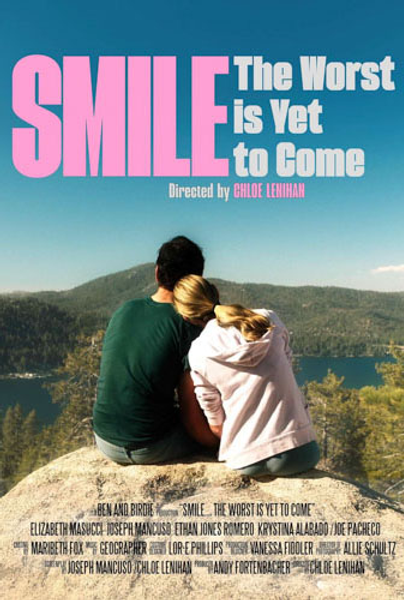
A millennial dark comedy that hits where it hurts — and makes you laugh anyway: Ben and Birdie, a forty-something LA couple buckling under failed IVF, stalled careers, and the death of their dog, escape to Big Bear Lake to reconnect — only to have their weekend derailed by Gen-Z influencers who force a raw night of secrets, confrontations, and uncomfortable clarity.
Why It Is Trending: The Millennial Midlife Crisis Finally Gets Its Film
The elder millennial experience — caught between generational expectations, biological timelines, and a world that has moved on without them — is a cultural pressure point with no real cinematic home, until now. Lenihan’s film conjures the relatable anxieties of being in your 40s and finally realising that life is slowly slipping away from you — steering wheel in hand, but no idea how to navigate it. Its arrival on the independent circuit taps directly into a growing audience hungry for honest, unpolished portrayals of modern couplehood. The film received the ReFrame Stamp for gender-balanced production, adding industry credibility to its grassroots momentum.
Elements Driving the Trend: For a debut feature, there is a quiet confidence in the storytelling — it doesn’t rely on spectacle or forced drama but hinges on emotional accumulation. The generational collision between elder millennials and Gen-Z influencers gives the film a built-in culture clash engine that plays across age groups. It captures a very specific emotional moment in modern adulthood with clarity and compassion, leaving you not with answers, but with recognition. Shot on a $300K budget, it proves that intimate, character-driven comedies remain one of indie cinema’s most bankable formats.
Virality: Word-of-mouth from its Dances With Films premiere drove strong early buzz, with audiences sharing its title — equal parts threatening and honest — widely across platforms as a mood-defining shorthand.
Critics Reception: Rotten Tomatoes critics called it deceptively powerful — funny, painful, and honest. High On Films praised its raw portrayal of millennial anxieties as instantly relatable, while GhMovieFreak highlighted its quietly liberating emotional honesty.
Awards and Recognitions: Won the New Filmmaker Grant from Panavision. World premiere at Dances With Films, New York, January 18, 2026, with 1 total win on the festival circuit so far.
The film arrives as millennial audiences — now deep in their late thirties and forties — are actively seeking content that reflects the compounding weight of modern adult life rather than its curated highlight reel. Its low budget and high emotional return position it as a template for indie comedy in 2026. Distributors looking for authenticity over spectacle are paying attention. Smile… is small in scale and large in resonance — exactly the kind of film that builds a loyal long-tail audience.
What Movie Trend Is Followed: Uncomfortable Truths Dressed as Comedy
The new wave of intimate, dialogue-driven relationship comedies has replaced punchlines with emotional precision — and Smile… sits at the sharper end of that movement. These are films where comedy is the delivery system for grief, failure, and the slow terror of time passing. The laughs don’t soften the blow — they make it land harder. With a title that feels both taunting and honest, the film doesn’t promise relief but rather offers perspective — not the glossy, self-help kind, but the raw, lived-in kind that comes from sitting with grief and disappointment long enough to understand them.
Trend Drivers: Indie Relationship Drama Is Getting Brutally Honest Audiences are exhausted by romanticised portrayals of long-term couplehood and are gravitating toward films that show the work — the silence, the resentment, the love that survives anyway. The film introduces Gen-Z characters not as comic relief but as mirrors — opening a window into the way we restrict our personalities and freedoms under the unsaid weight of growing up. The rise of micro-budget productions with strong ensemble casts has made this kind of intimate storytelling viable without studio backing. Themes of infertility, professional failure, and generational identity give the film a breadth that extends well beyond the rom-com lane.
What Is Influencing Trend: The cultural processing of the millennial experience — delayed parenthood, financial instability, identity confusion — is accelerating across all media. Independent film is proving a more agile space than streaming for these kinds of authentic, risk-taking narratives. Gender-balanced productions are consistently delivering more grounded, emotionally complex storytelling.
Macro Trends Influencing: The normalisation of conversations around infertility, therapy, and relationship failure has created an audience primed for fiction that meets them where they are. The generational divide between millennials and Gen-Z is generating fresh dramatic friction across film, television, and social content. Audiences are increasingly rejecting aspirational lifestyle narratives in favour of stories about people who are just trying to hold it together.
Consumer Trends Influencing: Elder millennials — now the dominant independent film-going demographic — are actively seeking stories about their specific life stage. The success of emotionally honest relationship content on streaming has trained audiences to expect depth from comedy. Festival-first release strategies are generating more organic, trusted word-of-mouth than algorithm-driven platform drops.
Audience Analysis: Elder Millennials, Indie Film Fans, Anyone Quietly Falling Apart The core audience is 30–45 — adults in long-term relationships navigating biological clocks, career stalls, and the gap between the life they planned and the one they’re living. The film’s incredibly convincing lead rapport helps elevate the project — their performances feel heartfelt and lived-in throughout. The Gen-Z subplot broadens appeal downward, pulling younger viewers into a story about people they will eventually become. Anyone who has ever smiled through something terrible will find a home in this film.
Smile… works because it refuses to resolve neatly — and that refusal is exactly what makes it feel true. The trend it rides is not genre-specific; it is emotional: a growing demand for fiction that acknowledges adult life is harder than advertised. The indie comedy space is increasingly the place where that honesty lives. For the industry, this film is proof that a $300K production with the right emotional intelligence can compete for audience loyalty against titles with ten times the budget.
Final Verdict: Smile… The Worst is Yet to Come Is the Indie Comedy the Millennial Generation Deserves
Chloe Lenihan announces herself as a director with a sharp instinct for emotional truth and a confident hand with ensemble performance. The film takes a premise that could have been a breezy weekend comedy and turns it into something that quietly dismantles the myths adults tell themselves to keep going. The impeccable swallow dive Lenihan pulls off is magical — tonal control that few debut directors manage. It is small, honest, and genuinely affecting — three qualities that matter more than scale.
Audience Relevance: For Everyone Who Is Holding It Together, Barely Smile… speaks directly to anyone navigating the gap between the life they expected and the one they are actually living. Its comedy is recognisable, its grief is real, and its refusal to offer easy answers makes it more comforting, not less.
The film’s emotional precision means it works across relationship statuses and life stages. Whether partnered, single, parent, or childless by choice, the experience of time moving faster than expected is universal.
What Is the Message: The Worst Hasn’t Happened Yet — and That’s Somehow Okay The film’s central argument is that discomfort, failure, and loss are not the end of the story — they are the story. Ben and Birdie don’t fix everything; they find each other inside the mess.
The title lands as both threat and invitation. Smile anyway — not because things are fine, but because they rarely are, and life continues regardless.
Relevance to Audience: A Weekend Away That Becomes a Reckoning The Big Bear setting gives the film a contained, pressure-cooker intimacy that forces every character to stop performing and start revealing. That claustrophobia is precisely what makes the emotional payoffs land.
For audiences in long-term relationships, the film functions almost as a diagnostic — a chance to recognise their own patterns from a safe distance.
Social Relevance: Infertility, Failure, and the Things Couples Don’t Say Smile… brings IVF failure, business collapse, and generational self-doubt into a comedy framework — normalising conversations that remain stigmatised in mainstream culture. It doesn’t moralize; it simply shows people dealing, badly and then better.
The generational dynamic between millennials and Gen-Z characters reflects a real social friction that resonates far beyond the film’s runtime.
Performance: Masucci and Mancuso Make You Believe Every Minute Elizabeth Masucci and Joseph Mancuso deliver heartfelt, lived-in performances as Birdie and Ben — their convincing rapport elevates the entire project. Krystina Alabado brings sharp energy as January, the Gen-Z foil whose presence forces the couple’s reckoning.
Masucci in particular carries enormous emotional weight with remarkable restraint. Mancuso’s dual role as co-writer and lead gives his performance an authenticity that can’t be manufactured.
Legacy: A Blueprint for Honest Indie Comedy in 2026 Smile… joins a lineage of micro-budget relationship films — The Big Sick, Tiny Furniture, Drinking Buddies — that prove intimacy is its own kind of spectacle. Its ReFrame Stamp and Panavision grant signal that the industry is ready to back this kind of work formally.
The film’s legacy will be built conversation by conversation — the kind of movie people recommend to their partners, their therapists, their friends going through it.
Success: Festival Recognition, Critical Warmth, and a Subject Whose Audience Is Everywhere Won New Filmmaker Grant from Panavision. IMDb user rating of 7.9 from early viewers. Premiered at Dances With Films, New York, January 18, 2026. Budget of $300K with strong critical consensus across indie film press.
No wide theatrical data yet, but the film’s word-of-mouth trajectory and niche-but-broad emotional subject matter position it well for streaming platform pickup and long-tail VOD performance.
Insights Smile… The Worst is Yet to Come is the rare comedy that earns its title — not by delivering disaster, but by making peace with the fact that it’s always coming. Industry: Micro-budget relationship comedies with strong ensemble casts and emotionally precise scripts are consistently outperforming their budgets in audience loyalty and critical return. Smile… offers a replicable model: gender-balanced production, festival-first strategy, and a subject matter with mass emotional resonance. The ReFrame Stamp and Panavision grant signal that institutional support for this kind of work is growing. Audience: The elder millennial audience — underserved, over-targeted, and exhausted by aspirational content — responds powerfully to stories that reflect their actual lives. Smile… gives them a film that doesn’t condescend, doesn’t resolve falsely, and doesn’t pretend the hard parts aren’t hard. That honesty is its primary commercial asset. Social: Infertility, professional failure, and relationship strain remain among the most underrepresented experiences in mainstream comedy. By centering these realities without shame or spectacle, Smile… normalises conversations that millions of couples are having privately. Its generational contrast sharpens the social argument: the struggle is not unique to one age group, just differently shaped. Cultural: The indie comedy is reclaiming its role as the space where adult emotional life gets honest treatment — and Smile… is a strong example of what that looks like at its best. Lenihan’s debut signals a director building a body of work around female-centric, emotionally complex American stories. That voice is rare, and the industry should be paying close attention.
For a $300K debut with no studio backing and a cast of character actors, Smile… The Worst is Yet to Come punches far above its weight — not through ambition, but through precision. It is proof that the most resonant films are often the smallest ones, if the emotional intelligence is large enough.
Summary of Smile… The Worst is Yet to Come: Love, Loss, and the Courage to Keep Laughing
-
Movie themes: Infertility, relationship strain, generational identity, failure, and renewal. A portrait of a couple learning to smile at a life that hasn’t gone to plan.
-
Movie director: Intimate debut lens — emotionally precise, ensemble-driven, female-centric. Chloe Lenihan brings MFA-trained craft and festival pedigree (SXSW, Atlanta, Palm Springs) to her first feature, delivering a tonal balancing act few debut directors manage.
-
Top casting: Two leads, one real rapport. Elizabeth Masucci and Joseph Mancuso — both producers on the film — bring lived-in authenticity to Birdie and Ben, with Krystina Alabado (Broadway’s Mean Girls) adding sharp generational contrast.
-
Awards and recognition: 1 win — New Filmmaker Grant from Panavision. ReFrame Stamp for gender-balanced production. World premiere at Dances With Films, New York, January 2026.
-
Why to watch: A rare comedy that makes you laugh and then quietly devastates you — honest about failure, tender about love, and deeply recognisable for anyone in their thirties or forties trying to hold it all together.
-
Key success factors: Emotional precision over spectacle — Smile… earns audience loyalty the way the best indie comedies always have, by being more truthful than anything with a bigger budget would dare to be.
-
Where to watch: Released January 18, 2026 (United States). Independent release via Ben and Birdie Productions; VOD and platform availability expanding through 2026.





Leave a Reply