
We may receive a commission on purchases made from links.
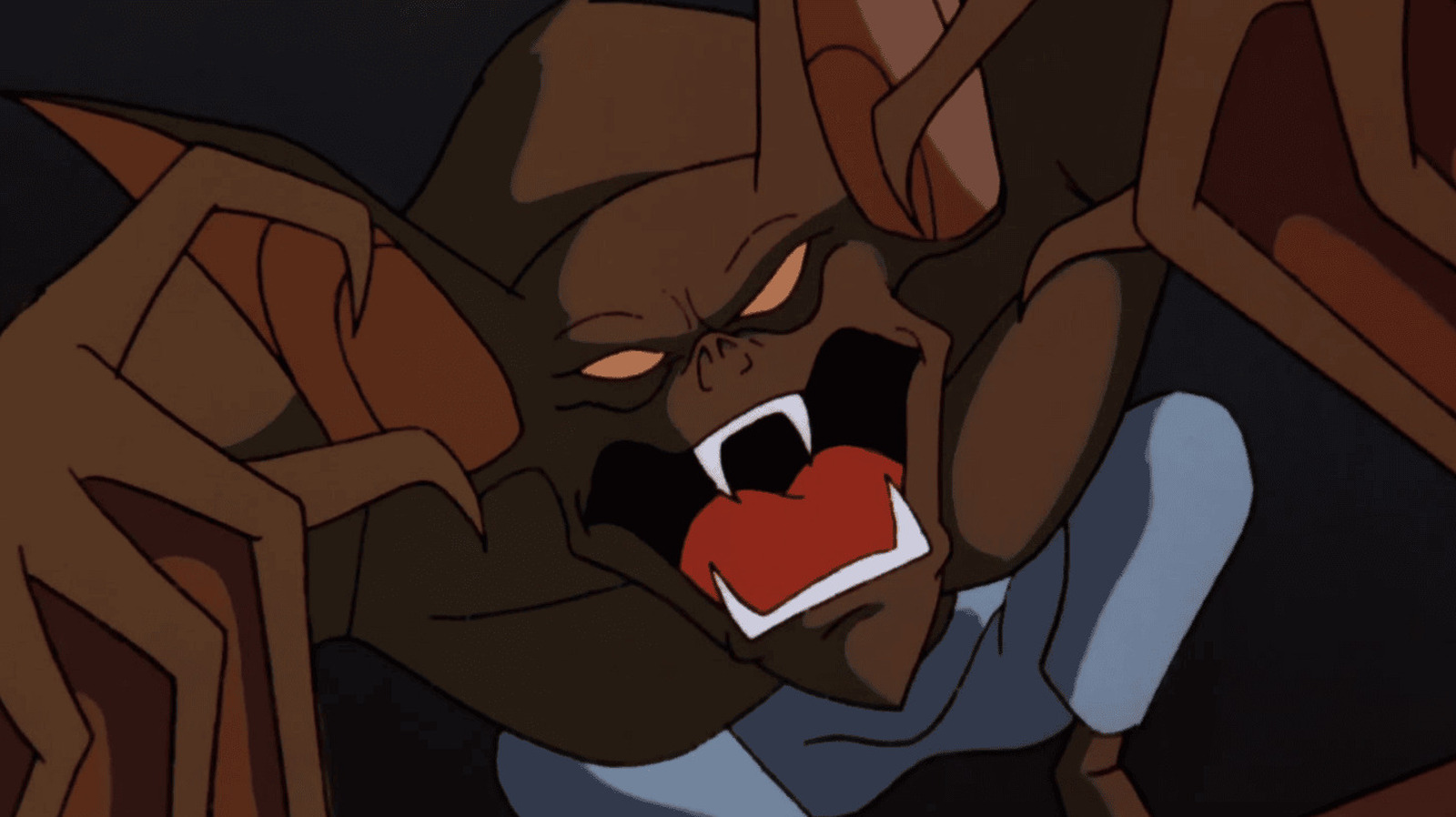
“Batman: The Animated Series” is darker than most superhero cartoons before and since — literally darker. Drawn on black paper, “Batman: The Animated Series” presents Gotham City like an art deco painting mixed with an old Hollywood crime movie. But it wasn’t only gangsters that went bump in the night. The very first episode, “On Leather Wings,” uses one of the most out-there Batman villains: Man-Bat, aka zoologist Kirk Langstrom (Marc Singer), transformed by a potion into a half-man/half-bat creature like a winged werewolf.
Debuting in 1970’s “Detective Comics” #400 by Frank Robbins and Neal Adams, Man-Bat had 20+ years of comics history behind him when “On Leather Wings” was made. But for non-comic fans, that episode would be the first time they’d seen him. According to “Batman: The Animated Series” co-creator Bruce Timm, that’s exactly why he was the pilot’s villain. In “Modern Masters Volume 3: Bruce Timm,” he recounted:
“Man-Bat was chosen specifically (for the first episode) because he wasn’t familiar to very many people outside of comic book fans. Nobody had any preconceived notions about him. It wasn’t like the Joker, where you had to deal with people expecting him to be Jack Nicholson or Cesar Romero.”
“On Leather Wings” was written by Mitch Brian, who had also developed the “Batman” series bible. What became “On Leather Wings” originated as an episode premise in that bible, though with the gruesome detail that Man-Bat was killing tourists, which isn’t in the episode as made. Brian has said he pushed for Man-Bat to give the series a dash of the fantastical right off the bat (no pun intended) — “Batman: The Animated Series” could do not just film noir, but also Universal Horror-esque mad science and monsters.
Man-Bat proved Batman: The Animated Series’ potential
Man-Bat as Batman’s first villain also carries narrative symmetry. His moniker is a twist on Batman’s own and he takes Batman’s mission to “become a bat” one step further. “Man-Bat kind of works because he’s literally the reverse of Batman and he’s also got the obsessive interest in bats,” said Bruce Timm in “Modern Masters.”
Now, technically, Catwoman’s debut episode “The Cat and the Claw” premiered first on September 5, 1992, one day earlier than “On Leather Wings” did. “Batman Returns,” starring Michelle Pfeiffer as Catwoman, had hit theaters that past summer. (Currently, “The Cat and the Claw” is also listed as the first episode of “Batman: The Animated Series” on HBO Max.) But, functionally, “On Leather Wings” is a much better pilot episode — because that’s what it was made to be.
It also demonstrated that “Batman: The Animated Series” was more than just a movie tie-in, down to the choice of villain. In “I Am The Night: The Ultimate Unauthorized History of Batman Series,” author Daniel Dockery notes a villain like Man-Bat would’ve been “nigh impossible to pull off in live-action.” Remember, this was 1992, a year before “Jurassic Park” unlocked the potential of CGI. A human-sized bat monster? And an action scene where it flies through Gotham with Batman towed behind it on a rope? Yeah, in the 1990s, a live-action “Batman” movie that even attempted any of that would look ridiculous. But in a cartoon, it was thrilling, and proved “Batman: The Animated Series” was a canvas for unique Batman stories.
Starting with “On Leather Wings” also highlights another tenet from the aforementioned “Batman” series bible: no origin story episodes, because the audience already knew Batman’s origin from decades of prior “Batman” comics, movies, and cartoons.
Perfecting Man-Bat for Batman: The Animated Series
During “On Leather Wings,” the police mistake Man-Bat for Batman (Kevin Conroy) and hunt the Dark Knight instead. This premise rests on Gotham City already knowing Batman, which is only possible because the series starts in media res with Batman as an experienced crimefighter. The first time we see Batman is deliberately unspectacular; he’s sitting in the Batcave, in costume, reading a newspaper article about the Man-Bat attacks.
The “Batman is framed” subplot also demonstrates that this isn’t the Adam West show where Batman is literally deputized by the police and trusted by all of Gotham as a paragon of justice. Many people are already scared of Batman, so it’s not a huge leap to blame him for Man-Bat’s attacks. (The series’ movie spin-off, “Batman: Mask of the Phantasm,” even used a nigh-identical story, with Batman being mistaken for the film’s eponymous villain.)
Turning Man-Bat’s identity into a mystery differs from his first appearance in the comics. There, we meet Man-Bat as Langstrom first and see his gradual and tragic transformation. Mitch Brian compared Man-Bat to “The Strange Case of Dr. Jekyll and Mr. Hyde,” and by making “On Leather Wings” a mystery, it brings Man-Bat closer to that book. It also, crucially, allows Batman to act as a detective. The twist of Man-Bat being Langstrom works because, again, he’s not a villain most of the audience already knew inside-and-out.
Artist Kevin Nowlan, who had drawn a Man-Bat story in DC’s “Secret Origins” #39, was initially recruited to design the villain. (See his concept art above.) Bruce Timm’s finalized design includes his characters’ standard broad upper chest, which fits well with Man-Bat’s arms growing out into wings. In form and function, Man-Bat was the perfect pilot villain for “Batman: The Animated Series.”





Leave a Reply