
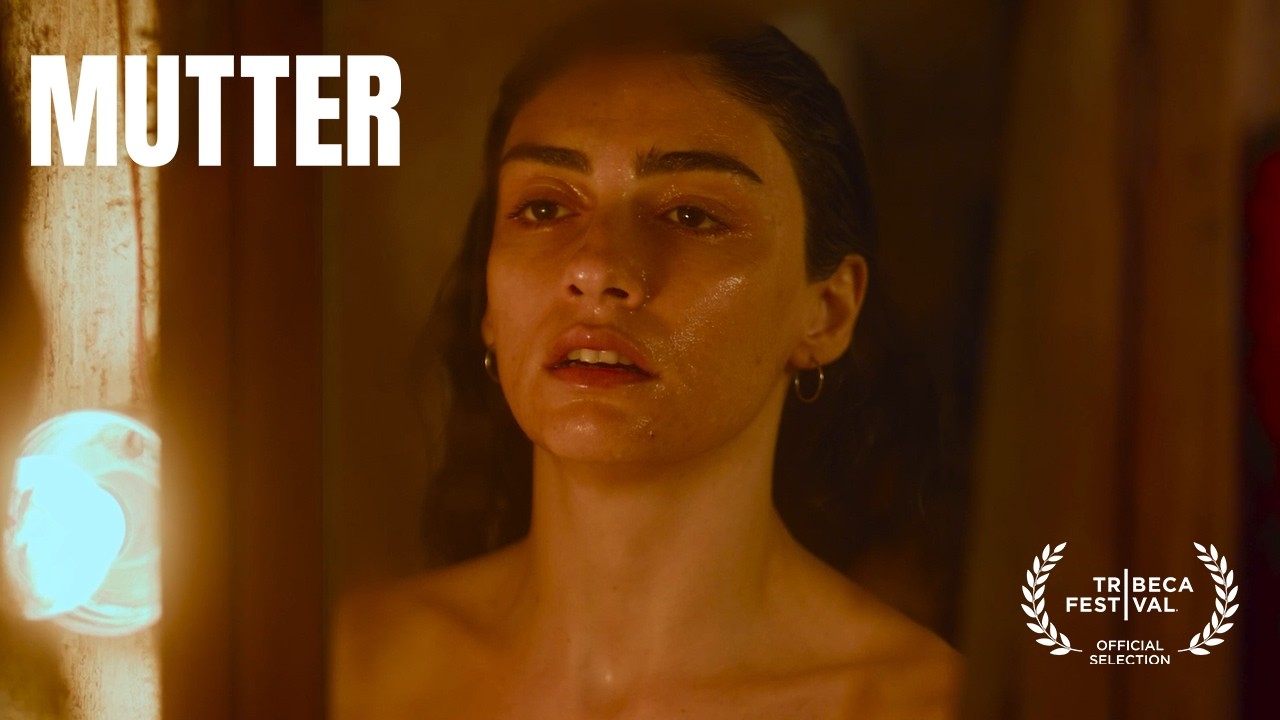
TR | 2026 | 99 min | HorrorOriginal title: Mutter: Bir Annenin Hatıra Defteri
A Mother’s Love for Her Unnatural Child Becomes a Threat to Her Own Survival
On Türkiye’s Black Sea coast, Gül gives birth under traumatic circumstances to a creature that is not human. Abandoned by her partner, she chooses to care for the child while facing hostility and isolation. As her body and mind begin to unravel, protecting her offspring becomes inseparable from confronting the dangers surrounding them—and the physical and emotional cost of her devotion.
➡️ Storyline: A mother’s determination to protect her child places her own safety under increasing pressure.
Why to Watch Mutter: Tenderness Makes the Creature Horror More Unsettling
Mutter offers a disturbing emotional proposition: the creature provoking fear is also the being its protagonist loves. Gül’s attachment gives the horror a conflict that cannot be resolved simply by escaping danger. The premise invites attention to how care continues under frightening circumstances, with the mother’s vulnerability making each protective decision more consequential.
Hazar Ergüçlü leads the cast alongside Güven Kıraç and Erdeniz Kurucan, while Alphan Eşeli writes and directs. Creature design by Matthew Hatton adds a production hook beyond the plot. The film premiered at Tribeca in June 2026 before competing at Sitges, placing it within both an international discovery programme and a specialist horror audience.
➡️ Reason to Watch: A creature feature whose emotional tension comes from the protagonist’s refusal to stop caring for the being that frightens others.
Why Mutter Stands Out: Body Horror Makes the Frightening Being Someone Worth Protecting
Creature horror frequently builds momentum around identifying, containing or escaping a dangerous presence. Mutter complicates that structure by making the creature a dependent child and its protector the central character. Gül’s devotion prevents its unusual appearance from settling the question of where the danger lies, keeping affection active within the horror.
The surrounding social hostility adds another pressure to that relationship. Threats come from the world in which Gül must care for her child as well as from the unsettling experience of motherhood itself. This gives the body horror a distinctive moral tension: physical revulsion does not automatically identify the least compassionate or most dangerous presence.
➡️ Why It Stands Out: The creature’s appearance generates fear, while the mother’s attachment challenges how that fear should be interpreted.
Movie Trend: Body Horror — Maternal Devotion Persists as a Woman’s Body and Mind Unravel
Mutter places bodily vulnerability inside an ongoing relationship of care. Gül’s physical and psychological deterioration develops alongside her commitment to the child, making the maternal bond a source of both purpose and pressure. The horror gains force because her attachment continues even as the circumstances surrounding it become increasingly difficult to sustain.
The film illustrates how body horror can connect transformation with obligations that cannot easily be abandoned. Its central question extends beyond what is happening to a body towards what someone feels compelled to endure for another being. That approach gives physical disturbance emotional meaning while allowing devotion, exhaustion and fear to coexist without a comfortable resolution.
➡️ Movie Trend Insight: Body horror gains emotional depth when bodily vulnerability changes the cost of a relationship the protagonist still values.
Broad Trend: The Search for Security — Protecting Someone Else Can Complicate Self-Protection
The Search for Security concerns safety, stability and the confidence that essential needs can be met. Mutter places those needs in conflict: Gül seeks protection for her child while becoming increasingly vulnerable herself. Her situation makes security relational, because what appears necessary for one dependent being may increase the pressure on the person providing care.
Beyond cinema, this offers a lens for examining caregiving, family responsibility and access to support. Safety becomes harder to sustain when it relies entirely on one person’s capacity to absorb difficulty. The broader question concerns the conditions that allow care to continue without requiring the caregiver’s own wellbeing to disappear from consideration.
➡️ Broad Trend Insight: Lasting security requires support for the person providing protection as well as the person receiving it.
Viewer Profile: Horror Audiences Interested in International Cinema, Visual Culture and Challenging Storytelling
The likely audience explores horror through festival programmes, specialist publications and distinctive filmmakers. These viewers are comfortable with disturbing imagery and emotional ambiguity, often choosing films that combine a strong genre premise with an unusual perspective. The following profile is an editorial targeting assessment, with indicative ages rather than measured audience demographics.
|
Adult viewers of body horror, psychological horror and international genre cinema. |
|
|
Adult Gen Z, Millennials and younger Gen X, approximately 23–50, accustomed to discovering challenging films through specialist channels. |
|
|
Engaged with genre communities, visual arts, film podcasts and independent cultural events. |
|
|
Strong atmosphere, unsettling imagery and stories that complicate familiar genre expectations. |
|
|
Values a clear premise developed through character, tone and visual invention. |
|
|
Uses festival selections, specialist reviews, teasers and recommendations from trusted horror curators. |
|
|
Seeks intensity, surprise and an experience that remains open to interpretation. |
Key Profiles: Creature Design and Emotional Conflict Offer Different Routes Into the Horror
1. Body Horror and Creature-Feature Enthusiasts
Audience Description: Adults approximately 23–45 who follow creature concepts, physical transformation and distinctive visual design. Matthew Hatton’s involvement and the unnatural-birth premise offer concrete discovery hooks, while Gül’s protective relationship with the creature adds a complication to familiar genre expectations.
2. Psychological and Social Horror Viewers
Audience Description: Adults approximately 28–55 who prefer horror that develops through relationships and social environments. The combination of personal vulnerability, isolation and community hostility gives this group several sources of tension to follow beyond the creature’s physical presence.
3. International Festival Discoverers
Audience Description: Adults approximately 25–55 who explore regional filmmaking through genre festivals and curated programmes. The Turkish Black Sea setting, Tribeca premiere and subsequent specialist festival appearances provide a route to discovering Eşeli’s work within an international horror context.
➡️ Audience Insight: The strongest positioning connects the creature premise with the emotional difficulty of protecting a being others reject.
What This Movie Means for the Industry: Emotional Perspective Can Differentiate a Familiar Creature Premise
Mutter combines an immediately communicable creature concept with a maternal viewpoint that complicates the genre’s usual relationship between fear and protection. Credited creature design, regional setting and a concentrated central performance provide distinct creative and marketing assets. Its progression from Tribeca to specialist festivals such as Sitges supports discovery across overlapping audiences, while Raven Banner’s sales involvement provides an industry route towards further distribution. The broader relevance lies in aligning creature design, emotional perspective and genre positioning with an appropriate release strategy. Festival exposure establishes visibility, but does not independently demonstrate commercial demand or sustained audience satisfaction.
➡️ Industry Insight: Creature horror can strengthen its identity when the emotional relationship is as clearly defined as the creature itself.
Final Verdict: The Need to Protect Makes the Horror Harder to Escape
Mutter’s strongest proposition is the conflict between Gül’s devotion and the increasing cost of sustaining it. Her attachment gives the story a reason to remain close to its frightening presence rather than simply seek distance. That choice makes the mother’s decisions central to the tension, with care carrying consequences that extend to her own survival.
The pairing of Body Horror with The Search for Security brings that contradiction into focus. Protection is urgently needed, yet Gül lacks the support that could make it sustainable. The film’s distinctive appeal rests on exploring how tenderness persists within frightening conditions, while leaving room to question which people and circumstances create the greatest danger.
➡️ Final Verdict Insight: The horror becomes more complicated when the protagonist’s strongest attachment is also the relationship she cannot safely step outside.
Final Insights: Protection Becomes Fragile When Care Has No Support
Stories about security gain depth when they examine who absorbs the work required to keep someone else safe. A dependent person’s needs do not remove the caregiver’s vulnerability, yet dramatic and social expectations can make that vulnerability easy to overlook. Bringing both into view creates a more demanding account of responsibility.
For horror filmmakers, the opportunity lies in connecting physical threat with the conditions that make protection difficult to sustain. A creature can give those pressures a vivid form without exhausting their meaning. This allows the genre to examine devotion and dependence while preserving uncertainty about where sympathy, fear and responsibility should fall.
➡️ Final Insight: Protecting another being does not eliminate the need for personal safety. Care becomes fragile when its provider has no dependable support. Horror gains depth when it examines the vulnerability on both sides of that relationship.





Leave a Reply