

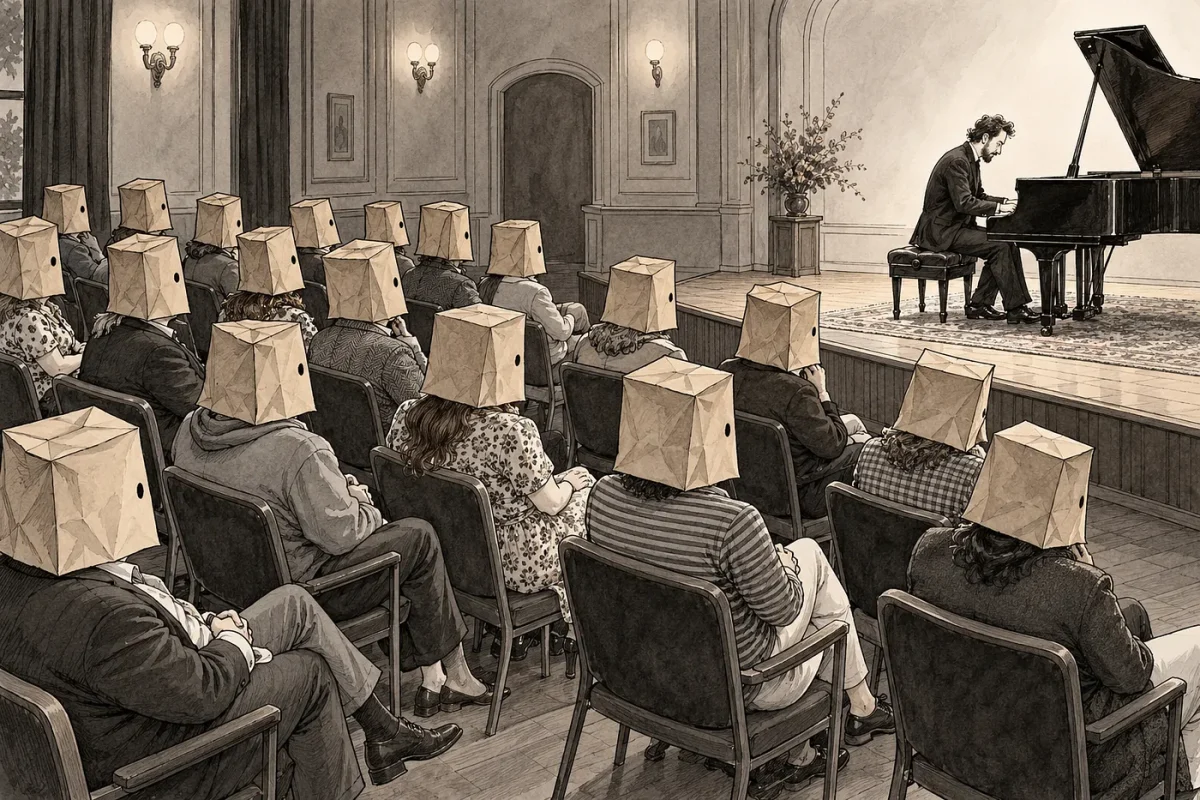
Sometimes, the quietest fans are the BEST fans… Photo Credit by Michael Whalen
What the music business overlooks when loyalty has to be visible.
Imagine a listener who has given a favorite artist an entire room in their home. The recordings and memorabilia represent years of collecting. They listen regularly, prefer to do it alone, and have no interest in joining the fan club.
Someone in the music business would probably describe this person as an opportunity to increase engagement. (Did I say: “Super Fan”?) The artist already has real estate. Apparently, there is still work to do.
That is the gap I keep coming back to. A listener has made music part of their life. The campaign needs a response by Friday. We are getting awfully comfortable judging the first relationship by the demands of the second.
What does the music business overlook when it expects people to make their attachment continually visible?
For a start, the listener may already be doing what we hoped they would do. They are listening. They return because something in the recording continues to interest them. Asking them to announce that choice and help circulate it gives them another job.
Late-2025 U.S. music audience data put willingness to post about an artist on social media at roughly one listener in five. Even among people classified as superfans, the figure was only around three in five. That measures what people would be willing to do, rather than their actual posting history. Still, it should make us question why public promotion has become such a familiar test of attachment. Plenty of listeners have expressed no interest in the assignment.
As a recording artist, I understand the attraction of a visible response. You spend months making decisions, then release the result without knowing how it will land. A comment provides reassurance. Someone heard it. When the next record depends partly on the response to this one, the need for evidence becomes financial as well as personal.
But our need for reassurance and validation does not create an obligation for the audience. A song might belong to a period of someone’s life they have no desire to discuss. They may simply want an hour in which their preferences do not become another contribution to the internet. Artists know how exhausting it is to keep producing content. We should notice when we start handing the same workload to listeners.
Quiet fans are not automatically the most devoted. Some people go quiet because they have lost interest. Others leave a platform or get tired of its conversations. And the people who enthusiastically share music can do enormous good for an artist. They deserve our gratitude without becoming the standard everyone else must meet.
Public silence also leaves plenty of room for measurable activity. Streaming services can recognize repeat listening; video platforms can identify returning viewers. Those are useful signals. I want to know whether people come back to the work. The trouble begins when a measurement designed to answer a business question becomes a judgment about the person.
That distinction matters when data determines access. Giving frequent listeners an early opportunity to buy concert tickets has an obvious appeal. But someone may have bought an artist’s records for decades, attended shows, and done most of their listening elsewhere. Their history will not fit neatly inside one platform’s records.
Calling someone eligible for an offer describes a decision within a system. Calling them one of an artist’s most dedicated fans claims to know considerably more. A ticket program needs workable rules. It also needs some modesty about what those rules establish.
Artists face a related problem when public responses start directing the next creative decision. The people most willing to speak are the easiest to hear. How much of the audience are we actually hearing?
Research on U.S. adults using TikTok in 2023 found that the most prolific quarter produced 98% of the publicly accessible videos from that group. That is a remarkably concentrated supply of public expression. It should give anyone taking creative direction from a feed a moment’s pause. The people filling it may have something valuable to say. They do not speak for everyone watching.
An immediate reaction can tell us something useful about a piece of work. So can the decision to return to it six months later. If we keep chasing the first, we risk overlooking the second. For music that accompanies concentration, rest, or an ordinary afternoon, the listener’s lack of public activity may be entirely consistent with what the artist hoped to make possible. We gave someone a place to stop performing. Why interrupt it to ask for a post?
Of course, none of this magically pays for the next album. Artists have expenses. People who buy recordings and tickets make a material contribution, and there is nothing dishonest about explaining what their purchases support. I would rather hear a clear offer than a sales pitch dressed up as a test of loyalty.
There is also a household budget hiding inside the language of devotion. In 2026 U.S. audience research, 42% of purchase-based superfans reported household incomes above $100,000, compared with 26% of music listeners overall. Before we turn spending into a hierarchy of affection, we should account for what people can afford. A fan should not need a better salary to qualify as someone the music matters to.
And even someone who can afford the offer gets to decline it. Loving an album does not commit a person to a subscription, a premium ticket package, or every subsequent release. We can record a lost sale without inventing a failure of loyalty.
This is also why I am uneasy with defending quiet fans by promising that they will eventually spend more. That makes our respect contingent on discovering a better customer. Some listeners will never be especially lucrative. Their relationship with the music still deserves room to exist without a plan for improving their value to us. You must empower their ability to choose you or not. This is tough for many artists.
The practical response is to be precise about what we are asking. Explain how sharing a release helps it reach people. Tell listeners what a purchase supports. Make the invitation easy to find, and let them decide. An unanswered request does not need to become a small accusation.
Artists deserve some relief here, too. We cannot ask an audience to keep supplying proof that our work mattered. Some listeners will tell us, and those encounters can be extraordinary. Others will keep the experience. Releasing music means accepting that it can acquire a life beyond our supervision.
The listener with a room full of records does not need a plan for becoming more engaged. The person who keeps returning to one song may have no wish to become part of the artist’s public life. We should be able to recognize the value of those relationships without demanding a performance from either person.
Someone made time for your music. Celebrate. And please try not to turn that connection into another obligation…






Leave a Reply