
There was a time in my life when a movie made by David Fincher and Quentin Tarantino would be the biggest cinematic event ever. Not to get all film bro on you, but Fincher and Tarantino were very important filmmakers to me in my youth. That’s not to say they aren’t still important to me now … but the luster has faded a bit. Fincher has spent the last few years making movies specifically for Netflix, and while those films — “Mank” and “The Killer” — have their charms, they pale in comparison to his previous work, so much so that I’d say the last great movie was “Gone Girl” in 2014 (for what it’s worth, Fincher’s exclusivity with Netflix is now over).
As for Tarantino, while he tends to make everyone’s eyes roll when he gives a new hot take-laden interview, I still think he has the juice. However, the “Pulp Fiction” auteur has decided that he will only direct 10 movies and then hang up his filmmaking spurs. Because of this, Tarantino seems hesitant to direct a movie again, since that hypothetical movie would be his last. He came close to making “The Movie Critic” only to drop the idea entirely, and now he’s working on directing his first stage play, “The Popinjay Cavalier.”
But his previous film, “Once Upon a Time in Hollywood,” might just be his best. It’s certainly near and dear to my heart, as I find it inherently rewatchable. It’s a funny, sad, surprisingly sweet hang-out movie that doubles as a slice of alternate Hollywood history. Tarantino has now returned to the world of “Hollywood” with his new script, but again, since he doesn’t want to direct his tenth and final movie just yet, he’s handed the project over to Fincher.
The Further Mis-Adventures of Cliff Booth is not the movie you’ll be expecting
All of this is a long-winded way of saying that everything about “The Further Mis-Adventures of Cliff Booth” should, in theory, appeal to me, a movie nerd who still considers Fincher and Tarantino to be among the greats. But Fincher’s not-so-stellar Netflix output coupled with Tarantino’s weird insistence on not directing the movie himself muted my enthusiasm a bit, as have some lackluster trailers. On top of all that, Fincher and Tarantino have vastly different movie making styles. Would a union between the pair even work? I’m pleased to say the answer is “Yes.” Sort of. While I was cautious about “The Further Mis-Adventures of Cliff Booth,” it eventually won me over. But it’s not quite the movie I think anyone is expecting, and that’s going to catch a few folks off guard.
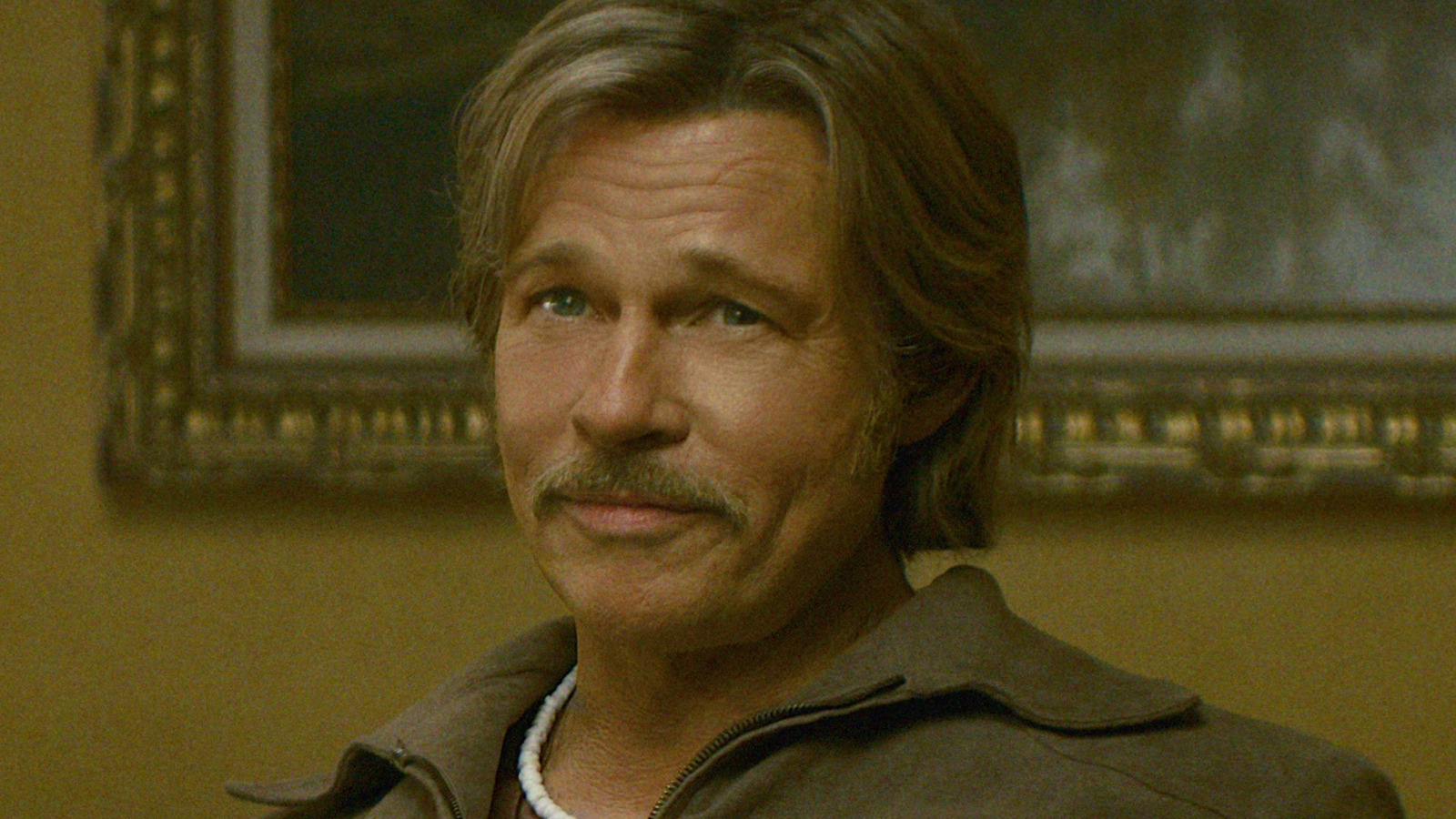
“Once Upon a Time in Hollywood” introduced us to washed-up actor Rick Dalton, played by Leonardo DiCaprio, and his trusty stunt man sidekick Cliff Booth, played by Brad Pitt. Pitt turned in a funny, scene-stealing performance that landed him an Oscar, but Cliff seemed destined to be a supporting player in Rick’s life. “Cliff Booth” turns him into a leading man, and I’m not entirely sure that’s a good idea. Because without Rick Dalton by his side, what is Cliff Booth? I think the case can be made that Cliff Booth is a very charming psychopath. He’s certainly not against brutally murdering people, and while he’s highly capable and smooth as silk, there doesn’t seem to be a whole lot going on in Cliff Booth’s head. Rick and his internal struggles were part of what gave “Hollywood” its heart. Without him around, “Cliff Booth” ends up frequently feeling cold and cruel.
Cliff Booth’s life has changed since we last saw him
Pitt’s Cliff became so lovable and likable in the first movie that I can’t help but think Tarantino, always one to subvert expectations, is deliberately hammering home the point that for all his charms, Cliff is not exactly a good guy. He’s a cypher; an idealized version of machismo — a men’s pulp magazine hero brought to life. He lives fast and hard, likes drugs and booze, constantly risks life and limb, flirts with every woman he encounters, can kick everyone’s butt, and still finds time to chill out and watch TV with his dear old dad. And yes, he occasionally murders people. Is “Cliff Booth” an attempt by Tarantino, or maybe Fincher, to remind us that this guy isn’t nearly as cool as he seems?
In “The Further Mis-Adventures of Cliff Booth,” it’s 1977, and Cliff’s movie stunt days seem to behind him, especially since Rick Dalton has moved to Australia, where he’s currently starring on a popular Aussie TV show. Cliff keeps busy, though, working an assortment of odd jobs. He runs the projector at the New Beverly Cinema, he works as a bartender making all sorts of elaborate margaritas, he participates in a demolition derby, and he even occasionally appears in an X-rated movie or two.
On the side, however, Cliff also works as a fixer for some of his old Hollywood friends. If they get into a jam that they can’t go to the cops about, Cliff is willing to step in and work something out — for a price. And sometimes that results in a body count.
The Further Mis-Adventures of Cliff Booth is in no hurry
Cliff has become a legend due to his fight with Bruce Lee and the time he killed those damn hippies who broke into Rick’s home (it’s also worth noting that in “Hollywood,” people suspected Cliff of murdering his wife, although that incident isn’t mentioned here). At the end of the day, Cliff comes home to the apartment he shares with his dad Gus (Peter Weller) to watch old movies and TV. Weller’s Gus is the warmest part of this surprisingly cold movie, and the banter between Cliff and his father is laid-back and believable in a way that made me wish the entire movie was just the two of them shooting the breeze.
“Cliff Booth” is in no hurry, but eventually a shaggy Hollywood crime thriller plot emerges. The logistics of what’s going on are hilariously convoluted, but Cliff is hired by manic actor Charlie Peters (Scott Caan, looking eerily like his late father in nearly every frame) to help get him out of some trouble. Cliff doesn’t exactly like Charlie, but he does like Charlie’s wife Toni (Carla Gugino), whom he had a love affair with over a decade ago. And Cliff really likes Charlie’s agent, amazonian goddess Karen Crosby, played Elizabeth Debicki.
The flirty relationship between Cliff and Karen is meant to be sweet and romantic, but while Pitt and Debicki are both quite good in their respective roles (Debicki is particularly funny, bugging her eyes out at all the ludicrous things that happen), they don’t have much chemistry. There’s the glimmer of something interesting in how Cliff reveals he’s a masochist who gets off on the idea of Karen slapping him around, but this angle is ultimately treated as little more than a throwaway gag.
Fincher and Tarantino have a different approach to movie violence
While “Cliff Booth” has the same hang-out movie vibes as “Hollywood,” there are bursts of brutal violence that left me uncomfortable. Tarantino is no stranger to violence, and the big finale of “Hollywood” is drenched in blood. But here is where the styles of Fincher and Tarantino seem to clash the most. Tarantino’s violence is almost always hyper-stylized and over-the-top. Influenced by countless splatter flicks and kung-fu movies, Tarantino shoots his violence in ways that are so ludicrously graphic that they become funny in a twisted sort of way.
Fincher, however, has a more realistic approach, which results in a handful of brutal scenes — most notably when the film’s villains, a pair of gangsters from the Philippines (played by Matt Groove and JB Tadena) butcher an entire family during a home invasion. This moment has no bearing on Cliff’s story, and seems to only exist to show us how bad these bad guys are. Which is fine, in theory, but Fincher stages it in such a cruel, unpleasant way that when he tries to lighten the mood in the following scenes, it rings hollow.
There’s a conversation worth having here about movie violence, I suppose. Which is the more questionable approach: depicting these moments in an unrealistic over-the-top fashion, or making them as real (and therefore upsetting) as possible? Again, I can’t help but think that Tarantino is intentionally trying to flip the script and deliver something harsher after the good vibes of “Hollywood.” The ’60s are over, and here we’re at the tail-end of the ’70s, nearing the ’80s. It makes sense for the vibes to be drastically different. But intentional or not, this contrast between Fincher and Tarantino makes “Cliff Booth” more mean-spirited than expected.
Cliff Booth has something to say about art vs. entertainment…sort of
Midway through the film, Tarantino’s script gives Karen a meaty monologue about movies. Before becoming an agent, Karen was a budding film critic, and in her professional opinion, movies should entertain above all else. While she thinks movies can be artistic, she doesn’t think of them as art. It’s 1977, and the movie everyone is talking about is “Star Wars,” which Karen thinks proves her point: audiences don’t want a fancy cinematic meal, they want movie fast food. Even “The Godfather” is little more than pulp in her estimation.
I don’t think a lifelong movie nerd like Tarantino actually believes this (and I don’t think Fincher does, either), but this little speech must be here for a reason. Are we meant to just sit back and enjoy the ride of “Cliff Booth” and not think too much about what’s unfolding here? Or is the film itself trying to prove Karen’s theory wrong? For all it’s moments of comedy, there’s a cold darkness lurking beneath “Cliff Booth” that keeps it from being fully entertaining. It’s as if Fincher and Tarantino don’t quite have a grasp on the material.
The Further Mis-Adventures of Cliff Booth works, but it pales in comparison to Once Upon a Time in Hollywood
Regardless, “The Further Mis-Adventures of Cliff Booth” is Fincher’s best movie in years — since “Gone Girl,” really. While I do think he and Tarantino don’t quite mix as well as we’d all hoped, the material has energized the filmmaker to craft a great-looking movie with several standout set pieces (I particularly liked a montage, told entirely via press photographs, showing Karen attending the premiere of “Looking for Mr. Goodbar”).
Still, I can’t help but wish Tarantino had just gone ahead and directed this himself. If he had, I think the tonal clashes might’ve been smoothed out considerably. “Once Upon a Time in Hollywood” felt like something of a masterpiece to me when I first saw it, and the film’s hefty runtime was a blessing rather than a curse — I wanted to spend as much time in this world with these characters as possible.
But that world is nowhere to be found in “The Further Mis-Adventures of Cliff Booth.” Tarantino clearly didn’t want to tread the same ground all over again when he banged out this script, and there’s nothing wrong with that. But if everything is so different this time around, why would we want to check back in with Cliff at all, then? Especially without Rick by his side? “Cliff Booth” builds towards a memorable, brutal, action-packed climax before just sort of giving up and rolling credits. It’s as if, in the end, everyone involved realized that old “Hollywood” magic was finally gone.
/Film Rating: 7 out of 10
“The Further Mis-Adventures of Cliff Booth” will be released exclusively in IMAX on November 25, 2026 for a two-week engagement before streaming on Netflix December 23, 2026.




Leave a Reply