
The French Folk Horror-Adjacent Period Debut That Was Cannes Directors’ Fortnight’s Most Atmospheric Revelation
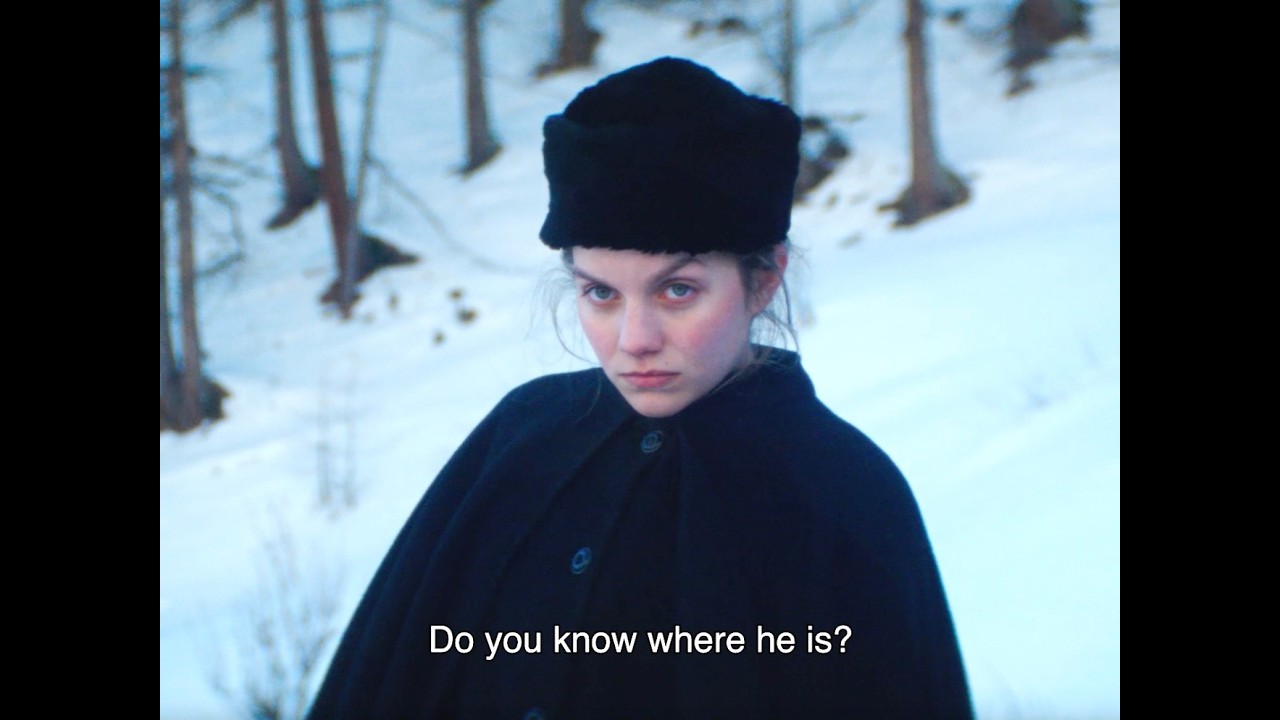
Aimée Lazare arrives at Soudain on a stormy night in 1899 — a hamlet so isolated in the Hautes-Alpes that the snow makes it effectively unreachable for months. She is secular, educated, reads Descartes by candlelight, and has come to educate children whose parents cling to Occitan folk traditions and superstitions. Her presence is disruptive before she speaks a word. When the avalanches begin and men disappear, the community’s fear needs a shape — and Aimée provides it. The project was inspired by the writings of Hémon’s great-great-aunt Aimée Bigallet and her grandfather Jacques Chevalier — generations of secular, atheist teachers who opened schools and went to teach in small Alpine villages in winter. Won the Gan Foundation creation grant in 2023. Directed by Louise Hémon — documentaries L’Homme le Plus Fort (2014), Une Vie de Château (2019). Cinematography by Marine Atlan. Score by Émile Sornin. Produced by Take Shelter with Arte France Cinéma and Canal+. International sales: Kinology. Cannes Directors’ Fortnight world premiere May 15, 2025. French theatrical December 24, 2025.
Why It Is Trending: Cannes Directors’ Fortnight and Golden Camera Nominee — César Best Cinematography Nominee — Lumière Triple Nominee — Chicago Special Mention
Cineuropa: “highly original and atmospheric — thanks in particular to cinematographer Marine Atlan’s Bergman-esque work on darkness and Émile Sornin’s haunting music; an atmosphere of first-rate strangeness that distinguishes a director who still has room for improvement, but who has a truly distinctive style.” The Chicago International Film Festival Special Mention jury citation is the film’s most formally precise institutional statement: “transported us into an extreme landscape, and created an unsettling atmosphere that kept us contemplating the nature of lust, education, and violence.” Screen Daily called it “a film of both style and substance — maintaining a suspenseful narrative whilst exploring intriguing ideas around culture, class, education and female empowerment.”
Elements Driving the Trend: Aimée as Black Silhouette, the Samarkand Rendezvous Death Fable, and Atlan’s 4:3 Darkness
-
In Review Online’s most precise formal observation: Aimée “appears repeatedly as a dark silhouette — clad in a black cloak and hat against a blazingly white landscape — both revealed and obscured by the environment she is visibly separate from; the film unspools like a parable of how meeting one’s supposed opposite can both uncover repressed truths and render illegible one’s existing self-conception.”
-
The Samarkand rendezvous — the mythical tale of Death visiting men in the form of shadows and seductive women — told in Occitan dialect by an old woman at the fire, is the film’s most formally specific folkloric architecture: the inescapable encounter with Death that there’s no point running away from.
-
Loud and Clear: “the 4:3 cinematography by Marine Atlan stands out — the icy landscapes and snow-covered forests are absolutely stunning; long takes and a static camera allow you to soak in every image.”
-
The Moveable Fest’s most precise observation: “Marine Atlan’s cinematography where the shadows and darkness have a real life as fire dances around and inside of them — arrives at an exquisite climax in which the community’s complicity and acceptance of denying the future can be crisply seen by pulling back the camera on the mountain town.”
Virality: The Cannes Coup de Cœur Response and the Folk Horror Tradition Positioning
-
The Letterboxd French critical community’s immediate response — “mon premier coup de cœur de Cannes” — established the film within the French arthouse discovery circuit before any institutional award.
-
Loud and Clear’s genre mapping: “it has become a staple in the arthouse crowd since The Witch (2015) — the beautifully shot period drama with glacial pacing and folk horror undertones that highlights the treatment of women due to superstition; last year it was The Devil’s Bath, this year it’s The Girl in the Snow.”
Critics Reception: Divided Along Formal-Ambition vs Execution Lines — Atlan Universally Praised
-
Screen Daily: “style and substance — suspenseful narrative, intriguing ideas around culture, class, and female empowerment.”
-
Cineuropa: “highly original and atmospheric — distinctive style; first-rate strangeness.”
-
IonCinema: “almost lazily sinister — the drastic juxtapositions between night and day highlight the teacher’s dwindling abilities; all the essence of a horror narrative and yet Hémon keeps an icy, observational distance, as if the film itself is destined to remain in permanent defrost.”
-
Loud and Clear: “Hémon doesn’t do much with the structure other than follow it dutifully — very tired and lacking in creative ambition; admittedly well-made.”
-
Eye for Film: “handsome piece of cinematic work — backwoods noir navigation of social landscape; folk horror traditions with a very light touch.”
-
IMDb 6.3 from 220 viewers. 16 critic reviews.
Awards and Recognitions: 1 Win, 9 Nominations — Cannes Golden Camera and Directors’ Fortnight Audience Award Nominees
-
Chicago International Film Festival 2025: Special Mention, New Directors Competition (win). Gold Hugo nominee.
-
César Awards 2026: Best Cinematography nominee — Marine Atlan.
-
Lumière Awards 2026: Best First Film, Best Cinematography, Best Music nominees (3 nominations).
-
Cannes 2025: Golden Camera nominee. Directors’ Fortnight Audience Award nominee.
-
Gijón IFF 2025: Albar Best Film nominee.
-
Champs-Élysées Film Festival 2025: Prix du Jury nominee.
-
French theatrical December 24, 2025. International sales: Kinology.
Director and Cast: A Documentarian Whose First Fiction Feature Was Built From Her Own Family’s Alpine Teaching History — With Bellugi at Her Most Formally Precise
-
Louise Hémon — L’Homme le Plus Fort, Une Vie de Château — describes her experiment as “to take a rational character, plunge her into irrational phenomena and see how far her mind would resist.”
-
Galatéa Bellugi (Aimée) — The Taste of Things — every Cannes review cited her as the film’s most formally essential element; her rosy-cheeked sensuality against the stark snow gives the film its most immediately legible visual argument.
-
Marine Atlan (cinematographer) — César and Lumière nominee; the Bergman-esque work on darkness is the film’s most internationally recognised single contribution.
-
Émile Sornin (composer) — Lumière nominee; the ondes Martenot, drone box, flute and percussion give the score its most formally specific folkloric register.
-
Matthieu Lucci (Enoch) and Samuel Kircher (Pépin) anchor the community’s male response to Aimée’s presence.
Conclusion: A Cannes Directors’ Fortnight Debut of Formal Distinction — Atlan’s Cinematography and Bellugi’s Performance Give Hémon’s Atmospheric Period Drama Its Most Durable Institutional Legacy
The nine nominations confirm sustained recognition across French awards (César, Lumière), major international festivals (Cannes, Chicago, Gijón), and the French arthouse circuit. The Chicago jury’s formulation is the most precise: “an unsettling atmosphere that kept us contemplating the nature of lust, education, and violence.”
What Movie Trend Is Followed: The Post-Witch Folk Horror Period Drama Adds a French Alpine Specificity — The Secular Republic Arriving in a Pre-Modern Mountain Community
Loud and Clear positioned it precisely within the contemporary arthouse genealogy: “The Witch (2015) inaugurated a very specific trend — the beautifully shot period drama with glacial pacing and folk horror undertones highlighting the treatment of women; The Devil’s Bath last year, The Girl in the Snow this year.” Hémon’s specific formal contribution is the French laïcité dimension — the secular Republican teacher arriving in an Occitan-speaking community that has never encountered the French state’s educational project — giving the folk horror premise its most historically grounded and most nationally specific argument.
Trend Drivers: The Secular-Sacred Confrontation, the Occitan Language as Cultural Resistance, and the Documentarian’s Eye Applied to Folklore
-
The secular teacher reading Descartes in a community that tells Occitan death fables around the fire is the film’s most formally specific cultural confrontation — the French Republic’s enlightenment project meeting mountain folk knowledge as irreconcilable epistemologies.
-
The Occitan dialect — spoken by the villagers as a form of cultural resistance that the Republican education programme was designed to extinguish — gives the film its most historically specific political dimension.
-
In Review Online’s structural insight: the community will eventually tell their own version of Aimée’s story — “the intruder who seduced and preyed upon members of their community and attempted to destroy their way of life — a fable with two opposing sides, irreconcilable perspectives that shed cold light and cast unnerving shadows on each other.”
What Is Influencing Trend: Take Shelter’s Arthouse Production and Kinology’s International Sales
-
Take Shelter — whose catalogue includes works by Alice Winocour and Kiko Mizuhara — gives the film its most commercially specific French arthouse production positioning.
-
Kinology’s international sales give the film the European arthouse distribution reach that a period documentary-inflected debut requires to sustain beyond the French domestic market.
Macro Trends Influencing: French Laïcité as Historical Subject and the Folk Horror Genre’s Arthouse Expansion
-
The 1899 setting — the precise moment of France’s Third Republic asserting secular educational control over rural communities — gives the film a historically specific political grounding that The Witch’s New England Puritanism and The Devil’s Bath’s Austrian Catholicism lack.
-
The Hautes-Alpes as a cinematic landscape — almost entirely absent from French historical cinema — gives the film a geographic identity as formally specific as Hémon’s family connection to the material.
Consumer Trends Influencing: French Arthouse Discovery and the Folk Horror Festival Circuit
-
The Cannes Directors’ Fortnight placement — the most commercially specific available section for formally adventurous debut French features — gives the film its widest possible European arthouse discovery circuit before the French theatrical release.
-
The Christmas Eve French theatrical release positions the film within the most commercially unusual slot available for a folk horror-adjacent period drama — the arthouse audience that seeks slow, atmospheric cinema during the winter holidays.
Audience Analysis: French Arthouse Audiences, Folk Horror Festival Communities, and the Post-Witch Genre Discovery Circuit
The core audience is 25–55 — French arthouse cinema audiences who follow the Take Shelter production catalogue and Directors’ Fortnight alumni, folk horror genre communities activated by The Witch-Devil’s Bath genre lineage, and the César-Lumière awards season audience for whom Atlan’s cinematography nominations provide institutional quality signals.
Conclusion: A Formally Distinctive French Debut That Earned Its Nine Nominations Through Atlan’s Cinematography and Hémon’s Atmospheric Authority — With a Screenplay Execution That Multiple Critics Found Less Certain Than the Formal Vision
The film’s most commercially instructive critical division: the audience that prioritises formal distinction over narrative momentum found a debut of genuine authority; the audience that prioritises narrative drive found insufficient movement beneath the beautiful surface.
Final Verdict: A Formally Precise Alpine Folk Horror-Adjacent Debut of Genuine Atmospheric Authority — Whose Cinematography and Performance Earn the César Nomination and Whose Screenplay Confirms Room for Growth
Cineuropa’s most precise summary: “an atmosphere of first-rate strangeness that distinguishes a director who still has room for improvement, but who has a truly distinctive style.” That formulation is the film’s most accurate single critical description — formal authority confirmed, narrative certainty still developing. The nine nominations confirm the industry’s recognition of what the film achieves; the critical division confirms what the second feature must resolve.
Audience Relevance: For French Arthouse Audiences and Folk Horror Genre Viewers Who Value Atmosphere Over Plot Mechanics
Works best for the audience that treats The Witch and The Devil’s Bath as formal touchstones — viewers for whom Marine Atlan’s 4:3 darkness, the Occitan death fable, and Bellugi’s black silhouette against the snow are sufficient reasons to engage with a film whose narrative is less certain than its visual identity.
What Is the Message: Two Epistemologies Cannot Coexist in a Space Too Small for Both — and the Mountain Doesn’t Care Which One Was Right
The Moveable Fest’s most precise thematic formulation: “the community’s complicity and acceptance of denying the future in favor of preserving the only life they’ve ever known — it may be too big a hill for Miss Lazare to climb, but Hémon cuts it down to size quite brilliantly.”
Relevance to Audience: The French Laïcité Battle of 1899 as Folk Horror — the Most Historically Specific Entry in the Post-Witch Arthouse Genre Cycle
The secular Republican teacher in an Occitan-speaking mountain community is a more historically grounded and more nationally specific version of the folk horror premise than any of its English-language predecessors — and the most formally honest available cinematic treatment of what France’s secular education programme actually cost the communities it entered.
Social Relevance: The Republican School as Colonial Instrument — and the Women It Sent Into the Mountains
The French Third Republic’s secular education programme is one of France’s most politically contested historical legacies — schools that simultaneously liberated women like Aimée and systematically suppressed Occitan language and folk culture. Hémon doesn’t resolve the tension, which is the film’s most formally honest political decision.
Performance: Bellugi’s Silhouette Is the Film’s Most Formally Irreplaceable Element — the Black Cloak Against the White Snow as Its Most Precise Visual Argument
Every Cannes review cited Bellugi first — her “rosy-cheeked sensuality,” her bearing as “intrepid as Ada in Jane Campion’s The Piano,” and the black silhouette as the film’s recurring formal statement about how the village will eventually remember her.
Legacy: A Debut That Confirmed Marine Atlan as One of French Cinema’s Most Internationally Recognised Emerging Cinematographers — and Hémon as a Director of Distinctive Formal Identity Awaiting a Screenplay of Equal Authority
The Girl in the Snow will be remembered as the debut that introduced Atlan’s Bergman-esque work on darkness to international cinema through a César nomination — and as the film that confirmed Hémon’s formal identity before fully demonstrating the narrative control that the second feature will be expected to deliver.
Success: 1 Win, 9 Nominations — Chicago Special Mention, César Best Cinematography Nominee, Lumière Triple Nominee
-
Chicago IFF 2025 Special Mention. Cannes Golden Camera and Audience Award nominees. César Best Cinematography nominee (Atlan). Lumière Best First Film, Best Cinematography, Best Music nominees. Gijón Albar and Champs-Élysées Prix du Jury nominees.
-
French theatrical December 24, 2025. International sales: Kinology. Worldwide gross $481,947.
The Girl in the Snow proves that the most formally precise folk horror debuts are the ones where the snow is not just weather but the landscape’s own epistemology — and that Marine Atlan’s Bergman-esque darkness makes Hémon’s argument before a word of Aimée’s Descartes is read.
Insights: A Cannes Directors’ Fortnight debut of genuine formal authority — Atlan’s Bergman-esque 4:3 cinematography, Bellugi’s black-silhouette-against-snow performance, and Hémon’s Occitan folk horror atmosphere collectively give the film a distinctive visual identity that the César, Lumière, and Chicago nominations confirm across three separate institutional constituencies. Industry Insight: The Gan Foundation creation grant, Take Shelter production, and Kinology international sales give the film the most commercially specific French arthouse debut infrastructure available — positioning it within the Directors’ Fortnight alumni circuit that gives formally adventurous French features their widest available European discovery reach. Audience Insight: The Christmas Eve theatrical release is the folk horror-adjacent period drama’s most formally specific commercial positioning — the arthouse audience that seeks atmospheric, slow, and visually demanding cinema during the winter holidays is the most pre-converted available audience for a film in which the snow is the dominant narrative force. Social Insight: A film set at the precise moment France’s secular Republican education programme arrived in Occitan-speaking Alpine communities — where the teacher sent to liberate the children was read by those communities as a witch — is making one of French historical cinema’s most formally honest and most politically uncomfortable observations about what laïcité actually cost at the level of lived cultural experience. Cultural Insight: The Girl in the Snow positions Hémon as the French filmmaker most formally equipped to bring the Alpine mountain community’s folk epistemology into dialogue with the Republican secular project — and Marine Atlan as the cinematographer whose César nomination confirms her as one of French cinema’s most internationally significant emerging visual voices.
Conclusion: A Formally Distinctive Cannes Debut With Nine Nominations That Confirm Hémon’s Atmospheric Authority and Atlan’s Cinematographic Standing — Awaiting the Second Feature That Will Deliver the Narrative Certainty This One’s Formal Identity Already Promises
The Girl in the Snow earns its nine-nomination sweep through the formal qualities that distinguish the most serious arthouse debuts from the merely atmospheric — a documentarian’s precision applied to folk horror imagery, a historically grounded political argument embedded in a landscape that refuses to be merely decorative, and a cinematographer whose Bergman-esque work on darkness is the most formally accomplished technical contribution to French cinema’s 2025 debut circuit. Hémon’s second feature, arriving with this formal identity confirmed across nine festival constituencies, will be one of French cinema’s most closely anticipated debut follow-ups.
Summary: One Teacher, One Hamlet, One Winter, and the Mountain That Has Always Known How Stories About Women Like Her End
-
Movie themes: The French secular Republican education programme as a cultural collision, two epistemologies unable to coexist in a space too small for both, the woman as the community’s readiest available explanation for what it cannot control, and the mountain as an entity with its own ancient indifference to the distinctions between superstition and science.
-
Movie director: Louise Hémon — L’Homme le Plus Fort, Une Vie de Château — makes her fiction debut with the most autobiographically grounded material available to her: her family’s Alpine teaching history, filtered through the documentary precision and the folk horror atmospheric authority that the Occitan death fable tradition demands.
-
Top casting: Bellugi’s Aimée — black cloak and hat against the snow, Descartes by candlelight, rosy-cheeked sensuality that the village cannot categorise — is every review’s first cited element. Atlan’s cinematography is the film’s most internationally recognised technical contribution. Sornin’s score with ondes Martenot and drone box is its most formally specific sonic identity.
-
Awards and recognition: 1 win (Chicago Special Mention), 9 nominations: Cannes Golden Camera and Audience Award, César Best Cinematography (Atlan), Lumière Best First Film, Best Cinematography, Best Music, Gijón Albar, Champs-Élysées Prix du Jury, Chicago Gold Hugo. French theatrical December 24, 2025. Worldwide gross $481,947.
-
Why to watch: The Cannes Directors’ Fortnight debut that positioned itself within the Post-Witch arthouse folk horror tradition with a specifically French historical argument — Marine Atlan’s Bergman-esque 4:3 darkness, Bellugi’s silhouette against the Alpine snow, and Hémon’s Occitan death fable atmosphere give the 98 minutes a formal authority that the Chicago jury correctly identified as keeping them “contemplating the nature of lust, education, and violence.”
-
Key success factors: Hémon’s autobiographical authority plus Atlan’s César-nominated cinematography plus Sornin’s haunting score plus Take Shelter’s arthouse production positioning plus Kinology’s European sales infrastructure plus the Cannes Directors’ Fortnight institutional launch plus the Post-Witch folk horror genre community’s active discovery circuit.
-
Where to watch: Available on Canal+ in France. International streaming availability via Kinology distribution — check local platform availability by territory.
Conclusion: A Nine-Nomination Cannes Debut of Formal Authority That Earned Its Critical Standing Through the Precision of Its Atmospheric Vision — Confirming Both Atlan as a Cinematographer of International Standing and Hémon as a Director Whose Distinctive Formal Identity Makes Her Second Feature One of French Cinema’s Most Anticipated
The snow is the epistemology. The black cloak is the argument. The Occitan death fable is the film’s most formally precise single sequence. Hémon earns her nine nominations through the qualities that distinguish the most serious French debuts from the merely handsome — a historically grounded political argument, a documentarian’s formal discipline applied to folk imagery, and a cinematographer whose work on darkness confirms that the distinctive style Cineuropa identified is already fully formed, awaiting only the narrative certainty that the second feature will be expected to deliver.




Leave a Reply