

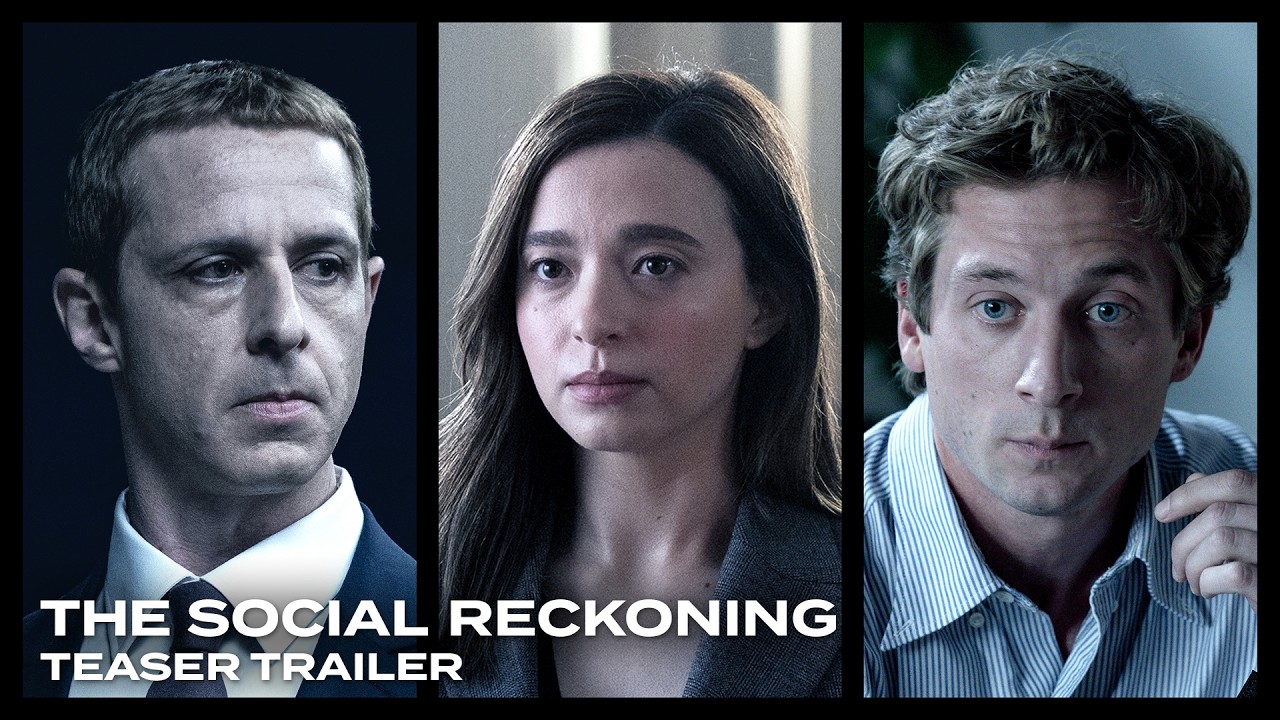
US | 2026 | 112 min | Political Drama / Investigative Thriller / Technology Drama
A Facebook Whistleblower Exposes the Hidden Dangers of Social Media
In The Social Reckoning (2026), Facebook engineer Frances Haugen (Mikey Madison) becomes increasingly concerned about the company’s handling of harmful content and the influence of its algorithms on public behavior. Frustrated by internal practices and the company’s response to potential risks, she contacts The Wall Street Journal reporter Jeff Horwitz (Jeremy Allen White) to expose information hidden from public scrutiny. Their collaboration develops into an investigation challenging Facebook’s leadership, including Mark Zuckerberg (Jeremy Strong), and raising questions about the platform’s responsibility for misinformation and its wider social consequences. Written and directed by Aaron Sorkin, the film follows the controversy surrounding the Facebook Files, transforming corporate secrecy into a political thriller about truth, public trust and the power of digital platforms.
➡️ Storyline: Algorithmic Concerns → Corporate Secrecy → Whistleblower Decision → Investigative Journalism → Facebook Files → Public Exposure → Demand for Transparency.
Why to Watch The Social Reckoning: A Political Thriller About Social Media, Truth and Corporate Power
The Social Reckoning combines investigative journalism, technology ethics and political drama to examine how hidden corporate decisions influence online information and why exposing those decisions matters for public trust.
|
1. Aaron Sorkin’s Writing and Direction |
Sorkin brings his dialogue-driven storytelling to the social and political consequences of Facebook’s influence, following his work as screenwriter of The Social Network (2010). |
|
2. Mikey Madison, Jeremy Allen White and Jeremy Strong |
Madison portrays whistleblower Frances Haugen, White plays journalist Jeff Horwitz and Strong takes on the role of Facebook founder Mark Zuckerberg. |
|
3. Social Media and Algorithmic Manipulation |
The film explores how engagement-driven algorithms, misinformation and platform decisions can shape public opinion and influence behavior. |
|
4. Investigative Journalism and Corporate Secrecy |
The collaboration between a technology insider and a reporter provides the foundation for exposing concealed institutional practices. |
|
5. A Contemporary Political and Technology Debate |
The film shifts the focus from Facebook’s creation to its societal consequences, connecting digital platform power with transparency and public accountability. |
➡️ Reason to Watch: A technology-driven political thriller that transforms the Facebook Files controversy into an examination of algorithmic influence, corporate secrecy and the struggle to reveal how social media platforms affect society.
Why The Social Reckoning Stands Out: The Hidden Power of Algorithms Becomes a Political Conflict
The Social Reckoning distinguishes itself by transforming the technical world of social media algorithms into a story about political influence, corporate responsibility and public transparency. Rather than focusing on the creation of Facebook, as The Social Network did, Aaron Sorkin examines the consequences of a platform that has become deeply embedded in public communication and everyday behavior. Frances Haugen’s decision to disclose internal information creates a conflict between corporate secrecy and the public’s right to understand how digital systems operate. The film combines investigative journalism with institutional drama, while Jeremy Strong’s portrayal of Mark Zuckerberg introduces the perspective of corporate leadership confronting scrutiny. Its distinctive relevance lies in making algorithmic manipulation and digital accountability central subjects of political storytelling.
➡️ Why It Stands Out: A political technology drama that turns the invisible influence of social media algorithms into a visible conflict between corporate power, investigative journalism and public transparency.
Movie Trend: Social Media Political Thrillers — Algorithms Become Instruments of Influence
Social Media Political Thrillers explore how digital platforms, algorithms and information systems influence public opinion, political behavior and social trust. The Social Reckoning reflects this trend through Frances Haugen’s investigation into Facebook’s internal practices and the consequences of its approach to harmful content. The film examines how algorithmic systems can amplify misinformation and influence what users see, while corporate decisions about transparency determine how much the public understands about these processes. By combining technology concerns with investigative journalism and political conflict, Aaron Sorkin transforms digital infrastructure into a source of dramatic tension. The narrative reflects growing cultural interest in the political consequences of social media and the responsibility of technology companies for the information environments they create.
➡️ Movie Trend Insight: Social Media Political Thrillers expose the hidden influence of digital platforms, transforming algorithmic manipulation, misinformation and corporate secrecy into conflicts about public trust and democratic accountability.
Broad Trend: Truth / Transparency — People Want to Understand the Systems Shaping Their Lives
Truth / Transparency reflects the growing importance of access to reliable information, openness in institutional decision-making and the ability to understand how powerful organizations influence society. In The Social Reckoning, Frances Haugen’s decision to reveal Facebook’s internal practices challenges the gap between what technology companies know about their platforms and what users understand about the risks involved. The film explores how secrecy can weaken trust, particularly when algorithmic systems influence public communication and information consumption. Through the relationship between a whistleblower and an investigative journalist, the narrative highlights transparency as a mechanism for questioning corporate authority and enabling public scrutiny. Its broader relevance lies in the demand for greater visibility into the decisions shaping digital experiences.
➡️ Broad Trend Insight: Truth and transparency become essential when powerful digital systems influence public behavior, making openness, independent scrutiny and access to reliable information central to institutional trust.
Viewer Profile: Audiences Interested in Technology, Political Power and Investigative Journalism
The Social Reckoning is likely to appeal to audiences interested in contemporary technology debates, political thrillers and investigative dramas examining corporate influence. Its recognizable cast, connection to The Social Network and focus on the Facebook Files offer particular appeal to viewers who follow social media controversies and appreciate dialogue-driven storytelling about institutional accountability.
|
Political thriller viewers, technology enthusiasts, investigative journalism audiences and fans of socially relevant dramas |
|
|
Adult audiences interested in social media, digital culture, political influence and contemporary institutional controversies |
|
|
Interested in technology, journalism, media literacy, digital behavior, corporate responsibility and public affairs |
|
|
Political dramas, investigative thrillers, corporate dramas, technology films and fact-based storytelling |
|
|
Following Frances Haugen and Jeff Horwitz as they investigate Facebook’s internal practices and challenge corporate secrecy |
|
|
Aaron Sorkin’s films, The Social Network, technology controversies, investigative journalism and high-profile ensemble casts |
|
|
Curiosity, concern about manipulation, frustration with secrecy and the desire for truth and accountability |
Key Profiles: Three Audiences, Three Reasons to Watch
1. Technology and Digital Culture Audiences
Viewers interested in social media algorithms, misinformation and the influence of digital platforms on everyday behavior. The film explores how technology companies shape information environments and why their internal decisions matter beyond the technology industry.
2. Political Thriller and Investigative Journalism Viewers
Audiences attracted to stories about whistleblowers, institutional secrecy and the pursuit of public accountability. Frances Haugen and Jeff Horwitz’s investigation provides a character-driven conflict between individuals seeking transparency and a powerful organization facing scrutiny.
3. Aaron Sorkin and Social Network Film Enthusiasts
Viewers familiar with The Social Network and Aaron Sorkin’s dialogue-driven political dramas. The film offers a continuation of the Facebook story, shifting attention from the company’s origins to the consequences of its global influence.
➡️ Audience Insight: The Social Reckoning connects digital culture with political storytelling, appealing to audiences interested in how algorithms influence society and how investigative journalism can challenge corporate secrecy.
What This Movie Means for the Industry: Technology Controversies Become Political Cinema
The Social Reckoning illustrates how contemporary political cinema can transform technology controversies into accessible stories about institutional power and social responsibility. Aaron Sorkin uses the Facebook Files investigation to connect algorithmic influence with broader concerns about misinformation, transparency and corporate accountability. By focusing on a whistleblower and an investigative journalist, the film gives a human dimension to technical systems that are often difficult to visualize or understand. Its connection to The Social Network demonstrates how established film narratives can evolve alongside changes in the industries they portray, shifting from entrepreneurial ambition to the consequences of technological influence. Despite mixed critical reception, the film highlights the storytelling potential of digital platform controversies and their relevance to contemporary political and cultural debate.
➡️ Industry Insight: Political technology dramas can make complex digital issues more accessible by connecting algorithms, corporate decisions and institutional secrecy with recognizable human conflicts about truth and accountability.
Final Verdict: A Timely Political Thriller About the Consequences of Social Media Power
The Social Reckoning (2026) is a dialogue-driven political technology drama that examines the consequences of Facebook’s influence on information, public trust and corporate accountability. Aaron Sorkin transforms the Facebook Files controversy into an investigative story centered on Frances Haugen’s decision to expose internal practices and Jeff Horwitz’s efforts to bring those findings to public attention. Mikey Madison, Jeremy Allen White and Jeremy Strong anchor the film’s examination of whistleblowing, journalism and institutional power, although the narrative’s technical dialogue and uneven pacing have divided audiences. With a 6.6/10 IMDb rating and 51 Metascore, the film has received mixed responses, but its subject remains relevant to debates about social media transparency and the responsibilities of technology companies.
➡️ Final Verdict: The Social Reckoning transforms the Facebook Files investigation into a political thriller about algorithmic influence, corporate secrecy and the public’s right to know. Its recognizable cast and dialogue-driven storytelling explore the human consequences of decisions made inside powerful digital platforms. The film is particularly suited to viewers interested in technology ethics, investigative journalism and contemporary political dramas examining the relationship between information and power.
Final Insights: Transparency Becomes Essential When Algorithms Shape Public Reality
The Truth / Transparency trend reflects the growing importance of understanding how powerful institutions make decisions that affect public information and everyday behavior. The Social Reckoning explores this need through Frances Haugen’s efforts to expose Facebook’s internal practices, highlighting the consequences of limited visibility into algorithmic systems.
The Social Media Political Thrillers trend transforms digital technology into a source of political conflict, revealing how information systems can influence public opinion and social trust. By connecting corporate secrecy with investigative journalism, the film emphasizes the importance of independent scrutiny and institutional accountability. When algorithms influence what people see and believe, transparency becomes essential to protecting informed public choice.
➡️ Final Insight: Truth / Transparency → Social Media Political Thrillers → Greater Awareness of Algorithmic Influence and Digital Accountability. The Social Reckoning explores how whistleblowing and investigative journalism can expose the hidden decisions shaping online information. The creative opportunity lies in developing political thrillers that make complex technology systems understandable through human stories about truth, power and responsibility.






Leave a Reply