
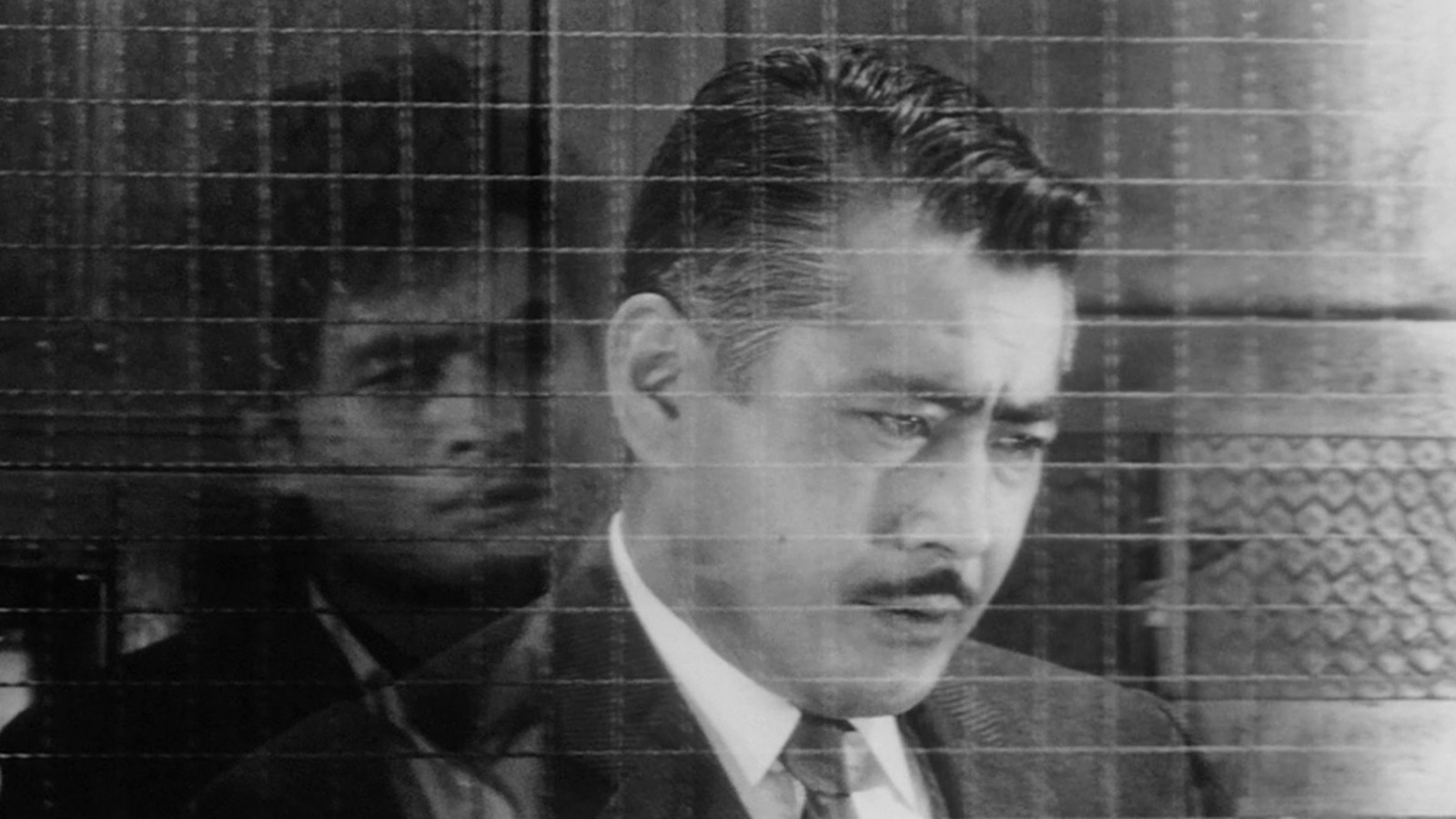
Ben Affleck’s new kidnapping thriller “Animals” made a splash on Netflix this year — at least in terms of viewership. Critics dismissed the picture, and justifiably so, given how shaky the “Animals” script is. Yours truly clocked that “Animals” is basically an unauthorized remake of Akira Kurosawa’s “High and Low,” and I was not the only one.
In both movies, a rich man who has just invested all his money in a venture (a business takeover in “High and Low,” a mayoral campaign in “Animals”) receives a phone call that his son has been kidnapped. Except, the ransomers mistakenly took one of his much poorer employee’s sons — so, does he still bankrupt himself to save a kid that isn’t his?
I would highly suggest turning off Netflix and flipping over to HBO Max (where “High and Low” is currently streaming) to watch Akira Kurosawa show you how it’s done. Several of the filmmaker’s classics are currently streaming on there, including “Seven Samurai,” “Rashomon,” “Throne of Blood,” and “Yojimbo.” Like with “High and Low,” all of those movies also star Toshiro Mifune, Kurosawa’s go-to leading man at his peak. But “High and Low” is my personal favorite of the bunch and Kurosawa’s magnum opus.
Kurosawa is distinguished for his samurai movies or Jidaigeki (Japanese historical dramas). He often adapted William Shakespeare’s plays, too, moving their stories from Europe to to the east: “Throne of Blood” is literally just “Macbeth” in feudal Japan, and it’s one of the best “Macbeth” movies to boot.
“High and Low” stands out in that collection for its contemporary setting and source material. (It’s adapted from a procedural novel, “King’s Ransom,” by American author Ed McBain.) While he may not have had the Bard to draw on this time, Kurosawa still made some pure cinematic brilliance.
There’s no easy answer in High and Low
If I were ever tasked with assembling a list of “old” and/or international movies to convince people that black and white or non-English-language movies can be great, “High and Low” would be on there, 100%. That’s not just because it’s great (it is), but it’s great popular entertainment: a taut suspense thriller and investigative procedural. It’s not at all “pretentious,” as untrained viewers might call it.
“Someone wants a ransom for the wrong kid, but only you can pay it” is also a great moral dilemma for a thriller and one that slots neatly into anywhere in the world with class disparity. That’s why “High and Low” has been remade in many different settings. We know what a hero would do in this situation, but we’re not sure if Kingo Gondo (Toshiro Mifune) is a hero from the beginning.
Now, the movie wisely stacks the deck in Gondo’s favor so he doesn’t come off as an aloof rich guy. He wasn’t born rich, he worked his way up, so he knows what losing everything is like, and that makes the sacrifice extra painful. And while he works in shoe manufacturing, he’s got a creative spirit. He’s planning a leveraged buyout because he wants to make high-quality shoes his way instead of saving money on a cheaper product.
Would you sacrifice all your savings and life’s work to save an innocent child? You probably just answered “yes,” but it’s still an abstract question for you. “High and Low” portrays how someone would act when the choice and its consequences become real. The most impressive balancing act in the movie is that it both does and doesn’t feel like a foregone conclusion when he agrees to pay the ransom.
High and Low shows how a suspense thriller should be done
“High and Low” doesn’t end when the ransom gets paid. The kidnapper escapes, setting off the second half, where Gondo is largely absent and the police characters take over to try and find the kidnapper. “High and Low” is as bifurcated as its title, with the two halves divided by setting: Gondo’s hilltop mansion in the first half, the town below in the second, with the train sequence where Gondo delivers the ransom as a fitting bridge. (It’s worth noting that a more literal translation of the original Japanese title, “Tengoku to Jigoku,” is “Heaven and Hell.”)
During that first half, Kurosawa uses Gondo’s living room like a theater stage. Even confined to a single house, the picture looks huge. The screen is wide enough that you can keep track of each character’s movements, and the film blocks no frame carelessly. The contained setting, and immense pressure placed on Gondo, still give the first half a claustrophobic feeling. The second half entering the town below is a pressure release, but your attention doesn’t go slack because there’s still a mystery to solve. The ending of “High and Low,” where Gondo and the kidnapper finally come face-to-face, is a triumphant denouement.
Many great American filmmakers have looked to Akira Kurosawa, like “The Godfather” director Francis Ford Coppola. Watching “High and Low,” it’s easy to understand why.






Leave a Reply