
Netherlands / Belgium / France / UK | 2026 | 102 min | Coming-of-Age Drama, Psychological Drama
Behind the Camera. Afraid of Intimacy. Learning How to Connect.
Why Growing Up Surrounded by Porn Makes Real Intimacy the Hardest Thing to Understand
A teenager raised around his father’s adult-film business discovers that constant exposure to sexual imagery has taught him almost nothing about vulnerability, affection or genuine human connection.
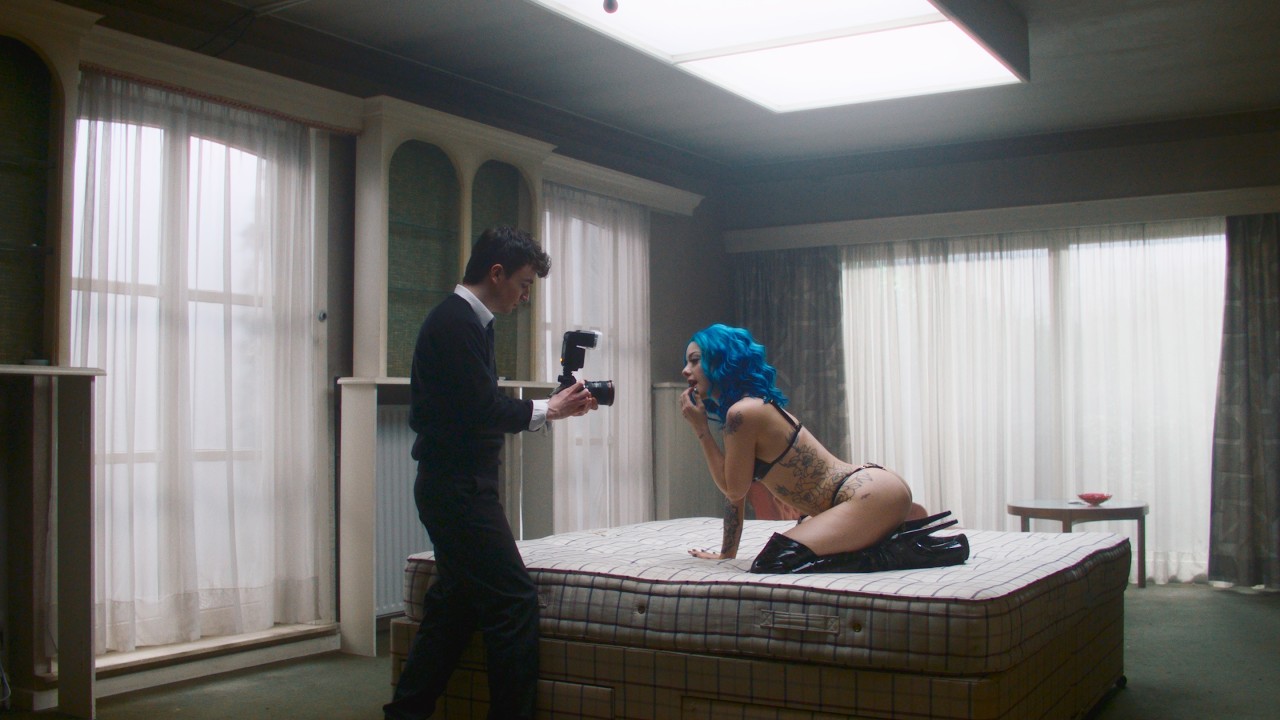
Truly Naked follows Alec, played by Caolán O’Gorman, an introverted teenager whose understanding of intimacy has been profoundly shaped by working behind the camera for his father Dylan’s pornography business. Sex is familiar to Alec as something filmed and produced, but emotional intimacy remains far more difficult to understand.
That begins to change when a classmate challenges the assumptions through which Alec has learned to interpret sexuality and relationships. His growing connection with Nina, played by Safiya Benaddi, forces him to move from detached observation toward participation in the messy emotional world he has largely avoided. French release materials similarly frame Nina as the person who changes Alec’s preconceptions about sexuality and desire.
Written and directed by Muriel d’Ansembourg, Truly Naked is an international European production starring O’Gorman alongside Andrew Howard, Alessa Savage, Safiya Benaddi, Lyndsey Marshal and Juliet Aubrey. The film premiered at the 2026 Berlin International Film Festival before receiving theatrical releases in France, the Netherlands and Belgium.
➡️ Movie Insight: Truly Naked reverses the traditional coming-of-age story: Alec already knows what sex looks like, but growing up means discovering the emotional intimacy that images cannot teach him.
Should You Watch It?: A Confrontational Coming-of-Age Drama About Intimacy in the Porn Generation
Truly Naked is best suited to adult viewers interested in challenging coming-of-age cinema that examines how exposure to sexual imagery can shape a young person’s understanding of desire, relationships and the body. Despite its teenage protagonist, this is deliberately provocative adult-oriented material rather than a conventional youth drama.
The film’s strongest conceptual contrast is between sexual visibility and emotional vulnerability. Alec has been exposed to material traditionally considered private, yet genuine intimacy remains unfamiliar. His relationship with Nina therefore represents something more radical to him than what happens in front of his camera: being emotionally seen by another person.
D’Ansembourg also approaches the adult-film environment as more than sensational background. In discussing the project, she has described researching low-budget pornography and speaking with people working within the industry, while French production material emphasizes her interest in adolescence as a period defined by first experiences and vulnerability.
The result has generated divided reactions. Some viewers praise its confrontational approach and performances, while others find its combination of coming-of-age drama, social critique and deliberately uncomfortable imagery uneven. That polarization is closely connected to the film’s strategy of making the viewer confront Alec’s distorted relationship with images rather than simply explaining it.
➡️ Viewing Takeaway: Watch Truly Naked if you want provocative European coming-of-age cinema that uses discomfort to examine the difference between seeing sexuality and actually understanding intimacy.
Why Everyone Is Talking About It?: Porn Is No Longer the Taboo—Intimacy Is
Truly Naked arrives at a moment when young people can encounter sexual imagery long before they have meaningful experience with emotional intimacy. Instead of asking whether sex should be visible, the film asks what happens when sexual visibility becomes ordinary while vulnerability, communication and connection remain difficult.
That reversal gives the film its strongest contemporary idea. Alec is not sexually naïve in the conventional sense. He is emotionally inexperienced despite extraordinary visual exposure, making his journey toward genuine connection a different kind of coming-of-age story.
D’Ansembourg reportedly developed the project from the image of an adult scene being filmed before revealing that the person behind the camera was an adolescent. That conceptual reversal became the foundation for examining how a teenager might simultaneously exist inside an adult sexual environment while remaining emotionally outside it.
The film’s festival trajectory has strengthened the conversation. It premiered at the Berlin International Film Festival on February 16, 2026, subsequently screened at the Movies That Matter Festival and entered theatrical distribution in several European markets.
➡️ Why It Matters: Truly Naked shifts the conversation about explicit digital culture away from simple exposure and toward emotional education, asking whether unprecedented access to sexual imagery is leaving genuine intimacy harder—not easier—to understand.
Awards
Truly Naked has received 1 major nomination.
Berlin International Film Festival
2026 Nominee — Perspectives Award
-
Best First Feature
-
Muriel d’Ansembourg
The nomination is particularly significant because Truly Naked is d’Ansembourg’s first feature, placing the filmmaker within Berlin’s emerging-director conversation from the beginning of her feature career.
➡️ Awards Insight: The Perspectives Award nomination positions Truly Naked as more than a provocative conversation-starter, giving d’Ansembourg’s debut recognition within one of international cinema’s most important platforms for emerging filmmakers.
Why Truly Naked Stands Out: Sexual Exposure Is Reframed as Emotional Inexperience
Most coming-of-age films build toward sexual experience as one marker of adulthood. Truly Naked reverses that trajectory. Alec has already been surrounded by representations of sex, yet the experience has arguably made authentic intimacy more confusing rather than more understandable.
That distinction separates sexual knowledge from emotional knowledge. A person can understand bodies, images and sexual performance while remaining inexperienced in affection, consent, vulnerability and reciprocal connection.
The film reinforces that divide visually. French distributor material describes the adult-film sequences as using colder visual tones while Alec’s developing emotional world is presented more warmly, creating a formal separation between sexuality as production and intimacy as lived experience.
The title consequently acquires another meaning. Being “truly naked” is not primarily about removing clothing. For Alec, genuine exposure means allowing another person to see him emotionally without a camera providing distance and control.
➡️ Standout Insight: Truly Naked stands out by making emotional vulnerability more revealing than physical nudity—the boy who has seen everything must learn that genuine intimacy begins when there is nowhere left to hide.
Movie Trend: Digital-Age Coming-of-Age Drama — Young People Are Learning to Separate Sexual Content From Real Intimacy
Truly Naked belongs primarily to the digital-age coming-of-age drama, using Alec’s unusual upbringing to explore a much broader generational question: how does someone develop a healthy understanding of intimacy when sexual imagery can arrive before emotional experience?
The film pushes beyond a straightforward story about the adult-film industry. Alec represents an extreme version of a more widespread contemporary condition in which young people can become visually familiar with sexuality before developing the emotional vocabulary required for real relationships.
That gives the movie a recognizable place within contemporary youth cinema. Rather than focusing only on first love or sexual awakening, it examines media-shaped intimacy—the increasingly complicated relationship between what young people see, what they expect and what genuine human connection actually requires.
➡️ Movie Trend Insight: Truly Naked reflects a new generation of coming-of-age cinema concerned with media-shaped sexuality, where growing up increasingly means unlearning images and discovering the difference between performance, desire and genuine connection.
➡️ Movie Trend: Media-Shaped Intimacy & Coming of Age
Who Should Watch It? (Audience Profile): For Viewers Interested in Challenging Contemporary Coming-of-Age Cinema
|
Arthouse and contemporary coming-of-age drama viewers |
|
|
Festival audiences interested in sexuality, media culture and social issues |
|
|
Culturally engaged, festival-oriented and interested in provocative social cinema |
|
|
European arthouse films, coming-of-age drama, social-issue cinema and psychologically challenging films |
Truly Naked is most likely to resonate with viewers comfortable with confrontational filmmaking and morally complicated subject matter. Its interest lies less in providing a conventional teenage romance than in examining the psychological distance between sexual representation and lived intimacy.
The Berlin positioning and European co-production background also make it particularly relevant to audiences following emerging auteur filmmakers and contemporary festival cinema.
➡️ Audience Insight: Truly Naked is designed for adult viewers who want coming-of-age cinema to engage directly with uncomfortable questions about pornography, adolescence, vulnerability and how media culture influences expectations around intimacy.
What This Movie Means for the Industry: Coming-of-Age Cinema Is Confronting the Sexual Education of the Algorithmic Generation
Truly Naked suggests that contemporary coming-of-age cinema has a new problem to explore: sexual awakening no longer necessarily begins with personal experience. Digital culture can expose young people to highly constructed representations of sex long before their first meaningful relationships.
That changes the traditional cinematic coming-of-age framework. The challenge is no longer simply discovering sexuality; it can also involve separating performance from intimacy, images from expectations and access to information from emotional understanding.
D’Ansembourg’s approach demonstrates how filmmakers can use an extreme fictional situation to examine that broader cultural shift. Alec’s work inside his father’s business is unusual, but the underlying question—how mediated sexual imagery shapes expectations of intimacy—is far more universal.
➡️ Industry Insight: Truly Naked points toward a new direction for coming-of-age cinema, where filmmakers increasingly examine not how young people discover sexuality, but how they learn to build authentic relationships after digital culture has already shown them an artificial version of it.
Creative Analysis: Knowing Everything About Sex Has Taught Alec Almost Nothing About Intimacy
Truly Naked builds its creative identity around one central contradiction: Alec is unusually familiar with sexual performance but profoundly inexperienced with emotional connection. Muriel d’Ansembourg uses the world of homemade pornography less as the film’s ultimate subject than as an extreme environment through which to examine masculinity, intimacy, representation and adolescence. The director herself has emphasized that the film is not fundamentally “about porn”; its deeper concern is the vulnerability Alec discovers when he can no longer remain safely behind a camera.
That distinction gives the film its unusual coming-of-age structure. Alec does not need to discover what sex looks like. He needs to unlearn an image-based understanding of sexuality and discover what desire feels like when another person has needs, boundaries and emotions of their own.
➡️ Creative Insight: Truly Naked reverses the sexual-awakening movie: Alec’s journey toward adulthood begins not by seeing more, but by questioning what years of watching have prevented him from understanding.
Storytelling: Growing Up Becomes a Process of Unlearning
The screenplay gives Alec two parallel worlds. At home, he films and edits the adult content produced by his father Dylan, where sexuality has become routine, technical and commercial. At school, his relationship with Nina introduces an entirely different vocabulary built around uncertainty, attraction, boundaries and emotional reciprocity.
The tension comes from watching those worlds collide. Alec has developed considerable technical confidence behind a camera but comparatively little confidence when confronted with genuine desire. Nina therefore does more than become a romantic interest: she forces Alec to reconsider assumptions he has absorbed without recognizing them as assumptions.
The coming-of-age journey consequently becomes one of deconstruction before discovery. Before Alec can develop his own relationship with sexuality, he must separate what he has witnessed and produced from what intimacy means to him personally.
➡️ Storytelling Insight: Truly Naked turns adolescence into an act of unlearning—the knowledge Alec inherited from images must be dismantled before he can discover a healthier emotional language of his own.
Direction: Muriel d’Ansembourg Uses Provocation to Create Discomfort, Not Seduction
D’Ansembourg deliberately refuses to make the adult-film environment distant or abstract. The film confronts viewers with its production processes while simultaneously emphasizing their routine, manufactured quality. Screen International notes how the explicit material is repeatedly juxtaposed with mundane domestic details, stripping the production environment of much of its fantasy.
That choice makes discomfort part of the film’s method. The audience occupies something close to Alec’s position: repeatedly exposed to images while gradually becoming more conscious of what those images conceal about intimacy, power and emotional vulnerability.
Yet the direction does not operate exclusively through condemnation. Several critics have noted the film’s attempt to approach the environment with research and complexity rather than presenting every participant through the same moral framework.
➡️ Direction Insight: D’Ansembourg uses explicitness as confrontation rather than spectacle, forcing viewers to distinguish between watching sexual performance and understanding the human relationships surrounding it.
Performances: Caolán O’Gorman Makes Emotional Inexperience the Center of the Film
Caolán O’Gorman’s Alec is built around contradiction. He can operate professionally inside an environment most teenagers would find overwhelming, yet ordinary emotional vulnerability leaves him uncertain.
His chemistry with Safiya Benaddi as Nina is therefore crucial. Their relationship introduces awkwardness, curiosity and hesitation into a film where sexual performance has otherwise become strangely mechanical. Cinerama Film particularly praised O’Gorman and Benaddi’s chemistry and their ability to convey teenage anxiety, attraction and uncertainty.
Andrew Howard’s Dylan creates the opposite energy. His familiarity with the adult business has helped normalize Alec’s involvement, blurring the boundaries between father, employer and performer. Alessa Savage’s Lizzie adds another perspective by complicating simplistic assumptions about women working within that environment.
➡️ Performance Insight: O’Gorman makes Alec compelling because the teenager who appears unusually experienced is emotionally the least prepared person in the room whenever genuine intimacy replaces performance.
Cinematography & Visual Style: Two Different Versions of Sexuality Occupy Two Different Visual Worlds
The cinematography reinforces the distinction between manufactured sexuality and emotional experience. Screen International describes the adult-production environment through brash neon tones, synthetic materials and deliberately artificial surfaces, while Alec’s domestic surroundings are comparatively worn and muted.
Outside that environment, the visual language changes. Cineuropa highlights Myrthe Mosterman’s frequently handheld camerawork, soft natural light, desaturated colors and English seaside landscapes, particularly during important scenes between Alec and Nina.
The contrast creates two forms of exposure. The adult-film sequences may show more physically, but Alec’s interactions with Nina feel more revealing because he cannot control them through framing, editing or performance.
➡️ Visual Insight: Truly Naked makes artificial sexuality visually louder and genuine intimacy quieter, suggesting that the film’s most revealing moments occur when spectacle disappears.
Editing: The Camera Gives Alec Control Until Real Life Refuses to Be Edited
Alec’s role as cameraman and editor is more than an unusual occupation. It gives him a way of controlling sexuality through images. Behind the camera, he can choose angles, organize footage and transform physical behavior into something constructed.
Real relationships offer no equivalent control. Nina cannot be edited into behaving according to Alec’s expectations, and emotional mistakes cannot simply be removed from a timeline.
Cineuropa describes Emiel Nuninga’s editing as light-handed but convincing, complementing the film’s more perceptive handheld visual approach.
This creates one of the movie’s most effective conceptual oppositions: Alec understands sexuality as someone who has spent years manipulating representations of it, only to discover that human intimacy cannot be directed in the same way.
➡️ Editing Insight: Alec can edit sexual images into whatever shape he wants, but growing up begins when he encounters relationships that refuse to follow his script.
Father & Son: The Most Important Boundary Problem Begins at Home
Beneath the provocative premise is a deeply complicated father-son relationship. Dylan has normalized Alec’s participation in his business to such an extent that professional, domestic and parental boundaries have become dangerously intertwined.
Their home is simultaneously family space, workplace and production studio. Alec is not simply Dylan’s son; he functions as cameraman, editor and creative collaborator. One review describes this dependency as central to understanding how Alec has learned to make himself useful within his father’s emotional and professional world.
That makes Alec’s eventual emotional independence particularly important. His relationship with Nina does not merely introduce romance; it creates a world outside the closed father-son system through which he can begin evaluating what he previously considered normal.
➡️ Family Insight: Truly Naked’s deepest coming-of-age conflict may be Alec’s separation from his father—the teenager cannot define intimacy for himself until he begins questioning the boundaries Dylan defined for him.
Masculinity & the Female Gaze: Alec Must Question What He Has Learned to Look At
The film also uses Alec’s camera to examine how masculinity learns to look at women. Years spent producing sexual imagery have given him a particular visual vocabulary, but Nina challenges whether that vocabulary has prepared him to understand women as autonomous participants in intimacy.
The predominantly female creative perspective behind the film is significant here. Critics have identified its engagement with the male gaze, female experience, consent and contemporary masculinity, even when disagreeing over how successfully every theme is developed.
Lizzie further complicates the argument because the film does not reduce every woman working in pornography to the same experience. Her perspective introduces agency and pragmatism while still allowing the film to question the structures surrounding the industry.
➡️ Masculinity Insight: Alec’s maturation requires more than learning how to desire someone—he must learn how to stop treating sexuality as something organized primarily around what men expect to see.
Themes & Messages: Sexual Literacy Is Not the Same as Emotional Literacy
Truly Naked’s strongest broader idea is that access to sexual information does not automatically create understanding. Alec represents an extreme version of a contemporary contradiction: someone can encounter enormous amounts of sexual imagery while remaining poorly prepared for vulnerability, communication and reciprocal intimacy.
That makes the film particularly relevant to digital-age adolescence. Its concerns extend beyond Alec’s unusual household toward a generation encountering mediated sexuality at increasingly young ages. Several reviews identify this tension between online sexual imagery and genuine intimacy as the film’s central contemporary concern.
The film has nevertheless attracted criticism for trying to address too many interconnected issues—pornography, patriarchy, masculinity, consent, relationships and adolescent psychology—within one narrative. That tension is worth preserving rather than treating its argument as universally accepted.
➡️ Theme Insight: Truly Naked argues that a generation can become sexually informed without becoming emotionally prepared, making intimacy education increasingly important in a culture saturated with images.
What Makes This Movie Different?: The Most Intimate Moments Are the Ones With the Least Exposure
Truly Naked distinguishes itself by reversing what audiences normally understand as explicit. Physical nudity surrounds Alec throughout his life and has consequently lost much of its ability to shock him. Emotional vulnerability is considerably more unfamiliar.
This reversal changes the meaning of the title. Being “truly naked” ultimately becomes less about bodies than being seen without performance, mediation or the protection of a camera.
That is why the developing relationship between Alec and Nina matters more than the provocative environment surrounding it. The adult-film business provides the film’s confrontational hook, but Alec’s inability to navigate ordinary affection provides its emotional center. Critics including Cineuropa and Première similarly emphasize the contrast between manufactured sexual performance and the tenderness, hesitation and vulnerability of Alec’s developing connection with Nina.
➡️ Difference Insight: Truly Naked turns nudity inside out: bodies are easy for Alec to look at, but allowing another person to see his uncertainty, vulnerability and desire is the most exposing experience of all.
If You Liked Truly Naked (2026): Recent Films Where Growing Up Means Rethinking Sex, Intimacy and Connection
If Truly Naked works for you because it approaches coming of age through uncomfortable questions about sexuality, intimacy and the expectations young people inherit, these recent films explore similar territory from different perspectives. Each examines the gap between sexual expectations and genuine emotional connection.
➡️ Recommendation Insight: Start with How to Have Sex for consent and peer pressure, Sweethearts for changing relationship expectations, and Young Hearts for the vulnerability of discovering genuine attraction.
How to Have Sex (2024) by Molly Manning Walker
How to Have Sex follows three British teenagers on a holiday in Malia, where partying and expectations around losing their virginity initially suggest sexual freedom. Gradually, the film exposes the pressure, ambiguity and vulnerability beneath that culture.
Like Truly Naked, the film challenges the assumption that greater exposure to sex necessarily creates greater understanding of intimacy. Sexuality is highly visible, while consent, communication and emotional readiness remain considerably more complicated.
➡️ Similarity Insight: Watch How to Have Sex for another confrontational coming-of-age drama where sexual experience exposes difficult questions about consent, vulnerability and emotional consequences.
Sweethearts (2024) by Jordan Weiss
Sweethearts follows college freshmen Jamie and Ben as they decide to break up with their respective high-school partners during Thanksgiving break. What begins as a coordinated plan becomes a broader confrontation with how quickly friendship, identity and expectations around relationships can change after leaving home.
Its tone is considerably lighter than Truly Naked, but both films explore young people discovering that the relationship scripts they inherited may not correspond to what they genuinely want. Growing up requires enough self-awareness to recognize which relationships actually feel authentic.
➡️ Similarity Insight: Watch Sweethearts for a lighter coming-of-age story about leaving inherited relationship expectations behind and discovering what emotional compatibility actually means.
Young Hearts (2024) by Anthony Schatteman
Young Hearts follows 14-year-old Elias, whose life changes when Alexander moves in nearby. As friendship develops into attraction, Elias must understand unfamiliar feelings while navigating family, school and his uncertainty about acknowledging what the relationship means to him.
Where Truly Naked gives Alec extensive exposure to sexuality but little understanding of intimacy, Young Hearts approaches adolescence from almost the opposite direction. Physical sexuality is less important than the vulnerability of recognizing genuine affection and allowing another person to see it.
Both films ultimately suggest that maturity is not measured by sexual knowledge or experience but by the ability to communicate honestly and accept emotional vulnerability.
➡️ Similarity Insight: Watch Young Hearts for a gentler counterpart to Truly Naked, where growing up means recognizing authentic desire and finding the courage to turn attraction into genuine emotional connection.
Final Verdict: A Provocative Coming-of-Age Film Where Emotional Intimacy Is More Revealing Than Nudity
Truly Naked is most compelling when it turns its provocative premise into a contradiction about contemporary adolescence: Alec has been exposed to more sexual imagery than most people his age, yet he remains profoundly inexperienced when intimacy becomes personal. Muriel d’Ansembourg uses that divide to create a coming-of-age drama concerned less with sexual discovery than with emotional education.
Caolán O’Gorman gives Alec the awkwardness the concept requires. His character is comfortable operating a camera inside his father’s adult-film business because the lens provides distance and control. Nina disrupts that protection, forcing him to encounter attraction as something reciprocal, uncertain and emotionally vulnerable rather than something that can simply be observed or edited.
The film’s deliberately confrontational approach will inevitably divide viewers. Its combination of explicit material, family dysfunction, adolescent sexuality, pornography, masculinity and patriarchal power can sometimes make the narrative feel overloaded. But that discomfort is also fundamental to what d’Ansembourg is attempting: the audience is repeatedly asked to reconsider the difference between looking at sexuality and understanding the people involved in it.
What ultimately gives Truly Naked greater substance than its provocative premise is its movement toward connection. The film gradually makes ordinary tenderness feel more significant than explicit imagery, suggesting that Alec’s real transition into adulthood begins only when he stops observing relationships from behind a lens.
➡️ Final Verdict: 3.8/5 — A challenging and deliberately uncomfortable debut that occasionally tries to carry too many ideas, but finds an affecting coming-of-age story in the divide between sexual exposure and genuine emotional intimacy.
Quick Facts: Truly Naked at a Glance
|
Coming-of-Age Drama / Psychological Drama |
|
|
Pornography, intimacy, adolescence, masculinity and emotional connection |
|
|
Netherlands / Belgium / France / UK |
|
|
Caolán O’Gorman, Andrew Howard, Alessa Savage, Safiya Benaddi, Juliet Aubrey |
|
|
Isabella Films / Prime Time / Cinémadefacto |
|
|
Berlin International Film Festival |
|
|
Media-Shaped Intimacy & Coming of Age |
Viewing Recommendation: Who Should Experience Truly Naked?
Highly Recommended For
Viewers interested in challenging European coming-of-age cinema, films examining contemporary masculinity and sexuality, stories about the psychological influence of sexual media, emerging filmmakers from the international festival circuit, and dramas willing to make audiences uncomfortable while exploring difficult social questions.
You May Want to Skip It If
The film is unlikely to suit viewers uncomfortable with explicit sexual material, nudity, disturbing sexual imagery or challenging discussions around pornography and consent. It is also deliberately more confrontational than a conventional teenage coming-of-age romance.
➡️ Viewing Recommendation: Approach Truly Naked as a provocative adult-oriented coming-of-age drama rather than a conventional romance; its most interesting question is not what Alec has seen, but whether he can unlearn those images sufficiently to experience intimacy for himself.
Final Insight: The More Sexuality Becomes Visible, the More Valuable Genuine Intimacy Becomes
Truly Naked uses an extreme upbringing to explore a much broader contemporary contradiction. A generation can have unprecedented access to sexual imagery while still struggling with communication, boundaries, vulnerability and emotional connection.
That is ultimately where the title finds its strongest meaning. Being truly naked is not simply being physically exposed—it is allowing another person to see you without performance, mediation or the protection of a screen.
➡️ Final Insight: Truly Naked suggests that in a culture where almost everything can be seen, genuine vulnerability may have become the most intimate form of exposure.






Leave a Reply