
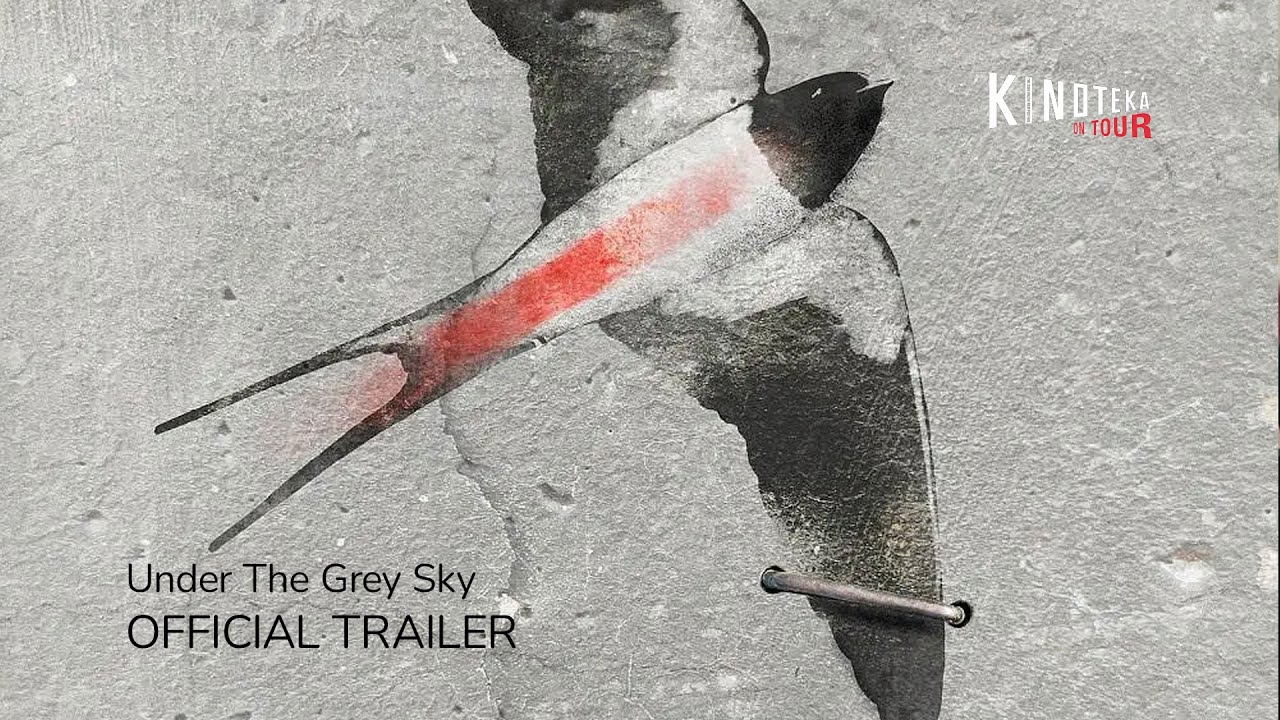
Polish-Belarusian Microbudget Debut — The 2020 Minsk Protests, a Journalist Serving Eight Years, and the Question Nobody in Belarus Can Avoid
Lena, a Belarusian independent journalist, is livestreaming a peaceful protest from an apartment window above Minsk’s Square of Changes when the police drone locates the signal. She is arrested. What she believed would be a week in detention becomes a criminal conviction. Her husband Ilya, a fellow journalist who had been slower to commit to resistance, must now navigate a regime determined to break the marriage as a secondary mechanism of punishment. A light fictionalisation of the real case of Katsiaryna Andreyeva — currently serving an eight-year sentence — and her husband Igor Ilyash. Written and directed by Mara Tamkovich — Polish-Belarusian, former independent journalist for Belarusian media broadcasting from abroad. Made under the Polish Film Institute’s Microbudget programme (€250K ceiling, one-year completion window). Cinematography by Krzysztof Trela. Production: Media Corporation. International sales: Loco Films (France). World premiere Tribeca Film Festival International Narrative Competition June 2024. Polish theatrical March 28, 2025.
Why It Is Trending: Tribeca World Premiere — Polish Golden Lions Best Debut Director — European Film Awards Discovery Nominee — Directors Guild of Poland Best Director
The Directors Guild of Poland awarded Tamkovich its Krzysztof Krauze Award for Best Director “for an uncompromising portrait of a marriage resisting totalitarian oppression — a complete and mature work in which the director ruthlessly examines the truth of human bonds and the strength of devotion.” Cineuropa called it “a deft display of her directorial skills — subtle yet convincing portrayal of life under the dictatorship in Belarus.” Tribeca’s programme note: “specific to Belarus but with increasing international relevance.” The European Film Awards 2026 Discovery — Prix FIPRESCI nomination confirms the film’s sustained institutional recognition across two consecutive award seasons.
Elements Driving the Trend: The Layers of Underwear Scene, the Static Camerawork, and the Marriage as the Regime’s Secondary Target
-
The film’s most formally precise single detail: Lena piles on extra layers of underwear before the door knock, “so resigned to being caught” — Tamkovich’s most economical image of what ordinary citizens have already internalised under a totalitarian regime before the plot has technically begun.
-
Journey Into Cinema’s most precise critical formulation: “the seeming impossibility of genuine change seeps into the affectless performances, the static camerawork, the lack of score and the muted greyscale colour palette — these journalists are not reporting to make a meaningful difference, but because it is simply the right thing to do.”
-
The ethical core is the dilemma between disobedience and conformity — Ilya’s slower path to commitment gives the film its most formally specific structural tension: the marriage under pressure from both the regime and the spouses’ differing timelines of courage.
-
The Soviet-era Belarusian pop song sequence — two beleaguered activists revitalised at a low point by mouthing along with a song about loving a grey, unremarkable country — is the film’s most emotionally precise tonal counterweight to its political grimness.
Virality: Katsiaryna Andreyeva Still Serving Her Sentence — the Real Footage at Film’s End
-
The film ends with real footage of Katsiaryna Andreyeva, including her court statement: “We will win.” She is smiling. The real person whose story the film tells is still in prison.
-
The Directors Guild citation — “uncompromising portrait of a marriage resisting totalitarian oppression” — is the film’s most commercially precise discovery statement, confirming both its political seriousness and its intimate register.
Critics Reception: Consistently Admired — the Microbudget Constraint and the Low-Key Acting Register the Defining Formal Choices
-
Cineuropa: “not a retelling of someone else’s story, but one deriving from it — the director crafts her own artistic vision in a skilful manner; the financial restrictions resulted in interesting artistic decisions, with scenes shot mainly in indoor spaces with natural light.”
-
Movie Waffler (Tribeca): “nerve-wracking; about what it means to love your country even when it seems your country doesn’t love you back.”
-
Journey Into Cinema: “paying the ultimate testament to the humility and doggedness of extraordinary reporters — heartbreaking and infuriating.”
-
Letterboxd: “a story that really needed to be told and seen” alongside Polish-language criticism noting the film sits between cold detachment and personal stakes, ultimately succeeding. IMDb 7.0 from 87 voters. 7 critic reviews.
Awards and Recognitions: 4 Wins, 5 Nominations — Polish Golden Lions Best Debut, Directors Guild Best Director, European Film Awards Nominee
-
Polish Film Festival 2024: Best Debut Director (Tamkovich) — win. Golden Lions Best Film — nominee.
-
Directors Guild of Poland 2025: Krzysztof Krauze Award Best Director — win.
-
Koszaliński Festival of Debuts 2025: Grand Jantar Best Feature Debut — win.
-
Torino Film Festival 2024: Scuola Holden Award Special Mention — win. Prize of the City of Torino nominee.
-
European Film Awards 2026: European Discovery — Prix FIPRESCI nominee.
-
Camerimage 2024: Golden Frog Polish Films Competition nominee.
-
Tribeca 2024: World Narrative Competition nominee.
Director and Cast: Polish-Belarusian Former Journalist Making Her Feature Debut — With the Most Autobiographically Invested Subject Available to Her
-
Mara Tamkovich — short films: Równanie (2015), Córka (2018), Na żywo (2022); former journalist for independent Belarusian media broadcasting from abroad — brings the insider knowledge of someone who worked in the precise institutional context she is filming, giving every production decision its most credible personal grounding.
-
Aliaksandra Vaitsekhovic (Lena) — the film’s emotional anchor; Tamkovich sought “a very specific acting style: not expressive, but hidden — let’s call it low-key”; Vaitsekhovic’s discreet naturalism gives the film its most formally specific performance register.
-
Valentin Novopolskij (Ilya) — Lithuanian actor found after the initial Belarusian casting failed; Tamkovich confirmed: “without these acting choices, their talent and the effort they put into the film, it would have been very difficult.”
-
Krzysztof Trela (cinematographer) — Camerimage Golden Frog nominee; the static camerawork and natural light that every review cited as the film’s most formally precise technical choices.
Conclusion: A Microbudget Polish-Belarusian Debut That Swept the Polish Debut Award Circuit and Reached the European Film Awards — Built on Autobiographical Authority and the Most Formally Specific Constraint-Informed Production Decisions Available
The €250K ceiling and the one-year completion window produced the indoor-space, natural-light, static-camera choices that every review identified as the film’s most formally intentional qualities. The four awards across five festivals confirm that both Polish industry juries and European critics recognised the formal discipline as achievement rather than limitation.
What Movie Trend Is Followed: Political Resistance Drama Told From the Husband’s Perspective — Marriage as the Regime’s Most Precise Instrument of Pressure
Cineuropa’s most precise structural observation: the film’s ethical core is the dilemma between disobedience and conformity — “and however clichéd it may sound, said dilemma feels universal, as the story is focused on these two central characters, with minimal interference from the dark forces of the Belarusian regime.” Under the Grey Sky belongs to the political resistance drama tradition but formally distinguished itself through Tamkovich’s structural decision: the film is as much Ilya’s story as Lena’s — the partner who committed more slowly, whose timeline of courage becomes the film’s most honest political observation.
Trend Drivers: The Husband’s Perspective, the Microbudget as Formal Discipline, and the Real Footage Ending
-
Telling the story from the husband’s perspective rather than the journalist’s is the film’s most commercially distinctive structural choice — giving the resistance narrative its most morally complex available entry point.
-
The microbudget constraint produced the indoor-space naturalism that every review cited as the film’s most formally specific quality — a case where production limitation and artistic intention are indistinguishable.
-
The real footage ending — Katsiaryna in court, smiling, saying “we will win” while still serving her sentence — is the film’s most powerful formal gesture and its most urgent political statement.
What Is Influencing Trend: Loco Films International Sales and the Polish Film Institute’s Microbudget Programme
-
Loco Films’ international sales give the film the European arthouse distribution reach that a microbudget Polish-Belarusian co-production requires to sustain its festival circuit beyond the domestic market.
-
The Polish Film Institute’s Microbudget programme is the most specific and most productive available funding infrastructure for politically urgent debut features — the €250K ceiling and the one-year window produce formal decisions that more conventional funding timelines would have smoothed away.
Macro Trends Influencing: Belarus’s Ongoing Repression and the Continuing Relevance of the 2020 Protests
-
Katsiaryna Andreyeva is still serving her eight-year sentence. The political context the film documents has not been resolved — it has intensified, giving the film a documentary urgency that fictional political drama rarely sustains beyond its premiere year.
-
Tamkovich’s director statement frames the most important political context: “the protest of 2020 shifted the paradigm from authoritarian stagnation to full-on terror — we had this amazing uplifting moment of true belief that change was possible; the moment some say the Belarusian nation was actually born.”
Consumer Trends Influencing: European Arthouse Political Drama Audience and the Belarusian Diaspora
-
The European Film Awards Discovery nomination positions the film within the most institutionally specific European arthouse discovery circuit, reaching the audience that follows FIPRESCI recognition as a quality signal.
-
The Belarusian diaspora — one of Europe’s most politically motivated documentary and film audiences — is the film’s most personally invested and most actively advocacy-driven discovery community.
Audience Analysis: European Political Drama Audiences, Belarusian Diaspora, and Polish Cinema Followers
The core audience is 25–60 — European arthouse political drama audiences who follow Tribeca and Torino discovery programmes, the Belarusian diaspora community for whom the film’s subject is a personal political reality, and Polish cinema followers tracking Tamkovich’s debut through the Golden Lions and Directors Guild recognition.
Conclusion: A Microbudget Political Drama That Earned Its Institutional Recognition Through Formal Discipline and Autobiographical Authority — and That Remains Politically Urgent Because the Story It Tells Is Not Finished
The film’s most commercially distinctive quality is the one Tribeca identified: it is specific to Belarus but with increasing international relevance. The regime’s continuing imprisonment of Katsiaryna Andreyeva is both the film’s most urgent political fact and its most sustained discovery argument.
Final Verdict: A Formally Disciplined, Autobiographically Grounded Political Drama Debut — Whose Constraint-Informed Aesthetic Is Its Most Precise Formal Achievement
Tamkovich delivers a debut of complete formal intentionality within its microbudget — the static camerawork, the natural light, the low-key performance register, and the absence of score are not compromises but the most formally specific available choices for a story in which the characters’ emotional repression mirrors the political repression that surrounds them. The Directors Guild citation is the most precise available external summary: “complete and mature work.”
Audience Relevance: For European Political Drama Audiences Who Respond to Restraint Over Sensationalism
Works best for viewers who respond to political cinema that refuses to sensationalise its subject — the audience that responded to Cold War (Pawlikowski), Ida, and Eastern European political naturalism, for whom the static camera and the muted palette are formal choices rather than formal limitations.
What Is the Message: Loving Your Country When It Doesn’t Love You Back — and the Ongoing Cost of Refusing to Look Away
Movie Waffler’s formulation is the most precise: “about what it means to love your country, even when it seems your country doesn’t love you back — if the land you grew up in is going to the dogs, do you up and leave or stay and fight?” Tamkovich does not answer the question — she documents the cost of both choices.
Relevance to Audience: The Film That Gives the 2020 Belarusian Protests Their Most Formally Specific and Most Politically Responsible Feature Film Treatment
Tribeca’s programme note confirms the film’s most commercially distinctive quality: “specific to Belarus but with increasing international relevance — unflinchingly depicts the personal toll political activism can take while still being a vital reminder of its ultimate necessity.”
Social Relevance: The Regime’s Use of Marital Pressure as a Totalitarian Tool — and a Journalist Still Serving Eight Years
The regime’s pressure on Ilya — raids, surveillance, the calculated erosion of a marriage — is the film’s most formally specific social observation about how contemporary authoritarian systems operate: not through spectacle but through sustained, intimate, domestic attrition.
Performance: Vaitsekhovic’s Hidden Style Is the Film’s Foundation — Novopolskij’s Slower Commitment Arc Is Its Most Honest Political Portrait
Vaitsekhovic’s low-key naturalism gives Lena’s conviction its most formally credible expression — restraint as courage. Novopolskij’s Ilya — the partner who takes longer to commit, who leaves before returning — is the film’s most politically specific and most universally resonant character.
Legacy: A Debut That Won Every Polish Debut Award Available and Reached the European Film Awards — and That Will Remain Relevant Until Katsiaryna Andreyeva Is Released
Under the Grey Sky will be remembered as the film that gave the 2020 Belarusian resistance its most formally disciplined and most politically responsible feature treatment — and that confirmed Mara Tamkovich as a filmmaker whose next film will be one of European political cinema’s most anticipated debuts.
Success: 4 Wins, 5 Nominations — Polish Golden Lions Best Debut, Directors Guild Best Director, European Film Awards Discovery Nominee
-
Polish Film Festival 2024: Best Debut Director. Directors Guild of Poland 2025: Best Director. Koszaliński Festival 2025: Grand Jantar Best Debut. Torino 2024: Special Mention.
-
European Film Awards 2026: Discovery nominee. Camerimage 2024, Tribeca 2024, Polish Golden Lions Best Film nominees.
-
World premiere Tribeca June 2024. Polish theatrical March 28, 2025. International sales: Loco Films.
Under the Grey Sky proves that the most honest political films about Belarus are the ones that document what the regime does to marriages — and that Katsiaryna Andreyeva’s court statement, “we will win,” lands hardest because she is still in prison when the credits roll.
Insights: A microbudget Polish-Belarusian debut of complete formal discipline — the static camerawork, natural light, low-key performance register, and absent score are the most formally specific available choices for a story in which the characters’ emotional restraint mirrors the political repression that defines their lives. Industry Insight: The Polish Film Institute’s Microbudget programme produced the formal constraints that gave the film its most distinctive aesthetic — confirming that €250K and a one-year window can generate the artistic decisions that more conventional development timelines smooth away. Audience Insight: The European Film Awards Discovery — Prix FIPRESCI nomination is the film’s most commercially efficient discovery signal for the European arthouse political drama audience — a recognition that positions it within the most prestigious available institutional circuit for politically urgent debut features. Social Insight: A film that documents how the Belarusian regime uses marital pressure — raids, surveillance, calculated domestic attrition — as its most precise instrument of political control is making the most formally specific available observation about how contemporary authoritarianism operates at its most intimate level. Cultural Insight: Under the Grey Sky positions Tamkovich as the European political filmmaker most formally equipped to treat the 2020 Belarusian resistance with the restraint, the autobiographical authority, and the formal discipline that the subject’s ongoing reality demands.
Conclusion: A Formally Disciplined Political Drama Debut That Earned Every Polish Debut Award Available and Reached the European Film Awards — Remaining Politically Urgent Because the Story It Tells Is Not Over
Under the Grey Sky earns its four-award sweep and its European Film Awards nomination through the formal qualities that distinguish the most honest political cinema from the sensationalised: a muted palette that refuses spectacle, performances whose restraint is itself an argument, and a real-footage ending that confirms the film’s subject is not history but an ongoing injustice. Tamkovich’s second film, arriving with this debut’s institutional validation confirmed, will be among European political cinema’s most closely watched productions.
Summary: One Journalist, One Drone, One Eight-Year Sentence, and the Marriage the Regime Tried to Use as a Secondary Prison
-
Movie themes: The cost of resistance versus the cost of compliance, the regime’s use of marital pressure as an instrument of political attrition, the question of whether you stay and fight or leave and act from safety, and the specific courage of journalists who report because it is right rather than because it will change anything.
-
Movie director: Mara Tamkovich — former independent Belarusian journalist; short films Równanie, Córka, Na żywo — makes her feature debut with the most autobiographically invested subject available to her, using the microbudget constraints to produce the formal discipline that every review recognised as achievement.
-
Top casting: Vaitsekhovic’s hidden-style Lena is the film’s formal and emotional foundation. Novopolskij’s Ilya — slower to commit, ultimately as resolute — is its most politically specific and most universally resonant portrait. Trela’s cinematography earned a Camerimage nomination.
-
Awards and recognition: Polish Film Festival 2024 Best Debut Director. Directors Guild of Poland 2025 Best Director. Koszaliński 2025 Grand Jantar. Torino Special Mention. European Film Awards 2026 Discovery nominee. Tribeca, Camerimage, Polish Golden Lions Best Film nominees. World premiere Tribeca June 2024. Polish theatrical March 28, 2025.
-
Why to watch: The microbudget debut that won every Polish debut award available and reached the European Film Awards — a static-camera, no-score political drama about a journalist still serving eight years for livestreaming a protest, whose court statement ends the film: “We will win.” She is smiling.
-
Key success factors: Tamkovich’s autobiographical authority plus the microbudget constraint-as-formal-discipline plus the low-key naturalistic performance register plus Trela’s static camera and natural light plus Loco Films’ international sales plus the real-footage ending plus the ongoing political urgency of Andreyeva’s imprisonment.
-
Where to watch: Available on streaming platforms via Loco Films international distribution. Polish theatrical from March 28, 2025.
Conclusion: A Formally Complete and Politically Urgent Debut That Confirmed Mara Tamkovich as a Director Whose Autobiographical Authority and Formal Discipline Are Among European Political Cinema’s Most Significant Recent Arrivals
Under the Grey Sky earns its four-award sweep through the qualities the Directors Guild citation named precisely — an uncompromising portrait, a complete and mature work, a ruthless examination of human bonds under totalitarian pressure. The film’s most powerful formal quality is also its most morally specific: it ends with real footage of a woman still in prison for doing what Lena does in the film’s first scene. Tamkovich’s second feature, arriving with this debut’s recognition confirmed, will be among European political cinema’s most anticipated productions.



Leave a Reply