
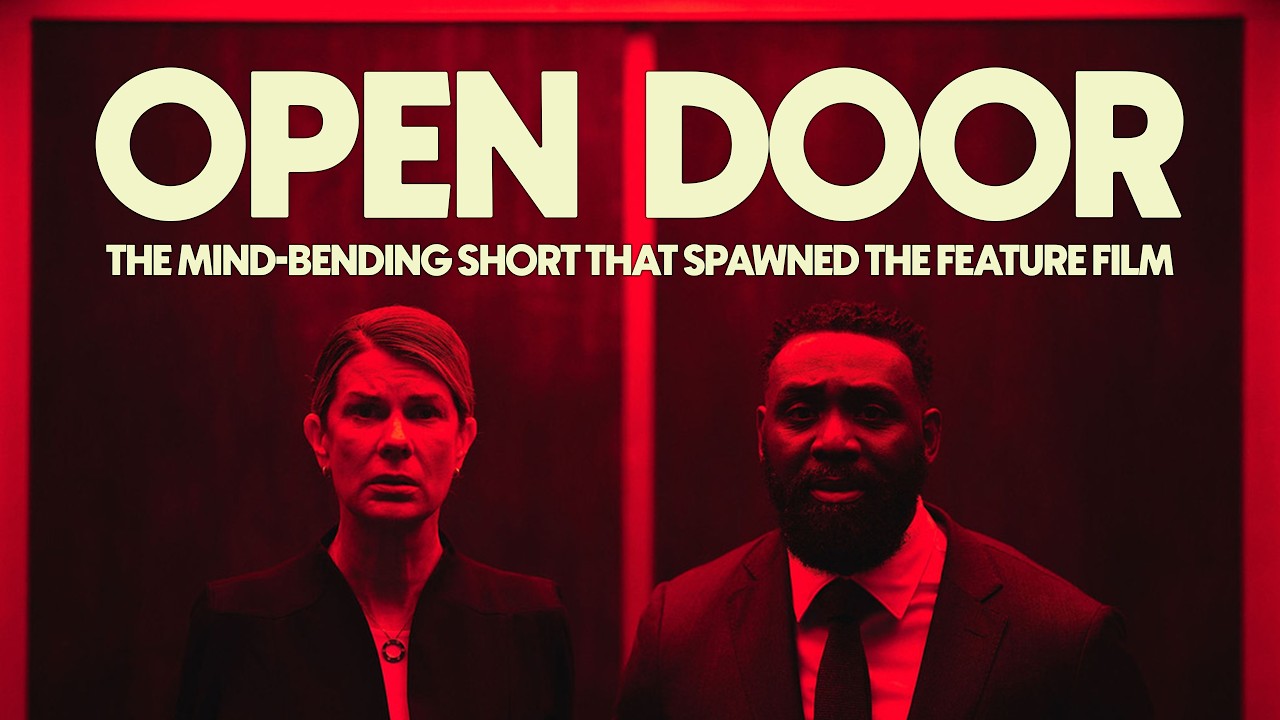
Why Creator Cinema Is Trending: Studios Are Mining The Internet For The Next Big Franchise
One of the most significant movie-industry trends of 2026 is the emergence of the Creator-To-Hollywood Pipeline—a movement where viral short films, YouTube creators, and social-first storytellers are increasingly becoming Hollywood’s newest source of intellectual property.
The development deal for Open Door demonstrates how the traditional path to filmmaking is rapidly changing. In previous decades, creators often needed film-school credentials, agency representation, festival recognition, or studio relationships to secure development opportunities. Today, millions of views, a dedicated fan community, and proven audience demand can achieve the same outcome. A short sci-fi film lasting only a few minutes can now function as a proof-of-concept for a feature-length franchise.
What makes this trend especially important is that studios are no longer simply buying stories—they are buying audiences. Viral projects arrive with built-in communities, proven engagement metrics, and evidence that consumers already care about the concept. In a high-risk entertainment environment, audience validation has become almost as valuable as the intellectual property itself.
At the same time, creators are becoming modern franchise incubators. Platforms such as YouTube, TikTok, and Instagram increasingly function as testing grounds where ideas can prove market demand before significant production investment occurs.
Trend Overview: Creator-To-Hollywood Pipeline Accelerating
➡️ implication: Audience validation increasingly replaces traditional gatekeeping.
➡️ implication: Creators increasingly become talent pipelines.
➡️ implication: Consumer demand increasingly shapes development decisions.
➡️ implication: Early fandom increasingly drives movie momentum.
➡️ implication: Digital engagement increasingly predicts investment decisions.
Trend Description: How Creator Cinema Is Reshaping Hollywood
-
Context — YouTube growth, creator economies, viral storytelling, indie filmmaking, fandom culture, and content democratization accelerated the movement.
➡️ implication: Entertainment creation increasingly decentralizes.
-
How it works — Creators release short-form concepts online, audiences validate them through engagement, and studios evaluate commercial potential.
➡️ implication: Viewership increasingly functions as market testing.
-
Key drivers — Creator credibility, audience ownership, lower development risk, fandom participation, and viral distribution accelerated the trend.
➡️ implication: Community increasingly drives content investment.
-
Why it spreads — Creator-To-Hollywood Pipeline combines authenticity, audience demand, creator trust, and scalable storytelling into one highly attractive entertainment ecosystem.
➡️ implication: Proven engagement increasingly drives greenlights.
-
Where it is seen — YouTube shorts, TikTok storytelling, indie sci-fi communities, horror fandoms, creator ecosystems, and streaming-platform acquisitions.
➡️ implication: Digital platforms increasingly shape film development.
-
Key Players & Innovators — Kevin Cate, Open Door, YouTube filmmakers, creator-led production companies, and social-first storytelling communities are helping define the movement.
➡️ implication: Independent creators increasingly become entertainment entrepreneurs.
-
Future — Creator Cinema may increasingly expand into creator-owned franchises, YouTube-to-streaming adaptations, community-funded films, and social-first intellectual-property ecosystems.
➡️ implication: Hollywood increasingly discovers its next franchises online.
Insight: Views Are Becoming The New Studio Pitch
-
The rise of Creator-To-Hollywood Pipeline reflects the emergence of creator-led, community-validated, and audience-driven entertainment ecosystems rooted in authenticity, participation, and proven demand.
-
Audiences increasingly seek projects that feel discovered, community-supported, and creator-driven rather than purely studio manufactured.
-
Movie development is evolving toward viral proof-of-concept filmmaking, social audience validation, creator entrepreneurship, and internet-native intellectual property creation.
-
The movement succeeds because it combines creator trust, fandom participation, viral reach, low-risk testing, and scalable storytelling into powerful entertainment ecosystems.
-
The future of movie development may increasingly depend on building creator pipelines, community-first franchises, and audience-validated intellectual property ecosystems rooted in engagement rather than gatekeeping.
Implication: The success of Open Door demonstrates that Hollywood is increasingly treating viral attention as market research, transforming YouTube views into development deals and turning creators into the industry’s newest franchise builders.
Why Creator-To-Hollywood Pipeline Is Exploding: Audience Validation, Creator Trust, and Franchise Hunting Converging
Studios Increasingly Want Proof Of Demand Before Taking Creative Risks
The rise of the Creator-To-Hollywood Pipeline reflects how entertainment companies are adapting to a more uncertain media environment. With rising production costs and increasing competition for audience attention, studios are under pressure to reduce risk. Viral creator projects provide something traditional development often cannot: real-world evidence that audiences are already interested.
Instead of relying solely on executive instincts, studios can now observe millions of views, comments, shares, fan theories, and community engagement before making investment decisions. Projects such as Open Door demonstrate how audience behavior increasingly functions as a market-validation mechanism. The internet effectively becomes a testing laboratory for future film franchises.
At the same time, audiences increasingly trust creators because they feel closer to them. Viewers often follow creators for years before they become mainstream successes, creating emotional investment that traditional Hollywood productions frequently struggle to replicate.
Elements Driving the Trend: Audience Validation Reshaping Movie Development
• Driver 1: Studio Risk Reduction Growing➡️ Studios increasingly seek projects with proven audience demand.
• Driver 2: Creator Trust Expanding➡️ Audiences increasingly support creators they have followed over time.
• Driver 3: Built-In Fandoms Increasing➡️ Viral projects increasingly arrive with established communities.
• Driver 4: Platform Discovery Accelerating➡️ Social platforms increasingly function as talent-discovery engines.
• Driver 5: Franchise Demand Growing➡️ Studios increasingly search for scalable intellectual property.
Virality of Trend: Every Viral Short Becoming A Potential Franchise
The trend spreads because creators increasingly see examples of internet projects transitioning into professional filmmaking opportunities. Each successful adaptation creates a new blueprint for others to follow.
At the same time, audiences actively participate in amplifying projects they believe deserve larger adaptations.
➡️ implication: Community advocacy increasingly influences development opportunities.
Consumer Reception: Audiences Embracing Creator-Led Entertainment
Consumers respond positively because creator-led projects often feel fresher, more original, and less constrained by traditional studio formulas.
➡️ implication: Authenticity increasingly drives entertainment appeal.
Consumers also enjoy supporting creators whose success feels earned rather than manufactured.
➡️ implication: Creator journeys increasingly become part of the story.
At the same time, audiences appreciate being early supporters of projects before mainstream recognition arrives.
➡️ implication: Cultural discovery increasingly drives fandom participation.
Consumer Description: Discovery-Driven Entertainment Fans
These consumers are highly engaged with YouTube creators, TikTok storytellers, indie filmmakers, fandom communities, streaming culture, and internet-native entertainment ecosystems. They increasingly seek projects that feel original and community-driven.
➡️ implication: Entertainment increasingly functions as cultural discovery.
Rather than waiting for studio marketing campaigns, these audiences actively search for emerging creators and niche content.
➡️ implication: Discovery increasingly shapes consumption habits.
Demographics: Digital-Native Entertainment Explorers
These audiences are primarily Gen Z, younger Millennials, creator followers, gaming communities, sci-fi fans, indie-film audiences, and digital-first consumers.
Gender: Broad participation across entertainment communities
Income: Mainstream entertainment consumers
Education: Digitally connected and creator-focused audiences
Lifestyle: Consumers Turning Discovery Into Entertainment
These consumers spend significant time exploring YouTube, TikTok, streaming platforms, creator channels, gaming communities, and fandom discussions.
Viewing behavior: Heavy engagement with creator content, indie films, short-form storytelling, sci-fi concepts, and online entertainment communities
Media behavior: Active across YouTube, TikTok, Reddit, Discord, Letterboxd, Twitch, and streaming platforms
Lifestyle habits: Following creators, discussing fandoms, discovering emerging talent, sharing recommendations, and participating in online communities
Decision drivers: Originality, creator credibility, cultural relevance, and community engagement
Values: Creativity, authenticity, innovation, participation, and discovery
Expectation shift: Preference for audience-validated concepts over purely studio-developed projects
Consumer Motivation: Seeking Discovery, Authenticity, and Participation
• Supporting creators they trust➡️ Consumers increasingly follow creators across multiple projects.
• Discovering entertainment early➡️ Audiences increasingly value being first to identify emerging talent.
• Participating in fandom growth➡️ Communities increasingly help build cultural momentum.
• Seeking fresh storytelling➡️ Consumers increasingly reward originality and experimentation.
Why Trend Is Growing: Creator Culture, Audience Validation, and Studio Economics Aligning Simultaneously
The trend is gaining popularity because it combines creator credibility, audience demand, fandom participation, and commercial validation into one scalable entertainment ecosystem.
• Emotional driver: Desire for cultural discovery➡️ Consumers increasingly enjoy finding new creators before mainstream success.➡️ This strengthens creator-led entertainment.
• Industry context: Rising production risk➡️ Studios increasingly seek projects with proven audiences.➡️ This accelerates creator-to-Hollywood pathways.
• Audience alignment: Consumers immersed in creator ecosystems➡️ Creator culture increasingly influences entertainment consumption.➡️ This naturally supports viral-to-feature adaptations.
• Motivation alignment: Desire for authenticity and originality➡️ Audiences increasingly reward creator-driven storytelling.➡️ This expands creator cinema ecosystems.
Insight: Hollywood Is Outsourcing Its R&D To The Internet
-
The Creator-To-Hollywood Pipeline reflects the rise of creator-led, community-validated, and audience-driven entertainment ecosystems rooted in authenticity, participation, and proven demand.
-
The trend scales because audiences increasingly seek discovered, community-supported, and creator-driven projects rather than purely studio-manufactured content.
-
The value lies in combining creator trust, fandom participation, viral reach, audience validation, and scalable storytelling into powerful entertainment ecosystems.
-
The implication is a future where social platforms increasingly function as Hollywood’s development pipeline, identifying talent and intellectual property before traditional studios do.
-
It reveals that modern entertainment increasingly rewards authenticity, community engagement, creator credibility, cultural discovery, and audience participation over traditional gatekeeping models.
Trends 2026: Creator Cinema and Audience-Validated IP Reshaping Hollywood’s Development Model
The Next Generation Of Franchises Is Being Built Online Before Hollywood Arrives
The rise of the Creator-To-Hollywood Pipeline reflects a broader transformation where intellectual property increasingly emerges from internet communities rather than traditional studio development systems. Projects such as Open Door demonstrate that creators can now build audiences, validate concepts, generate fandoms, and prove commercial viability before engaging with Hollywood.
At the same time, studios are increasingly shifting from discovering ideas to acquiring momentum. Rather than investing heavily in untested concepts, entertainment companies increasingly prefer projects that have already demonstrated audience demand. The result is a movie ecosystem where engagement metrics, community participation, and creator credibility increasingly influence which stories become feature films.
Trend Elements: Creator Cinema Reshaping Hollywood
• Audience-validated IP➡️ Projects increasingly prove demand before studio involvement.
• Creator-to-director pathways➡️ Digital storytellers increasingly transition into mainstream filmmaking.
• Proof-of-concept filmmaking➡️ Short-form content increasingly functions as franchise testing.
• Community-powered development➡️ Audiences increasingly influence which stories get expanded.
• Social-platform talent discovery➡️ Platforms increasingly function as filmmaker incubators.
• Internet-born franchises➡️ Online concepts increasingly evolve into commercial IP.
• Low-risk content acquisition➡️ Studios increasingly acquire proven engagement rather than speculative ideas.
• Fandom-driven momentum➡️ Communities increasingly create commercial value.
• Creator-owned storytelling ecosystems➡️ Independent creators increasingly retain influence over adaptations.
• Digital-first entertainment development➡️ Online engagement increasingly shapes production decisions.
Trend Table: Creator-To-Hollywood Pipeline Reshaping Entertainment
|
Creators becoming mainstream filmmakers |
Talent discovery increasingly decentralizes |
|
|
Projects proving demand before investment |
Studios increasingly reduce development risk |
|
|
Online stories becoming major film properties |
Social platforms increasingly generate IP |
|
|
Proof-of-Concept Filmmaking |
Shorts functioning as development tools |
Viral content increasingly becomes pitch material |
|
Community-Powered Development |
Audiences helping determine future projects |
Engagement increasingly shapes investment |
|
Filmmakers building businesses around audiences |
Creators increasingly control distribution pathways |
|
|
Social networks functioning as talent incubators |
Discovery increasingly moves online |
|
|
Communities driving franchise growth |
Participation increasingly creates value |
|
|
Digital-Native Storytelling |
Internet aesthetics influencing cinema |
Online culture increasingly shapes filmmaking |
|
Engagement-Driven Greenlights |
Metrics influencing development decisions |
Audience behavior increasingly guides investment |
Summary of Trends: Hollywood Becoming An Audience-Validation Business
• Main Trend: Creator Cinema — Digital creators increasingly becoming mainstream entertainment producers.
• Social Trend: Cultural Discovery Participation — Audiences helping identify future entertainment successes.
• Industry Trend: Audience-Validated IP — Studios investing in concepts with proven engagement.
• Main Strategy: Community-Led Development — Building projects around demonstrated demand.
• Main Consumer Motivation: Supporting Emerging Creators — Audiences seeking authenticity and discovery.
Cross-Industry Expansion: Audience Validation Expanding Beyond Film
The audience-validation model shaping Creator Cinema increasingly influences publishing, gaming, music, podcasts, education, and consumer products. Consumers increasingly determine winners before institutions make investments.
At the same time, creator economies are shifting power away from traditional gatekeepers. Communities increasingly function as talent scouts, marketers, investors, and validation mechanisms. The same dynamics helping Open Door secure a development deal are reshaping how innovation spreads across industries.
Expansion Factors: Creator Economies Reshaping Entertainment
• YouTube-to-film pipelines➡️ Creators increasingly may move directly into feature filmmaking.
• TikTok-originated intellectual property➡️ Short-form concepts increasingly may become long-form franchises.
• Creator-owned studios➡️ Independent creators increasingly may build production companies.
• Community-funded development➡️ Audiences increasingly may support projects before studio involvement.
• Cross-platform storytelling ecosystems➡️ Narratives increasingly may move between formats and platforms.
• Engagement-based talent scouting➡️ Entertainment companies increasingly may recruit based on audience performance.
• Digital-native franchise creation➡️ Internet culture increasingly may generate blockbuster IP.
• Audience-participation marketing➡️ Communities increasingly may drive awareness organically.
• Creator-driven entertainment brands➡️ Personal audiences increasingly may become commercial assets.
• Social-first content incubation➡️ Platforms increasingly may function as development laboratories.
Insight: Engagement Is Becoming Hollywood’s New Currency
1. Audience Validation Is Replacing Speculation: Studios increasingly prefer projects with demonstrated demand rather than relying solely on internal predictions.
2. Creators Are Becoming Franchise Founders: Digital storytellers increasingly function as the first stage of franchise development.
3. Communities Are Becoming Talent Scouts: Audiences increasingly determine which creators and stories deserve larger platforms.
4. Social Platforms Are Becoming Film Schools: YouTube, TikTok, and creator ecosystems increasingly develop the next generation of filmmakers.
5. Views Are Becoming Investment Signals: Engagement metrics increasingly function as proof of commercial viability.
Implication: The biggest shift behind Open Door is not simply a viral short becoming a movie—it is the emergence of Audience-Validated Entertainment, where community engagement increasingly determines which ideas become Hollywood’s next franchises.
Innovation Opportunities: How Studios Can Build Creator-Led Franchise Ecosystems
The Future Of Hollywood May Start With A YouTube Upload
The rise of the Creator-To-Hollywood Pipeline demonstrates that the entertainment industry is increasingly shifting from a gatekeeper model to a validation model. Rather than deciding what audiences should watch, studios increasingly observe what audiences are already watching. Viral projects like Open Door show how creators can develop concepts, test engagement, build communities, and generate demand before a studio invests a single dollar.
At the same time, creators are becoming more than content producers. They are increasingly functioning as intellectual-property incubators, franchise architects, marketers, and community builders. This creates a new entertainment landscape where audience attention becomes one of the most valuable development assets available.
Innovation Directions: Creator Cinema Reshaping Entertainment Strategy
• Creator-incubator programs➡️ Studios increasingly may establish formal pathways for digital creators to develop feature films.
• Short-to-feature development pipelines➡️ Viral shorts increasingly may become the standard proof-of-concept format for future movies.
• Audience-validation platforms➡️ Engagement metrics increasingly may influence greenlight decisions.
• Creator-owned franchise ecosystems➡️ Filmmakers increasingly may retain creative influence across multiple adaptations.
• Community-powered development models➡️ Fan engagement increasingly may shape story expansion and world-building.
• Cross-platform storytelling universes➡️ Stories increasingly may originate on social platforms before expanding into film, gaming, and streaming.
• Digital-native talent recruitment➡️ Studios increasingly may scout creators rather than traditional industry entrants.
• Real-time audience testing➡️ Internet communities increasingly may function as development focus groups.
• Independent IP acceleration➡️ Small creator projects increasingly may scale into global entertainment properties.
• Creator-community monetization ecosystems➡️ Audiences increasingly may become long-term participants in franchise growth.
Summary of the Trend
• Main Trend: Creator-To-Hollywood Pipeline — Viral creators increasingly becoming mainstream filmmakers.
• Social Trend: Cultural Discovery Participation — Audiences actively identifying and promoting emerging entertainment.
• Industry Trend: Audience-Validated IP — Studios increasingly investing in concepts with demonstrated engagement.
• Main Strategy: Community-Led Franchise Development — Building entertainment properties around proven fandoms.
• Main Consumer Motivation: Supporting Authentic Creators — Audiences increasingly rewarding originality and creator ownership.
Summary of the Trend
• Trend Name: Creator-To-Hollywood Pipeline
• Trend Description: Social-media creators and viral filmmakers increasingly transforming online concepts into mainstream entertainment franchises.
• Consumer Driver: Desire for authenticity, discovery, participation, and creator-led storytelling.
• Industry Driver: Need for lower-risk intellectual-property development and proven audience demand.
• Key Enablers: YouTube, TikTok, creator economies, fandom communities, viral distribution, and engagement analytics.
• Most Important Beneficiaries: Independent filmmakers, creators, streaming platforms, studios, production companies, and audience communities.
• Growth Potential: Very High — Hollywood’s talent-discovery model is increasingly shifting toward creator ecosystems.
• Future Outlook: Creator-developed intellectual property increasingly may become one of the dominant sources of future film franchises.
Conclusion
Insights: The Creator-To-Hollywood Pipeline reflects the rise of creator-led, community-validated, and audience-driven entertainment ecosystems where viral engagement increasingly functions as proof of commercial demand. Industry Insight: Studios increasingly compete through their ability to identify, acquire, and scale internet-native intellectual property before competitors do. Consumer Insight: Audiences increasingly seek creator-driven, authentic, and community-supported stories that feel discovered rather than manufactured. Social Insight: Entertainment culture increasingly rewards participation, early discovery, creator loyalty, and fandom involvement over traditional top-down entertainment models. Cultural/Brand Insight: The future of Hollywood may increasingly depend on building relationships with creators and communities rather than relying exclusively on internal development pipelines. Final Take: The biggest trend behind Open Door is not simply a viral YouTube short becoming a feature film—it is the emergence of Audience-Validated Franchise Creation, where creators build the audience first, and Hollywood arrives second. In this new model, views are becoming pitches, fandoms are becoming investors, and community engagement is becoming the industry’s most valuable currency.





Leave a Reply