
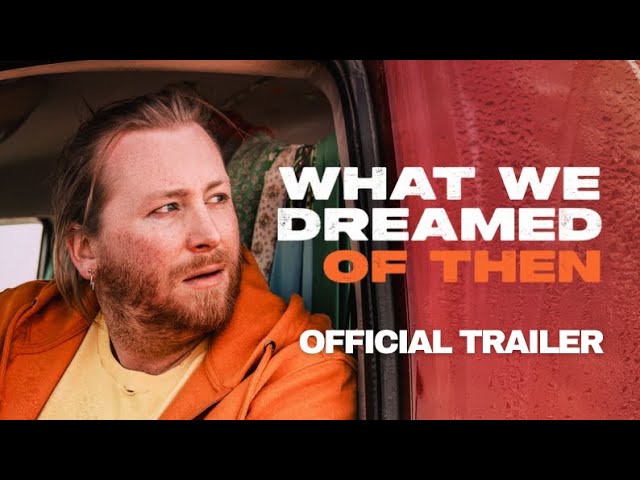
A swim coach, a van, and everything a man refuses to let anyone see
Gideon is a passionate swim coach and a devoted father to his daughter Faith — and he is secretly homeless, living out of his van in Saint John, New Brunswick. Set across two parallel timelines spanning the early COVID-19 lockdowns and their aftermath, the film follows his deepening isolation, his unlikely bond with Navleen who faces her own housing precarity, and the quiet battle to hold on to a version of himself his daughter can still be proud of.
Why It Is Trending: Atlantic Canada’s Housing Crisis Gets Its Most Human Portrait
The largest English-spoken film to be shot in New Brunswick in more than a decade, What We Dreamed of Then was funded by the governments of New Brunswick and Nova Scotia alongside Screen Nova Scotia and Telefilm Canada — a production whose existence is itself a signal of how seriously Atlantic Canada’s film infrastructure has begun to take its own stories. World premiering at the 2025 Atlantic International Film Festival, the film was also partnered with the Nova Scotia Human Rights Commission as part of their Human Rights on Screen series, with Canada’s Federal Housing Advocate among the panel participants at its premiere screening. It is part of a vibrant, often overlooked stratum of Canadian cinema: the Telefilm-supported, regionally rooted feature film that plays small theatrical runs and festivals before quietly landing on streaming. Its semi-autobiographical foundation — Taylor Olson working from his own script — gives the social subject matter the same authority that Caravan drew from Kirchnerová’s lived experience.
Elements Driving the Trend: It would be easy to read What We Dreamed of Then as a simple social-issue drama about homelessness and leave it there. Olson offers something more intimate — taking the headlines about affordability, precarious work, and families just trying to get by, and filtering them through one ordinary household. The dual timeline structure — moving between Gideon’s present crisis and the recent past that produced it — gives the narrative both thriller momentum and the depth of a character study. We see very clearly how desperation prompts Gideon to do things that would have ordinarily never crossed his mind, and how he becomes more and more invisible and expendable to society as he slips through its cracks. The pandemic backdrop is not a gimmick but a structural argument: lockdowns made invisible homelessness more invisible still.
Virality: The Silver Wave Film Festival opened with the film as its gala feature, and word-of-mouth among Atlantic Canadian audiences has been strong since the AIFF premiere. The Human Rights Commission partnership and Nova Scotia government backing gave the film unusual institutional visibility for a CA$1.3M production.
Critics Reception: A powerful and heart-rending film from one of Halifax’s most prolific and celebrated filmmakers, according to The Way I See It Theatre & Music Blog. Taylor Olson’s third feature blends personal insight with timely social relevance, shining a light on invisible homelessness with quiet urgency, per the AIFF programme. One critic review confirmed at time of writing, with broader critical engagement expanding through the Maritime theatrical tour.
Awards and Recognitions: 4 wins and 2 nominations total. World premiere Atlantic International Film Festival, September 12, 2025. Silver Wave Film Festival Opening Gala. Canadian theatrical release February 12, 2026.
What We Dreamed of Then arrives as Canada’s housing crisis has reached a generational peak — the film’s subject matter is not historical but present-tense for millions of Canadians navigating the gap between working incomes and liveable housing costs. For the industry, it demonstrates that Atlantic Canadian cinema can produce socially urgent, formally confident drama on modest budgets with regional government support — and reach theatrical audiences willing to see their own communities on screen.
What Movie Trend Is Followed: The Invisible Homelessness Drama Makes the Hidden Visible
A growing body of North American social realist cinema is turning its attention to the working homeless — people who hold jobs, maintain relationships, and keep their housing precarity entirely hidden from the people who depend on them. Gideon’s fall isn’t precipitated by drug addiction or mental health issues, the usual assumptions of those living with homelessness. That deliberate subversion of expectation is the film’s most important social argument: invisible homelessness does not look like what we assume, and the people experiencing it are indistinguishable from the people around them — until they aren’t. In the vein of films like The Florida Project and American Honey, What We Dreamed of Then follows the day-to-day life of Gideon as he faces logistical, existential, and emotional struggles related to invisible homelessness.
Trend Drivers: A Filmmaker Who Plays His Own Most Vulnerable Character Olson is drawn to characters who have good values at their core but are very flawed — people who work against their own self-interest, because so many people do. The decision to play Gideon himself rather than cast a name actor gives the character’s specificity — the queer identity Olson built into the role after consulting queer friends and peers who said simply, “No, no, he’s queer. Just let him be queer” — an autobiographical weight that casting could not replicate. The non-linear structure positions the film formally alongside prestige social drama while keeping its Atlantic Canadian regional identity fully intact. The compounding small kindnesses of the narrative — particularly Navleen’s presence — give the film emotional momentum without false redemptive resolution.
What Is Influencing Trend: Canada’s housing affordability crisis has made housing precarity a mainstream political subject for the first time in a generation, creating an audience actively seeking stories that give the crisis a human face. Atlantic Canadian cinema is experiencing a revival through exactly the kind of regionally specific, socially grounded filmmaking that What We Dreamed of Then represents. The invisible homelessness subject matter — people who work, parent, and participate in community life while secretly having no home — is one of the least-represented experiences in mainstream dramatic cinema.
Macro Trends Influencing: Housing affordability is the defining domestic policy crisis in Canada, with working families in major and secondary cities alike navigating the gap between income and rent. The pandemic’s disruption of informal support networks — the social fabric that catches people before they fall entirely — is now producing the stories of those who fell during the lockdowns and are still falling. Documentary and dramatic formats are converging around housing precarity as a subject: the Nova Scotia Human Rights Commission’s involvement signals institutional recognition that this story needs cultural amplification.
Consumer Trends Influencing: Atlantic Canadian audiences are actively supporting regionally produced cinema in ways that translate directly to word-of-mouth theatrical attendance — the Maritime touring model the film is using works because the community it depicts is watching. The Telefilm Canada support and interprovincial co-production model gives the film access to national streaming platforms that will extend its reach well beyond its regional theatrical run. Queer representation of working-class and housing-precarious characters remains underrepresented in Canadian drama — the film’s matter-of-fact inclusion of Gideon’s queerness without making it the story is its own cultural statement.
Audience Analysis: Atlantic Canadians, Housing-Precarity Survivors, and Anyone Who Has Hidden Something Shameful From People They Love The core audience is 25–55 — Atlantic Canadians who recognise the landscape and the specific economic pressures of the region, supplemented by national audiences drawn to the social subject matter and the Parveen Kaur casting. The audience is left thinking even more about the people who still live in real tent encampments in our communities than the fictional people whose story we have just been immersed in — which is the exact effect serious social drama should produce. The dual timeline structure rewards patient viewers who want to understand how an ordinary family arrives at crisis. The queer identity layered into Gideon’s character gives LGBTQ+ audiences a working-class, non-urban, non-crisis-centred queer protagonist of a kind rarely seen in Canadian cinema.
What We Dreamed of Then works because Gideon is not exceptional — every unhoused person has a story worth hearing, worth knowing and understanding, and receiving with compassion and empathy. That conviction is the film’s moral foundation, and it gives every scene the weight of something at stake beyond any single character’s outcome.
Final Verdict: What We Dreamed of Then Is a Quietly Urgent, Emotionally Precise, and Socially Essential Atlantic Canadian Drama That Deserves a National Audience
Taylor Olson delivers his most ambitious and most personal film — a social drama that refuses the easy sentimentality and crisis-focused framing that most homelessness narratives fall into, and replaces them with a fully inhabited portrait of one ordinary man’s extraordinary concealment. In its wide frames and cramped interiors, its emptied-out streets and crowded memories, What We Dreamed of Then asks us to see not just a man in a van, but everything he has lost on the way there. The performances are excellent, the dual timeline structure is controlled, and the social argument is made through character rather than statement.
Audience Relevance: For Anyone Who Has Ever Kept a Devastating Secret From the People They Love Most Gideon’s invisible homelessness is also an invisible shame — and the film understands that the social stigma of housing precarity is itself part of the crisis. His refusal to tell his estranged wife and daughter is not pride but terror: the fear that the revelation will cost him the last relationships that make the situation survivable.
That combination of practical crisis and emotional concealment is what makes the film feel true — it is not about homelessness as an abstract social problem but about what it costs a specific person to experience it while pretending he isn’t.
What Is the Message: The Cracks in Society Are Ordinary People, Not Exceptions Olson doesn’t try to give Gideon’s story an easy fix because in reality there is so rarely one easy fix. The film’s refusal of redemptive resolution is its most politically honest quality — housing precarity is a structural problem that individual resilience cannot solve, and the film knows it. The small acts of kindness — Navleen’s friendship, a student’s warmth — are not presented as solutions but as the human texture that makes survival possible while the larger problem remains.
The film leaves its audience thinking about the real tent encampments in their own communities — which is exactly what a socially urgent film should do.
Relevance to Audience: Atlantic Canada Recognises Itself on Screen Saint John, New Brunswick is not a backdrop but a character — the specific economic pressures of Atlantic Canada, the specific texture of its working-class neighbourhoods, and the specific way the pandemic emptied and transformed its communities are all present and precisely observed. For Atlantic Canadian audiences, the film offers the rare experience of seeing their own reality treated with cinematic seriousness.
For national and international audiences, the regional specificity is a strength rather than a limitation — a film this honest about a specific place is more universally legible, not less.
Social Relevance: Invisible Homelessness, Finally Named Amid an ongoing housing crisis, stories from the perspective of individuals experiencing housing precarity are central to our understanding of the complex challenges facing Canadians — including circumstance, stigma, and the systems involved in providing support and access to safe, attainable housing. The film’s institutional partnerships — Human Rights Commission, Telefilm, provincial government funding — signal that the homelessness crisis has reached a point where cultural production is being treated as part of the public response.
The pandemic timing is not incidental — the film documents how crisis accelerates the conditions that were already pushing ordinary families toward the edge.
Performance: Olson Carries the Film With Lived-In Vulnerability Olson creates a really loveable, goofy, and flawed person in Gideon, who is pushed to his breaking point under tremendous stress and responds in ways that feel entirely comprehensible rather than dramatically convenient. Parveen Kaur’s Navleen — another person navigating housing precarity, another life kept partly hidden — gives the film its most important supporting relationship: two people who can only partially be honest with each other because full honesty would cost them something they need.
Christie Burke, Hugh Thompson, and the ensemble of Atlantic Canadian actors give the film’s community world an authenticity that imported productions cannot achieve.
Legacy: A Film That Will Matter to Atlantic Canada for Years What We Dreamed of Then will be remembered as the film that gave Atlantic Canada’s housing crisis its most complete and most humane dramatic portrait — and as the film that demonstrated what regionally funded, regionally rooted Canadian cinema can achieve when it trusts its own subject matter. It is part of a vibrant, often overlooked stratum of Canadian cinema that deserves more than quiet streaming discovery.
Olson’s work as writer, director, and lead actor here announces a filmmaker at full creative maturity — and the film he makes next will arrive with genuine national anticipation.
Success: Atlantic Festival Circuit, Human Rights Commission Partnership, Canadian Theatrical Release 4 wins and 2 nominations. World premiere Atlantic International Film Festival, September 12, 2025. Silver Wave Film Festival Opening Gala. Canadian theatrical release February 12, 2026. CA$1.3M budget. IMDb 7.7 from early viewers — a score that reflects genuine audience engagement rather than algorithmic inflation.
The film’s real commercial life will be built through Canadian streaming platforms — where the national audience for exactly this kind of socially urgent, regionally authentic drama is waiting.
Insights What We Dreamed of Then is the most honest Canadian film about housing precarity yet made — and it earns that honesty because its director has lived the story he is telling. Industry: The interprovincial Nova Scotia/New Brunswick co-production model, Telefilm support, and provincial government funding demonstrate that regionally rooted Atlantic Canadian cinema can produce socially urgent drama of genuine national relevance — a template worth replicating across underfunded regional film industries. Audience: The Atlantic Canadian audience for films that take their own communities seriously is proven and loyal — and the Human Rights Commission partnership gives the film discovery reach into institutional and community contexts that theatrical marketing cannot access. Social: Invisible homelessness — the experience of people who work, parent, and participate in community life while secretly having no home — is one of Canada’s least-represented social crises in dramatic cinema. What We Dreamed of Then gives it a face, a name, and the full dignity of a serious film. Cultural: Taylor Olson’s decision to play Gideon himself — to put his own body in the van, in the pool, in the pandemic streets of Saint John — is the defining cultural choice of the film. It is not a drama about homelessness. It is a drama that refuses to look away from the specific person experiencing it, and that refusal is what makes it matter.
What We Dreamed of Then is a film about a man in a van who is also a father, a coach, a partner, a queer person, and a community member — a film that insists all of those things remain true even when the van is all he has left.
Summary of What We Dreamed of Then: One Man’s Secret, One City’s Crisis, One Film That Refuses Easy Answers
-
Movie themes: Invisible homelessness, pandemic isolation, fatherhood under pressure, the shame of economic precarity, queer identity in working-class Atlantic Canada, and the compounding small kindnesses that make survival possible when the system cannot.
-
Movie director: Taylor Olson — Canadian Screen Award nominee, Halifax filmmaker, semi-autobiographical writer-director-actor — delivers his most personal and most accomplished feature, working from lived experience to produce social drama of genuine moral authority.
-
Top casting: Olson’s performance as Gideon is the film’s foundation — loveable, flawed, and entirely convincing under accumulating pressure. Parveen Kaur as Navleen provides the film’s most important relationship: two people who can only be partially honest with each other because full honesty costs too much.
-
Awards and recognition: 4 wins and 2 nominations. World premiere Atlantic International Film Festival, September 12, 2025. Silver Wave Film Festival Opening Gala. Canadian theatrical release February 12, 2026. Human Rights Commission partnership.
-
Why to watch: The most humane and most honest Canadian drama about housing precarity yet made — a film that replaces the usual crisis-narrative framing with a fully inhabited portrait of one ordinary man’s extraordinary concealment, set against the specific landscape of Atlantic Canada during COVID-19.
-
Key success factors: Semi-autobiographical authenticity plus precise non-linear structure plus Telefilm/provincial government support plus the AIFF platform — a combination that gives a deeply personal regional film the cultural standing it deserves.
-
Where to watch: Canadian theatrical release February 12, 2026 — Maritime regional tour including Saint John, Moncton, Fredericton, Halifax, then Toronto and Vancouver. Canadian streaming availability to follow.






Leave a Reply