
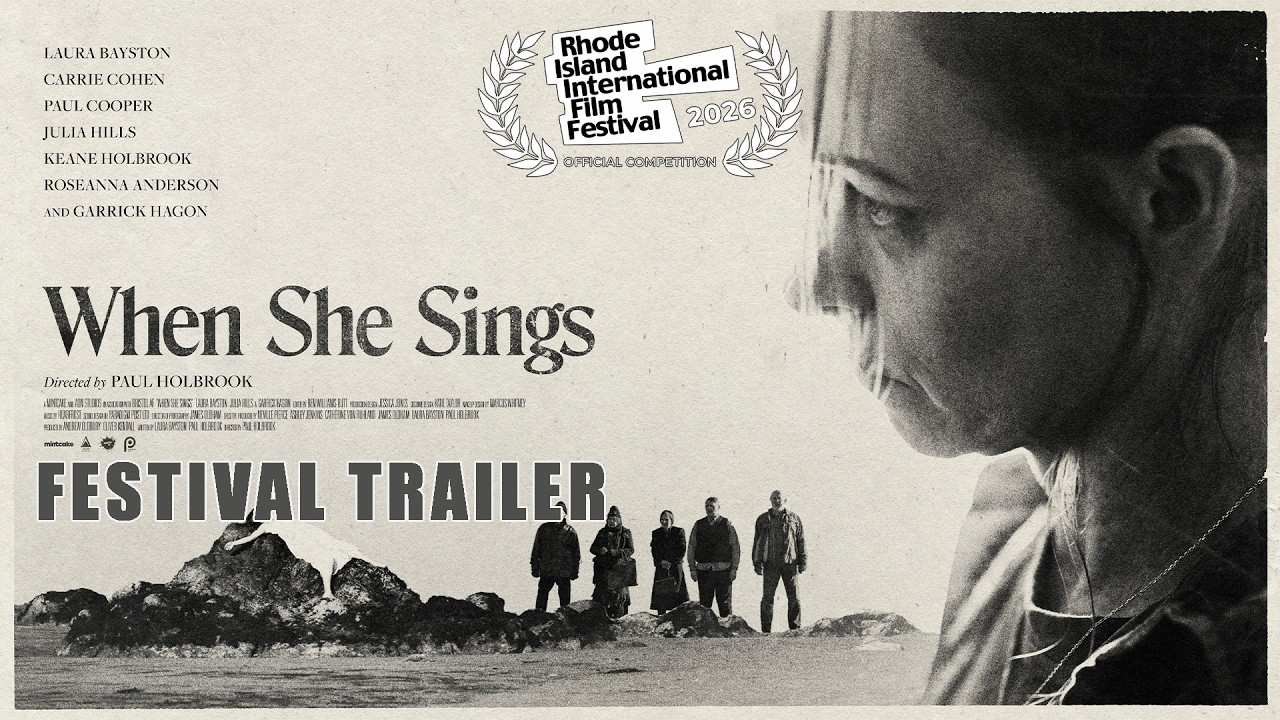
A Folk Horror Short Where Coastal Folklore Becomes Psychological Terror
Remote seaside towns have long provided fertile ground for British folk horror, where isolation, local superstition, and ancient legends merge into deeply unsettling stories. When She Sings embraces this tradition, transporting viewers to a bleak coastal community where myth is inseparable from everyday life. What begins as the story of a gifted artist gradually transforms into a haunting exploration of obsession, folklore, and the hidden darkness lurking beneath seemingly ordinary communities.
Directed by Paul Holbrook and written by Laura Bayston and Paul Holbrook, the British short film combines psychological horror with supernatural folklore. Rather than relying on conventional scares, the film builds an atmosphere of mounting unease through its eerie seaside setting, mysterious townspeople, and the recurring presence of a sinister mermaid whose haunting song blurs the line between imagination and reality.
Quick Facts: British Folk Horror Short
Genre: Short, Drama, Horror • Format: Short Film • Director: Paul Holbrook • Writers: Laura Bayston, Paul Holbrook • Main Cast: Laura Bayston, Garrick Hagon, Julia Hills, Paul Cooper, Roseanna Anderson • Production Companies: Bristol AF Productions, Mint Cake Productions • Country: United Kingdom • Language: English • Status: Completed • Estimated Budget: £36,000
Awards & Recognition
When She Sings has completed production and is preparing for its festival journey. While awards and festival selections have not yet been announced, the film brings together an experienced creative team known for independent British genre filmmaking. Its blend of coastal folklore, psychological horror, and atmospheric storytelling positions it as a strong candidate for horror-focused and international short film festivals.
What This Story Is Really About: The Monsters That Communities Create
Set in a bleak British seaside town, When She Sings follows a talented artist whose life is consumed by increasingly terrifying encounters with a sinister mermaid while strange members of the local community begin to reveal unsettling behavior. Rather than treating the supernatural as a simple external threat, the film suggests that the greatest danger may lie within the town itself, where folklore, fear, and collective belief shape reality.
The mysterious mermaid functions as more than a mythical creature. She appears to symbolize temptation, obsession, memory, and the psychological pull of the sea itself—an enduring element of British coastal folklore where the ocean often represents both beauty and destruction. As the artist becomes increasingly haunted by her presence, the surrounding townspeople transform into an equally disturbing force, creating uncertainty about whether the true horror is supernatural or deeply human.
By combining mythological imagery with psychological tension, When She Sings explores how isolated communities preserve ancient fears through stories that refuse to disappear. The result is a horror narrative driven less by violence than by atmosphere, ambiguity, and the unsettling feeling that some places never truly escape their past.
➡️ Key Takeaway: When She Sings uses British coastal folklore to examine how myth, isolation, and community can become sources of psychological horror.
Why This Short Film Matters Right Now: Folk Horror Continues to Thrive
In recent years, folk horror has experienced a significant resurgence as filmmakers increasingly turn to regional myths, rural traditions, and local folklore to create distinctive alternatives to conventional supernatural horror. Rather than relying on jump scares, these stories generate fear through atmosphere, landscape, and centuries-old cultural beliefs.
When She Sings reflects this movement by drawing upon Britain’s rich maritime folklore. The figure of the mermaid is presented not as a fairy-tale fantasy but as an unsettling symbol rooted in coastal legends, where the sea has long represented mystery, loss, and danger. By pairing this mythology with psychological storytelling, the film contributes to a new generation of independent horror that values mood, symbolism, and emotional unease over spectacle.
➡️ Key Takeaway: When She Sings demonstrates how contemporary folk horror continues to reinvent traditional myths through intimate, character-driven storytelling.
Why It Is Trending: Independent British Horror Embraces Local Mythology
Although still awaiting its festival premiere, When She Sings has attracted attention within independent horror circles because of its atmospheric premise and commitment to British folk traditions. Rather than imitating mainstream supernatural horror, the film embraces regional identity, using its coastal setting and unsettling local characters to create a distinctive sense of place.
The collaboration between Paul Holbrook and Laura Bayston also reflects the growing strength of independent British genre filmmaking, where modest budgets are increasingly paired with imaginative concepts and carefully crafted atmosphere. With an estimated production budget of £36,000, the film illustrates how independent creators continue producing visually ambitious horror through strong storytelling rather than large-scale effects.
➡️ Key Takeaway: When She Sings highlights the growing appeal of independent horror films that transform local folklore into emotionally resonant psychological cinema.
Short Film Trend: The Revival of Coastal Folk Horror
When She Sings belongs to the emerging trend of Coastal Folk Horror, where filmmakers draw upon maritime legends, isolated communities, and regional mythology to explore contemporary fears. Unlike traditional monster movies, these stories use supernatural folklore as a reflection of grief, identity, memory, and social isolation, allowing mythology to become both metaphor and narrative engine.
As audiences increasingly seek original horror experiences rooted in cultural tradition rather than franchise mythology, films like When She Sings demonstrate how regional folklore can provide fresh and deeply atmospheric storytelling. The film suggests that some of horror’s most compelling monsters are not newly invented—they have simply been waiting beneath the waves for generations.
➡️ Key Takeaway: When She Sings reflects the continuing revival of folk horror by transforming Britain’s coastal myths into an intimate and psychologically rich cinematic experience.
Why This Short Film Is Worth Discovering: Atmosphere Becomes the True Monster
What immediately distinguishes When She Sings from many contemporary horror shorts is its commitment to atmosphere over spectacle. Rather than relying on graphic violence or frequent jump scares, Paul Holbrook constructs an unsettling world where the environment itself becomes threatening. The empty coastline, the weathered streets, and the mysterious townspeople create an overwhelming sense of isolation, making every encounter feel increasingly unpredictable.
At the center of the story is an artist whose creative imagination gradually becomes intertwined with local folklore. As the haunting presence of the mermaid grows stronger, reality begins to feel unstable, inviting viewers to question whether the supernatural creature is real or a manifestation of psychological trauma. This ambiguity gives the film emotional depth while allowing its horror to linger long after the story ends.
The supporting characters further amplify the unease. Garrick Hagon’s enigmatic “The Creep,” Julia Hills’ unsettling “Godly Woman,” Paul Cooper’s “Greasy Fryer,” and Carrie Cohen’s “Old Fishwife” all appear less like ordinary townspeople and more like figures drawn from centuries-old folklore. Each encounter deepens the feeling that the entire community exists according to its own hidden rules, where outsiders are never truly welcome.
Visually, the film embraces Britain’s rugged coastal landscape as an essential storytelling element. Rather than serving as a backdrop, the sea becomes a living presence—beautiful, mysterious, and quietly terrifying. Combined with the eerie appearance of Roseanna Anderson’s mermaid, the imagery evokes the timeless atmosphere of classic British folk horror while maintaining a distinctly contemporary aesthetic.
➡️ Key Takeaway: When She Sings demonstrates how atmosphere, folklore, and psychological uncertainty can create horror that feels far more enduring than conventional scares.
What This Short Film Means for the Film Industry: Folk Horror Continues Its Independent Revival
Independent Filmmakers: Atmosphere Can Replace Expensive Visual Effects
When She Sings illustrates how compelling horror does not require a large production budget. Through careful cinematography, location choice, and sound design, independent filmmakers can create immersive worlds where mood becomes the primary source of fear.
British Horror: Regional Identity Is Becoming a Creative Strength
British genre cinema has increasingly embraced local folklore, regional history, and distinctive landscapes rather than imitating Hollywood horror formulas. When She Sings continues this movement by grounding its supernatural elements within Britain’s rich maritime traditions.
Short Films: Mythology Creates Instant World-Building
Short-form storytelling offers limited time for exposition, making established folklore particularly valuable. By drawing upon the familiar mythology of mermaids and isolated coastal communities, the film immediately creates a believable supernatural world without extensive explanation.
Horror Audiences: Psychological Ambiguity Is Replacing Simple Monsters
Modern horror increasingly encourages viewers to interpret events for themselves rather than providing clear answers. When She Sings embraces this ambiguity, allowing the mermaid to function simultaneously as a supernatural entity, psychological symbol, and representation of the community’s buried fears.
➡️ Key Takeaway: When She Sings reflects the growing success of independent horror that combines regional folklore with psychologically rich storytelling.
Future Outlook: Coastal Folklore Will Continue Inspiring Modern Horror
As audiences seek more original horror experiences, filmmakers are increasingly turning to regional myths and overlooked folklore instead of familiar supernatural franchises. Coastal legends, maritime ghost stories, and ancient sea myths offer rich material for contemporary horror because they connect timeless fears with recognizable landscapes and cultural traditions.
Films like When She Sings demonstrate how short-form cinema can serve as an important testing ground for innovative horror concepts. If the film enjoys a successful festival run, it could further encourage independent filmmakers to explore Britain’s extensive folklore through intimate, character-driven narratives rather than large-scale genre spectacles.
➡️ Key Takeaway: The future of folk horror lies in rediscovering local myths and presenting them through emotionally grounded, visually atmospheric storytelling.
Should You Watch It?: A Strong Choice for Fans of Atmospheric Horror
Best Suited For: Viewers Who Enjoy Slow-Burning Folk Horror
-
Fans of British folk horror and supernatural folklore.
-
Viewers who appreciate psychological horror over graphic violence.
-
Audiences interested in atmospheric independent short films.
-
Horror fans who enjoy ambiguous narratives that encourage interpretation.
May Not Appeal To: Those Seeking Fast-Paced Horror
-
Viewers expecting constant action or jump scares.
-
Audiences looking for creature-feature spectacle.
-
Those who prefer clearly explained supernatural mythology.
➡️ Key Takeaway: When She Sings is ideal for audiences who value atmosphere, symbolism, and unsettling psychological tension over conventional horror thrills.
Final Verdict: A Haunting Celebration of British Folk Horror
When She Sings transforms a simple supernatural premise into an evocative exploration of folklore, isolation, and psychological fear. Paul Holbrook combines striking coastal imagery with intimate storytelling, creating a short film that embraces the traditions of British folk horror while speaking to contemporary audiences drawn to more thoughtful genre cinema.
Its modest scale becomes one of its greatest strengths, allowing atmosphere, performances, and mythology to take precedence over spectacle. By treating the mermaid not simply as a monster but as a symbol of memory, obsession, and the unknowable power of the sea, the film achieves a level of emotional resonance uncommon within short-form horror.
For viewers who appreciate atmospheric storytelling and independent genre filmmaking, When She Sings promises to be a memorable addition to the continuing revival of modern folk horror.
These films explore similar themes of British folk horror, coastal folklore, psychological dread, and atmospheric supernatural storytelling. Listed from the newest available releases.
1. Rabbit Trap (2026) by Bryn Chainey
Set in rural Wales during the 1970s, Rabbit Trap follows a married couple whose lives are transformed after they encounter a mysterious child in the surrounding wilderness. Like When She Sings, it blends ancient folklore, unsettling landscapes, and psychological horror to create a haunting slow-burn experience.
2. The Severed Sun (2025) by Dean Puckett
This British folk horror explores isolated communities, religious extremism, and pagan traditions. Its eerie atmosphere, remote setting, and mythological themes make it one of the closest modern companions to When She Sings.
3. Starve Acre (2024) by Daniel Kokotajlo
Set in rural England during the 1970s, Starve Acre combines ancient folklore, grief, and supernatural horror into a deeply unsettling psychological experience. Like When She Sings, it treats folklore as an emotional force rather than simply a source of monsters.
➡️ Viewing Beyond When She Sings: If you enjoyed the film’s blend of coastal mythology, psychological ambiguity, and slow-building dread, these three titles offer some of the strongest recent examples of modern folk horror, each approaching ancient legends through a contemporary cinematic lens.
Viewing Recommendation: Essential for Fans of Contemporary Folk Horror
When She Sings is highly recommended for viewers who appreciate atmospheric horror rooted in mythology and regional identity. Fans of films such as The Lighthouse, The Witch, Enys Men, and Men will likely enjoy its emphasis on symbolism, landscape, and psychological ambiguity.
Those seeking a horror short that prioritizes atmosphere, folklore, and emotional tension over spectacle will find a compelling example of modern independent British genre filmmaking. Rather than simply telling a ghost story, When She Sings explores how ancient myths continue to shape the fears of contemporary communities, proving that some legends never truly disappear—they simply wait for someone willing to listen when they sing.






Leave a Reply