

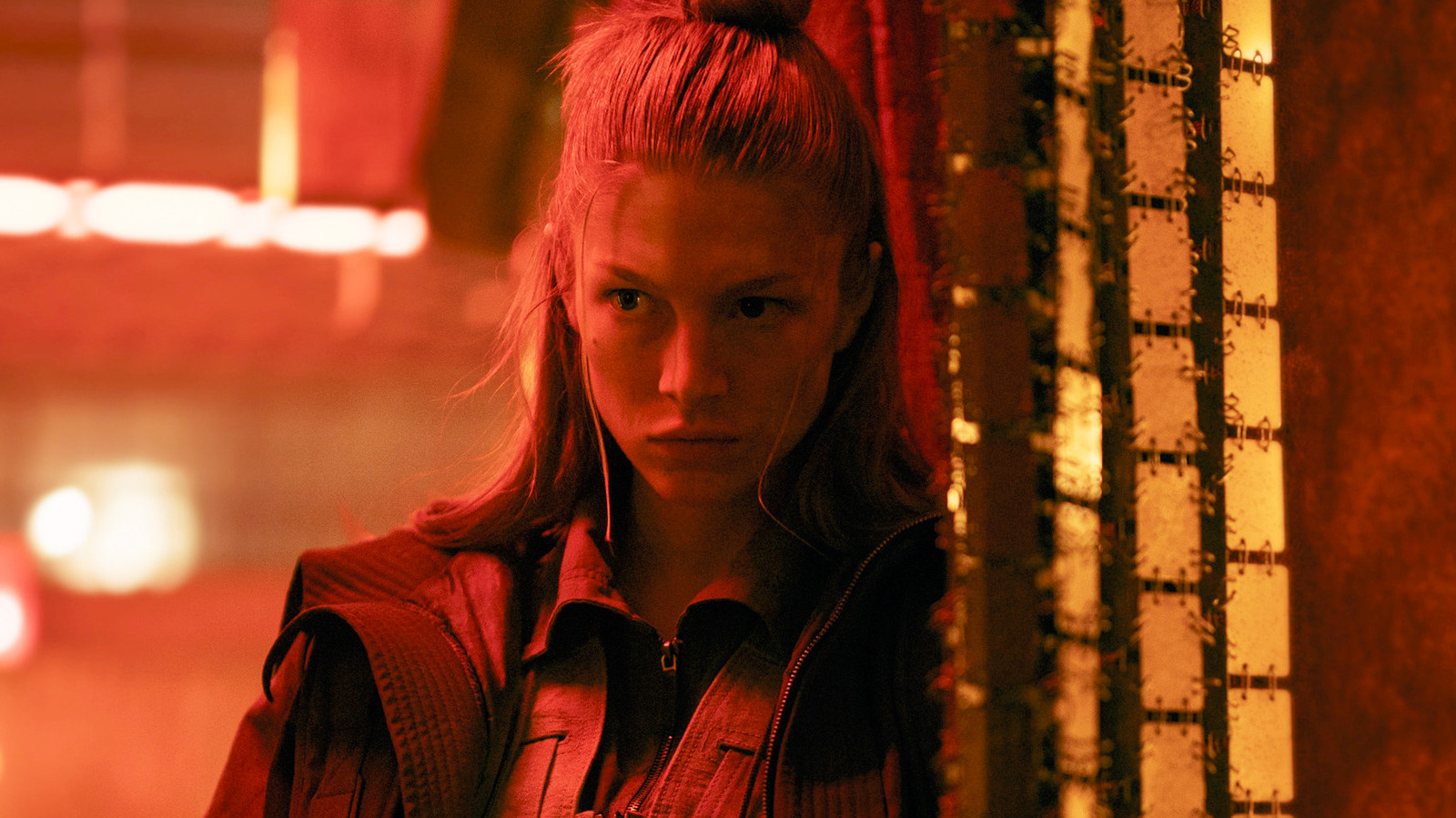
“Welcome to a future we no longer control.” So says the official tagline for the Prime Video series “Blade Runner 2099,” which is set (self-evidently) 50 years after the events of Denis Villeneuve’s “Blade Runner 2049” movie. The world has undergone some seriously seismic changes since then, as viewers will quickly realize in the opening moments of the show. Where both Ridley Scott’s classic 1982 film “Blade Runner” and Villeneuve’s 2017 sequel took place under very traditional confines (with humanity ruling over bioengineered Replicants as second-class citizens), “2099” has flipped the script entirely. Instead, the Replicants have orchestrated a full-scale uprising and seized control.
Not that we’ll actually see any of that go down within “Blade Runner 2099,” mind you. The series premiere opens well after this revolutionary turn of events has become old news. It’s a bold and decisive creative choice, and one that I had to ask showrunner Silka Luisa about during a recent press junket. Why set this story in the aftermath of such a development rather than during it? As she tells it, it had to do with telling a story we haven’t already seen in pop culture before:
“To be honest, I feel like I’ve seen that before. Not with Replicants, but definitely the robot revolution is definitely something I can close my eyes and picture. It’s been in the zeitgeist and people have done different takes on it, so it didn’t seem like I was going to be putting anything out into the world that people couldn’t imagine for themselves.”
Reading between the lines, it’s true that properties like “Terminator” have already covered this ground before. And, in fairness, a wartime drama wouldn’t quite mesh with the neo-noir vibes of “Blade Runner.” But, for Luisa, her reasons extend even deeper than that.
Thematically, Blade Runner 2099 explores what happens after the balance of power has shifted
Considering the timeline established in “Blade Runner” and “2049,” the Replicant uprising in “Blade Runner 2099” has been almost a century in the making. The Denis Villeneuve sequel even took steps to directly integrate this possibility into its plot, keeping a Replicant rebellion simmering in the background of its story. In the Prime Video series, this powder keg has been detonated, and now the various characters (including Michelle Yeoh’s Replicant Blade Runner Olwen and Hunter Schafer’s incognito human Cora) have to live with the consequences.
According to Silka Luisa, this was a challenge that she embraced from the start. It’s fairly easy to tell a straightforward story about revolution, but it’s much harder to depict what comes next. As she told me over Zoom, “Whereas, what I really wasn’t sure about myself at the beginning and that was interesting, was what happens afterwards. What does it look like to lose? And if you have been disempowered for your entire existence, what do you do with power?”
It’s a fascinating question to pose to a group of sentient beings frequently described as “more human than human.” They make look, walk, and bleed like humans … but Replicants have always been designed to be far stronger, physically. When the oppressed throw off their shackles, do they then become the oppressors in turn? According to Luisa:
“Those were just, at least to me personally, much more interesting questions than just a simple idea of which side is gonna win. When, in truth, you kind of know which side is gonna win (laughs).”
All eight episodes of “Blade Runner 2099” are currently streaming on Prime Video.






Leave a Reply