
MX / ES | 2024–2026 | Approx. 56 min per episode | Crime, Drama, Mystery, Thriller
When Joining the System Is Only the Beginning
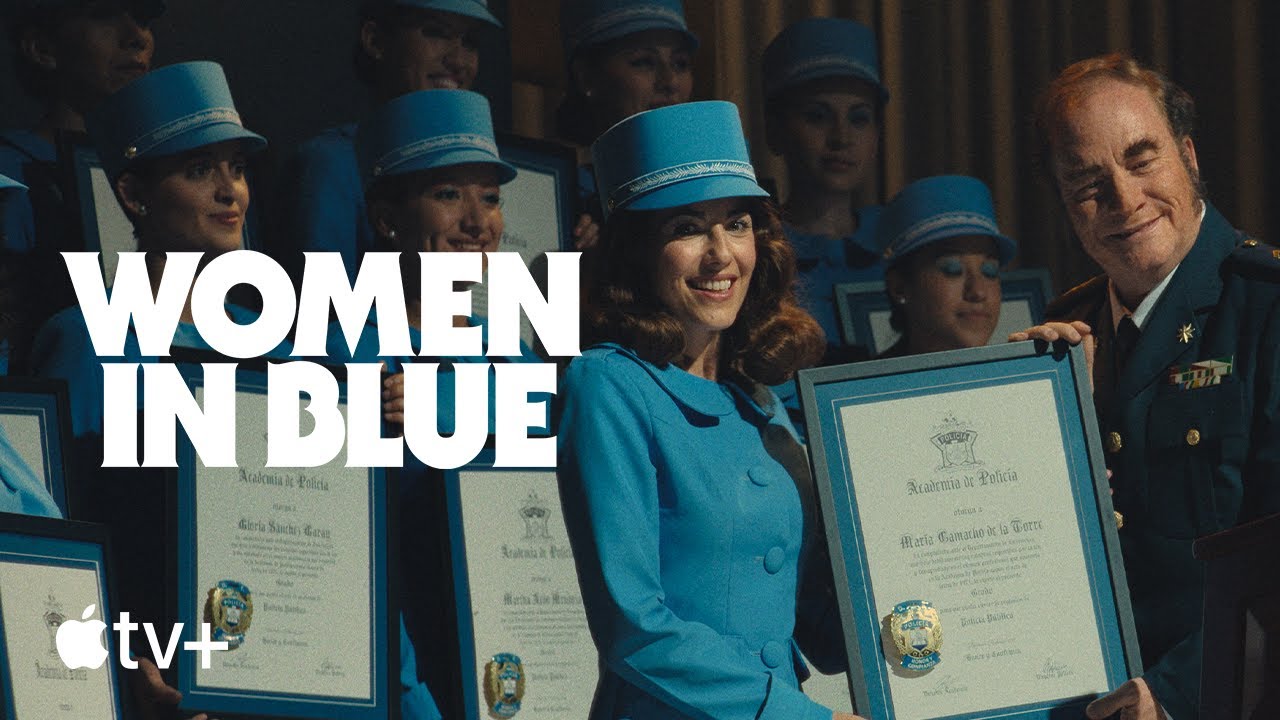
Set in 1971 Mexico City, Women in Blue begins with a contradiction disguised as progress. María, Ángeles, Valentina and Gabina become part of Mexico’s first female police force, believing they are entering a profession previously closed to them, only to discover that their recruitment is largely a publicity stunt designed to divert attention from a serial killer targeting women.
What begins as a historical crime mystery therefore becomes something more provocative: a story about women entering institutions that want their image but not necessarily their authority. Season two pushes that idea further as María becomes a lieutenant and the Azules investigate the murder of a student activist, uncovering connections to the 1968 student massacre and forcing them to confront corruption from within the system they fought to join.
➡️ Series Insight: Women in Blue turns institutional progress into the beginning of the conflict rather than its resolution. Its detectives must solve crimes while constantly negotiating who is permitted to hold authority. That tension gives the series a distinctive position between historical drama, crime thriller and social commentary.
Why This Series Matters Right Now: Progress Means Little Without Power
Women in Blue feels contemporary because it explores the distance between visible representation and meaningful institutional change. The women are allowed inside policing, but access does not automatically produce respect, influence or protection from the structures that previously excluded them.
Season two makes the tension even stronger by moving María into leadership. Instead of asking whether women can enter a male-dominated institution, the story increasingly asks whether gaining authority allows them to transform it — particularly when corruption, political memory and institutional self-preservation stand in the way.
➡️ Why It Matters: Representation is only the first stage of institutional change. Women in Blue explores what happens when inclusion collides with systems reluctant to surrender power. That makes its 1970s setting resonate strongly with contemporary debates about who actually gets to change institutions from within.
Should You Watch It?: Crime Mystery With Character Depth and Social Stakes
Women in Blue works best for viewers who want investigation to carry more weight than simply identifying a killer. The mysteries generate momentum, but the emotional investment comes from watching four very different women navigate careers, relationships, social expectations and a workplace that repeatedly underestimates them.
The tone moves between character drama, investigative suspense and moments of humor without losing the seriousness of the crimes underneath. Its pacing gives the ensemble room to develop, making it particularly suited to audiences who prefer crime series where personal transformation matters as much as procedural mechanics.
➡️ Viewing Recommendation: Watch it for the combination of mystery, historical atmosphere and ensemble character development. Expect a crime drama interested in the people behind the investigation rather than nonstop procedural action. Its strongest reward comes from watching the Azules gradually claim authority that was never intended to be theirs.
Why Everyone Is Talking About It?: The Azules Have Become Bigger Than One Case
The series has developed credibility beyond its central premise. Its recognition includes five wins and 11 nominations, with an International Emmy nomination for Drama Series, an HMMA win for Lucas Vidal’s score, a PRODU Award for Best Historical, Political or Social Drama Series and a Premios Aura ensemble win.
The arrival of an eight-episode second season gives that recognition additional weight. Rather than reproducing the first season’s serial-killer structure, the new story expands toward political memory, corruption and the legacy of the 1968 student massacre, allowing the Azules to evolve from outsiders fighting for legitimacy into investigators confronting the institution from within.
➡️ Viral Potential: The combination of female empowerment, murder mystery and institutional corruption gives the series multiple routes into cultural conversation. Its ensemble encourages character attachment while its cases generate episode-to-episode discussion. Season two broadens that appeal by connecting crime storytelling with unresolved political history.
Why Women in Blue Stands Out: The Detectives Are Fighting Two Investigations
The most distinctive element is the double conflict built into virtually every investigation. The Azules must uncover what happened while simultaneously proving that they have the right to investigate it, meaning professional legitimacy becomes part of the suspense rather than background characterization.
That gives the series a different engine from a conventional police procedural. Solving the case does not automatically solve the larger problem because the institution surrounding the women can itself become an obstacle, making every professional victory part of a longer struggle over authority.
➡️ Cinema Insight: Women in Blue makes institutional resistance part of its mystery architecture. The protagonists are investigating crimes while continually negotiating the structures controlling their ability to investigate. That transforms professional exclusion into dramatic tension rather than treating it simply as historical context.
Series Trend: Historical Crime Drama — When Women Investigate the Institutions That Exclude Them
Crime television is increasingly capable of using historical investigations to examine the institutions surrounding a crime rather than presenting policing as a neutral mechanism for solving it. The mystery becomes a way to investigate power itself — who possesses authority, whose testimony matters and which truths institutions would prefer to contain.
Women in Blue embodies that movement particularly effectively because its protagonists are simultaneously representatives of the police and outsiders within it. Their position allows the series to explore policing from inside the institution without asking viewers to accept the institution itself as unquestionably trustworthy.
➡️ Series Trend: Historical crime drama is increasingly turning investigations into examinations of institutional power. Women in Blue makes that shift personal by placing newly empowered women inside a system that still resists them. The result shows how crime storytelling can combine suspense with deeper questions about authority, history and social change.
Viewer Profile: Historical Crime Drama Audience (Rule Breakers) – Audiences Drawn to Women Breaking Barriers and Challenging Power
The core audience enjoys crime stories where investigation intersects with character, history and social power. These viewers want the satisfaction of uncovering clues, but they are equally interested in the people challenging the rules surrounding the investigation.
Women in Blue also appeals to audiences attracted to female ensembles and stories about outsiders earning authority within resistant institutions. Its combination of accessible mystery and deeper social conflict allows it to reach beyond traditional procedural viewers.
|
Historical Crime Drama Audience — viewers who want mystery combined with social and institutional conflict |
|
|
Female-Led Drama Audience — viewers attracted to women challenging restrictive systems |
|
|
25–54 — adult viewers likely to connect with its crime, workplace, historical and political dimensions |
|
|
Broad appeal, with particularly strong relevance for audiences drawn to female-centered storytelling |
|
|
Broad middle-income and subscription-streaming audience |
|
|
Culturally engaged viewers interested in crime, history, social change and character-driven prestige television |
|
|
Streaming audiences who follow serialized mysteries, international drama and prestige crime series |
➡️ Audience Insight: The strongest audience wants crime stories where solving the mystery also exposes something larger about society. Rule Breakers are attracted to characters who challenge systems rather than simply operate inside them. Women in Blue satisfies that desire by making resistance, investigation and personal empowerment inseparable.
What This Series Means for the Industry: Local History Can Become Global Prestige Television
Women in Blue demonstrates the international potential of culturally specific crime storytelling. Its Mexican setting, Spanish-language identity, Latin American cast and engagement with the country’s social history are not obstacles to international accessibility; they are precisely what differentiate it within an increasingly crowded global crime market.
Its continuation also demonstrates the value of building international series around recognizable genre engines while retaining cultural specificity. Murder investigation gives audiences an accessible entry point, while gender politics, institutional corruption and Mexican history create the identity capable of distinguishing the series globally.
➡️ Industry Insight: Global streaming does not require culturally neutral storytelling. Women in Blue shows how a familiar crime structure can carry highly specific historical and social material across borders. For platforms, culturally rooted genre television can simultaneously deliver accessibility, differentiation and franchise potential.
Creative Analysis: Crime Becomes a Battle Over Who Gets to Define Justice
Women in Blue builds its creative identity from the friction between a recognizable crime format and protagonists who were never expected to possess investigative authority. That creates tension even before the individual mysteries begin.
Its ensemble structure is equally important. Rather than building everything around a solitary detective, the series allows María, Ángeles, Valentina and Gabina to embody different relationships with gender expectations, professional ambition, family and authority.
Storytelling: The Mystery Opens the Door to a Bigger Conflict
The investigative structure keeps the narrative accessible. Each clue advances the crime story while revealing another layer of the social and institutional environment surrounding the Azules.
Season two expands this mechanism by connecting a contemporary 1971 investigation to the 1968 student massacre. The past therefore becomes evidence, turning historical memory itself into part of the mystery.
Direction: Suspense and Social Observation Work Together
The direction allows the crime narrative and character drama to operate simultaneously rather than forcing one to interrupt the other. Workplace encounters, domestic tensions and investigative discoveries all contribute to understanding the restrictions surrounding the protagonists.
The result gives institutional pressure dramatic form. Sexism and corruption are not merely topics discussed by the characters; they repeatedly affect what the Azules can investigate, whom they can challenge and how seriously their conclusions are treated.
Performances: Four Women Create Four Different Forms of Resistance
Bárbara Mori gives María the central burden of balancing professional ambition with the personal cost of challenging expectations. Her promotion to lieutenant in season two naturally changes that tension because she is no longer simply demanding recognition — she now carries institutional responsibility.
Ximena Sariñana, Natalia Téllez and Amorita Rasgado broaden the ensemble by giving Ángeles, Valentina and Gabina distinct personalities and approaches to authority. Their differences prevent female empowerment from becoming a single character type and make solidarity something the characters build rather than something the narrative simply assumes.
Visual Style: The 1970s Become Part of the Investigation
The period setting gives the series an immediate identity, using costumes, environments, vehicles and production design to position the investigation within a society undergoing visible cultural change. Mexico City becomes more than a backdrop because its institutions, social expectations and historical memory shape the characters’ possibilities.
The visual recreation also creates productive distance between the viewer and the story. The world looks recognizably historical, yet many of the power struggles unfolding within it remain contemporary enough to make that distance uncomfortable.
Themes: Representation, Authority and Institutional Memory
The central theme is not simply female empowerment but the difference between being permitted to participate and possessing genuine power. The Azules repeatedly encounter situations where symbolic progress coexists with structures designed to preserve older hierarchies.
Season two adds institutional memory to that equation. By connecting its investigation to the aftermath of 1968, the series asks whether justice is possible when institutions have an interest in controlling how their own history is remembered.
What Makes It Different: Progress Does Not End the Story
Many historical dramas build toward the moment when excluded characters finally gain entry into a profession or institution. Women in Blue treats that milestone as the beginning.
That reversal gives the series longevity. Once the women become police officers, the more interesting question emerges: what happens when people previously excluded from power finally acquire enough authority to see how the system actually works?
➡️ Creative Insight: Women in Blue succeeds by turning professional advancement into dramatic complication rather than resolution. Its ensemble, historical setting and investigative structure continuously reinforce the same conflict between inclusion and power. That coherence gives the series an identity beyond the individual crimes it investigates.
If You Liked Women in Blue (2024–2026): Crime Stories Where Investigation Reveals the System
The Residence (2025): A Woman Detective Investigating Power From the Inside
Uzo Aduba’s Cordelia Cupp investigates a murder inside the White House, transforming one of the world’s most recognizable seats of political authority into an elaborate crime scene. Like Women in Blue, the pleasure comes partly from watching an unconventional female investigator read an institution differently from the people who already belong to it.
➡️ Why It Connects: Both series place distinctive female investigators inside institutions defined by hierarchy and power. Their mysteries reveal the relationships hidden beneath official appearances. The Residence offers a lighter and more eccentric companion to Women in Blue’s historical seriousness.
The Åre Murders (2025): Female Investigation Against a Closed Community
This Swedish crime series follows police officer Hanna Ahlander into a murder investigation where isolation, secrets and community relationships make discovering the truth increasingly difficult. Its atmosphere is colder and more contemporary, but its character-led approach makes investigation inseparable from the protagonist’s personal position.
➡️ Why It Connects: Both series use female investigators to enter environments built around secrets and established relationships. The procedural mystery remains important without overwhelming character development. Viewers who enjoy the investigative side of Women in Blue should find a similarly character-centered crime experience here.
➡️ Where to Watch: Netflix — availability varies by territory.
The Better Sister (2025): Murder Exposes the Power Beneath Respectability
Jessica Biel and Elizabeth Banks lead a murder mystery built around sisters, privilege, family secrets and the carefully maintained appearance of success. Rather than approaching power through policing, the series explores how a violent crime destabilizes the private structures surrounding wealth and social status.
➡️ Why It Connects: Both series understand murder as the opening to a larger examination of power. Female perspectives determine how those hidden structures are uncovered. The Better Sister shifts the setting from institutional history to contemporary privilege while preserving the appeal of character-driven mystery.
➡️ Where to Watch: Prime Video — availability varies by territory.
➡️ If You Liked Insight: The strongest companion series combine investigation with a second layer of social discovery. Their mysteries expose families, communities or institutions rather than stopping with the identity of a killer. That broader purpose is central to the appeal of Women in Blue.
Final Verdict: The Real Mystery Is Who Gets to Hold Power
Women in Blue succeeds because its historical premise creates more than an attractive setting for a murder investigation. The creation of Mexico’s first female police force gives the series a built-in contradiction between apparent progress and institutional resistance, while the four-woman ensemble keeps that conflict personal.
Season two makes the concept more ambitious by giving the women greater authority and then testing what that authority actually means. By connecting crime, corruption and political memory, the series demonstrates that becoming part of the system does not necessarily mean the battle with the system is over.
➡️ Final Verdict: Women in Blue is strongest when crime investigation and institutional conflict become impossible to separate. Its female ensemble gives historical change a human scale while its mysteries keep the storytelling accessible. Season two proves the premise can evolve from breaking barriers toward questioning what happens after those barriers begin to fall.
Quick Facts: Women in Blue at a Glance
|
Fernando Rovzar, Pablo Aramendi |
|
|
Bárbara Mori, Ximena Sariñana, Natalia Téllez, Amorita Rasgado |
|
|
Miguel Rodarte, Leonardo Sbaraglia, Christian Tappán, Horacio García Rojas, Bruno Bichir |
|
|
Crime, Drama, Mystery, Thriller |
|
|
Lemon Studios for Apple TV |
|
|
Creators / Executive Leadership |
Fernando Rovzar and Pablo Aramendi |
|
Eight episodes; premiered August 12, 2026 |
|
|
5 wins and 11 nominations listed in supplied awards material, including International Emmy recognition |
|
|
Historical Crime Drama — When Women Investigate the Institutions That Exclude Them |
|
|
María, Ángeles, Valentina and Gabina |
|
|
Four pioneering female police officers pursue justice while confronting the institution that reluctantly admitted them |
|
|
Female-led historical crime investigation becomes an examination of representation, authority and institutional power |
|
|
Gender, power, justice, corruption, institutional change, solidarity, political memory |
|
|
A character-driven crime mystery where breaking barriers is only the beginning of the struggle |
Final Insights: Crime Television Is Turning the Investigation Back on the Institution
Women in Blue reflects a broader evolution in crime storytelling: institutions once treated simply as the machinery through which mysteries were solved are increasingly becoming subjects of investigation themselves. This creates richer dramatic possibilities because detectives can pursue individual crimes while simultaneously confronting the political, historical or cultural structures surrounding them.
Female-led crime drama is particularly suited to this shift when protagonists occupy positions from which institutional rules can be questioned rather than taken for granted. As international streaming continues to expand culturally specific genre storytelling, series capable of combining familiar mystery structures with distinctive histories and perspectives can become increasingly valuable global propositions.
➡️ Final Insight: The next evolution of institutional crime drama is not simply about finding better detectives. It is about detectives questioning the systems that define justice in the first place. Women in Blue demonstrates how historical crime storytelling can turn that conflict into both compelling entertainment and culturally relevant television.





Leave a Reply