
ES, BE | 2026 | 94 min | Drama
➡️ Where to Watch: ES
How Much of Your Life Should You Give Up for Someone You Love?
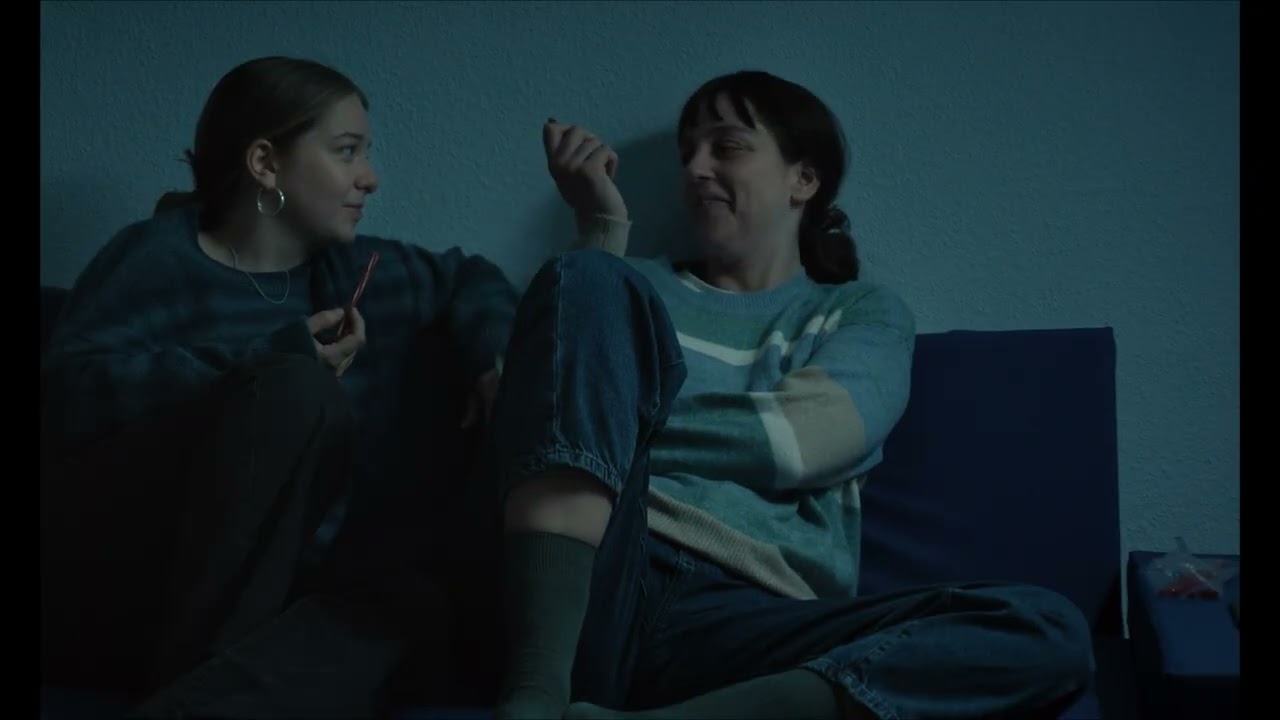
Claudia is young, in love, surrounded by friends and still discovering what she wants from adulthood. At home, however, her life is moving in the opposite direction. Her mother Julia is progressively losing her independence to Alzheimer’s, leaving Claudia and her siblings facing a responsibility none of them can escape.
Claudia refuses to accept the assumption that being a good daughter means surrendering her youth to become her mother’s caregiver. That decision makes her difficult, sometimes selfish and sometimes painfully understandable. Marta Matute builds the film around the uncomfortable space between those interpretations: Claudia loves her mother, but she also desperately wants a life that does not revolve around watching her disappear.
➡️ Movie Insight: Yo no moriré de amor asks a question families rarely want to say aloud: how much of your own life do you owe a parent who can no longer care for themselves? Claudia’s desire for freedom can look selfish, but the alternative may mean sacrificing years of her own future. The movie refuses to pretend there is an easy moral answer.
Why This Movie Matters Right Now: Caring for Your Parents Can Change Your Entire Future
Family caregiving is often described through the language of love, responsibility and sacrifice. Yo no moriré de amor challenges the comforting version of that narrative by concentrating on the person who does not feel ready to sacrifice everything. Claudia wants friends, romance, independence and the freedom to become herself at precisely the moment her mother increasingly needs someone else to take responsibility.
The tension becomes more provocative because responsibility is distributed across a family. Claudia’s sister Inés returns with stronger ideas about how their mother should be cared for, while Claudia resists becoming the daughter everyone expects her to be. Illness therefore exposes not only grief but resentment: who gives up their time, who gets to leave, and who decides what counts as doing enough?
➡️ Why It Matters: Caring for an aging or seriously ill parent can turn love into an exhausting negotiation over time, money, freedom and guilt. Families may agree that someone needs care while fiercely disagreeing over who should provide it. Yo no moriré de amor makes that hidden negotiation impossible to ignore.
Should You Watch It?: Watch If You Want a Family Drama That Refuses to Make Anyone a Saint
This is not a sentimental portrait of the devoted daughter who puts everything aside for her mother. Claudia can be defensive, impatient and emotionally absent, particularly as she tries to protect the parts of her life that exist outside the family home. The film allows those qualities to remain uncomfortable rather than constantly asking audiences to approve of her.
That makes the viewing experience more challenging and ultimately more interesting. Audiences may sympathize with Claudia in one scene and become frustrated with her in the next, while the other members of the family carry their own exhaustion, resentment and limitations. Nobody possesses a painless solution because every possible choice costs somebody something.
➡️ Viewing Recommendation: Watch Yo no moriré de amor if you prefer emotionally raw family dramas over comforting stories about illness. Its strongest material comes from allowing Claudia to be contradictory rather than turning her into an inspirational caregiver. The film works because understanding her does not always mean agreeing with her.
Why Everyone Is Talking About It?: Claudia Is Allowed to Say What Good Daughters Are Not Supposed to Say
The provocative element is not simply that Claudia has a mother with Alzheimer’s. It is that Claudia does not automatically accept the culturally reassuring idea that children should abandon their own priorities when their parents need them. She wants to protect her youth even when doing so risks making her appear cruel.
That uncompromising perspective has been accompanied by significant festival recognition. The film won the Golden Biznaga for Best Spanish Film at the 2026 Málaga Spanish Film Festival, while Júlia Mascort won Best Actress, Tomás del Estal won Best Supporting Actor and Marta Matute received the Feroz Puerta Oscura Award for Best Film.
➡️ Viral Potential: Claudia is the kind of protagonist capable of dividing an audience because the movie forces viewers to decide how much selfishness they are willing to forgive. Some will see a young woman protecting her future; others may see a daughter abandoning responsibilities when her mother needs her most. That disagreement gives the film conversation power far beyond its Alzheimer’s storyline.
Why Yo no moriré de amor Stands Out: It Makes Caregiving Look Exhausting Instead of Noble
Movies about illness often emphasize the emotional nobility of caring for someone. Matute is more interested in the physical repetition, frustration and psychological erosion behind that idealized image. Caregiving means routines, interruptions, arguments, embarrassment, dependence and the gradual disappearance of boundaries between one person’s needs and another person’s life.
The domestic setting becomes increasingly important because home is no longer simply a place of security. For Claudia, it represents obligation and emotional pressure, while the world outside represents the possibility of remaining young. Moving between those spaces creates an increasingly painful division between the person she can be outside the family and the daughter she becomes whenever she returns home.
➡️ Cinema Insight: Yo no moriré de amor removes the halo from caregiving without removing the love. That distinction makes the family feel more truthful because exhaustion and affection are allowed to coexist. Loving someone does not automatically make caring for them emotionally sustainable.
Movie Trend: Parents or Your Own Life? — The Choice Nobody Wants to Make
Parents or Your Own Life? captures a growing kind of family drama in which adult or young-adult children discover that parental illness can radically alter the future they imagined for themselves. The conflict is uncomfortable because neither side is easily dismissed: a vulnerable parent genuinely needs help, while the child providing that help has a life that matters too.
Yo no moriré de amor pushes the dilemma further by refusing to present self-sacrifice as the automatic moral victory. Claudia wants to choose herself. The movie asks whether that makes her selfish — or whether society has become too comfortable expecting family members, and particularly women, to absorb enormous caregiving responsibilities without acknowledging what they lose.
➡️ Movie Trend: Parents or Your Own Life? turns caregiving into a conflict between two legitimate needs rather than a simple lesson about family duty. The parent needs care, but the child also needs a future. The choice becomes devastating precisely because protecting one life can feel like abandoning another.
Viewer Profile: Audiences Ready for an Uncomfortable Conversation About Family Duty
The core audience is likely to include viewers drawn to intimate Spanish and European family dramas, particularly stories about complicated women who are not designed to be immediately likable. Younger adults confronting changing relationships with their parents may find Claudia’s situation particularly recognizable.
The film should also resonate strongly with anyone who has experienced long-term family caregiving. For those viewers, arguments about responsibility, exhaustion and resentment may feel less like dramatic inventions than emotions families frequently experience but hesitate to discuss openly.
|
Viewers of intimate European family and coming-of-age dramas |
|
|
Caregivers, adult children and audiences interested in Alzheimer’s and family responsibility |
|
|
Broad audience with particularly strong relevance for women confronting family caregiving expectations |
|
|
Broad middle-income theatrical, festival and streaming audience |
|
|
Socially aware, culturally engaged and interested in contemporary family dynamics |
|
|
Spanish cinema, festival dramas, family stories, female-led cinema and emotionally realistic films |
➡️ Audience Insight: The movie’s strongest audience connection comes from a question almost everyone can eventually imagine facing. People want to believe they would sacrifice everything for someone they love until they understand what “everything” might actually mean. Claudia forces audiences to confront the gap between the ideal answer and the answer they might give in real life.
What This Movie Means for the Industry: Caregiving Is Becoming a Major Family Story
Care is becoming increasingly visible in contemporary Spanish cinema, particularly through stories examining the people expected to provide it rather than treating illness as an isolated dramatic event. These films can turn everyday domestic responsibilities into larger questions about gender, family, independence and the invisible labor holding households together.
Matute makes that conversation particularly sharp by centering someone who resists the expected caregiver role. Instead of celebrating endless sacrifice, the film asks what happens when a young person says no — or at least refuses to pretend that caring for somebody does not come with anger, exhaustion and loss.
➡️ Industry Insight: Caregiving gives filmmakers a powerful way to explore social pressure through intimate family stories. The strongest examples avoid dividing families into heroes and villains and instead reveal how impossible circumstances can make everyone behave badly. Yo no moriré de amor suggests that the future of caregiving cinema may be less about celebrating sacrifice and more about questioning why families are expected to absorb so much of it alone.
Creative Analysis: A Family Slowly Learns That Love Cannot Stop Time
Matute draws on personal experience to build a drama in which deterioration happens gradually rather than through one spectacular turning point. Julia’s decline changes the family through accumulation: routines become harder, relationships become strained and the possibility that life might somehow return to normal becomes increasingly unrealistic.
That gradual structure is crucial because Claudia is also growing while her mother is deteriorating. One life is pushing toward independence while another increasingly requires dependence, placing mother and daughter on trajectories moving painfully in opposite directions.
Storytelling: Years of Pain Become the Story
The film avoids treating illness as a single dramatic crisis. Instead, time becomes part of the pressure as Julia’s deterioration gradually restructures the lives around her.
This makes Claudia’s frustration more complicated. A short period of sacrifice might seem manageable, but degenerative illness offers no simple timetable, meaning caregiving can expand indefinitely until it becomes part of the architecture of an entire family.
Direction: Marta Matute Refuses Easy Sentimentality
Matute approaches the family through observation rather than emotional manipulation. Domestic routines, arguments and silences accumulate until the exhaustion surrounding Julia becomes visible without requiring the film to constantly announce what viewers should feel.
That restraint also protects Claudia from becoming a simple moral lesson. Matute permits audiences to observe behavior that can be compassionate, selfish, immature and understandable within the same character.
Performances: Júlia Mascort Makes Claudia Difficult to Judge
Júlia Mascort’s performance is fundamental because Claudia cannot work if audiences immediately classify her as either a victim or a selfish daughter. Her contradictions create the film’s moral tension.
Sonia Almarcha’s Julia gives that conflict its emotional weight, while Laura Weissmahr’s Inés and Tomás del Estal’s Manuel expand the story beyond a simple mother-daughter relationship. Together, the family reveals how illness redistributes pressure rather than affecting only the person who is sick.
Visual Style: Home Becomes the Place Claudia Wants to Escape
The domestic environment increasingly represents repetition, responsibility and emotional exhaustion. Small routines and familiar spaces acquire greater weight as Julia’s dependence grows.
Outside the home, Claudia can still experience friendship, romance and youth. That spatial contrast makes her desire to escape understandable even when her behavior toward her family becomes harder to defend.
Themes: Love, Guilt, Freedom, Illness and Family Obligation
The central theme is not whether Claudia loves her mother. The more difficult question is whether love creates an unlimited obligation to sacrifice yourself for another person.
Guilt becomes the bridge between those ideas. Claudia wants freedom, but freedom becomes difficult to enjoy when she knows that choosing herself may leave somebody else carrying the responsibility she escaped.
What Makes It Different: Claudia Does Not Want to Be the Perfect Daughter
The film’s most refreshing decision is allowing Claudia to resist the role audiences may expect her to embrace. She does not become inspirational simply because her family faces tragedy.
That makes her feel unusually human. People experiencing prolonged family illness can feel tenderness, resentment, grief, boredom, anger and even the desire to run away — sometimes within the same day.
➡️ Creative Insight: Marta Matute finds drama in emotions families often consider unacceptable. Claudia can love her mother and still resent what her illness is doing to her life. Allowing both truths to exist gives Yo no moriré de amor its emotional honesty.
If You Liked Yo no moriré de amor (2026): More Recent Movies About Family, Care and the Lives We Cannot Hold Onto
These recent films approach family responsibility, aging and emotional separation from different directions. Each connects to Yo no moriré de amor through the difficult question of how people continue living their own lives while somebody they love is changing, struggling or slipping away.
Familiar Touch (2025) by Sarah Friedland: When Losing Independence Changes Everyone Around You
Ruth, an elderly woman experiencing memory loss, moves into assisted living and must negotiate a new relationship with herself, her independence and the people now responsible for helping her. Sarah Friedland approaches aging from the opposite generational perspective to Matute, making the person receiving care rather than the younger caregiver the emotional center.
➡️ Why It Connects: Familiar Touch shows the other side of the caregiving relationship at the heart of Yo no moriré de amor. Both recognize that care can contain tenderness while simultaneously threatening independence, identity and dignity. Together they reveal why becoming dependent and becoming responsible for someone else can both transform a family.
➡️ Where to Watch: US
The Love That Remains (2025) by Hlynur Pálmason: When a Family Changes but Does Not Disappear
Anna and Magnús are separating while trying to preserve stability for their three children. Across a year, ordinary family life continues even as the structure holding that family together gradually changes.
➡️ Why It Connects: The Love That Remains shares Matute’s interest in families that cannot simply stop living because something fundamental is changing. Both films observe everyday routines rather than reducing emotional disruption to a single dramatic event. They understand that families can fracture while love remains present in complicated, imperfect forms.
➡️ Where to Watch: US
Hard Truths (2025) by Mike Leigh: When Loving Your Family Does Not Make Living Together Easy
Pansy’s anger and depression have made family relationships increasingly difficult, while her more optimistic sister Chantelle continues trying to maintain a connection with her. Mike Leigh turns ordinary family interactions into a study of how love survives resentment, frustration and behavior that pushes other people away.
➡️ Why It Connects: Hard Truths and Yo no moriré de amor reject the idea that loving relatives automatically creates harmonious families. Both allow women to behave in ways audiences may dislike without reducing them to villains. Their families endure because emotional attachment can survive even when living with one another becomes exhausting.
➡️ Where to Watch: US
➡️ If You Liked Insight: Familiar Touch examines care from the perspective of the person losing independence, The Love That Remains observes a family adapting to emotional separation, and Hard Truths explores love surviving resentment. All three are from 2025 and currently have verified US viewing options. Together they extend Yo no moriré de amor’s central idea that loving your family and wanting freedom from them can exist at the same time.
Final Verdict: Sometimes Loving Your Parents Means Admitting You Cannot Give Them Everything
Yo no moriré de amor is strongest when it refuses to tell audiences what Claudia should do. Her mother needs care. Claudia needs a life. Her siblings have their own limits. Every attempt to solve one person’s problem risks transferring the burden to somebody else.
That is why the movie’s central conflict extends far beyond Alzheimer’s. Eventually, many families confront some version of the same question: when somebody you love can no longer live independently, how much responsibility belongs to you — and how much of yourself should you be expected to surrender?
➡️ Final Verdict: Yo no moriré de amor turns caregiving into one of the most uncomfortable moral dilemmas of family life. Júlia Mascort gives Claudia enough contradiction to make both sympathy and frustration feel justified. The movie leaves audiences with a question rather than an answer: can choosing your own life sometimes be an act of survival rather than selfishness?
Quick Facts: Yo no moriré de amor at a Glance
|
Júlia Mascort as Claudia; Sonia Almarcha as Julia |
|
|
Laura Weissmahr as Inés; Tomás del Estal as Manuel; Guillermo Benet as Gabriel |
|
|
Málaga Spanish Film Festival 2026 |
|
|
Golden Biznaga for Best Spanish Film; Best Actress for Júlia Mascort; Best Supporting Actor for Tomás del Estal; Feroz Puerta Oscura Award for Best Film |
|
|
Parents or Your Own Life? — The Choice Nobody Wants to Make |
|
|
Claudia, a young woman struggling with the growing responsibility of caring for her mother |
|
|
Claudia must confront how much of her youth and independence she is willing to sacrifice as her mother becomes increasingly dependent |
|
|
A caregiving drama centered on a daughter who does not want to become the ideal self-sacrificing caregiver |
|
|
Caregiving, Alzheimer’s, family duty, freedom, guilt, youth, responsibility, resentment |
|
|
A provocative family drama that asks whether choosing yourself can coexist with loving someone who desperately needs you |
Final Insights: Parents or Your Own Life Is Becoming One of Cinema’s Most Uncomfortable Family Questions
Caregiving stories are becoming more powerful when they move beyond the reassuring idea that sacrifice automatically equals love. The reality is messier: caring for somebody can strengthen relationships while simultaneously creating resentment, exhaustion and a desire to escape. Cinema can make those contradictory emotions visible without pretending one of them cancels out the others.
The broader trend matters because aging, chronic illness and family responsibility ultimately force societies to confront who is expected to provide care. When that responsibility falls primarily inside the family, the question is no longer simply whether someone loves their parents enough. It becomes a question about whose career, relationships, independence and future will be reorganized to keep another person alive and cared for.
➡️ Final Insight: Parents or Your Own Life? is powerful because neither choice feels morally clean. Choosing your parent can mean losing part of your own future, while choosing yourself can leave you carrying enormous guilt. Yo no moriré de amor understands that sometimes the hardest family decisions are the ones where love cannot make everybody whole.






Leave a Reply