
The A24 Pop Star Gothic Chamber Drama Where Anne Hathaway and Michaela Coel Spend One Night Designing a Dress, Exorcising a Ghost, and Settling a Decade of Estrangement
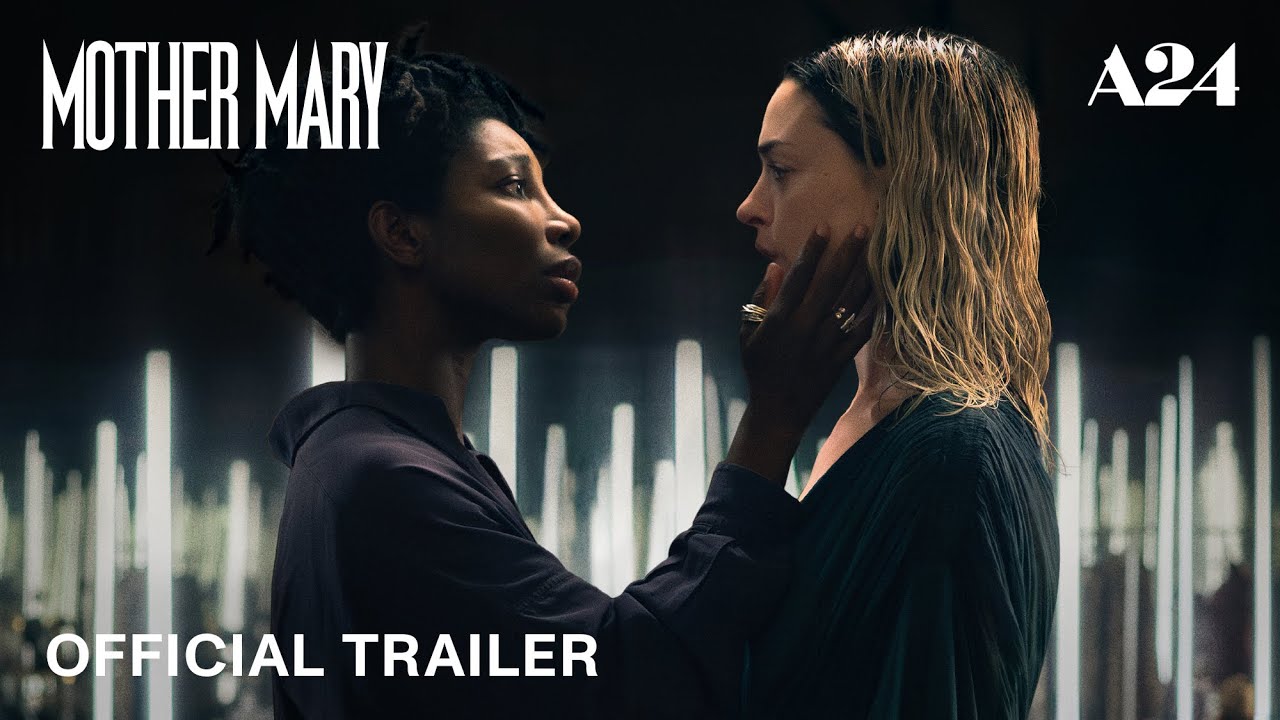
Mother Mary is a global pop superstar — ornamental halo, transgressive Catholic iconography, a fanbase that borders on the religious — on the eve of a comeback performance after a mysterious on-stage accident. She arrives unannounced at the English country estate of Sam Anselm, the British fashion designer who created her visionary costumes and was her closest confidante before Mary dropped her for bigger names a decade ago. Sam is still carrying the wound. Mary needs a dress — the ultimate dress. What unfolds over one long night is a cat-and-mouse negotiation that deepens into confession, séance, supernatural visitation, and the exorcism of something neither woman can name. The project originated as a one-location script. David Lowery describes it as his most personal film — a work rooted in his own Catholic formation and his childhood fascination with Madonna. Written and directed by Lowery. Cinematography by Andrew Droz Palermo and Rina Yang. Original songs by Jack Antonoff, Charli xcx, and FKA twigs — who also appears in the cast. Costume design by Bina Daigeler. A UK-Finland-Germany-US co-production. Produced by A24, Topic Studios, and Access Entertainment. Filmed over 14 months at Burg Adendorf, Germany. German release May 21, 2026. US opening weekend April 19, 2026.
Why It Is Trending: A24’s Most Formally Divisive 2026 Release — Anne Hathaway and Michaela Coel in a Two-Hander Gothic Chamber Film That the Critics Cannot Agree On
The film opened to one of the most divided critical responses in A24’s recent history — Metascore 57, with assessments ranging from “extraordinary performances” (Deep Focus Review) and “genuinely great” (High on Films) to “thuddingly pretentious fantasia” (Variety) and “risibly self-serious metaphysical nonsense” (Hollywood Reporter). The Hathaway-Coel central performances are the one unanimous critical consensus. Jack Antonoff, Charli xcx, and FKA twigs delivering the fictional pop star’s soundtrack gives the film a music industry credibility that no commissioned film score alone could achieve. The Lady Gaga-Madonna-
The Hathaway-Coel central performances are the one unanimous critical consensus across every review. The Lady Gaga-Madonna-Taylor Swift-Beyoncé amalgam that constitutes Mother Mary gives the character her most commercially legible celebrity referent while the Catholic mysticism and the ghost narrative give the film its formal distinctiveness from any straightforward pop star drama. Lowery described the film as “the hardest thing I’ve ever done.” The US opening weekend of $168,063 confirms this is a theatrical arthouse release rather than a commercial wide opener.
Elements Driving the Trend: The Hathaway Dance Without Music, Coel’s Insinuating Intelligence, and the Red Fabric Ghost
-
Hathaway’s performance of the title character’s new song — dancing without music so Sam can see what her dress must endure, beginning like a ballet and ending like a possession — is cited by Roger Ebert and Deep Focus Review as the film’s single most visceral and most formally accomplished sequence.
-
Coel’s Sam — penetrating large eyes, profile like a Picasso, alternating between warm smile and embittered frown, withholding until exactly the right moment — is the performance that Roger Ebert called better than anything she has done, including her concurrent work in The Christophers.
-
The red fabric ghost — a swirling tangle of organza that acquires near-corporeal form in Andrew Droz Palermo’s sumptuous darkness — is the film’s most formally polarising visual invention: mesmerising to the critics who embrace the film’s logic, nonsensical to those who resist it.
-
The soundtrack’s real-world credibility — Jack Antonoff, Charli xcx, and FKA twigs building a genuinely convincing fictional pop star soundscape — gives Mother Mary’s cultural presence an authority that composited celebrity references alone could not achieve.
Virality: The Critical Division and Hathaway’s “Does She Really Sing” Discovery Cycle
-
The Metascore 57 against the unanimous performance praise generates the most productive possible discovery dynamic for an A24 prestige release: an argument the audience can only resolve by watching the film themselves.
-
The Wrap’s “Does Anne Hathaway Really Sing in Mother Mary?” coverage — published April 24, 2026 — confirms that Hathaway’s vocal performance is the film’s most-searched specific element and its most effective word-of-mouth driver.
Critics Reception: Unanimously Praising the Performances — Divided Precisely on the Supernatural Third Act and Lowery’s Metaphorical Density
-
Roger Ebert — big swings A24 and Lowery are taking; not like anything you’ve seen before; Coel mesmerising; the film loses its way in the supernatural third act; Lowery and Coel fully understand it but can’t always convey what they mean to the audience.
-
Deadline — most personal Lowery work; exceptional chemistry between Hathaway and Coel; musically shines; FKA twigs visceral acting moments; takes a little too long to reach the main event but the getting there is satisfying.
-
High on Films — Lowery’s self-described “gentle experience” channels something visceral; messy, unwieldy, and sometimes dangerous; Hathaway bleeds all over the floor; Coel hardens and clots; tangible warmth as counterweight to a persistent chill.
-
Deep Focus Review — extraordinary performances; sluggish, self-important drama; at times plays like bad avant-garde theater; should be seen for Hathaway and Coel alone; Metascore 57.
-
Variety — thuddingly pretentious fantasia; all style no substance despite lots of heat; Hathaway commanding avatar for pop superstardom; the film comes down to a séance, stabbing of flesh, and a ghost. Hollywood Reporter — risibly self-serious metaphysical nonsense; two-hander with real heat from both stars; sumptuous visual darkness. IMDb user reviews 10 responses, pre-release.
Awards and Recognitions: No Awards — German Theatrical May 21, 2026 — US Opening Weekend April 19, 2026
-
No awards at time of writing. German theatrical May 21, 2026. US opening weekend April 19, 2026. Gross worldwide $186,522 (limited arthouse release). Filmed over 14 months. A24 and Topic Studios distribution.
Director and Cast: Lowery’s Most Personal and Most Formally Polarising Film — With Two Lead Performances That Critics Cannot Stop Writing About Regardless of Their Position on the Film Itself
-
David Lowery — Ain’t Them Bodies Saints, A Ghost Story, The Green Knight, Old Man & the Gun — delivers what every review acknowledges as the most David Lowery film David Lowery has ever made: the Catholic mysticism, the ghost logic, the metaphorical density, and the conviction that image and sound can carry what language cannot. His own description — “the hardest thing I’ve ever done” — is earned by the 14-month production and the difficulty of the final cut.
-
Anne Hathaway (Mother Mary) — producing a genuinely committed physical performance, particularly in the dance sequence, and a pop star persona built on the accumulated cultural DNA of Lady Gaga, Madonna, Taylor Swift, and Beyoncé simultaneously. Reportedly sang for the role.
-
Michaela Coel (Sam Anselm) — reportedly involved from the screenwriting phase before being cast — delivers what multiple critics called the finest performance of her career: the capacity to shift from warmth to malice within a single held gaze, the debater’s intelligence, the accumulated wound of a decade’s estrangement rendered entirely through physical presence.
-
FKA twigs (Imogen) — whose real-world musical contribution to the soundtrack gives the film’s fictional pop industry its most formally credible element — also delivers what Deadline called visceral acting moments in a supporting capacity.
-
Andrew Droz Palermo and Rina Yang (cinematographers) — the sumptuous darkness and tight close-ups that give the two-hander its most formally composed visual register.
Conclusion: A24’s Most Formally Divided 2026 Release — the Performances Are Inarguable, the Ghost Is Not
The critical division is itself the film’s most commercially distinctive quality — an A24 prestige release that generates genuine argument is more discoverable than one that generates consensus. Hathaway’s dance sequence and Coel’s insinuating intelligence are the film’s two most reliable word-of-mouth assets. The ghost will determine whether each individual viewer considers the experience worthwhile.
What Movie Trend Is Followed: The Pop Star Gothic Chamber Drama Uses the Catholic Mysticism Tradition to Turn a Two-Hander Estrangement Drama Into a Séance
Mother Mary belongs to the prestige pop star drama tradition — Black Swan, All About Eve’s DNA, A Star Is Born’s shadow — but occupies its own formally specific register: the chamber Gothic. Two women in an English country manor, one night, long-buried wounds, a ghost that may or may not be literal. The Exorcist as structural reference rather than horror touchstone. Lowery’s specific contribution is the treatment of artistic collaboration as a form of spiritual possession — the costume designer who designs from the “transubstantiation of feeling” and the pop star who channels something beyond talent into her performances are presented not as metaphors for creative process but as its most accurate available description.
Trend Drivers: The Chamber Gothic Structure, the Transubstantiation Theme, and the A24 Prestige Music Drama Positioning
-
The one-location chamber structure — Sam’s English country estate as the entire world for the film’s central act — gives the Hathaway-Coel dynamic its most concentrated formal pressure and the film its most formally controlled register before the supernatural sequences expand the space.
-
The Catholic mysticism as a genuine rather than decorative framework — transubstantiation of feeling into design, the séance as a creative methodology, the ghost as the residue of a creative partnership — gives the film its most formally distinctive argument about what art actually is.
-
The A24 music prestige positioning — alongside Midsommar’s folk horror and The Green Knight’s Arthurian mysticism in Lowery’s A24 register — gives Mother Mary a specific institutional context that prepares its audience for formal ambition without conventional narrative resolution.
-
The anthology of pop star references — Lady Gaga, Madonna, Taylor Swift, Beyoncé distilled into a single fictional composite — gives the film a contemporary cultural specificity that the mythological framework requires without anchoring it to a single artist’s biography.
What Is Influencing Trend: A24’s Prestige Gothic Pipeline and Lowery’s Catholic Formation
-
A24’s consistent investment in formally ambitious, aesthetically distinctive prestige drama — Midsommar, The Witch, Ex Machina’s DNA — gives Mother Mary an institutional context that prepares its audience for the ghost and the séance without requiring genre horror framing.
-
Lowery’s explicit biographical statement — his Catholic formation, his childhood fascination with Madonna, his “festering” relationship to the material — gives the film’s religious iconography a personal authority that distinguishes it from decorative religiosity.
-
The 14-month production schedule reflects the formal difficulty Lowery acknowledged publicly — and gives the film a production story that contributes to its discovery as a labour of genuine creative investment.
Macro Trends Influencing: Celebrity Worship as Quasi-Religion and the Female Creative Collaboration as Gothic Subject
-
The almost religious following that surrounds artists at the level of Madonna, Lady Gaga, Taylor Swift, and Beyoncé — Lowery’s stated inspiration — is one of contemporary cultural theory’s most discussed phenomena and one of cinema’s least formally examined subjects.
-
The female creative collaboration as Gothic subject — the bond between a star and the person who made her image, the abandonment and its wound, the return and its demands — is a formal territory that All About Eve established and that Mother Mary occupies with its own supernatural specificity.
-
The costume designer as the architect of celebrity identity — Bina Daigeler’s real-world work giving the premise its most grounded professional credibility — is one of fashion-adjacent cinema’s most underexplored subjects at the prestige level.
Consumer Trends Influencing: A24’s Theatrical Audience and the Coel-Hathaway Discovery Circuit
-
A24’s theatrical audience — built on prestige arthouse releases that generate genuine critical discourse — is the film’s most motivated discovery community; the critical division is itself a draw for the audience that attends A24 releases specifically to form their own position.
-
Coel’s concurrent visibility in The Christophers — multiple reviews explicitly citing her better performance here — gives the film a discovery signal for the arthouse audience currently following her career at its most active.
-
The Antonoff-Charli xcx-FKA twigs soundtrack gives the film a music community discovery pathway that is entirely separate from the conventional arthouse audience.
Audience Analysis: A24 Prestige Arthouse Audiences, Lowery’s Established Following, and Coel’s Career Tracking Viewers
The core audience is 25–55 — A24 prestige arthouse regulars who follow Lowery’s formally ambitious projects as institutional events, Coel’s career-tracking audience activated by the simultaneous The Christophers visibility, and the music community that will encounter the film through the Antonoff-Charli xcx-FKA twigs soundtrack connection. The critical division positions the film as something every viewer must resolve personally — generating the most commercially productive possible discovery dynamic for a limited theatrical release.
Conclusion: A24’s Most Formally Ambitious and Most Divisive 2026 Release — With Two Career-Defining Performances at Its Centre and a Ghost That Demands Personal Resolution
Mother Mary’s institutional positioning within A24’s prestige gothic catalogue, the Hathaway-Coel performances that even the most sceptical reviews cannot dismiss, and the soundtrack’s music industry credibility give the film its fullest available commercial and cultural reach. The ghost and the séance are what each viewer must decide about alone.
Final Verdict: David Lowery’s Most Personal and Most Formally Polarising Film — Sustained Entirely by Two of the Year’s Most Committed Lead Performances and Andrew Droz Palermo’s Sumptuous Visual Register
Lowery delivers a film of complete formal conviction — the Catholic mysticism, the chamber Gothic structure, the ghost rendered as swirling red organza, and the metaphorical density that exhausts even its own characters — that is simultaneously the most genuinely ambitious and the most debatable work of his career. The Hathaway-Coel central dynamic is the film’s inarguable foundation. The supernatural third act is the film’s most formally daring departure and its most commercially risky.
Audience Relevance: For A24 Prestige Arthouse Audiences Who Trust Lowery’s Formal Vision and the Performances That Carry It
Works best for viewers who respond to formally ambitious prestige drama that values image, sound, and physical performance over conventional narrative resolution — the A Ghost Story audience, The Green Knight audience, viewers who accept that the ghost may be beyond definitive explanation.
What Is the Message of Movie: The Person Who Made Your Image Owns Part of Your Soul — and You Cannot Perform Without Her Permission to Use It
The film’s most precise thematic statement — Sam’s insistence that her process is the “transubstantiation of feeling” into design, that Mother Mary cannot wear a dress Sam has not genuinely designed from Mary’s interior truth — is the film’s most formally specific argument: that the creative collaboration between a star and the person who makes her image is a spiritual bond that abandonment cannot simply dissolve.
Relevance to Audience: A Film About the Almost Religious Power of a Global Pop Star’s Cultural Presence — Addressed to the Audience That Constitutes That Presence
Lowery’s stated inspiration — the quasi-religious followings of Madonna, Lady Gaga, Taylor Swift, Beyoncé — gives the film a direct relationship with the audience that constitutes those followings. The fans who experience a pop star’s music as something more than entertainment will find in Mother Mary the most formally serious available examination of why that experience feels the way it does.
Social Relevance: The Costume Designer as the Unacknowledged Co-Author of Celebrity Identity
Sam Anselm’s position — the person whose visionary designs made Mother Mary’s image, abandoned when bigger names came available, asked to perform a miracle for the woman who dropped her — is one of the fashion and celebrity industry’s most socially specific and most cinematically underrepresented professional relationships. The film’s most honest social observation is that the person who made the star is rarely acknowledged as having made anything.
Performance: Coel Delivers One of the Year’s Most Precise and Most Physically Specific Screen Performances — Hathaway’s Dance Sequence Is the Film’s Most Viscerally Committed Moment
Coel’s Sam — debater’s intelligence, the face that shifts from warmth to malice within a single gaze, the accumulated wound of a decade rendered entirely through physical presence — is the performance that every review placed first regardless of its position on the film. Hathaway’s dance without music — beginning as ballet, ending as possession, performed with violent physical force and emotional rawness — is the film’s single most formally accomplished sequence and the most reliable indicator of what the whole film is attempting.
Legacy: The David Lowery Film That Divided Critics Most Precisely Along the Lines of Whether They Trust the Ghost
Mother Mary will be remembered as the Lowery film that committed most completely to his esoteric register and generated the most direct critical confrontation with the question of whether that commitment is genius or self-indulgence. The Hathaway-Coel performances will be remembered regardless of how that question is eventually resolved.
Success: US Opening Weekend $168,063 — German Theatrical May 21, 2026 — Metascore 57 — No Awards Yet
-
US opening weekend April 19, 2026: $168,063. Gross worldwide $186,522 (limited theatrical). German theatrical May 21, 2026.
-
A24, Topic Studios, Access Entertainment. Metascore 57 from 32 critic reviews. No awards at time of writing.
The performances generated the critical attention. The critical division generated the discovery conversation. The ghost is what audiences must decide about for themselves.
Mother Mary proves that the most formally honest films about celebrity worship are the ones that take the religion seriously — and that David Lowery, Michaela Coel, and Anne Hathaway were the only available collaborators prepared to go all the way into the séance.
Insights: A24’s most formally polarising 2026 release — the chamber Gothic structure, the Catholic mysticism, and the red fabric ghost generate genuine critical disagreement about whether Lowery’s conviction produces profundity or self-indulgence, while the Hathaway-Coel central dynamic generates the unanimous performance consensus that sustains the film’s cultural conversation regardless of critical position. Industry Insight: The 14-month production, the Antonoff-Charli xcx-FKA twigs music credibility, and A24’s institutional positioning within the prestige gothic catalogue give Mother Mary the most complete available commercial infrastructure for a formally ambitious chamber drama — the critical division is not a commercial liability but the most efficient possible discovery mechanism for an A24 limited theatrical release. Audience Insight: Coel’s concurrent visibility in The Christophers — multiple reviews explicitly noting this performance exceeds even that work — is the film’s most commercially efficient discovery signal for the arthouse audience currently tracking her career at its most active phase. Social Insight: A film that treats the costume designer’s abandonment by the star she made as a spiritual wound rather than a professional grievance is making the most formally precise available observation about the unacknowledged creative labour at the centre of celebrity image construction — and the film’s Catholic framework gives that observation a moral weight that secular industry drama cannot achieve. Cultural Insight: Mother Mary positions Lowery as the American arthouse filmmaker most willing to commit completely to formal risk within the A24 prestige system — and the critical division it generated is precisely the kind of cultural conversation that A24’s institutional brand requires to sustain its position as the most formally ambitious major independent studio in contemporary American cinema.
Conclusion: A Chamber Gothic of Complete Formal Conviction — Anchored by Two Career-Defining Performances and a Ghost That Each Viewer Must Resolve Alone
The Hathaway dance sequence is inarguable. Coel’s insinuating intelligence is inarguable. The red fabric ghost is entirely arguable. Mother Mary earns its place in Lowery’s filmography as his most personally exposed and most formally committed work — and the film that confirmed Michaela Coel as one of contemporary cinema’s most exceptional screen presences at the peak of her current visibility.
Summary: One Pop Star, One Designer, One Night, One Ghost — and a Dress That Cannot Be Made Without First Exorcising Everything Between Them
-
Movie themes: The quasi-religious power of global celebrity, the costume designer as the unacknowledged co-author of a star’s identity, the spiritual bond between creative collaborators that abandonment cannot dissolve, Catholic mysticism as the most formally precise available framework for examining artistic possession, and the argument that the transubstantiation of feeling into art is not a metaphor but a literal description.
-
Movie director: David Lowery — A Ghost Story, The Green Knight, Old Man & the Gun — delivers his most personally exposed and most formally committed film: a work rooted in his own Catholic formation, his childhood fascination with Madonna, and his conviction that the ghost is not an obstacle to the drama but its most essential formal element.
-
Top casting: Coel’s Sam — the film’s unanimous performance consensus — delivers what Roger Ebert called better than any prior work, a decade of wound and intelligence carried entirely through physical presence. Hathaway’s Mother Mary — Lady Gaga-Madonna-Taylor Swift composite — commits with violent physical force to the dance sequence that is the film’s most formally accomplished single moment. FKA twigs’s Imogen gives the fictional pop industry its most credible musical and performing presence.
-
Awards and recognition: No awards at time of writing. Metascore 57 from 32 critic reviews. US opening weekend April 19, 2026. German theatrical May 21, 2026. Gross worldwide $186,522. A24, Topic Studios, Access Entertainment.
-
Why to watch: The A24 chamber Gothic that takes celebrity worship as religion with complete formal seriousness — Hathaway’s dance without music and Coel’s insinuating intelligence are two of the year’s most committed screen performances, the Antonoff-Charli xcx-FKA twigs soundtrack gives the fictional pop star genuine cultural credibility, and the ghost demands that each viewer decide for themselves whether Lowery’s conviction is genius or the most expensive metaphor ever assembled.
-
Key success factors: The Hathaway-Coel central dynamic plus Lowery’s A24 institutional positioning plus the Antonoff-Charli xcx-FKA twigs music credibility plus Bina Daigeler’s costume design challenge plus Andrew Droz Palermo’s visual authority plus the critical division that makes the film impossible to ignore.
-
Where to watch: A24 theatrical from April 17, 2026 (limited US). German theatrical May 21, 2026. Check JustWatch for full streaming and theatrical availability.
Conclusion: The A24 Pop Star Gothic That Commits Completely to the Séance — and Confirms That Michaela Coel and Anne Hathaway Are Prepared to Go Further Into the Dark Than the Script Requires
The critical division is the discovery mechanism. The performances are the reason to attend. The ghost is the question Lowery leaves entirely with the audience. Mother Mary earns its formal ambition through the completeness of its conviction — and through two lead performances that remain inarguable long after the red fabric has settled.



Leave a Reply