
FR | 2025 | 70 min | Drama / Comedy
An Unhoused Woman’s Unbound Freedom Collides with Unwanted Well-Meaning Help
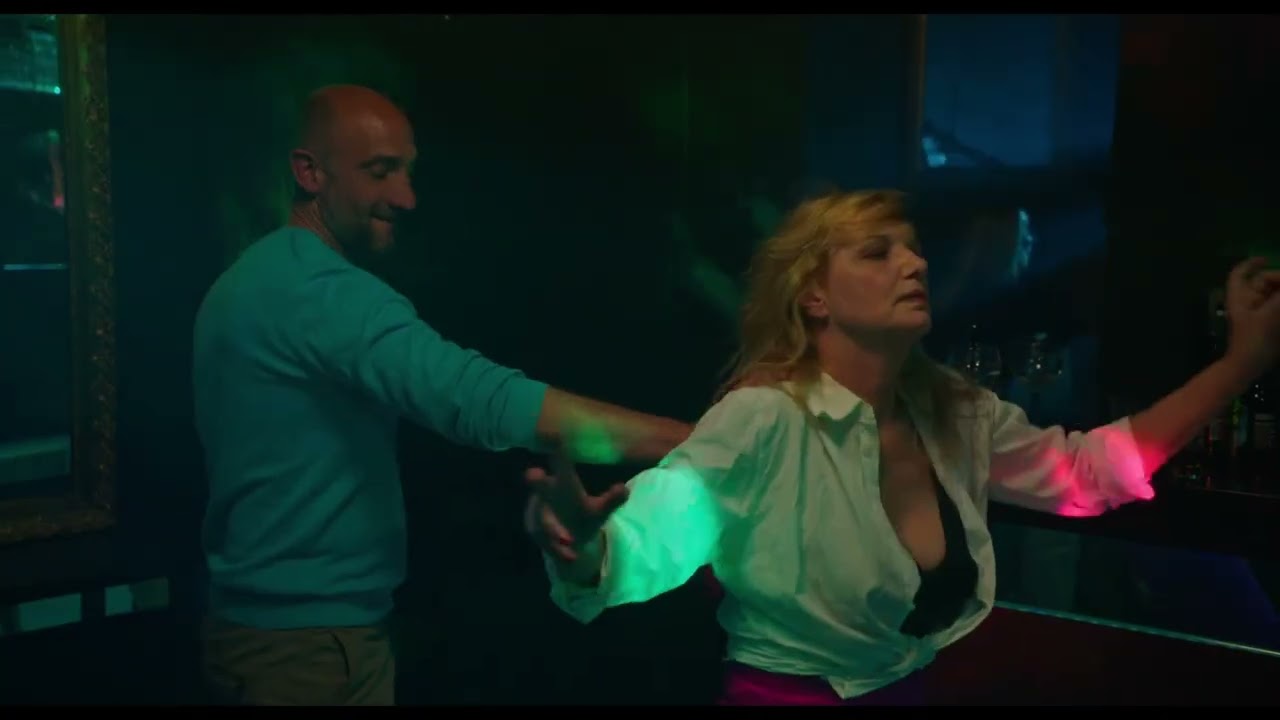
Gladys (Fabienne Babe), an unhoused woman in her fifties, lives entirely on the fringes of society without basic infrastructure like a bank account, a healthcare card, or a permanent shelter. Unbothered by her material precarity, she finds pure, unrestrained fulfillment in dancing wildly and living entirely on her own uncompromising terms. Her fiercely guarded independence is thrown into disarray when she unexpectedly runs into Eugénie (Anne-Lise Heimburger), a former high school classmate who insists on staging an unwanted social intervention. Directed by Jérôme Reybaud, the narrative explores the clash between middle-class savior complexes and an individual’s radical refusal to conform to societal norms.
➡️ Storyline: An unhoused woman’s fierce, joyful commitment to living on the social margins is tested when a former classmate insists on saving her.
Why to Watch A Balcony in Limoges: Eccentric Charm Meets Subversive Comedy
A Balcony in Limoges offers a refreshing, emotionally nuanced cinematic experience that subverts typical social realism tropes through deadpan humor and exuberant character work. Fabienne Babe delivers a hypnotic lead performance as Gladys, capturing her raw vitality, fierce independence, and joyful frenzy without ever reducing her character to a tragic social case study. Supported by Anne-Lise Heimburger’s sharp performance as the well-intentioned yet intrusive Eugénie, the film builds its narrative tension through subtle social friction, witty dialogue, and unexpected moments of cathartic dance rather than heavy-handed melodrama. Director Jérôme Reybaud brings a light, observant directorial touch that renders Limoges as an intimate, vibrant urban canvas.
The film carries strong international art-house credentials behind the camera, following its celebrated festival run across Locarno, Montreal, and Seville. Having earned the Junior Jury Award in the Filmmakers of the Present competition at Locarno alongside a Grand Prix nomination at the Entrevues Film Festival, the project showcases Reybaud’s distinct ability to craft sophisticated French auteur cinema. For audiences seeking an offbeat, deeply humanistic character study, A Balcony in Limoges provides a delightful, thought-provoking reflection on middle-class assumptions and personal freedom.
➡️ Reason to Watch: Magnetic lead performances and witty directorial execution elevate an offbeat encounter into a sharp, joyful reflection on personal autonomy.
Why A Balcony in Limoges Stands Out: Rejecting the Conventional Victimhood Narrative
Unlike typical social dramas that frame homelessness purely through tragedy, despair, or systemic misery, A Balcony in Limoges separates itself by endowing its unhoused protagonist with radical agency, uninhibited joy, and complete emotional independence. The film deliberately avoids framing Gladys as a passive victim in need of rescue, choosing instead to present her chaotic lifestyle as a deliberate, self-determined refusal to participate in the tedious machinery of modern administrative life.
Furthermore, the production subverts expectations by positioning the bourgeois desire to “fix” or “rehabilitate” marginalized individuals as an intrusive, self-serving impulse. By contrasting Eugénie’s rigid middle-class anxiety with Gladys’s liberating dance routines and unencumbered presence, the film maintains a level of satirical clarity that feels rare in contemporary European indie cinema. It respects the audience’s intelligence by refusing easy moral lessons, presenting personal freedom as something messy, unpredictable, and fiercely personal.
➡️ Why it stands out: The film prioritizes radical character autonomy and deadpan humor over formulaic, tragic social-realism tropes.
Movie Trend: Radical Autonomy: Reclaiming Marginalized Perspectives in Modern Indie Cinema
A Balcony in Limoges exemplifies a rising wave in contemporary European art-house cinema where narratives center on eccentric, marginalized protagonists who actively reject societal assimilation. Rather than filtering poverty or homelessness through patronizing pity, the movie frames Gladys’s journey around personal dignity, emotional freedom, and the right to exist outside conventional economic structures. The narrative demonstrates that profound dramatic tension can emerge from the clash between well-meaning middle-class intervention and an individual’s refusal to be managed.
This pattern marks a strategic evolution in film culture toward subverting traditional social-issue cinema in favor of character-led existential comedy. Audiences are increasingly drawn to indie films where marginalized characters retain complete psychological agency rather than serving as moral lessons for comfortable viewers. By centering unvarnished eccentricity and authentic human friction, filmmakers are revitalizing character-driven drama, offering grounded stories where personal liberty takes center stage.
➡️ Movie Trend Insight: Contemporary European cinema is shifting away from paternalistic social realism to celebrate radical character autonomy and existential freedom.
Broad Trend: The Search for Freedom: Individual Autonomy vs. Well-Meaning Social Conformity
The struggle between personal freedom and institutional conformity has become a central cultural driver in an increasingly regulated, administrative world. As modern society enforces rigid expectations around productivity, financial tracking, and conventional stability, the desire to step off the grid or live entirely on one’s own terms becomes both deeply alluring and socially disruptive. People increasingly question whether societal “help” and institutional integration genuinely foster human happiness or merely enforce behavioral compliance.
Beyond cinema, this cultural shift is visible across lifestyle movements, off-grid living trends, alternative mental health philosophies, and discussions surrounding social safety nets. From the rise of minimalist countercultures to growing skepticism toward paternalistic social policies, contemporary culture reflects a collective debate over where true personal well-being resides. The search for freedom represents a broad behavioral movement toward re-evaluating the boundaries between individual choice and societal expectation.
➡️ Broad Trend Insight: The ongoing search for freedom requires balancing society’s push for administrative order with the fundamental human right to individual self-determination.
Viewer Profile: Art-House Cinema Enthusiasts Seeking Offbeat Character-Driven Comedy
This strategic target audience consists of thoughtful, culturally curious film consumers who prioritize character depth, original directorial voices, and nuanced human relationships over formulaic storytelling. They view cinema as a space for intellectual engagement, emotional discovery, and social observation.
|
Devoted art-house cinema goers, European film enthusiasts, festival followers, and fans of character-driven tragico-comedies. |
|
|
Millennials, Gen X, and Boomers, approximately 25–65, who appreciate witty social satire, French auteur cinema, and unconventional character studies. |
|
|
Culturally engaged urbanites and film festival attendees who prefer curated streaming platforms, independent cinema visits, and thoughtful cultural discussions. |
|
|
Grounded French dramas, festival-backed indie comedies, and character-led stories featuring complex, non-conformist protagonists. |
|
|
Seeking witty dialogue, authentic human friction, offbeat humor, and subtle social critiques. |
|
|
Guided by film festival selections (Locarno, Entrevues), critic reviews, auteur reputations, and curated art-house platforms like MUBI. |
|
|
A desire for intellectual stimulation, cathartic humor, and refreshing perspectives on human freedom. |
Key Profiles: Three Distinct Pathways to Intimate Drama
1. The French Auteur Follower
Audience Description: Viewers drawn to the distinct directorial voices of contemporary French cinema. They choose A Balcony in Limoges specifically to experience Jérôme Reybaud’s observational style, witty dialogue, and nuanced exploration of modern French society.
2. The Festival & Award Seeker
Audience Description: Audiences who track award-season contenders, festival selections, and indie discoveries. They enter the film attracted by its Locarno Film Festival win and Entrevues nomination, expecting elevated artistic craft and strong critical credibility.
3. The Unconventional Character Enthusiast
Audience Description: Film lovers seeking stories centered on complex, eccentric, and non-traditional lead characters. They are drawn to Fabienne Babe’s vibrant portrayal of an unhoused woman who finds joy in radical independence rather than tragic victimhood.
➡️ Audience Insight: Different audience segments access the film through distinct entry points, whether drawn by auteur craft, festival prestige, or offbeat character dynamics.
What This Movie Means for the Industry: Subverting Social Realism for Prestige Art-House Cinema
From a storytelling and genre perspective, A Balcony in Limoges delivers a structural evolution for European social-issue cinema by replacing dreary melodrama with deadpan, existential comedy. Instead of relying on formulaic tragedy, the narrative merges vibrant character study with sharp social satire, proving that low-budget indie cinema can tackle precarity and homelessness without alienating audiences through relentless bleakness. It demonstrates to the wider industry that subverting genre expectations with humor and radical character agency offers a sustainable, highly acclaimed path for prestige festival-driven storytelling.
➡️ Industry Insight: Replacing heavy-handed social realism with satirical, character-driven comedy redefines how European art-house cinema approaches stories of precarity and marginalization.
Final Verdict: A Joyful, Uncompromising Celebration of Personal Liberty
A Balcony in Limoges succeeds as a captivating narrative because it treats its eccentric protagonist with immense respect, humor, and dignity. Anchored by Fabienne Babe’s magnetic lead performance and Jérôme Reybaud’s light directorial touch, the film turns an unexpected reunion into a poignant, funny exploration of what it truly means to live freely.
The narrative smoothly bridges its movie-specific storytelling with broader cultural patterns, demonstrating how Radical Autonomy provides a vital mirror for The Search for Freedom. It reminds viewers that true human dignity lies in respecting an individual’s right to define their own happiness, even when it defies comfortable societal expectations.
➡️ Final Verdict Insight: A beautifully crafted, offbeat French gem that proves personal freedom is often found outside the boundaries of conventional society.
Final Insights: Rethinking the Boundaries of Social Help
The cultural appetite for non-conformist, character-led cinema reflects a growing desire to question rigid societal structures and well-meaning paternalism. In a world that increasingly equates worth with productivity and administrative order, stories that celebrate uninhibited individuality serve as an essential reminder that human fulfillment takes many forms.
As cinema continues to evolve, social dramas will increasingly move away from patronizing rescue narratives to embrace the messy complexity of personal choice. The future of character-driven storytelling lies in honoring individuals who dare to live outside the lines, challenging us to rethink our assumptions about help, freedom, and human connection.
➡️ Final Insight: BOURGEOIS EXPECTATION → UNWANTED INTERVENTION → CLASH OF VALUES → REASSERTION OF AGENCY → THE SEARCH FOR FREEDOM. This progression shows how personal boundaries resist well-meaning social control. Character-led cinema will increasingly be framed not as a lesson in social pity, but as a celebration of radical human independence.





Leave a Reply