

An age-old rivalry will bookend the Rugby League World Cup 2026 in the latest symbol that rugby league worldwide has grown but, ultimately, the contenders are still just contenders and the favourites remain just that.
In a sensational opener to the tournament, Australia clinched a dramatic 24-22 victory over New Zealand in front of the biggest Test crowd in 50 years, surpassing the previous benchmark set in 1974.
Now, the two men’s teams will meet once again to decide who will be world champions. And in the women’s tournament, the same showdown will decide who is on top.
Australia and New Zealand have contested the last four women’s World Cup finals. In the men’s, Australia have cemented their spot as ever with New Zealand returning to the final for the first time since 2013.
New Zealand’s men’s side have won the World Cup just once back in 2008. The women’s side have won it on three occasions but not in 18 years, their last glory coming back in 2008 – the last year New Zealand were on top of the world.
Since then, it has been total and utter Australian domination. New Zealand Women head into their fifth final in a row against the Jillaroos. They do not want it to be a fifth loss in a row.

The showdown between Tonga and Samoa was electric
Coming into this Rugby League World Cup, the talk was all about the new contenders, the ones that had been growing and growing and looked like, this time, they could take down the big boys. The talk was all about Tonga and Samoa showing the landscape of rugby league internationally had changed.
Throughout the group stage, they looked primed and their showdown in the final pool round, in which Tonga came away 20-18 victors, seemed to be the marker that they were here for the big win.
In the end, that match between the two nations ultimately became their final of sorts.
Following that, Tonga succumbed to New Zealand and Samoa fell short of Australia in the men’s semi-finals. Exciting Samoa Women could not keep up in a 32-0 loss to New Zealand Women.
They edged closer in some respects but could not complete the job.
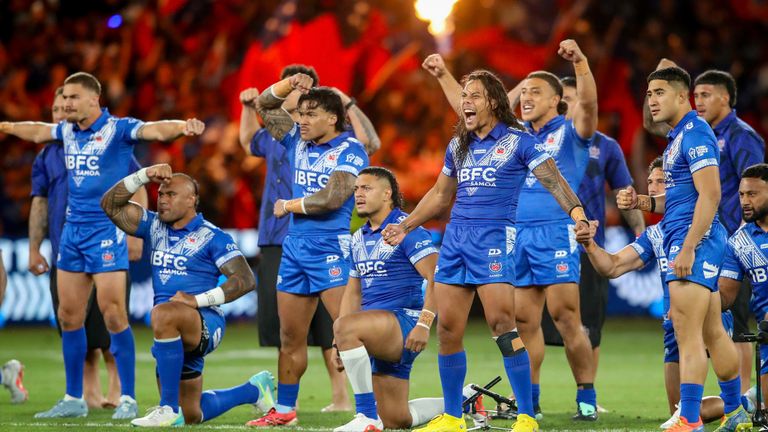
Tonga and Samoa both made it out of the combined Pool B and C
The task is set for New Zealand’s men – do what they did 18 years ago and release Australia’s near two-decade long grip on the title.
Kalyn Ponga became the emblem of how the change to State of Origin eligibility would open up the international landscape as he could still play for Queensland but also represent his heritage. He did that valiantly by returning from a broken arm in that opening clash within just 22 days to star in the semi-finals.
What it would mean to him to complete the journey.

New Zealand’s Kalyn Ponga could complete the ultimate fairytale with victory
The World Cup storyline, for many, was going to be how a nation could defy the odds to win and send shockwaves globally.
While on the face of it New Zealand winning seems normal, it is anything but. They can still change the landscape, mark their moment, move the competition on.
A victory for them means Australia will be denied the chance to say they have been world champions for 20 years – surely that is as good a motivation as any?
One bookend is a win for Australia. Could the other bookend be glory for New Zealand?






Leave a Reply