
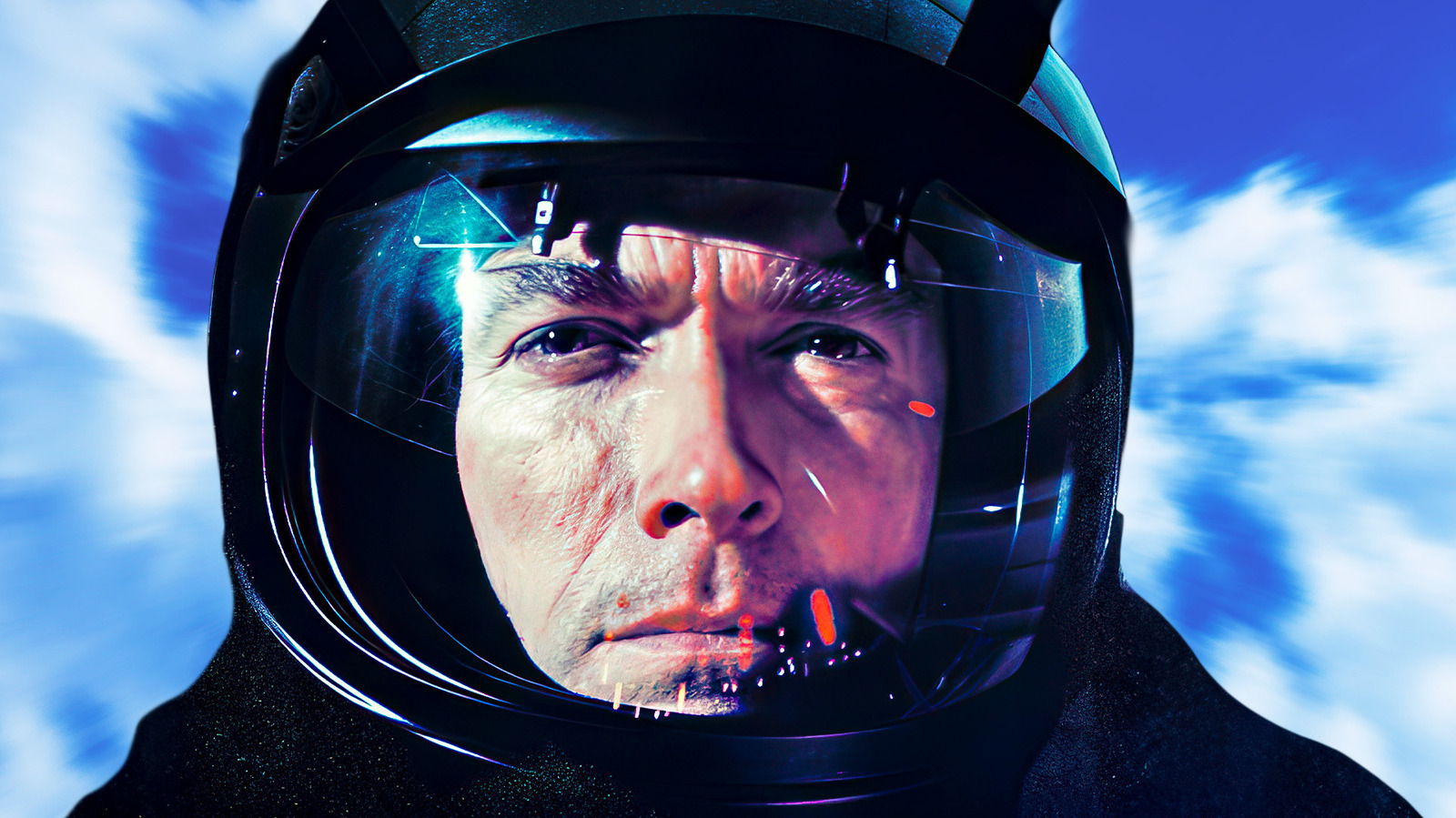
When Clint Eastwood made his 1982 jet-based thriller “Firefox,” he had a great deal of trouble with the aerial special effects. The film includes many shots of high-speed aircraft, all of them filmed against sky-colored backgrounds or snowy climes, and Eastwood had trouble eliminating the hard dark matte lines that result from piecing such special effects shots together on a physical film strip. Luckily, Eastwood was able to employ John Dykstra, the Academy Award-winning special effects man from “Star Wars,” to help solve the problem.
In a behind-the-scenes documentary about “Firefox,” Eastwood voiced his complaints about the matte problems he had with the plane scenes in “Firefox,” alluding to the fact that earthbound planes are harder to visually realize than, say, spaceships. Matte lines in starship scenes, you see, can be hidden in the blackness of space. Dykstra was also interviewed in the same documentary, and he explained that the VFX for “Firefox” were more difficult than “Star Wars” “by a factor of ten” because of the matte problem.
Dykstra was enthused to share his techniques on how he filmed the fast-streaking sky required for fast-moving plane scenes, as he was able to achieve the effect by using a very slow-motion camera — very, very slow-motion, clicking off “a frame or two” every second — while shooting footage of the sky in a Learjet that was traveling 350 miles per hour. Most film cameras shoot at 24 frames per second, so Dykstra noted that filming in such a way forced them to cover a lot of physical space very quickly.
What are matte lines and why were they a problem on Firefox?
The passing mention of a “matte line” might confuse a VFX layperson, so luckily Dykstra explained succinctly what a matte is. In Dykstra’s words, a matte is “a combination of two pieces of film on to one, (to) make them look like they were shot at the same time.” When two pieces of film are combined in the way Dykstra describes, a black line, or a matte line, forms around the plane or the starship in question.
“Firefox” is about a high-tech Soviet superplane, the fictional MiG-31 Firefox, that Clint Eastwood’s character, Major Mitchell Gant, is enlisted to steal as part of a joint British/American military effort. /Film listed it as the seventh best of Eastwood’s nine war movies, and it’s definitely a must-see for any fans of the “Top Gun” films.
Naturally, a plane-based plot requires a lot of aerial scenes involving the fictional title plane that have to be inserted into shots via a matte. Eastwood recalled his VFX issues like this:
“There were so many different ways in which this plane has to fly. And the big difficulty with particular this kind of a film is, all of a sudden, you go to special effects people, and you say, ‘Now, this time, we’re not out in outer space where nobody knows what it looks like. We’re not on a black backdrop so matte lines, etc. etc., all disappear. I want to fly in the clouds and in the planet, and I want to fly over ice, white snow, the Arctic.’ And everybody’s going, ‘Oh my God, there’s no way this is going to happen.'”
Clint Eastwood, too, seemed to be alluding to the VFX in “Firefox” in direct comparison with the effects from “Star Wars.”
John Dykstra had to use a slow motion camera to solve the matte line problem in Firefox
John Dykstra reiterated Eastwood’s comment about matte lines by saying that “in space, where everything’s black … that automatically takes care of the problem.” He then added that when you do a similar effect against a blue sky, “the bit that turns black between the airplane and the sky is really obnoxious.” Luckily, Dykstra handily eliminated said lines using unmentioned VFX alchemy.
Elsewhere in the doc, Dykstra gave an exasperated laugh at the amount of effort that went into capturing the slow-motion shots of the sky, and how little film was used. He said:
“What we did is we went out and shot at slow framerates, meaning two frames or one frame a second. But you must remember something: one frame a second, at the speed we’re traveling — 350 miles an hour in a Learjet — we cover, oh, 150 miles in the amount of time it takes to shoot ten seconds of film. So, in fact, you run out of location very quickly at that rate!”
These kinds of VFX issues were likely annoying to Clint Eastwood, as he is notoriously efficient when it comes to his directorial efforts. Eastwood saved “The Bridges of Madison County” from production limbo by essentially asking for 24 hours to begin prep. He usually gets the shots he needs in one or two takes, so his potential annoyance with the meticulous nature of having to wait for special VFX shots for “Firefox” would be understandable.






Leave a Reply