
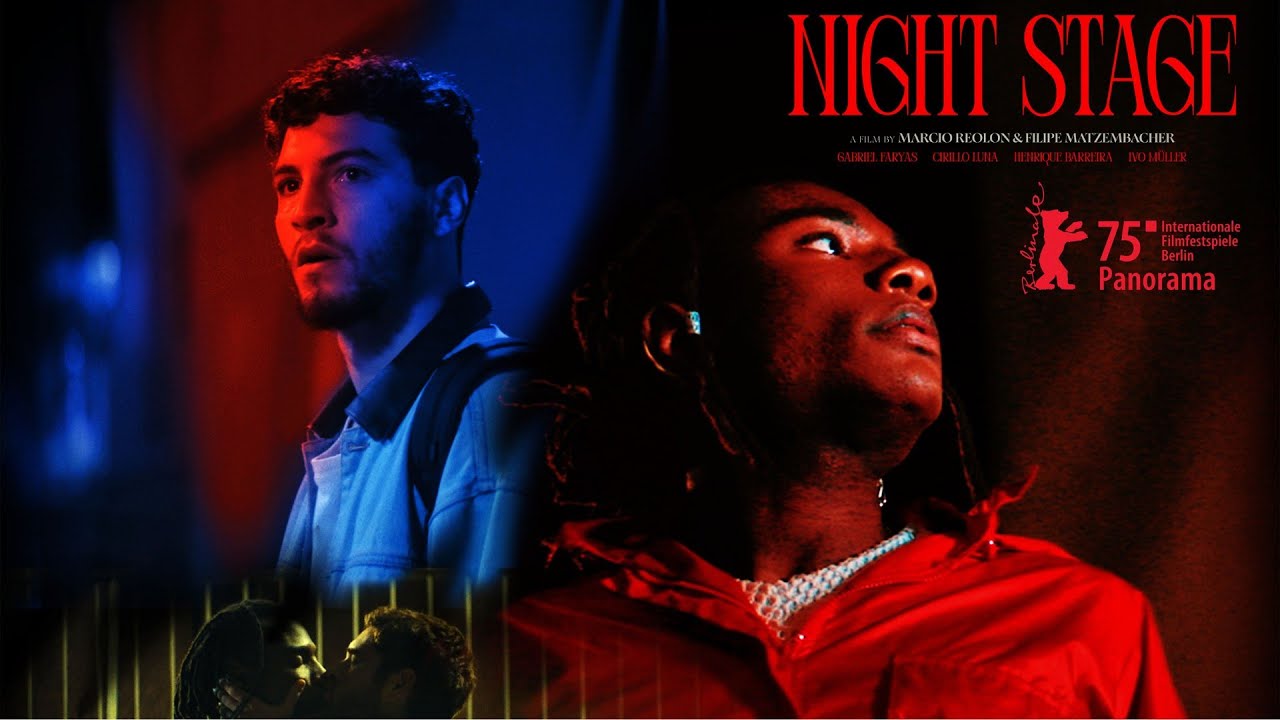
Queer Brazilian Erotic Thriller — Hard Paint Directors Return to Berlinale With Public Sex, Political Ambition, and Baseggio’s Widescreen Tableaux
Matias is a 23-year-old Afro-Brazilian theatre actor in Porto Alegre, hungry for fame. Rafael is a charismatic politician running for mayor, closeted for career reasons. They connect on a hook-up app. What begins as a one-night stand deepens into mutual addiction — not only to each other but to the specific thrill of public sex, the risk of discovery amplifying the connection. As Rafael’s string-pulling advances Matias’s career at the expense of his best friend Fabio, the relationship’s consequences spiral into noir territory. The directors’ central question: what is the difference between desire and ambition? Their answer: it depends on the social context in which you express it. Written and directed by Filipe Matzembacher and Marcio Reolon — partners in life and at their production company Avante Filmes. Cinematography by Luciana Baseggio. World premiere Berlinale Panorama February 14, 2025. BFI Flare Closing Night Gala March 29, 2025. UK theatrical April 3, 2026. German theatrical February 26, 2026.
Why It Is Trending: Third Consecutive Berlinale Premiere — Hard Paint Won the 2018 Teddy — BFI Flare Closing Night — 6 Wins Across Rio, Madrid, and Aruanda
The duo’s filmography maps precisely onto the Berlinale’s LGBTQ+ institutional programme: Seashore (Forum, 2015), Hard Paint (Panorama, Teddy Award, 2018), Night Stage (Panorama, Teddy nominee, 2025). Screen Daily described it as “a sexy queer drama with thematic smarts to match.” ICS Film called it “a taut and atmospheric narrative exploring identity, desire, and societal pressure.” The BFI Flare Closing Night placement — following the Berlinale world premiere — gives the film its widest available UK LGBTQ+ institutional endorsement. Rio de Janeiro International Film Festival awarded it Best Brazilian Film, Best Actor, Best Screenplay, and Best Cinematography — the most comprehensive domestic sweep available.
Elements Driving the Trend: Baseggio’s Widescreen Tableaux, the Public Sex as Political Act, and the Noir Escalation
-
Screen Daily’s most precise formulation: the dramatic tension “doesn’t only rely on possible discovery — it’s also a smart drama about the insane price that a queer person has to pay to attain success in the public eye.”
-
The directors’ argument: “people don’t necessarily care about others being gay anymore — but having sex in public is a different matter. What if these two elements are inextricably linked? What if the subversive streak in being queer is perhaps even more important than the gender of the person you sleep with?”
-
Baseggio’s cinematography — praised unanimously for its widescreen tableaux and gorgeous close-ups — gives the film its most formally accomplished technical register and its double Rio and Aruanda cinematography award recognition.
-
Letterboxd positioned it precisely: “Paul Verhoeven with Hitchcockian flourishes — high camp and simultaneously dead serious, constantly edging.”
Virality: The Guardian’s “Deranged Erotic Thriller” Interview and the BFI Flare Closing Night Profile
-
The Guardian ran an interview headlined ‘It’s the year of gay Brazilian cruising!’ — the most commercially distinctive single media moment in the film’s international release cycle.
-
The BFI Flare Closing Night placement generated the widest UK LGBTQ+ press coverage; the Naturist screening on April 4 at Rio Dalston is the film’s most formally adventurous single exhibition decision.
Critics Reception: Divided — Visual Authority and Screenplay Ambition the Praise; Escalation Logic the Consistent Reservation
-
Screen Daily: “sexy drama with thematic smarts to match — occasionally schematic screenplay; Baseggio’s widescreen tableaux really showcase the directors’ mise-en-scène.”
-
ICS Film: “visual flair and exceptional use of colour and framing — bold swings; increasingly provocative scenes keep in line with the perpetual escalation of risk.”
-
Purple Hour: “shadowy night scenes veer toward erotic thriller territory but few moments end up particularly gripping — the bisexual lighting jazzes up the darker sequences.”
-
Flare audience: “beautiful shooting; sex scenes didn’t seem plausible — performative; final scenes absurd.”
-
Letterboxd (Brazilian critics): “wasted potential — the text truncated and artificial in conflict with the naturalism of the images; a sanitised version of a film that wants to be provocative.” IMDb 6.6 from 262 viewers. 22 critic reviews.
Awards and Recognitions: 6 Wins, 4 Nominations — Rio Sweeps, QueerCineMad, Aruanda, Berlinale Teddy Nominee
-
Rio de Janeiro IFF 2025: Best Brazilian Film (Felix Award), Best Actor (Faryas), Best Screenplay, Best Cinematography — 4 wins; Best Film nominee.
-
Festival Aruanda do Audiovisual Brasileiro 2025: Best Cinematography (Baseggio) — win.
-
QueerCineMad 2025: Best Screenplay Jury Prize (ex-aequo with Lesbian Space Princess) — win.
-
Berlinale 2025: Teddy Award Best Feature Film nominee.
-
Mar del Plata 2025: Best Latin American Film nominee.
-
San Sebastián 2025: Sebastiane Award Best Latin American Film nominee.
Director and Cast: The South American Queer Renaissance’s Most Awarded Duo — Back in Panorama With Their Most Genre-Ambitious Film
-
Filipe Matzembacher and Marcio Reolon — partners in life and production; Seashore (Berlinale 2015, 3 Rio prizes), Hard Paint (Berlinale Teddy 2018) — return for their third consecutive Berlinale with a deliberate pivot from identity drama to genre cinema: “we brought our love for genre films into this one — noir, neo-noir, eroticism, blending danger and desire.”
-
Gabriel Faryas (Matias) — Rio Best Actor winner; a face-centred performance of “quiet and shiningly beautiful” quality that anchors the film’s most demanding emotional and physical sequences.
-
Cirillo Luna (Rafael) — the closeted politician whose charisma conceals the specific vulnerability of a man whose public identity depends on what his private life cannot reveal.
-
Henrique Barreira (Fabio) — Matias’s best friend and artistic rival; the relationship fractured by Rafael’s string-pulling is the film’s most emotionally acute secondary register.
-
Luciana Baseggio (cinematographer) — Fogaréu — won Best Cinematography at both Rio and Aruanda; the film’s unanimously recognised single most accomplished technical contribution.
Conclusion: A Six-Win Brazilian Queer Erotic Thriller That Earned Its Festival Circuit Through Visual Authority and a Central Argument That Screenplay Execution Didn’t Always Match
The Berlinale Teddy nomination confirms the institutional recognition. The Rio sweep — four wins including Best Brazilian Film — confirms the domestic industry’s validation. The Baseggio double cinematography award is the film’s most durable formal legacy. The screenplay’s escalation logic is the most consistently identified limitation.
What Movie Trend Is Followed: Brazilian Queer Cinema Enters the Erotic Thriller — Public Sex as Political Subversion, Not Just Kink
Night Stage belongs to the South American queer renaissance — alongside Reolon and Matzembacher’s own previous work and a broader Latin American queer cinema wave — but pivots from identity drama to genre cinema. The specific formal argument: in Bolsonaro’s Brazil, the suppression of public queerness makes sex in public spaces not merely erotic but structurally political. The erotic thriller framework gives the political argument its most commercially accessible delivery mechanism.
Trend Drivers: Genre Cinema as Political Vehicle, the Ambition-Desire Equivalence, and Baseggio’s Visual Architecture
-
The directors’ most formally specific argument: desire and ambition operate identically — both require suppression for public success, and both become most potent when expressed in defiance of that suppression.
-
The Porto Alegre setting gives the film a specific Brazilian regional geography — not São Paulo, not Rio — that grounds the political repression in a city the directors know with the intimacy of residents.
-
The bisexual lighting — purple, blue, pink — is the film’s most formally discussed visual decision and its most immediate stylistic identity signal within the LGBTQ+ film community.
What Is Influencing Trend: M-Appeal’s International Sales and the Berlinale-BFI Flare Pipeline
-
M-Appeal acquired international sales in December 2024 — the Berlin-based genre-adjacent arthouse sales company whose catalogue positions Night Stage within the most commercially specific available European arthouse LGBTQ+ market.
-
The Berlinale-to-BFI Flare pipeline is the most established institutional route for Brazilian queer cinema to reach UK and European theatrical audiences.
Macro Trends Influencing: Brazil’s Queer Cinema Moment and the Erotic Thriller’s Revival
-
The erotic thriller revival — Babygirl, Desire, the post-#MeToo genre reassessment — gives Night Stage a contemporary cultural context that makes the genre choice legible to international audiences.
-
Brazil’s political polarisation — the Bolsonaro era’s explicit anti-LGBTQ+ positioning — gives the public sex premise its most urgent social grounding: “the idea of sex in public spaces becomes a response to repression.”
Consumer Trends Influencing: LGBTQ+ Festival Circuit and the Brazilian Film International Audience
-
The Berlinale-BFI Flare-QueerCineMad-Rio festival circuit covers the maximum available LGBTQ+ institutional and international arthouse discovery geography simultaneously.
-
Gabriel Faryas’s Rio Best Actor win is the film’s most commercially efficient domestic discovery signal — activating the Brazilian arthouse audience that uses Rio prizes as quality indicators.
Audience Analysis: LGBTQ+ Festival Audiences, Erotic Thriller Enthusiasts, Brazilian Cinema Followers
The core audience is 22–45 — LGBTQ+ film festival audiences who follow the Berlinale Panorama queer programme, erotic thriller enthusiasts activated by the Paul Verhoeven-Hitchcock critical comparisons, and Brazilian and Latin American cinema followers who track the Matzembacher-Reolon filmography.
Conclusion: The Most Genre-Ambitious Brazilian Queer Film of 2025 — Using the Erotic Thriller to Argue That Public Queerness Is Still a Political Act
Night Stage confirms that Matzembacher and Reolon’s formal evolution — from identity drama to genre cinema — is both formally productive and politically purposeful. The genre’s commercial accessibility gives the political argument its most widely distributable available frame.
Final Verdict: Visually Authoritative, Politically Precise, Screenplay-Limited — Baseggio and Faryas Are the Film’s Most Reliable Assets
The directors deliver their most formally ambitious film — the Verhoeven-Hitchcock register, the bisexual lighting, Baseggio’s tableaux — with a screenplay that doesn’t always sustain the escalation logic the premise demands. Screen Daily’s summary is the most precise: “thematic smarts to match the sexy drama — occasionally schematic.” The six festival wins confirm institutional recognition; the divided audience response confirms the gap between formal ambition and narrative conviction.
Audience Relevance: For LGBTQ+ Festival Audiences Who Engage With Political Subtext Over Plot Mechanics
Works best for viewers who approach the erotic thriller as a vehicle for social argument rather than genre entertainment — the Hard Paint audience, BFI Flare regulars, viewers for whom the political context amplifies the erotic premise rather than competing with it.
What Is the Message: Public Queerness Is Still Transgression — the Fetish Is the Argument
The film’s most formally specific claim: the suppression of public queerness under political conservatism makes sex in public spaces not a fetish but a political act. What Matias and Rafael do in parks and theatres is not merely erotic — it is a refusal of the social contract that demands their invisibility as the price of their ambition.
Relevance to Audience: The Insane Price of Public Success for Queer People — Named Directly, Not Metaphorically
Screen Daily identified the film’s most commercially distinctive quality: it names the cost explicitly rather than encoding it in allegory. “The insane price that a queer person has to pay to attain a level of success in the public eye” is the film’s thesis statement, delivered through genre rather than message drama.
Social Relevance: Bolsonaro’s Brazil, the Closeted Politician, and the Public Sex as Resistance
The political context — a Brazil in which explicit anti-LGBTQ+ conservatism has defined the mainstream — gives the closeted mayoral candidate his most formally specific social grounding. Rafael’s calculation is not personal cowardice but a structural response to a system that demands his invisibility.
Performance: Faryas’s Rio Best Actor Win Is Confirmed by Every Review — Luna’s Rafael Is the Film’s Most Complex Performance Challenge
Faryas’s “quiet and shiningly beautiful” performance gives the film its most commercially praised individual element. Luna’s Rafael — charismatic public figure, privately driven by the same transgressive impulse he professionally conceals — is the film’s most formally difficult role and its most unresolved critical question.
Legacy: Matzembacher and Reolon’s Genre Pivot — and Baseggio’s Double Cinematography Award as the Film’s Most Formally Durable Contribution
Night Stage will be remembered as the film that confirmed the duo’s formal evolution from identity drama to genre cinema — and as the film that introduced Luciana Baseggio’s widescreen cinematographic authority to the international LGBTQ+ festival community.
Success: 6 Wins, 4 Nominations — Rio Sweep, Berlinale Teddy Nominee, BFI Flare Closing Night
-
Rio IFF 2025: 4 wins (Best Brazilian Film, Best Actor, Best Screenplay, Best Cinematography). Aruanda: Best Cinematography. QueerCineMad: Best Screenplay. Berlinale Teddy, Mar del Plata, San Sebastián Sebastiane nominees. UK theatrical April 3, 2026. German theatrical February 26, 2026.
Night Stage proves that the most formally honest Brazilian queer erotic thrillers are the ones that treat the fetish as a political argument — and that Matzembacher and Reolon understood this well enough to build a film where the sex in public spaces is the most politically precise act either character performs.
Insights: A six-win Brazilian queer erotic thriller of visual authority — Baseggio’s widescreen tableaux, Faryas’s Rio Best Actor performance, and the public sex as political argument give the film its most formally specific and most institutionally validated qualities, despite a screenplay that doesn’t always match the escalation logic the premise demands. Industry Insight: M-Appeal’s international acquisition and the Berlinale-BFI Flare pipeline confirm that Matzembacher and Reolon have secured the most commercially specific European distribution infrastructure available to Brazilian queer cinema — positioning Night Stage within the genre-adjacent arthouse LGBTQ+ market that Hard Paint’s Teddy established. Audience Insight: The Guardian’s “deranged erotic thriller” framing and the Naturist BFI Flare screening are the film’s two most commercially distinctive single marketing moments — each reaching a different discovery community with the same core argument about transgression and visibility. Social Insight: A film set in Bolsonaro-era Brazil where a closeted mayoral candidate and an ambitious actor develop a fetish for public sex as a form of resistance is making the most formally specific available observation about the relationship between political repression and queer expression: the suppression of public queerness makes its defiance simultaneously erotic and political. Cultural Insight: Night Stage positions Matzembacher and Reolon as the South American queer cinema directors most formally equipped to make the political argument through genre — and Luciana Baseggio as the cinematographer whose double award recognition confirms her as one of Brazilian cinema’s most internationally significant emerging visual voices.
Conclusion: A Visually Authoritative Queer Erotic Thriller That Earned Its Six Festival Awards Through Baseggio’s Cinematography and Faryas’s Performance — With a Screenplay That Points Toward the Film’s Next Evolution
Night Stage confirms the duo’s formal evolution from identity drama to genre cinema as both purposeful and partially fulfilled — the visual authority is complete, the political argument is precisely stated, and the screenplay’s escalation logic is the formal challenge their fourth film must resolve. Baseggio’s double cinematography award and Faryas’s Rio Best Actor win are the film’s most durable institutional legacies.
Summary: One Actor, One Politician, One City Block, and the Discovery That Public Sex Is a Political Act in Conservative Brazil
-
Movie themes: Public queerness as political transgression in conservative Brazil, the inextricable link between desire and ambition, the insane cost of visibility for queer public figures, and the argument that what is subversive in being queer is more important than the gender of who you sleep with.
-
Movie directors: Filipe Matzembacher and Marcio Reolon — Seashore (Berlinale 2015), Hard Paint (Berlinale Teddy 2018) — pivot from identity drama to genre cinema for their third feature, bringing cinephile love of noir, neo-noir, and eroticism to their most commercially ambitious production.
-
Top casting: Faryas’s Rio Best Actor win confirms the unanimous critical assessment of his performance. Luna’s Rafael is the film’s most formally complex challenge. Baseggio’s double cinematography award is the film’s most institutionally recognised single contribution.
-
Awards and recognition: 6 wins: Rio IFF (Best Brazilian Film, Best Actor, Best Screenplay, Best Cinematography), Aruanda (Best Cinematography), QueerCineMad (Best Screenplay). 4 nominations: Berlinale Teddy, Mar del Plata Best Latin American Film, San Sebastián Sebastiane, Rio Best Film. UK theatrical April 3, 2026. German theatrical February 26, 2026.
-
Why to watch: The Brazilian queer erotic thriller that the Hard Paint directors built from Verhoeven, Hitchcock, and bisexual lighting — Baseggio’s widescreen tableaux, Faryas’s quiet authority, and a political argument about public sex and conservative repression that Screen Daily called “thematic smarts to match the sexy drama.”
-
Key success factors: Matzembacher and Reolon’s Berlinale institutional track record plus Baseggio’s double award-winning cinematography plus the Berlinale-BFI Flare-Rio festival circuit plus M-Appeal’s European sales infrastructure plus Faryas’s Rio Best Actor award plus the Guardian media profile plus the public sex as political argument’s cultural timing.
-
Where to watch: UK theatrical from April 3, 2026. German theatrical from February 26, 2026.
Conclusion: A Formally Ambitious Brazilian Queer Erotic Thriller Whose Visual Authority and Political Argument Confirm the Duo’s Evolution — and Point Directly at What the Fourth Film Must Resolve
Night Stage earns its six festival awards through the formal qualities that distinguish the most serious entries in the erotic thriller revival — a cinematographic identity of complete authority, a political argument stated with precise directness, and two performances that commit fully to a premise the screenplay doesn’t always serve at the level they deserve. The fourth Matzembacher-Reolon film, arriving with this genre pivot confirmed, will be the definitive test of whether the political argument and the genre mechanics can finally operate at the same level simultaneously.






Leave a Reply