
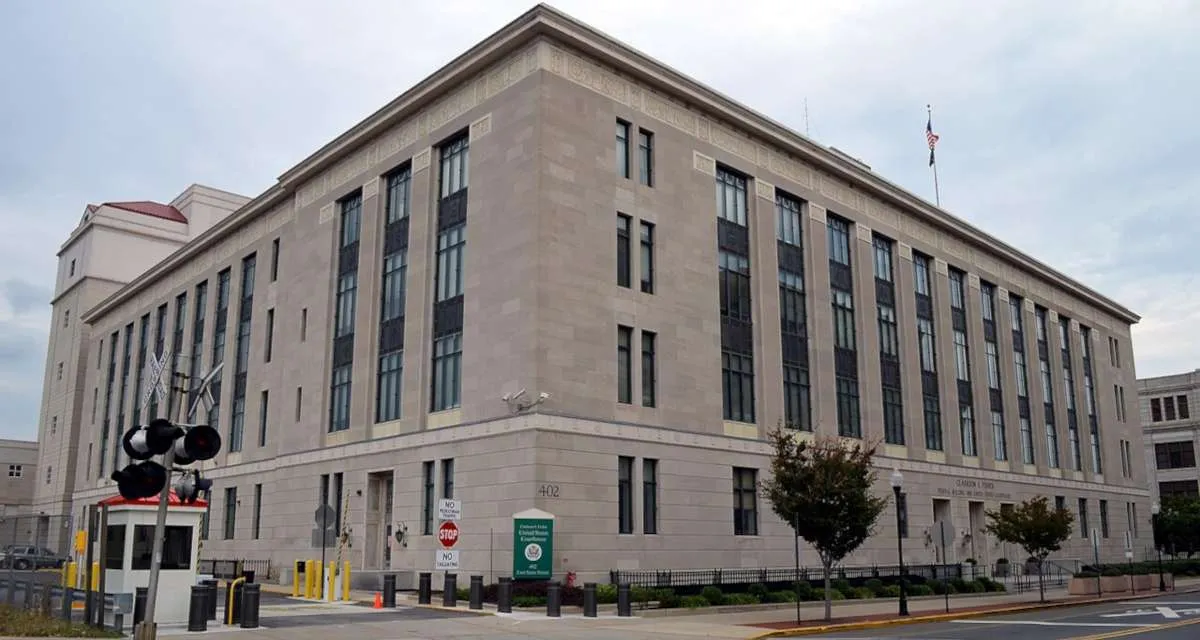

Trenton’s Clarkson S. Fisher Federal Building and United States Courthouse. Photo Credit: Niagara
Following the Supreme Court’s Cox v. Sony decision, internet service provider RCN is doubling down on its push to end the copyright suit filed against it by the major labels.
Technically, it’s been months since the defendant initially moved to invoke the unanimous Supreme Court decision in its marathon legal battle with the majors. Like a number of different ISPs, RCN was accused of being contributorily liable for subscribers’ alleged repeat infringement.
But as many know, Cox v. Sony dramatically narrowed the scope of secondary liability – and prompted the abrupt conclusion of multiple industry suits against internet companies. Just in passing, the majors voluntarily dropped their Altice and Verizon cases with prejudice, while Grande beat a $47 million copyright verdict.
(Incidentally, RCN, Grande, and others are now operating under the broader Astound Broadband banner.)
Why, then, is the seven-years-running RCN showdown still in motion? According to a new filing from the company, the majors are attempting to use a “pending discovery dispute…to extract concessions from RCN.”
“Indeed, in the wake of Cox, the Labels and other rightsholders dismissed every other secondary copyright infringement case against an ISP—including the movie industry’s virtually identical lawsuit against RCN,” the defendant wrote.
“The same should have happened here,” RCN continued. “However, there is a pending discovery dispute between the parties regarding RCN’s privilege claims, and the Labels are using that dispute as justification for keeping this case alive, seemingly in order to extract concessions from RCN.”
Not stopping there, the ISP went on to express the belief that Universal Music and others “filed this case…for additional leverage in discussions regarding a potential settlement of Grande,” which was heading to trial when the RCN complaint set sail.
But “(f)or nearly the past five years, the Labels have been raising an ever-evolving series of complaints about RCN’s claims of privilege over internal documents relating to RCN’s handling of copyright issues,” the defendant vented.
When it comes to this “past five years” timetable, “millions” of produced documents later, the magistrate judge in May 2022 stayed fact depositions to determine whether RCN had complied with all its production obligations.
In the internet provider’s view, the lengthy delay – the stay is in place today – aimed to dramatically slow the process and enable continued complaints from the labels.
“The stay has remained in place for years because the Labels have thwarted any final resolution through a series of shifting complaints that have resulted in no fewer than 20 discovery letter briefs to Magistrate Judge Bongiovanni,” RCN recapped. “The Court has issued multiple orders to attempt to resolve these matters, but no matter the Court’s rulings, the Labels refuse to take no (or yes) for an answer.”
Unsurprisingly, the filing also explores the idea that the Cox v. Sony precedent means UMG v. RCN is essentially finished; because the same points have already surfaced in similar cases, we needn’t recap them here.
As for what comes next, RCN is now looking to lay out its dismissal position during an early October oral argument.






Leave a Reply