
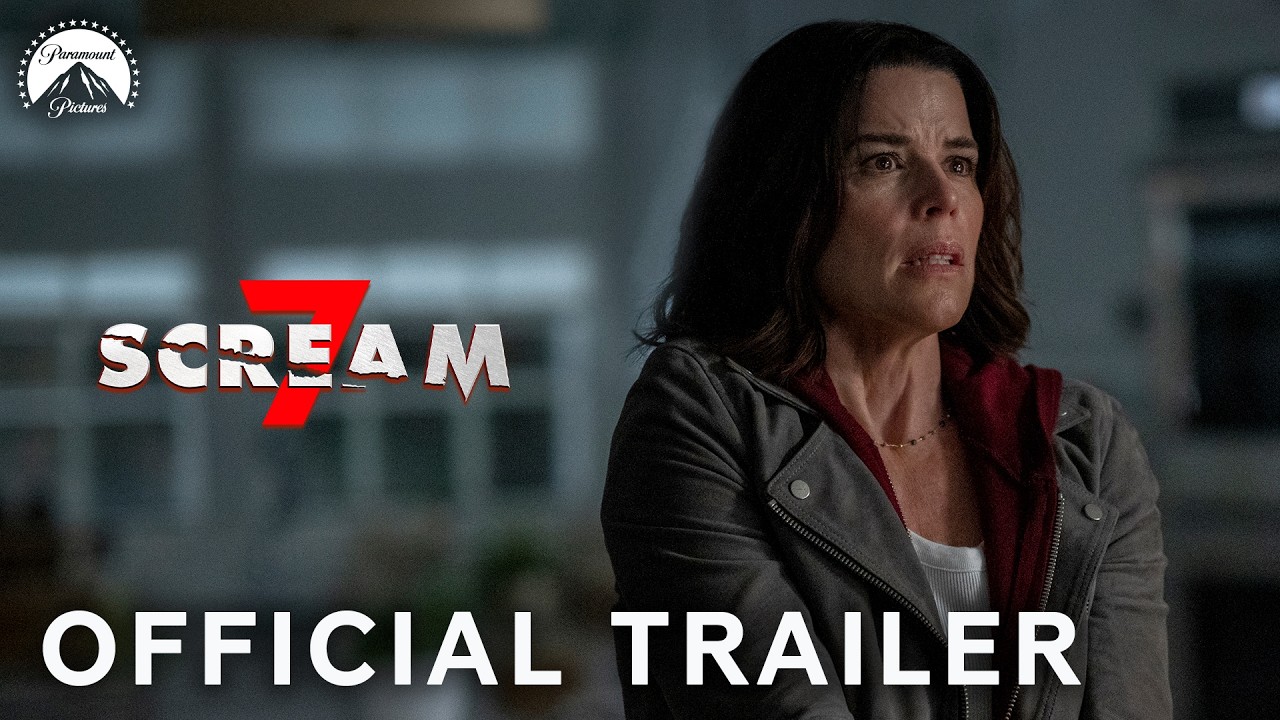
Legacy horror revival blending nostalgia with generational stakes and franchise reinvention
A legacy slasher reboot exploring fear, family, and inherited traumaGhostface returns to haunt a new generation through bloodline and memory
Scream 7 follows Sidney Prescott as she attempts to live a quiet life, only to be pulled back into violence when a new Ghostface killer targets her daughter. The film raises the stakes by shifting the horror from personal survival to generational protection, intensifying both emotional and physical danger.
As past trauma resurfaces, Sidney is forced to confront not just the killer, but the legacy of fear that continues to define her life. The narrative builds on the franchise’s meta-horror roots while exploring themes of motherhood, identity, and cyclical violence.
The film operates as both continuation and commentary, using nostalgia as a narrative device while questioning its own relevance in a modern horror landscape. It frames horror not just as external threat, but as something inherited—passed down through history, memory, and family ties.
Why It Is Trending: A legacy horror revival driven by nostalgia, generational stakes, and franchise continuation
Scream 7 is trending due to its return to one of the most iconic horror franchises, anchored by the comeback of Neve Campbell as Sidney Prescott. The film capitalizes on nostalgia while introducing a generational shift, positioning Sidney’s daughter as the new focal point of terror.
It aligns with the industry’s ongoing strategy of reviving established IPs, blending legacy characters with new storylines to maintain relevance across audiences. This approach allows studios to leverage emotional familiarity while expanding narrative possibilities.
The film also benefits from strong box office performance and high visibility, reinforcing the continued commercial viability of long-running horror franchises.
Elements Driving the Trend: Nostalgia, legacy characters, and elevated generational conflict
The film’s appeal is rooted in its connection to the original Scream, bringing back familiar faces while introducing new dynamics centered around family and legacy.
Its focus on a mother-daughter relationship adds emotional depth, shifting the narrative from survival to protection and inheritance of trauma.
The return of core cast members like Courteney Cox alongside newer actors creates a balance between continuity and renewal, sustaining audience engagement.
Virality of Movie (Social Media Coverage): High engagement driven by fan nostalgia and franchise discourse
The film generates strong social media traction, particularly among long-time fans of the franchise who engage with theories, character arcs, and Ghostface reveals.
Trailer releases and legacy character returns fuel online discussions, memes, and speculation, maintaining consistent visibility across platforms.
While reactions are mixed, the conversation itself sustains the film’s cultural presence.
Critics Reception: Mixed reviews highlighting entertainment value but declining originality
With a Metascore of 35, Scream 7 received generally mixed-to-negative reviews. Critics acknowledge its pacing, performances, and intense sequences but point to overreliance on nostalgia and weak narrative payoff.
Industry publications and critics often note that while the film delivers moments of tension, it struggles to innovate within the franchise. Reviews across platforms emphasize that the Ghostface reveal lacks impact, reducing the overall effectiveness of the story.
Awards and Recognitions: Limited recognition reflecting commercial focus over critical acclaim
Unlike earlier entries in the franchise, Scream 7 has not secured major awards recognition, reflecting its positioning as a commercial horror sequel rather than a festival-driven film.
Its success is measured more through box office performance and audience engagement than through industry accolades.
Director and Cast: Kevin Williamson’s return supported by a legacy and new-generation ensemble
Kevin Williamson returns to direct, bringing his foundational connection to the franchise while attempting to modernize its themes. His involvement reinforces continuity with the original tone and meta-horror style.
Neve Campbell leads the film with a performance grounded in emotional weight, supported by Isabel May as her daughter, introducing the next generation of characters.
The ensemble cast blends returning and new actors, maintaining the franchise’s tradition of ensemble-driven storytelling.
The film trends because: Nostalgia, franchise expansion, and generational storytelling align
• Cultural + market relevance The film taps into long-standing audience attachment to legacy horror franchises while updating its themes for modern viewers.
• Industry opportunity Studios continue to invest in proven IPs to reduce financial risk and ensure built-in audience engagement.
• Audience alignment Multi-generational audiences are drawn to familiar characters alongside new storylines that extend the narrative universe.
The industry increasingly relies on franchise expansion as a strategy to sustain relevance and profitability in the evolving entertainment landscape.
Conclusion: A commercially driven continuation balancing nostalgia with evolving horror dynamics
Scream 7 reinforces the enduring appeal of legacy horror franchises, leveraging nostalgia while attempting to introduce new emotional stakes. Its strength lies in audience familiarity and brand recognition, even as it faces challenges in originality. While not critically groundbreaking, it succeeds in maintaining cultural relevance through conversation and continuity. Ultimately, the film reflects the industry’s ongoing reliance on established IP as both creative foundation and commercial strategy.
What Movie Trend Is Followed: Legacy horror franchises evolving through generational storytelling and meta-revival
Scream 7 follows a dominant trend in modern horror: the revival of legacy franchises through generational handoffs and self-aware storytelling. It extends the narrative of earlier films while repositioning the story around a new generation, using legacy characters as emotional anchors rather than sole protagonists.
This trend builds on the foundation of the original Scream, which redefined horror through meta-commentary, but now shifts toward exploring inherited trauma, legacy, and continuity. The film reflects a broader movement where horror franchises evolve by connecting past and present, rather than rebooting entirely.
It fits within a landscape where storytelling is cyclical—returning to familiar structures while layering new emotional and cultural relevance on top.
Trend Drivers: Nostalgia-driven IP strategy and demand for continuity in storytelling
A key driver is the industry’s reliance on established franchises, where recognizable IP reduces financial risk and ensures audience interest.
There is also a growing emphasis on continuity, where stories evolve across generations instead of restarting, allowing deeper emotional investment.
Performances by Neve Campbell and Isabel May reinforce this trend by embodying both legacy and transition within the same narrative.
What Is Influencing Trend: Franchise culture and audience attachment to long-running narratives
The trend is heavily influenced by franchise culture, where audiences develop long-term emotional connections with characters and story worlds.
There is also a strong influence from modern media consumption habits, where serialized storytelling and cinematic universes dominate entertainment preferences.
This creates demand for films that extend existing narratives rather than introducing entirely new ones.
Macro Trends Influencing: Expansion of cinematic universes and IP-driven entertainment models
Globally, the entertainment industry is shifting toward interconnected storytelling, where films function as part of larger narrative ecosystems.
Studios prioritize scalability, allowing stories to expand across sequels, spin-offs, and cross-platform content.
This supports a broader movement toward franchise sustainability and long-term audience engagement.
Consumer Trends Influencing: Desire for familiarity combined with new perspectives
Audiences increasingly seek a balance between nostalgia and novelty, wanting familiar characters alongside fresh storylines.
There is also a preference for emotionally grounded narratives, where character relationships drive engagement rather than pure spectacle.
This makes generational storytelling particularly effective in maintaining relevance.
Audience Analysis: Multi-generational viewers engaged through nostalgia and continuity
The core audience spans from long-time fans of the franchise (30–50+) to younger viewers (16–30) discovering it through newer entries.
These audiences value both familiarity and evolution, engaging with content that respects legacy while introducing change.
Behaviorally, they are highly active online, participating in discussions, theories, and franchise discourse.
They are more likely to engage with sequels and extended universes, especially when legacy characters are involved.
Conclusion: A scalable and sustainable trend driven by nostalgia, continuity, and evolving narratives
This trend works because it balances emotional familiarity with narrative expansion, creating a sense of continuity that keeps audiences invested. It is highly scalable, allowing franchises to extend across multiple installments and platforms. Its sustainability remains strong, as long as innovation accompanies nostalgia. The industry will continue to rely on this model, as it provides both creative flexibility and commercial security.
Final Verdict: A nostalgic yet uneven franchise continuation balancing legacy with diminishing innovation
Scream 7 delivers an experience rooted in legacy, bringing back Neve Campbell as Sidney Prescott while attempting to pass the narrative torch to a new generation. It succeeds in moments of tension and emotional resonance, particularly through its focus on family and generational trauma.
Director Kevin Williamson leans into the franchise’s meta-horror DNA, but the execution feels less sharp than earlier entries. While the film maintains pace and delivers visually polished sequences, it struggles to balance nostalgia with originality.
The performances provide stability, with Campbell anchoring the story and Isabel May introducing a new emotional layer. However, narrative weaknesses—particularly around the reveal and motivations—undermine the overall impact.
The film’s long-term significance lies less in innovation and more in its role as a continuation, reinforcing the franchise’s cultural presence rather than redefining it.
Audience Relevance: Engaging for fans but less impactful for new audiences seeking originality
The film resonates strongly with long-time fans invested in the Scream legacy, offering familiar characters and thematic continuity.
However, for newer audiences or viewers seeking fresh horror concepts, it may feel repetitive and overly dependent on past formulas.
What Is the Message of Movie: Trauma persists across generations, shaping identity and fear
At its core, the film suggests that unresolved trauma is not contained within individuals but passed down through generations.
It explores how fear, survival instincts, and identity are inherited, particularly within family structures.
Relevance to Audience: Reflecting modern anxieties around legacy, family, and inherited conflict
The narrative connects with audiences navigating generational expectations and emotional inheritance.
It reflects a broader cultural conversation about how past experiences shape present realities.
Social Relevance: Commentary on cyclical violence and the inability to escape past trauma
The film highlights how cycles of violence and fear can repeat, especially when unresolved.
It subtly critiques the idea that survival alone is enough, suggesting that deeper healing is often ignored.
Performance: Strong commercial success despite mixed critical reception
Despite a Metascore of 35, the film achieved significant box office success, grossing over $200 million worldwide.
Its commercial performance reinforces the enduring appeal of the franchise, even in the face of critical division.
Legacy: Sustaining franchise relevance rather than redefining the genre
Scream 7 contributes to the longevity of the franchise, ensuring its continued presence in popular culture.
However, it does not significantly evolve the genre, instead reinforcing established formulas.
Success: Driven by brand recognition, nostalgia, and audience loyalty
The film’s success is rooted in its strong brand identity and established fan base.
It demonstrates how legacy franchises can remain commercially viable even with mixed reception.
Insights: Franchise-driven horror continues to dominate through nostalgia, even as creative innovation declines.Industry Insight: Studios prioritize recognizable IP to ensure consistent returns, often at the expense of originality. This reinforces a cycle of safe, repeatable content.Consumer Insight: Audiences remain loyal to familiar franchises, even when quality fluctuates. Emotional attachment outweighs critical reception.Social Insight: The film reflects a broader cultural pattern of revisiting the past rather than creating new narratives. This highlights both comfort and stagnation in entertainment consumption.Cultural Insight: Scream 7 underscores how legacy storytelling shapes modern cinema, where continuity often takes precedence over reinvention. This dynamic continues to influence industry direction.
Conclusion: A commercially successful but creatively constrained continuation of an iconic horror franchise
Scream 7 ultimately stands as a film that prioritizes continuity over reinvention, delivering moments of engagement without fully recapturing the innovation that defined the original. It operates within a franchise ecosystem that values familiarity, ensuring audience retention. From a cultural perspective, it highlights both the power and limitation of nostalgia-driven storytelling. The industry will continue to support such films, as their commercial reliability outweighs creative risk. Ultimately, it reflects a horror landscape increasingly shaped by legacy rather than evolution.
Summary of the Movie: A legacy-driven horror sequel blending nostalgia with generational fear and franchise continuity
• Movie themes: Legacy, generational trauma, survival, identity, fear cycles, family protectionThe film explores how trauma and violence are passed down across generations, turning survival into a recurring cycle rather than a resolution.
• Movie director: Meta-horror roots revisited through Kevin Williamson’s franchise returnWilliamson brings back the self-aware tone that defined earlier entries, though with a stronger emphasis on emotional stakes and legacy storytelling rather than genre reinvention.
• Top casting: Franchise anchors led by Neve Campbell with a new-generation ensembleCampbell reprises her role as Sidney Prescott, supported by Isabel May as her daughter, alongside returning cast members like Courteney Cox, creating continuity across generations.
• Awards and recognition: Commercial success outweighing critical acclaimWhile the film did not secure major awards recognition, it achieved strong box office performance, grossing over $200 million worldwide, reinforcing its market impact.
• Why to watch movie: A high-stakes continuation for fans of the franchise and slasher genreIt offers intense sequences, legacy character arcs, and a continuation of the Ghostface mythology, appealing primarily to long-time fans.
• Key Success Factors: Established IP, nostalgic appeal, and multi-generational storytellingThe film succeeds through brand recognition, emotional continuity, and its ability to merge past and present narratives within a single storyline.
• Where to watch: Theatrical release with expected streaming distributionReleased on February 27, 2026 (United States), the film follows a traditional theatrical rollout, with future availability expected on major streaming platforms.
Conclusion: A familiar yet enduring franchise entry shaped by nostalgia and audience loyalty
Scream 7 ultimately defines its impact through continuity rather than reinvention, maintaining relevance by leaning into its legacy. It delivers a viewing experience shaped by familiarity, emotional stakes, and recognizable characters. While it does not significantly push the genre forward, it reinforces the staying power of franchise-driven horror. Its strength lies in its connection to audience memory and cultural recognition. Ultimately, the film reflects an industry where legacy storytelling continues to dominate mainstream success.











Leave a Reply