
The Austrian-Made Las Vegas Slacker Film Where a Man With No Training Bets a Million Dollars He Can Run 70 Miles Around the Same City Block in 24 Hours — and His Friend Watches Him Fall Apart
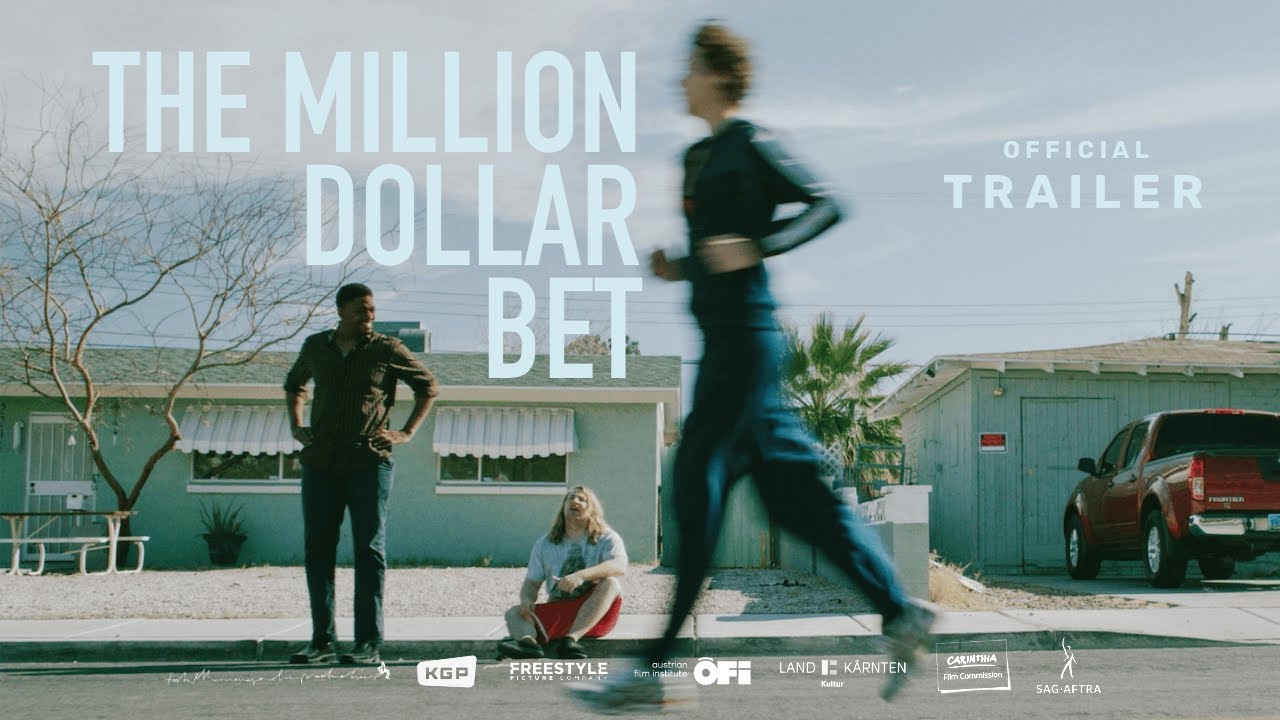
Jack and Hank are Las Vegas gamblers stuck in the seedy suburbs — far from the neon of the Strip, in the cramped flats and dull glow of fast food palaces. Hank — described by his sister Janet as “running away from adulthood” — spots a man training for a marathon and makes an impulsive bet: 70 miles around the block, 24 hours, a million dollars at 3-to-1 odds. The bet escalates. The city watches. A sandstorm approaches. Hank’s body begins to fail. It’s not a sports film. Inspired by true events. Written by Woschitz and Andrea Piva. Cinematography by Enzo Brandner. Produced by KGP Filmproduktion — the company behind Hubert Sauper’s Sundance winners and Kornél Mundruczó’s Cannes Competition entries. Viennale 2024 world premiere. Austrian theatrical October 21, 2024. Available on Prime Video and Apple TV.
Why It Is Trending: Viennale World Premiere — An Austrian Director Making an American Indie in Las Vegas — Max Ophüls Prize Winner Returning After Nine Years
Woschitz won the Max Ophüls Prize for Universalove (2009), which premiered at TIFF and the Berlinale. The Million Dollar Bet is his first feature in nine years. The Viennale positioned it as a film that “harks back to the early days of American independent cinema, when relative unknowns could gain notice with a low-budget feature driven by a sharply observed screenplay.” Cinema Austriaco called it “a real gem of contemporary Austrian cinema.” AWFJ’s Jeanne Wolf called it “a powerful exploration of friendship and loss.” Eye for Film noted the film “automatically feels refreshing” in a festival landscape that favours agenda-driven films.
Elements Driving the Trend: The Absurdist Premise Played Straight, the Slacker Lineage, and Jack’s Transformation as the Film’s Surprise
-
The film’s most formally specific structural decision: it is Jack — the observer, not the runner — who undergoes the most significant transformation during the 24 hours, giving the film its most commercially unexpected emotional arc.
-
The Clerks-Big Lebowski slacker lineage gives the film its most commercially legible tonal positioning — laid-back characters in a nondescript neighbourhood, the landmark Las Vegas deliberately kept off screen.
-
Amir Naderi’s cinema of impossible missions is Woschitz’s stated formal influence — the gruelling race against time as a mechanism for exposing what a character is made of, rather than as a sports drama celebrating endurance.
-
The sandstorm approaching across the Nevada desert is the film’s most formally specific environmental pressure — an external force that amplifies the internal collapse happening in real time.
Virality: The True Events Foundation and the “Austrian Director in Las Vegas” Discovery Angle
-
The inspired-by-true-events grounding gives the bet its most commercially surprising quality — the absurdity of the premise is real, which makes every moment of Hank’s deterioration more formally weighted.
-
The Austrian production in Las Vegas — KGP Filmproduktion, a company whose track record runs to Cannes Competition and Sundance Grand Jury Prizes, making a $300K English-language slacker film — is the film’s most charming and most unusual institutional identity.
Critics Reception: Warmly Positive — the Friendship Themes and the Slacker Register the Consensus Strengths
-
Cinema Austriaco: “one laughs a lot, but also has time to reflect — much more complex and layered than it may initially seem; a gem of contemporary Austrian cinema.”
-
Viennale: “a small, appealingly scrappy film about masculinity in crisis — as Hank tries to become a winner by literally running in circles.”
-
Eye for Film: “something as lighthearted and fun as Woschitz’s film automatically feels refreshing — the actors fit the landscape, playing their everyman characters compellingly; could be listened to as a radio play, which is an extremely rare case.”
-
AWFJ: “borrowed from the style of great slacker movies — Clerks, The Big Lebowski — this brings an unexpectedly quiet emotional power when the marathon miles and stakes edge toward absurdity; Woschitz has avoided sport clichés to create a powerful exploration of friendship and loss.”
-
Letterboxd: “lovely visuals, convincing performances, great soundtrack — defying expectations brought by the low budget.” IMDb 7.1 from 43 early voters.
Awards and Recognitions: No Awards — Viennale 2024 World Premiere — Prime Video and Apple TV
Director and Cast: The Max Ophüls Prize Winner Returning With His Most Commercially Accessible Film — Shot on Location in Las Vegas With an American Cast
-
Thomas Woschitz — studied at Centro Sperimentale di Cinematografia Rome; Universalove (Max Ophüls Prize 2009, TIFF, Berlinale), Bad Luck (Max Ophüls, Diagonal Award); nine-year feature gap — returns with his most formally accessible and most geographically adventurous production.
-
Justin Cornwell (Jack) — the film’s most praised individual performance; the observer whose transformation is the film’s surprise; Letterboxd specifically noted him as the standout.
-
Douglas Smith (Hank) — Die Alone — carries the physical deterioration across 24 hours of circling the same block with the specific vulnerability that the slacker-who-won’t-grow-up character requires.
-
Kristen Gutoskie (Janet) — Hank’s sister; the film’s most lucid outside observer; her line — “Hank is running away from adulthood” — is the screenplay’s most formally precise character diagnosis.
-
Enzo Brandner (cinematographer) and the retro electric guitar-dominated score are the film’s most unanimously praised technical contributions.
Conclusion: A Viennale Debut That Confirms Woschitz’s Continued Formal Authority in the Low-Budget Character Comedy — and Delivers the Las Vegas Slacker Film That the American Indie Circuit Never Made
The KGP production infrastructure, the Viennale premiere, and Woschitz’s Max Ophüls track record give the film its institutional credibility. The slacker lineage, the true events foundation, and Cornwell’s performance are its most reliable discovery assets. The $300K budget and the 90-minute runtime make it the most practically accessible entry point in Woschitz’s filmography.
What Movie Trend Is Followed: The Austrian Filmmaker Makes the American Slacker Film the American Industry Stopped Making — Las Vegas Without Landmarks, Friendship Without Sentimentality
The Million Dollar Bet belongs to the American 1990s indie slacker tradition — Clerks, The Big Lebowski, early Richard Linklater — in which nothing much happens and everything matters. Woschitz’s specific formal contribution is the Austrian outsider perspective: he sees the Las Vegas suburbs with the documentary attentiveness of a filmmaker who has no nostalgic relationship to the American indie tradition he is working within. The deliberately non-iconic Las Vegas — the nondescript block, the fast-food pallor, the sandstorm over the Nevada desert — is the film’s most formally specific visual decision and its most commercially distinctive quality.
Trend Drivers: The Prop Bet as Structure, the Non-Iconic Las Vegas, and the Amir Naderi Impossible Mission
-
The prop bet — a specific gambling format in which one person bets another they can accomplish a physical or logistical feat — gives the film its most formally specific American gambling culture grounding and its most commercially unusual narrative engine.
-
The deliberate avoidance of Las Vegas landmarks gives the film a suburban American geography that the American indie tradition rarely inhabits with this level of formal intention.
-
The Amir Naderi influence — the impossible physical mission as a mechanism for exposing the inner life — gives the endurance premise its most formally serious cinematic lineage.
What Is Influencing Trend: KGP’s International Arthouse Track and the Viennale’s US Indie Endorsement
-
KGP Filmproduktion’s track record — Sundance Grand Jury Prizes, Cannes Competition — gives Woschitz’s micro-budget slacker comedy an institutional context that positions it within the most credentialed available Austrian arthouse infrastructure.
-
The Viennale’s endorsement of the film as a return to early American independent cinema’s formal values gives it the most commercially specific festival positioning available for a European-produced American indie.
Macro Trends Influencing: The American Slacker Film’s Absence From Contemporary Cinema and the Friendship Drama’s Streaming Viability
-
The 1990s American slacker tradition has no contemporary mainstream heir — the streaming era’s content economics have made the low-budget character comedy commercially non-viable within the American studio system, making the Austrian outsider’s version of it formally significant.
-
The friendship drama set within a single 24-hour period is one of streaming’s most commercially accessible narrative formats — the contained timeline and the two-hander dynamic give the film a direct-to-streaming viability that the theatrical run’s limited scope could not fully exploit.
Consumer Trends Influencing: Prime Video and Apple TV Discovery and the Running Community
-
Prime Video and Apple TV availability gives the film the most commercially motivated secondary discovery window — the streaming audience for the $300K true events indie drama is significantly larger than the theatrical window’s reach.
-
The running community — which the Letterboxd reviewer specifically noted as their entry point — is the film’s most self-selecting secondary discovery audience: viewers who run 70 miles in 24 hours, or know people who do, will seek this film out independently of any marketing effort.
Audience Analysis: American Indie Drama Audiences, Streaming Discovery Viewers, and the Running Community
The core audience is 25–50 — American indie drama audiences who follow the Clerks-Big Lebowski slacker tradition, streaming discovery viewers who encounter the film through Prime Video and Apple TV algorithms, and the running and ultramarathon community for whom the true events premise is personally resonant.
Conclusion: An Austrian-Made American Slacker Film That Fills a Gap the American Industry Left Empty — With the KGP Production Pedigree and the Viennale Endorsement Giving It a Formal Authority Its $300K Budget Would Not Otherwise Command
The film earns its institutional positioning through the formal quality that distinguishes the best micro-budget slacker dramas from the merely cheap — a director who knows exactly what register he is working in and refuses to sentimentalise or inflate the material.
Final Verdict: A Formally Precise Low-Budget Las Vegas Slacker Film That Delivers Clerks-Level Character Warmth and Amir Naderi-Level Formal Seriousness — at $300K and 90 Minutes
Woschitz delivers a film of complete formal discipline — the non-iconic Las Vegas, the slacker register, the prop bet structure, and the Naderi impossible mission influence are all precisely calibrated without a frame wasted. The film’s most commercially significant quality is identified by Eye for Film: “it could be listened to as a radio play, which is an extremely rare case” — confirming that the screenplay and the performances carry the film’s entire weight without visual extravagance.
Audience Relevance: For American Indie Drama Fans, Slacker Film Enthusiasts, and the Streaming Discovery Audience
Works best for viewers who responded to the 1990s American indie slacker tradition and have found nothing comparable in the contemporary streaming landscape — and for whom a $300K Austrian-produced Las Vegas drama built on a true bet is the most formally honest available continuation of that tradition.
What Is the Message of Movie: The Biggest Gambles Are Never About the Money — They Are About Whether You Are Still the Person You Believed Yourself to Be
AWFJ’s most precise formulation: “This story shows the fleeting illusion that we are still who we once were — as one man runs himself into the ground and another wonders if he’ll lose even if he wins.” The million dollars is the formal mechanism. The friendship and the self-image are what’s actually being wagered.
Relevance to Audience: A Film That Gives the Las Vegas Suburban Underclass Its Most Formally Honest and Most Character-Specific Cinematic Treatment in Recent American-Adjacent Independent Cinema
The seedy Las Vegas suburbs — the cramped flats, the fast-food pallor, the nondescript block — give the film a geographic specificity that the Strip’s glamour has always overwhelmed in mainstream Las Vegas cinema. Woschitz’s Austrian outsider perspective is the film’s most formally distinctive quality.
Social Relevance: Masculinity in Crisis and the Bet as the Last Available Proof of Self-Worth
The Viennale’s characterisation — “a small film about masculinity in crisis, as Hank tries to become a winner by literally running in circles” — is the film’s most precise social observation. The bet is not about money. It is about the specific male conviction that a single spectacular physical act can settle every question about who you are.
Performance: Cornwell’s Jack Is the Film’s Surprise — Smith’s Physical Deterioration Is Its Most Sustained Formal Achievement
The film’s most formally unexpected performance decision — Jack’s transformation being more significant than Hank’s — is what Letterboxd viewers praised most specifically. Cornwell’s observer-becoming-participant arc gives the 90 minutes their most commercially rewarding emotional payoff.
Legacy: Woschitz’s Return Confirmed His Formal Identity as an Austrian Filmmaker Most Productive When Working Against Genre Expectations
The Million Dollar Bet will be remembered as the Austrian film that made the American slacker drama the American industry stopped making — and as the Woschitz film that confirmed his formal instincts are most productive when the budget is lowest and the screenplay does the heaviest lifting.
Success: No Awards — Viennale 2024 World Premiere — Prime Video and Apple TV
-
No awards. Viennale world premiere October 2024. Austrian theatrical October 21, 2024. Budget $300,000. Available on Prime Video and Apple TV.
The Million Dollar Bet proves that the most formally honest Las Vegas films are the ones that never go near the Strip — and that an Austrian filmmaker with a $300K budget and a true story understood the American slacker tradition better than the American industry that abandoned it.
Insights: A Viennale-premiered Austrian-made American slacker film that earns its formal authority through precise genre discipline — the non-iconic Las Vegas, the prop bet structure, and Jack’s surprise transformation give the $300K production a character warmth and a formal seriousness that its budget makes remarkable. Industry Insight: KGP Filmproduktion’s track record — Sundance Grand Jury Prizes, Cannes Competition entries — gives Woschitz’s micro-budget slacker comedy an institutional context that positions it within Austrian arthouse cinema’s most internationally credentialed production company, confirming that the Austrian industry can support formally adventurous genre experiments at the lowest available budget level. Audience Insight: The running community is the film’s most self-selecting secondary discovery audience — viewers who run ultramarathons or follow the prop bet gambling culture will find the film through the true events premise independently of any marketing effort, giving it a sustained word-of-mouth circuit that the theatrical run alone cannot generate. Social Insight: A film about a man who bets a million dollars on a physical feat he cannot perform — described by the Viennale as “masculinity in crisis, as Hank tries to become a winner by literally running in circles” — is making one of contemporary independent cinema’s most specific and most economically precise observations about what men do when they need to prove something to themselves and have no other available instrument. Cultural Insight: The Million Dollar Bet positions Woschitz as the Austrian filmmaker most formally equipped to work within the American indie slacker tradition — and confirms that the European outsider perspective on the Las Vegas suburban underclass produces a more formally specific and more honest portrait than the Strip-focused glamour that American cinema has consistently preferred.
Conclusion: A Formally Disciplined $300K Austrian-Made Las Vegas Slacker Film That Fills the Gap the American Indie Industry Left — and Confirms Woschitz as a Director Whose Most Productive Creative Condition Is a Minimal Budget and a Maximum Character Obligation
The Million Dollar Bet earns its Viennale placement and its streaming discovery through the qualities that the best micro-budget slacker dramas always share — a screenplay that carries the film’s entire weight, performances that inhabit their characters with conviction rather than virtuosity, and a director who knows precisely what register he is working in and refuses every opportunity to inflate it. Woschitz’s next feature, arriving with this formal identity re-confirmed after a nine-year gap, will be among Austrian independent cinema’s most closely anticipated productions.
Summary: One Block, One Bet, 70 Miles, 24 Hours, and the Discovery That the Friend Watching Was the One Who Needed to Run
-
Movie themes: The prop bet as the last available instrument for proving masculine self-worth, friendship tested by the specific vulnerability of watching someone you love destroy themselves, the Las Vegas suburban underclass as American cinema’s most formally overlooked geography, and the argument that the biggest gambles are never about money.
-
Movie director: Thomas Woschitz — Centro Sperimentale di Cinematografia Rome; Universalove (Max Ophüls Prize 2009, TIFF, Berlinale), Bad Luck — returns after nine years with his most accessible, most formally disciplined, and most geographically adventurous film, applying Amir Naderi’s impossible-mission cinema to the American slacker tradition with $300K and a true story.
-
Top casting: Cornwell’s Jack — the observer whose transformation is the film’s surprise — is the performance Letterboxd viewers specifically praised. Smith’s Hank carries the physical deterioration with the vulnerability the character requires. Gutoskie’s Janet delivers the screenplay’s most formally precise character diagnosis.
-
Awards and recognition: No awards. Viennale 2024 world premiere. Austrian theatrical October 21, 2024. Budget $300,000. Available on Prime Video and Apple TV.
-
Why to watch: The Austrian-made American indie that built a Clerks-level slacker film in Las Vegas on $300K — a true story, a prop bet, a sandstorm, Cornwell’s surprise transformation, and 90 minutes that Eye for Film correctly identified as a film that could be listened to as a radio play, which is the rarest available formal compliment.
-
Key success factors: Woschitz’s Max Ophüls Prize track record plus KGP’s arthouse production pedigree plus the true events foundation plus the Viennale institutional endorsement plus the non-iconic Las Vegas suburban geography plus Cornwell’s surprise performance plus Prime Video and Apple TV streaming availability.
-
Where to watch: Prime Video. Apple TV. Austrian theatrical from October 21, 2024.
Conclusion: A Micro-Budget Austrian-Made Slacker Film of Formal Precision — Confirming That the American Indie Tradition Is Most Honestly Served by a European Outsider Who Sees Its Geography Without Nostalgia
The block is the same every lap. The bet escalates past what anyone can actually pay. The sandstorm arrives on schedule. Woschitz builds the film out of those three facts and lets the characters do the rest — which is exactly what the best slacker films have always done, and exactly what the American industry stopped funding a decade ago.





Leave a Reply