
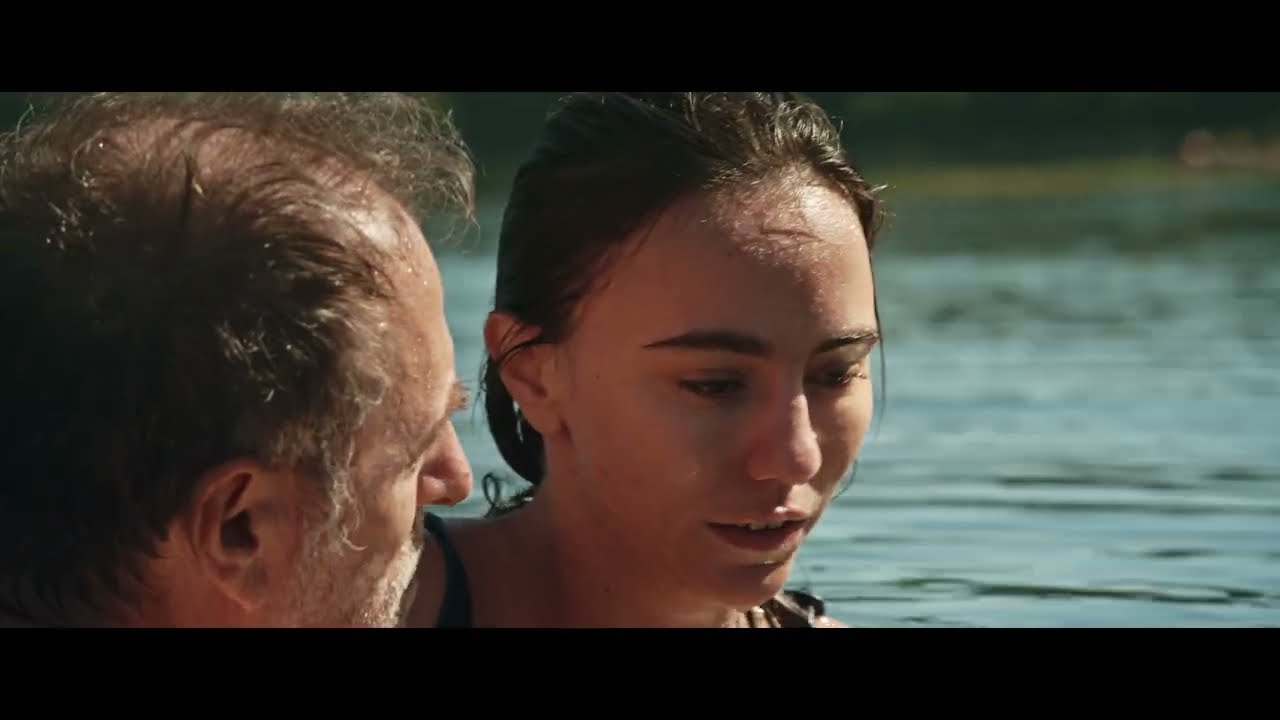
A quiet rural drama about grief, disruption, and reluctant coexistence
Grief-stricken loner vs idealistic vineyard revivalists
A withdrawn man returns to his isolated villa only to find it unexpectedly occupied by a group of young students and graduates restoring abandoned vineyards nearby. Their presence disrupts his solitude, triggering irritation and emotional resistance as he attempts to reclaim control over his space.
As tensions rise, what begins as a territorial conflict slowly evolves into a layered emotional confrontation—between past and present, isolation and community, pain and renewal. The rural Tuscan landscape becomes a silent witness to internal struggles, where each interaction chips away at unresolved trauma. The film frames this clash not just as a physical intrusion, but as a symbolic challenge to stagnation and emotional avoidance.
Why It Is Trending: A reflective Italian drama aligning with post-pandemic emotional storytelling trends
The film is trending due to its alignment with a growing appetite for slow, introspective cinema that explores emotional healing and human fragility. In a market saturated with high-concept storytelling, Five Seconds stands out by offering grounded, character-driven narratives that resonate with audiences seeking authenticity.
Its release timing in late 2025 places it within a wave of European films reclaiming rural settings as spaces for psychological exploration and social commentary. The involvement of acclaimed director Paolo Virzì—known for blending realism with subtle humor—adds credibility and draws cinephile attention. Additionally, its festival circuit presence and critical mentions reinforce its cultural relevance.
The film also benefits from a cross-generational appeal: older audiences connect with themes of regret and memory, while younger viewers resonate with the communal, purpose-driven lifestyle of the vineyard restorers. This dual appeal strengthens its visibility across both arthouse and mainstream discussion spaces.
Elements Driving the Trend: A human conflict rooted in space, memory, and generational contrast
At its core, the film’s appeal lies in a simple but powerful premise—personal space invaded by collective idealism. This creates an immediate emotional hook that is both relatable and symbolically rich.
The narrative leverages a strong contrast between an emotionally withdrawn protagonist and a group of socially engaged young individuals, allowing for layered character dynamics. Performances by Valerio Mastandrea and Galatéa Bellugi elevate this tension with nuanced portrayals of internal conflict and vulnerability.
The rural vineyard setting adds both aesthetic and thematic depth, functioning as a metaphor for neglected emotional landscapes being slowly revived. Accessibility also plays a role—its universal themes (grief, coexistence, purpose) transcend cultural barriers, making it widely relatable despite its localized setting.
Virality of Movie (Social Media Coverage): Quiet buzz driven by emotional resonance and critical discussion
Unlike blockbuster virality, Five Seconds gains traction through thoughtful discourse rather than mass hype. Clips, quotes, and review excerpts circulate within cinephile communities, particularly highlighting its philosophical undertones and restrained storytelling style.
The emotional honesty of the narrative—especially its exploration of pain without resolution—sparks discussions on platforms like film forums and niche social media spaces, contributing to a steady, organic visibility.
Critics Reception: Subtle, compassionate storytelling praised for emotional clarity
Critical reception leans positive, emphasizing the film’s ability to balance detachment with empathy. Publications such as Screen Daily note Virzì’s observational style, which avoids melodrama while gradually building emotional depth.
Reviewers particularly highlight the film’s tonal balance—where moments of quiet humor prevent the narrative from becoming overwhelmingly heavy, maintaining a human and breathable storytelling rhythm.
Awards and Recognitions: Festival acknowledgment signaling strong auteur presence
According to IMDb data, the film has received 4 nominations total, including recognition linked to the David di Donatello Awards—Italy’s most prestigious film awards.
These nominations position the film within a high-quality European cinema bracket, reinforcing its artistic credibility and elevating its visibility in international festival circuits.
Director and Cast: Paolo Virzì’s humanist direction elevated by restrained, emotionally precise performances
Director Paolo Virzì brings his signature blend of realism and understated irony, crafting a narrative that observes rather than judges its characters. His direction leans into emotional restraint, allowing silence, landscape, and small gestures to carry meaning instead of overt exposition.
Valerio Mastandrea delivers a deeply internalized performance as Adriano Sereni, embodying grief and resistance with minimal dialogue but strong physical presence. His portrayal anchors the film’s emotional weight, making the character’s transformation feel gradual and believable.
Galatéa Bellugi adds a contrasting energy through vulnerability and openness, representing a younger generation navigating uncertainty with emotional transparency. Supporting performances, including Valeria Bruni Tedeschi, enrich the narrative by reflecting different responses to pain, responsibility, and memory.
The film trends because: Cultural relevance, industry timing, and audience alignment converge
• Cultural + market relevance The film taps into a growing demand for introspective, emotionally grounded storytelling.• Industry opportunity European cinema is increasingly spotlighting rural narratives as spaces for deep human exploration.• Audience alignment Viewers are drawn to authentic, character-driven conflicts over spectacle.The industry is responding by amplifying auteur-led projects that prioritize emotional realism and subtle storytelling.
Conclusion: A restrained yet powerful reflection on coexistence and emotional renewal
The film succeeds by transforming a simple premise into a layered exploration of grief, resistance, and human connection. Its strength lies in subtle storytelling choices that prioritize emotional truth over dramatic excess. By placing generational conflict within a symbolic rural setting, it creates both intimacy and universality. Ultimately, Five Seconds stands as a compelling example of modern European cinema’s shift toward quiet, character-driven narratives that linger beyond the screen.
What Movie Trend Is Followed: Slow cinema meets rural regeneration storytelling
Five Seconds follows a growing trend in contemporary European cinema that blends slow, introspective storytelling with rural revival narratives. These films move away from fast-paced plotting and instead focus on emotional depth, character psychology, and environmental symbolism.
At its core, the trend reflects a shift toward stories where place becomes a character, and transformation happens gradually rather than through dramatic turning points. The abandoned vineyard is not just a setting—it represents decay, memory, and the possibility of renewal.
This trend is also emotionally accessible, focusing on universal human experiences like grief, coexistence, and purpose, making it resonate across diverse audiences despite its niche presentation. It prioritizes emotional realism over narrative spectacle, aligning with evolving audience expectations.
Trend Drivers: Emotional authenticity replacing spectacle-driven storytelling
The primary driver behind this trend is the audience’s growing fatigue with formulaic, high-concept narratives. Viewers are increasingly drawn to films that feel real, intimate, and emotionally honest, even if they are slower or less event-driven.
Filmmakers like Paolo Virzì are responding by creating stories that observe rather than dramatize, allowing audiences to sit with discomfort and reflection. This creates a deeper psychological engagement compared to traditional narrative arcs.
Additionally, the rise of streaming platforms and festival exposure has made it easier for these films to reach global audiences, expanding the demand for character-driven, contemplative cinema.
What Is Influencing Trend: Post-crisis introspection and generational value shifts
The trend is heavily influenced by a broader cultural movement toward introspection following global crises, where audiences are seeking meaning, healing, and human connection.
Younger generations, in particular, are drawn to narratives that explore alternative lifestyles, sustainability, and community-driven living—reflected in the vineyard restoration subplot.
There is also a growing interest in stories about coexistence and emotional accountability, rather than individual heroism.
Macro Trends Influencing: Return to locality and anti-urban storytelling
On a macro level, cinema is experiencing a shift away from urban-centric narratives toward rural and peripheral spaces. These environments offer a sense of authenticity, stillness, and existential reflection that urban settings often lack.
This aligns with a broader cultural reevaluation of modern life, where audiences are questioning productivity-driven lifestyles and exploring slower, more intentional ways of living.
The film fits into this macro trend by using the countryside as both a physical and philosophical backdrop.
Consumer Trends Influencing: Demand for meaningful, emotionally resonant content
Audiences today are prioritizing content that offers emotional depth and personal reflection over passive entertainment. There is a clear movement toward films that feel “lived-in” rather than constructed.
Viewers are also more open to ambiguity and unresolved endings, valuing authenticity over closure. This allows films like Five Seconds to resonate more deeply, even without traditional narrative payoffs.
The consumption pattern is shifting toward quality over quantity, especially within niche and arthouse segments.
Audience Analysis: Emotionally aware, culturally curious, and introspection-driven viewers
The primary audience for this trend falls within the 25–55 age range, skewing slightly toward urban, educated viewers with an interest in culture, cinema, and social themes.
These viewers often lead lifestyles that balance professional ambition with a desire for meaning, making them receptive to narratives about slowing down and reconnecting with purpose.
Behaviorally, they prefer thought-provoking films, engage in post-viewing discussions, and are active in film communities or festivals. They are less driven by hype and more by critical reception and word-of-mouth credibility.
This audience is also increasingly drawn to European cinema, appreciating its focus on realism, nuance, and emotional complexity.
Conclusion: Emotional resonance and cultural timing drive the trend’s long-term relevance
The trend works because it taps into a deep emotional need for reflection and authenticity in a fast-paced world. It is scalable across different cultures due to its universal themes and adaptable storytelling style. Its sustainability lies in its alignment with long-term cultural shifts toward mindfulness and emotional awareness. The industry is likely to continue investing in such narratives as audiences increasingly seek meaningful cinematic experiences.
Final Verdict: A quiet but powerful signal of cinema’s shift toward emotional realism and human-centered storytelling
Five Seconds positions itself as a refined example of modern European cinema’s move away from spectacle and toward emotional depth. It reflects an industry recalibration where smaller, intimate stories are gaining cultural and critical weight.
The film’s strength lies in its ability to transform stillness into narrative power, allowing audiences to engage with discomfort, reflection, and subtle transformation. Director Paolo Virzì reinforces his role as a storyteller of human fragility, crafting a film that feels both personal and universally resonant.
From an identity perspective, the film resonates with audiences navigating themes of purpose, belonging, and emotional accountability in a rapidly changing world. Its long-term impact is likely to be seen in how it contributes to sustaining demand for introspective, auteur-driven cinema.
Ultimately, Five Seconds is less about resolution and more about endurance—positioning itself as a film that lingers intellectually and emotionally rather than delivering immediate gratification.
Audience Relevance: A story that mirrors emotional realities across generations
The film connects with audiences by reflecting shared emotional experiences—grief, resistance to change, and the search for meaning. It speaks to both older viewers processing past decisions and younger audiences exploring alternative ways of living.
This dual-layer relevance allows the film to transcend niche boundaries, making it culturally adaptable while maintaining its arthouse identity.
What Is the Message of Movie: Confronting truth as a path to coexistence and survival
At its core, the film suggests that healing does not come from resolution, but from acknowledgment and shared understanding. Characters are not “fixed,” but rather learn to coexist with their past and with each other.
The narrative promotes emotional honesty as a form of survival—where speaking truth, even without forgiveness, becomes a step toward living forward.
Relevance to Audience: Emotional authenticity over narrative closure defines engagement
Audiences today are increasingly drawn to stories that reflect real emotional processes rather than idealized resolutions. Five Seconds meets this expectation by offering a narrative that feels unresolved yet complete in its honesty.
This approach aligns with shifting audience preferences toward authenticity, where emotional truth is valued more than traditional storytelling structure.
Social Relevance: A reflection of changing values around community and coexistence
The film captures a broader societal shift toward collective living and shared responsibility. The presence of young vineyard restorers symbolizes a move toward sustainability, collaboration, and purpose-driven lifestyles.
This dynamic contrasts with individual isolation, highlighting a tension that mirrors real-world social evolution.
Performance: Strong critical standing supported by niche audience engagement
With an IMDb rating of 6.9 and a smaller but engaged review base, the film demonstrates solid reception within its target audience. Its box office performance of approximately $3.2M worldwide reflects its positioning as a niche, festival-driven release rather than a mainstream commercial product.
Critical discussions and festival recognition further reinforce its standing as a quality arthouse film rather than a mass-market success.
Legacy: A contribution to the evolution of slow, introspective European cinema
The film’s legacy will likely be tied to its role in reinforcing the viability of slow cinema in a global market. It contributes to a body of work that prioritizes emotional depth, realism, and philosophical inquiry.
As more filmmakers explore similar themes, Five Seconds stands as part of a movement redefining what cinematic engagement looks like in the modern era.
Success: Artistic credibility outweighing commercial scale in defining impact
The film’s success is measured less by box office numbers and more by its cultural and critical positioning. Recognition through 4 IMDb-listed nominations, including those associated with the David di Donatello Awards, reinforces its industry value.
Combined with positive critical reception and strong performances from Valerio Mastandrea and Galatéa Bellugi, the film achieves success as a respected auteur-driven project.
Insights: The rise of emotionally grounded cinema reflects a broader cultural shift toward introspection and authenticity.Industry Insight: Filmmakers and studios are increasingly investing in smaller, character-driven stories as audiences seek deeper engagement rather than spectacle. This creates space for auteur voices like Paolo Virzì to thrive in both festival and streaming ecosystems. The success of such films signals a diversification of what is considered commercially viable.Audience Insight: Viewers are prioritizing emotional resonance and relatability over plot-driven entertainment. They are more willing to engage with slower narratives that reflect real-life complexities and unresolved emotions. This indicates a maturation of audience taste across global markets.Social Insight: The film reflects evolving societal values around community, sustainability, and emotional openness. It highlights a growing tension between individual isolation and collective living, mirroring real-world cultural shifts. These themes are becoming increasingly central in contemporary storytelling.Cultural Insight: European cinema continues to lead in producing introspective, human-centered narratives that influence global film language. Five Seconds contributes to this cultural export by reinforcing the importance of subtlety, realism, and philosophical depth. It helps shape the future direction of storytelling beyond mainstream conventions.
Conclusion: Long-term cultural relevance driven by authenticity and introspection
The film’s long-term relevance lies in its alignment with a sustained cultural movement toward authenticity and introspection. It operates within a system where emotional realism is becoming a key differentiator in storytelling. From a market perspective, it reinforces the viability of niche, auteur-driven cinema in a global ecosystem. The industry is likely to continue expanding this space as audience demand for meaningful content grows.
Summary of the Movie: A poetic collision between isolation, youth, and emotional renewal
• Movie themes: Grief, coexistence, renewal, emotional accountabilityThe film explores how unresolved pain shapes identity and relationships, using physical space as a metaphor for internal emotional states.
• Movie director: Humanist realism with subtle irony by Paolo VirzìVirzì approaches the story with observational sensitivity, avoiding melodrama while allowing emotional depth to emerge organically. Known for films like Like Crazy, he consistently blends humor with human fragility, reinforcing his signature storytelling style.
• Top casting: Emotionally restrained performances led by Valerio Mastandrea and Galatéa BellugiMastandrea anchors the film with a quiet, internalized portrayal of grief, while Bellugi introduces vulnerability and generational contrast, creating a dynamic emotional balance.
• Awards and recognition: 4 nominations including David di Donatello recognitionThe film holds 4 IMDb-listed nominations, notably tied to the David di Donatello Awards, reinforcing its position within Italy’s prestigious festival and awards circuit.
• Why to watch movie: A deeply human story that prioritizes emotional truth over dramatic spectacleIt offers a reflective viewing experience for audiences seeking meaningful, character-driven narratives with lasting emotional impact.
• Key Success Factors: Comparable to modern European slow cinema success modelsSimilar to films like The Great Beauty, it succeeds through atmosphere, character depth, and philosophical undertones rather than plot intensity.
• Where to watch: Festival-driven release with theatrical rolloutReleased on October 30, 2025 (Italy), the film follows a festival circuit trajectory with limited theatrical distribution and potential streaming availability.
Conclusion: A defining blend of introspective storytelling and meaningful viewing experience
The film ultimately defines its plot through emotional confrontation rather than action, positioning grief and coexistence as its central narrative drivers. It stands out as a must-watch for audiences seeking depth, realism, and reflective storytelling over conventional cinematic structure. By embracing silence, nuance, and character-driven tension, it creates a viewing experience that lingers beyond the screen. Its ability to balance personal pain with subtle moments of human connection reinforces its emotional authenticity and narrative strength. Ultimately, Five Seconds offers not just a story, but an experience that encourages introspection, empathy, and a deeper understanding of how people learn to live with what cannot be undone.






Leave a Reply